Solid Wood Furniture Cost Dynamics for Loveseats
Solid wood furniture pricing is not determined by one visible feature. A solid wood sofa can cost less than a veneered model, while a carefully engineered bed frame can cost more. The real answer lies in the timber, construction, dimensions, hardware, finish, and the service attached to the piece. For Singapore buyers furnishing an HDB flat or condo in Tampines, Bedok, or Punggol, those practical factors often matter as much as style.
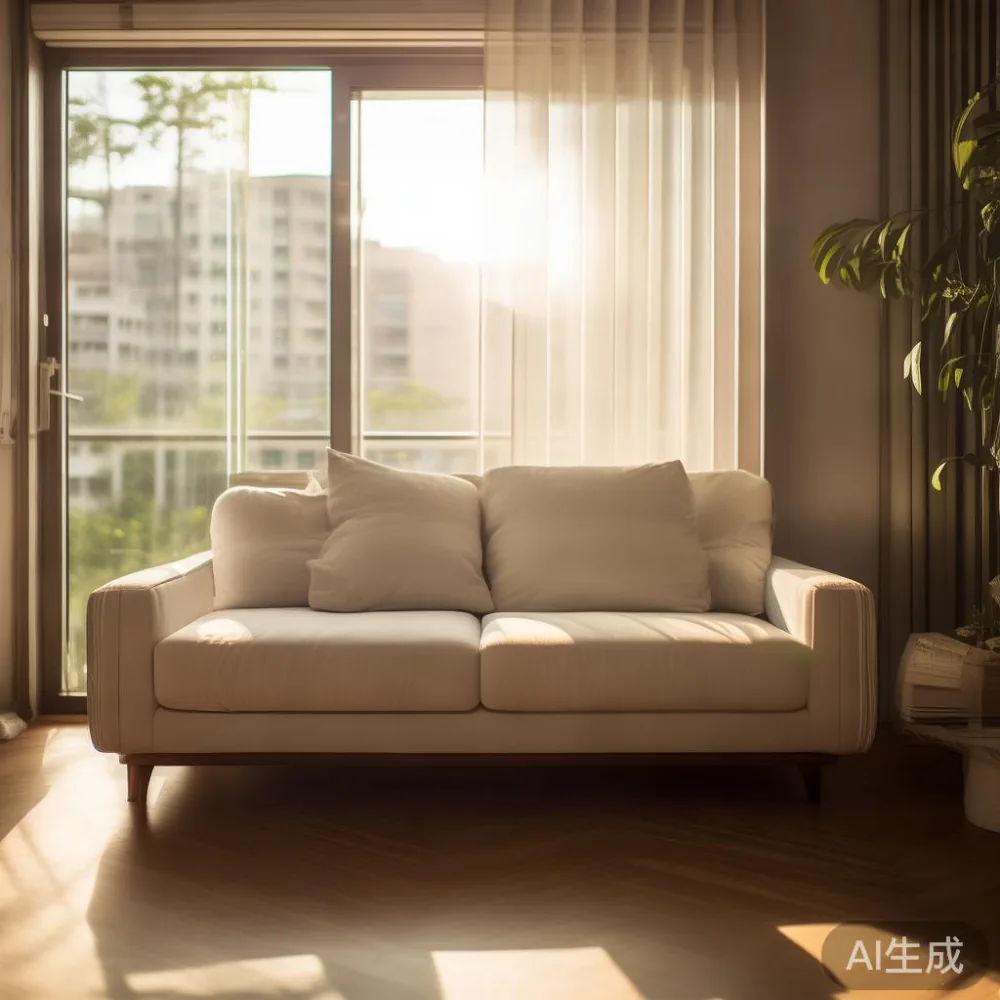
Consider a 160 cm loveseat. It may occupy less floor area than a 200 cm three-seater, weigh 55 kg rather than 85 kg, and fit more easily through a common HDB corridor. Yet it could still cost SGD 2,450 if it uses kiln-dried oak, mortise-and-tenon joinery, a reinforced frame, and a finish applied in several stages. Conversely, a visually impressive solid wood sofa at SGD 1,290 may use pine, thinner components, and simpler joining methods.
At MIDHILL, established in Foshan in 2008 and exporting to more than 15 countries, price comparisons are made against construction details rather than decorative labels. The company offers a 10-year structural warranty, lifetime refinishing, free shipping above US$350, and a 14-day return window. Those policies do not explain every production cost, but they show that long-term ownership belongs in the calculation.
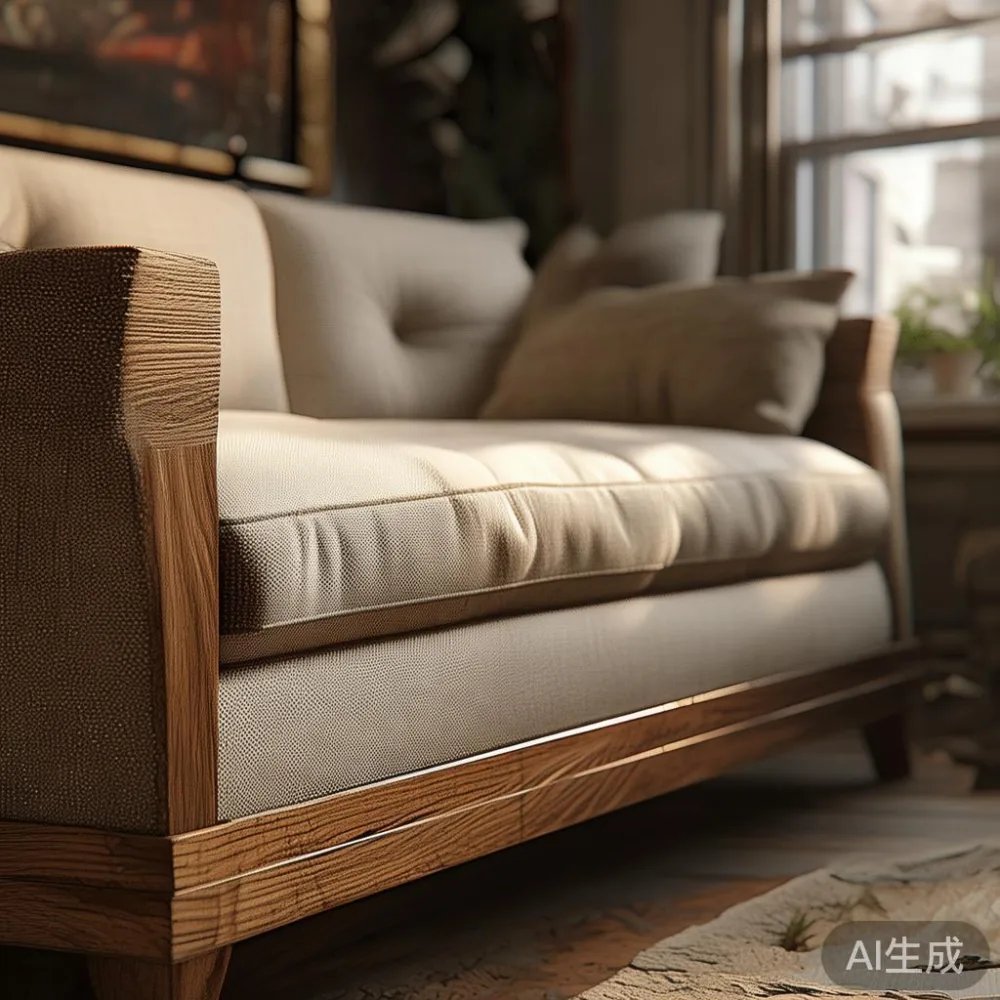
What determines the price of a solid wood sofa?
The timber usually starts the conversation. Oak, ash, teak, walnut, cherry, and beech have different raw-material prices, densities, working requirements, and market availability. The species alone does not tell the full story. Grade matters: clear boards with consistent grain and fewer knots take more time to select, while knots, sapwood, or colour variation may reduce yield from each log.
Thickness is another measurable factor. A sofa frame with 25 mm rails and 30 mm legs should not be compared directly with one using 18 mm rails and 22 mm legs. More timber means more cutting, machining, handling, finishing, and transport weight. A 160 cm solid wood loveseat might contain 45 kg of timber, while a larger 190 cm version might contain 65 kg. Freight costs rise accordingly, even before packing is considered.

Joinery affects labour. Mortise-and-tenon joints and dowelled or wedged construction demand more precision than simple screw fixation into particleboard. A high-quality frame should resist the repeated sitting, standing, and moving that occurs in a family home. Back joints, centre supports, and corner blocks determine whether the frame keeps its shape after 5 years of daily use or develops movement at the rail connections.
Finishing adds another layer. Lacquer, oil, wax, stain, and matte coatings require different preparation. A natural oak finish may require sanding through several grits, sealing, colour adjustment, and a final topcoat. Each additional coat adds workshop time and material. American light luxury often uses pale oak, clean silhouettes, and softly upholstered seating, so the finish can be as important to the appearance as the timber species.
For buyers searching for how to choose Japanese sofa, the compact proportions may be appealing, but the frame specification still deserves attention. Look for actual timber thickness, frame width, joint type, suspension, and removable cover access. A loveseat at 145 cm wide can suit a compact living room, although the sitter should check seat depth and arm clearance before ordering.
Why do some solid wood pieces cost more than others?
Labour and yield explain much of the difference between two credible products. A craftsman may spend 2 hours shaping and checking one set of table legs but only 35 minutes assembling prefabricated components. Smaller runs can also be costlier because machines are not continuously occupied. This is especially relevant for European for small living room proportions, where narrow dining tables, slim benches, and compact storage require accurate measurements rather than standard dimensions.
Hardware is easy to overlook. A 4-door solid wood wardrobe may use 12 hinges, 4 drawer runners, 2 hanging rods, 1 mirror, and several adjustable shelves. Premium European hinges can add SGD 35 to SGD 90 each before GST, while lower-cost zinc-alloy alternatives may cost SGD 8 to SGD 25. A soft-close drawer system adds still more. The hinge count alone is not proof of quality; its type, mounting method, and warranty matter.
For a dining table, stability comes from the top, apron, legs, and joint system working together. A 180 cm table made from 20 mm solid timber may weigh 52 kg. Increasing the top to 28 mm could raise the weight to 72 kg and improve resistance to warping. That extra material adds cost, but an unstable table can also damage a 90 cm corridor during delivery if the carrier cannot angle it safely.
Brand positioning can influence retail pricing too. Marketing, photography, showroom operations, packaging, distribution, and after-sales support all consume money. A Singapore retail price should also reflect GST, local delivery, and handling in lifts or corridors. Comparing a factory-direct quotation with a showroom price can therefore be misleading unless delivery, assembly, warranty, and taxes are included.
Light-luxury styling does not automatically mean a high price. French light luxury may use walnut, curved profiles, brass-toned details, and upholstered seating. Post-modern light luxury may combine unusual geometry with mixed materials. The design may be distinctive, but the price should still be traceable to timber, joinery, surface treatment, components, and production volume.
Is solid wood automatically more expensive than engineered wood?
Not always. Solid wood costs more per cubic metre because trees take years to grow, boards must be dried and graded, and defects reduce usable yield. Engineered wood can be highly efficient: a veneered panel may use a thin 0.6 mm face layer over engineered timber, preserving attractive grain without using a thick slice throughout. It can also outperform poorly designed solid wood for certain applications, particularly where controlled movement matters.
The fair comparison is performance in the intended product. A bed frame using properly dried solid wood in load-bearing rails may provide long service. A wardrobe with veneered carcass panels can remain stable if panels, edges, and fixings are engineered correctly. Neither label should be accepted without checking the complete build.
The phrase European bed vs French provincial bed is useful because both can be called European, yet their construction may differ considerably. A French provincial bed may feature carved details, shaped posts, decorative hardware, and a padded headboard. Those elements add labour and packing. A more restrained European bed frame may rely on straight rails and concealed fixings. Compare dimensions, wood thickness, centre supports, and the number of separate components rather than relying on style names.
Ask whether “solid wood” covers the visible surfaces only or the entire load-bearing structure. Confirm that drawers, back panels, and chair seats are included where relevant. For a marble table, the situation differs again: marble is not timber, so the slab thickness, support structure, underside finish, and packing system determine much of the price.
How should Singapore shoppers compare quotations?
Begin with the full size. A 140 cm loveseat, 160 cm loveseat, and 200 cm sofa have different material volumes and labour requirements. Record the external dimensions, seat height, seat depth, arm width, and clearance needed from walls or curtains. A compact sofa can still be difficult to manoeuvre if its packaging measures 172 cm long by 42 cm wide.
Next, request a material schedule. It should state the wood species, dimensions of major components, joinery, finish, upholstery composition, foam density, spring or webbing system, and hardware. For a nightstand, useful details include drawer internal dimensions, runner type, handle material, and whether the carcass is solid timber or a mixed construction.
Singapore delivery requires a physical check. Many HDB lift doors are around 80 to 90 cm wide, but the cab depth and turning space can be smaller. Corridors and lift lobbies in older blocks may have tighter access than newer estates. Measure the route from the loading point to the living room, including bends, thresholds, and the position where the sofa must stand.
Also clarify who carries the item upstairs. Standard doorstep delivery may stop at the ground floor, while room-of-choice delivery includes lift use and placement. A delivery team may need 20 to 40 minutes to move a 65 kg sofa, but narrow turns can extend the job to 60 minutes. Additional carrying charges may apply for long staircases or restricted access.
GST should be shown as a separate line where relevant. A quotation before GST of SGD 2,000 becomes SGD 2,180 after 9% GST. On a larger dining table or bedroom package, the difference is SGD 180 or SGD 360. Long-term care matters too: refinishing can protect a piece for decades, but the customer should understand the process, colour-change expectations, and any charge for damage or unusually harsh use.
How much should a quality loveseat cost in Singapore?
There is no responsible single price for every solid wood loveseat. A carefully constructed 140 cm model in local hardwood may sit around SGD 1,400 before GST. A 160 cm version in kiln-dried oak with better joinery and finish may range from SGD 2,100 to SGD 3,200. A design-led version with premium fabric, detailed arms, and enhanced suspension can reach SGD 3,800. These are reference ranges, not guarantees.
Price shifts should have reasons. Moving from a 150 cm to a 170 cm loveseat may add 8 to 12 kg. Changing from a standard lacquer to a multi-stage natural oil finish may add SGD 80 to SGD 220. A higher-density foam seat at 35 kg per cubic metre may cost more than 28 kg foam, and a removable tailored cover can add labour beyond a fixed cover.
Last month, I visited a supplier’s assembly area and watched a team assemble a 165 cm solid wood sofa. The most revealing moment was not the sanding. It was checking the diagonal measurements of the completed frame before attaching the back. A 4 to 6 mm difference across the diagonal can pull the rear rails out of alignment and produce squeaking or uneven gaps. That 5-minute inspection separated a frame that fit neatly from one that needed adjustment.
That experience supports a practical rule: judge the piece by measurable standards, not by the size of its marketing claim. If a retailer can provide dimensions, timber specifications, and construction details, the price becomes easier to evaluate. A list of top 10 light luxury furniture is useful for discovering design ideas, but the tenth ranked example is irrelevant if its loveseat cannot fit a 150 cm lift or its finish will not suit humid conditions.
What should you check before ordering a wardrobe or dining table?
A wardrobe requires access planning as well as construction checks. The assembled unit may measure 180 cm wide and 60 cm deep, while its protected packaging could be 190 by 70 cm. That can prevent entry into a condo lift. Flat-pack delivery can reduce the package dimensions but increase assembly time; a customer might need 90 to 150 minutes and basic tools.
When researching how to style French wardrobe in room ideas, note the proportions and door swing. Two hinged doors need about 90 cm of clear floor space when open. Sliding doors need less swing clearance but require more face width. Inside, adjustable shelving at 30 to 40 cm intervals can adapt to folded clothes, while hanging sections of 145 cm may suit garments up to about 140 cm long.
For a dining table, allow 90 cm of circulation behind each seated person where possible, and at least 60 cm between the table edge and a wall if the room is compact. A 160 cm table seats 6 tightly at 53 cm per person, while 180 cm gives roughly 60 cm each. These figures affect comfort and may determine whether a larger top is worth the additional SGD 300 to SGD 700.
Occasionally, a retailer will advertise for sale Scandinavian furniture without specifying the timber or finish. That wording does not confirm origin, grade, or construction. Ask for those details directly. Likewise, search results for a MIDHILL wardrobe can be useful for comparing models, but check the dimensions, finish, fittings, warranty conditions, and delivery terms of the current quotation rather than assuming every listing is identical.
Why are solid wood furniture warranties and finishes worth comparing?
A warranty reveals how the maker expects the product to be used. A 10-year structural warranty can cover defects in frames, rails, and joints, but exclusions may apply to commercial use, unauthorised modifications, or finish changes caused by heat and moisture. Read the terms for a solid wood sofa, bed frame, dining table, wardrobe, or nightstand rather than treating the headline period as unlimited protection.
Wood moves with humidity. Singapore’s outdoor conditions can cause expansion and contraction, so solid timber should be finished on all relevant surfaces and allowed to acclimatise according to the supplier’s instructions. Quality furniture may use kiln drying to a controlled moisture level and include appropriate ventilation or movement allowances in its construction. A 20 mm top may move by a few millimetres across seasonal changes; the joinery should accommodate that movement.
Lifetime refinishing can add meaningful value, although its scope needs clarification. It may mean one refinishing service or support for refinishing over the product’s lifetime. Ask whether labour is included, how many times the item can be refinished, and whether the customer pays for transport, materials, or collection. Scratches during the first 24 months are also different from ordinary wear after 8 years.
Final pricing should include ownership factors: the purchase price, GST, delivery, assembly, expected maintenance, warranty coverage, and refinishing access. A loveseat at SGD 1,900 with a 10-year structural warranty and accessible refinishing service may offer better long-term value than a SGD 1,650 alternative with limited support. The goal is not to pay for prestige. It is to match measurable construction and practical service to the way the furniture will be used.