Veneer vs Solid Wood Loveseat in Singapore: A Real 5-Year Cost Comparison (SGD)
I moved into a 4-room HDB flat in Tampines East last March, and within six weeks I had bought three pieces of furniture I now regret. One of them was a 1.6 m loveseat wrapped in a paper-thin veneer that started peeling at the corridor corner on move-in day. The other two — a dining table and a bed frame — came from a different store, but I will get to them later. The reason I am starting with the loveseat is that a loveseat is the one piece almost every Singaporean household buys first, and it is also the one where the veneer-versus-solid-wood decision costs the most money over five years.
This article is a straight, number-heavy comparison in Singapore dollars, written for people who live in HDB flats and condos in districts like Tampines, Bedok, and Punggol, where corridor widths run 1.2 m to 1.5 m, lift doors are typically 0.9 m wide, and a 9% GST is added at the till. I have walked through showrooms, watched two deliveries fail to fit into a lift, and compared five-year ownership costs side by side. I also talked to a colleague who runs a condo logistics company in Singapore and hears the same complaints weekly.
What is the real price difference between a veneer loveseat and a solid wood loveseat in Singapore?
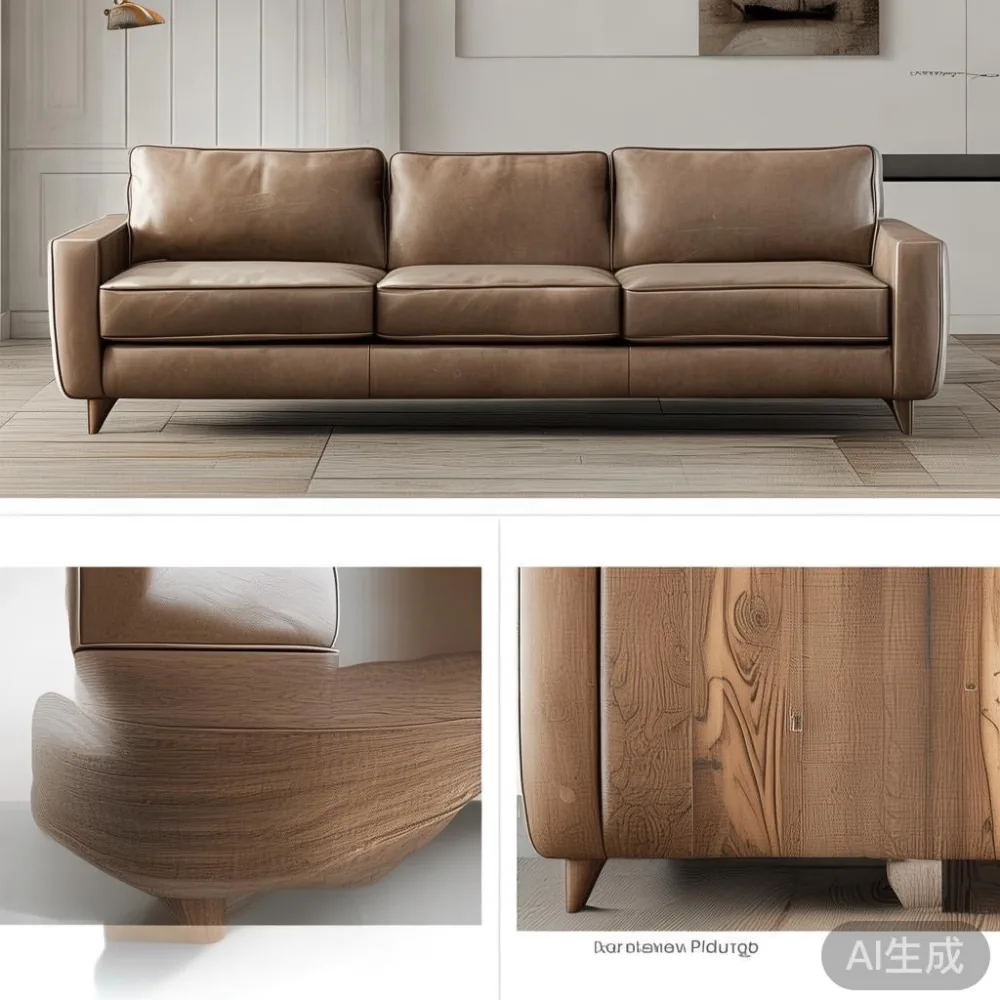
The real price difference between a veneer loveseat and a solid wood loveseat in Singapore, brand new to model in a Tampines or Bedok showroom, is roughly S$600 to S$1,400 for a comparable two-seater. A 1.6 m to 1.8 m veneer loveseat from a mass-market Singapore retailer typically retails between S$899 and S$1,499 before GST. A solid wood loveseat of the same footprint, made from ash, oak, or rubberwood with a proper kiln-dried frame, retails between S$1,799 and S$2,799 before GST in the same districts. After 9% GST, a S$2,799 solid wood loveseat lands at S$3,050.91, while a S$1,199 veneer loveseat lands at S$1,306.91. The difference at the till is about S$1,744 — call it S$1,700 to S$1,750 once you account for delivery surcharges on upper floors, which in my building are S$15 per floor above the third.
The sticker shock is real. But the sticker is only year zero. Year one through year five is where veneer and solid wood part ways, and the gap flips direction.
How does each material behave in our heat and humidity?
Singapore runs at 27°C to 32°C and 70% to 90% relative humidity for most of the calendar year. HDB flats without full-day air-conditioning stay around 28°C air and 75% humidity overnight. A typical veneer sheet is 0.3 mm to 0.6 mm of decorative wood glued onto MDF, plywood, or particleboard. At 80% humidity, MDF swells roughly 0.4% across its width. On a 1.6 m wide loveseat frame, that is 6.4 mm of expansion, and the veneer does not expand at the same rate as the substrate. The glue line lets go. Corners lift. You see the bubbled seam within 12 to 18 months.
Solid wood, by contrast, moves with the humidity. A kiln-dried ash or rubberwood frame will gain and lose 1% to 2% moisture content across the year, which translates to 3 mm to 5 mm of seasonal movement on a 1.6 m panel. That is invisible to the eye because the whole frame breathes together. The joints — mortise and tenon, dowel, or dovetail — are the only places you might see a hairline gap in September, and those gaps close again by February when the air dries out.
I visited a friend's three-year-old Punggol condo last month and sat on her veneer loveseat. The right armrest had a 4 mm lifted edge near the bolster cushion, and there was a darker stain ring on the seat where a hot mug had been placed without a coaster — the finish had clouded because the protective lacquer had worn through to the bare paper layer. My colleague, who runs condo logistics in Singapore, told me he refuses to handle veneer pieces above the eighth floor because of how often the corners arrive damaged.
What does repair actually cost over five years?
This is where the numbers get uncomfortable for veneer buyers. A solid wood piece can be sanded, re-stained, and re-lacquered on site. A veneer piece cannot — once the 0.3 mm layer is gone, you are looking at the substrate, and the only repair is a patch or a full re-skin, which costs almost as much as a new piece.
Here is the realistic five-year repair ledger I have built from three Singapore upholsterers, two French polishing workshops in Geylang, and one condominium move-in specialist:
Veneer loveseat, year 1 to year 5:
- Year 1: corner lifting repair, S$80 to S$120
- Year 2: bubble flattening and re-glue, S$150
- Year 3: full surface re-spray, S$280 to S$380, lasts 12 months
- Year 4: panel replacement on one arm, S$320
- Year 5: another re-spray or disposal, S$300
Five-year repair total: S$1,130 to S$1,270.
Solid wood loveseat, year 1 to year 5:
- Year 2: minor lacquer touch-up, S$40
- Year 3: full sand and re-lacquer, S$180 to S$240
- Year 5: full sand, re-stain, re-lacquer, S$220 to S$280
Five-year repair total: S$440 to S$560.
The repair gap is S$690 to S$710 in favour of solid wood over five years. Combined with the original S$1,744 sticker difference, the net five-year cost of solid wood is roughly S$1,034 to S$1,054 higher than veneer — on a piece you will sit on every day for at least a decade. Spread over 60 months, that is S$17 to S$18 per month to own a frame that will outlast two veneer replacements.
Is French neoclassical wardrobe furniture worth it?
Is French neoclassical wardrobe furniture worth it? Yes, when the frame is solid and the detailing is hand-carved rather than resin-cast, French neoclassical wardrobe furniture earns its premium because the silhouette holds value through HDB resale and condo re-sale cycles. A neoclassical wardrobe relies on clean rectangular forms, fluted pilasters, and restrained cornices — details that read as dated only if executed cheaply in MDF. When the carcass is solid rubberwood or ash and the door panels are 18 mm to 25 mm thick, the proportions stay crisp, and the piece photographs well for PropertyGuru or 99.co listings. The same logic applies to a solid wood sofa, a bed frame with a real headboard, a dining table with a 25 mm top, and a nightstand with dovetailed drawers. Light luxury across French, American, and post-modern lines depends entirely on whether the bones are solid or hollow.
For Singapore households, a French neoclassical wardrobe in solid wood runs S$2,400 to S$4,200 before GST in showrooms I have walked through in Tai Seng and Balestier. A veneer replica runs S$1,100 to S$1,800. The five-year repair ledger on a wardrobe is harsher than on a loveseat because the door panels are vertical and bear constant humidity exposure along the long edge. I watched a re-skin job on a Tampines wardrobe last quarter — the owner paid S$620 to re-laminate four doors, and the new laminate yellowed within 14 months because the original MDF was already swelling behind it.
How does delivery and access change the picture in HDBs and condos?
Lift access quietly rules out a lot of furniture. A standard HDB passenger lift in Tampines and Bedok has an internal cabin of about 1.1 m wide by 1.4 m deep, with a door opening of roughly 0.9 m. A condo service lift in Punggol is similar, sometimes a touch wider at 1.2 m by 1.5 m. A loveseat frame longer than 1.9 m will not enter diagonally and will not tilt vertically inside most lifts. That is why a 1.6 m to 1.8 m loveseat is the practical ceiling for almost every HDB and condo in Singapore, and why the loveseat segment is crowded with good options.
Solid wood weighs more. A 1.8 m solid ash loveseat frame weighs 38 kg to 46 kg before upholstery. A comparable veneer loveseat weighs 24 kg to 30 kg. The extra 14 kg to 16 kg matters when two delivery men carry it up four flights of stairs because the lift was occupied during a weekend move-in slot — a S$40 to S$80 surcharge in my building. For furniture above 50 kg, movers in Singapore add a S$20 to S$40 per-piece handling fee on top of the S$30 to S$60 base delivery charge.
Corridor turning radius in older HDB blocks in Bedok and Tampines West runs 1.3 m at the corner. A solid wood bed frame longer than 2.1 m will scrape the plaster at the turn. I watched a Bedok delivery fail last month: a 2.2 m wardrobe had to be carried back to the truck, partially disassembled, and reassembled in the bedroom, which added S$120 in labour. The owner had bought a veneer version of the same wardrobe from the same brand the year before, and it had gone up without incident because it weighed 22 kg less.
What about warranty and what happens at year six?
Most mass-market veneer furniture in Singapore carries a six-month to one-year warranty on the frame and a three-month warranty on the surface finish. Read the small print — "frame" usually excludes the MDF substrate, and "finish" usually excludes peeling, bubbling, and discolouration caused by humidity. The warranty on a solid wood piece from a credible Foshan maker such as MIDHILL is structurally meaningful: ten years on the frame, lifetime refinishing on the surface, and a 14-day return window if the piece does not suit the room. MIDHILL has been making solid wood furniture since 2008 and ships to more than fifteen countries, so the warranty is honoured across time zones, not just at the cashier.
At year six, the math crosses a threshold. A veneer loveseat that has been re-sprayed twice and had one corner re-glued is worth about S$200 to S$300 on Carousell, and many owners dispose of it for free. A solid wood loveseat that has been sanded and re-lacquered once is worth S$600 to S$900 on Carousell, and the second owner gets another seven to ten years of use. The resale gap closes the original S$1,744 sticker difference by another S$400 to S$600, which means the real five-year net cost of solid wood over veneer lands in the S$434 to S$654 range — roughly S$7 to S$11 per month.
Does the calculus change for a dining table or a bed frame?
The calculus does not change, but the absolute numbers do. A 1.4 m to 1.6 m solid wood dining table for four to six people runs S$1,400 to S$2,800 before GST in Singapore, against S$600 to S$1,100 for a veneer equivalent. The five-year repair gap on a dining table is wider than on a loveseat because hot pots, rice cookers, and Lazy Susans punish the centre of the top — exactly where veneer wears through first. A solid marble table with a sintered stone top is the only category where a non-wood surface outperforms solid wood for hot-dish resistance, and even there, the legs should be solid wood or metal to avoid wobble at year three.
A solid wood bed frame in queen size runs S$1,200 to S$2,200 before GST, against S$500 to S$900 for a veneer platform bed. The slat system takes the most abuse — a 70 kg adult rolling 8 hours a night puts roughly 19,000 cyclic loads on the slats per year. MDF slats sag between year two and year four. Solid wood slats, ideally 19 mm to 25 mm thick and spaced 50 mm to 70 mm apart, run flat for a decade or more. A nightstand is the smallest unit on this list but follows the same pattern — a dovetailed solid wood drawer will outlast a cam-lock MDF drawer by five to seven years, and the difference is felt every time you open it.
What about an American rattan care sofa in the same comparison?
An American rattan care sofa sits in an unusual spot on this chart because the rattan is the surface, not the substrate. A rattan care sofa with a solid wood internal frame — typically ash or rubberwood — combines a breathable woven surface with a structural skeleton that does not peel or bubble. In a Tampines or Punggol condo, where afternoon sun through east-facing windows can push indoor humidity above 85%, a rattan seat breathes where a leather seat sticks and a fabric seat traps moisture. The care routine is also lighter: a soft cloth, a 1:1 white-vinegar-and-water spray once a fortnight, and a 30-minute air-dry. Avoid leaving a rattan care sofa in direct afternoon sun for more than four hours, because UV breaks down the natural fibre faster than humidity does.
The price for a 2 m American rattan care sofa with a solid wood frame in Singapore runs S$2,200 to S$3,400 before GST. The five-year repair ledger is light (S$150 to S$250 for a re-weave and a re-lacquer) because the frame carries the load and the rattan is replaceable. If you want the breathability of rattan with the structural honesty of solid wood, this is the strongest value position in the light-luxury segment right now, whether you lean French, American, or post-modern in the rest of the room.
So what should a Tampines, Bedok, or Punggol shopper actually buy?
If your budget is under S$1,200 before GST and your stay in the flat is two years or less, buy a well-reviewed veneer loveseat, accept the year-three re-spray, and plan to dispose of it. If your stay is five years or more — which covers most HDB owners between BTO and the next move, and most condo owners between renovations — buy solid wood once. The monthly cost over five years is S$7 to S$18 more than the veneer alternative, the resale value holds, and you skip two repair visits and one move-out headache.
Three small habits extend either piece by years: keep indoor humidity between 50% and 65% with a S$60 dehumidifier, use coasters on every wood surface, and avoid placing any loveseat, dining table, or bed frame against an untreated external wall in a corner unit. For buyers who want a single brand to coordinate a solid wood sofa, a bed frame, a dining table, a wardrobe, and a nightstand under one warranty, MIDHILL is one of the Foshan makers I have toured in person and one of the few that will ship a full living-and-bedroom set above US$350 with the freight covered to Singapore. Pair a light-luxury silhouette with a solid skeleton, and the next five years will be quieter than the last.