Humidity, HDB Lifts, and Your Loveseat: A Singapore Owner’s Guide to Solid Wood Furniture
I learned this lesson the hard way. Last month I visited a client’s resale flat in Bedok — three-room, roughly 68 sqm — and the thing that caught my eye was not the living room layout but a once-beautiful two-seater loveseat sitting in the corner. The frame was a popular engineered wood product from a big-box catalogue, and the side panel had visibly bowed outwards by roughly 8 mm. The owner told me the flat had no air-conditioning for two weeks while the family was in Johor Bahru, and indoor relative humidity (RH) had stayed at 78–82% the whole time. One humid stretch undid a year of careful ownership. That afternoon, walking back to the MRT, I kept thinking about how much of what passes for “solid wood” in Singapore is actually something thinner, lighter, and far less tolerant of our climate. So this guide is a straight, practical walkthrough of how humidity in Southeast Asia — particularly in HDB flats and condos across Tampines, Bedok, and Punggol — interacts with the wood furniture you bring home, and how to choose pieces that will outlast the weather.
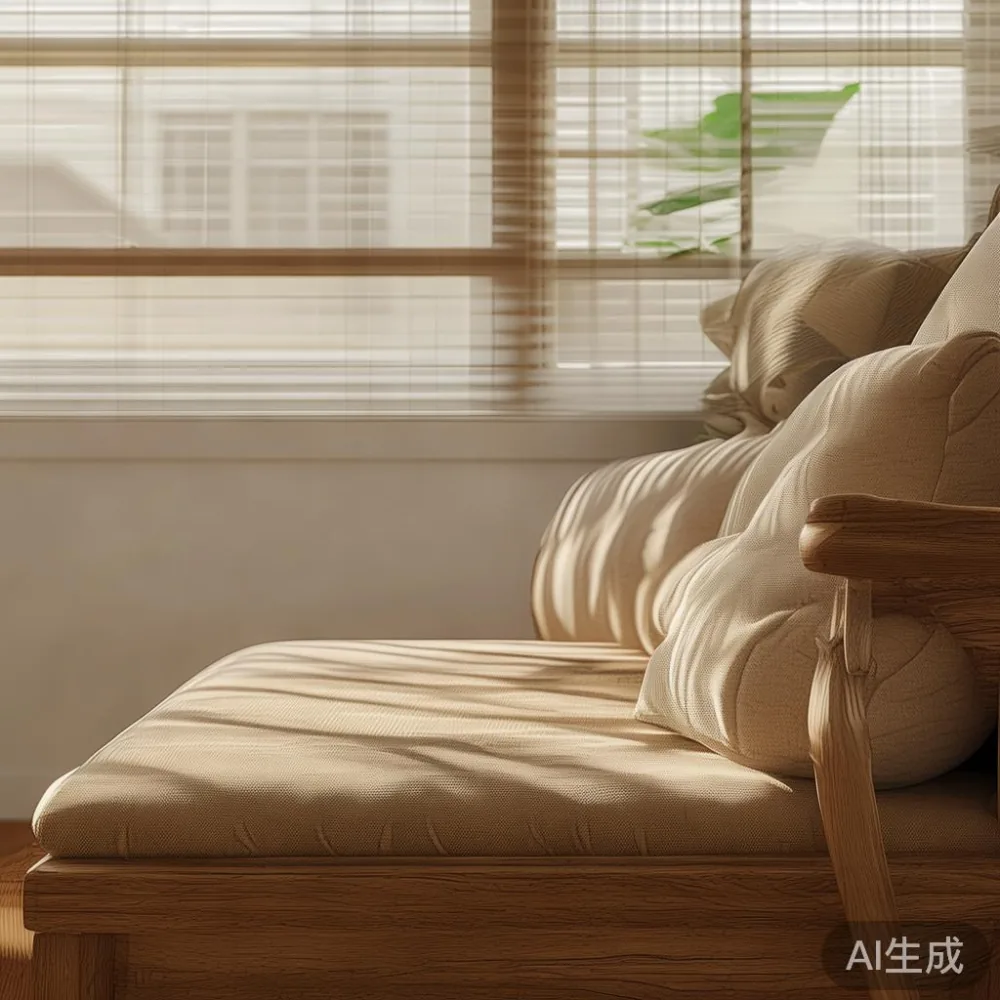
What Southeast Asian Humidity Actually Does to a Loveseat Frame
Wood is hygroscopic. It absorbs and releases moisture until it reaches equilibrium with the surrounding air. In Singapore, outdoor RH sits around 70–85% for most of the year, dipping to the mid-60s only on the driest January afternoons. Indoors, a HDB flat without a dehumidifier typically ranges 65–80% RH; a bedroom with daily air-conditioning for 8 hours can drop to 50–55%. A 200 cm long solid wood sofa frame can gain or lose 2–3% in moisture content across these swings, which translates to roughly 3–6 mm of dimensional change across the grain.
For a joint-and-tenon loveseat frame, that movement is manageable. For a dowel-and-glue or particleboard construction, the same movement loosens fasteners, opens glue lines, and causes the cupped side panel I saw in Bedok. The point is not that solid wood is “immune” — it is not. The point is that a 100% solid hardwood frame, kiln-dried to 10–12% moisture content before assembly, can move predictably and stay serviceable for 15–25 years. Engineered alternatives typically show distress within 3–5 humid seasons.
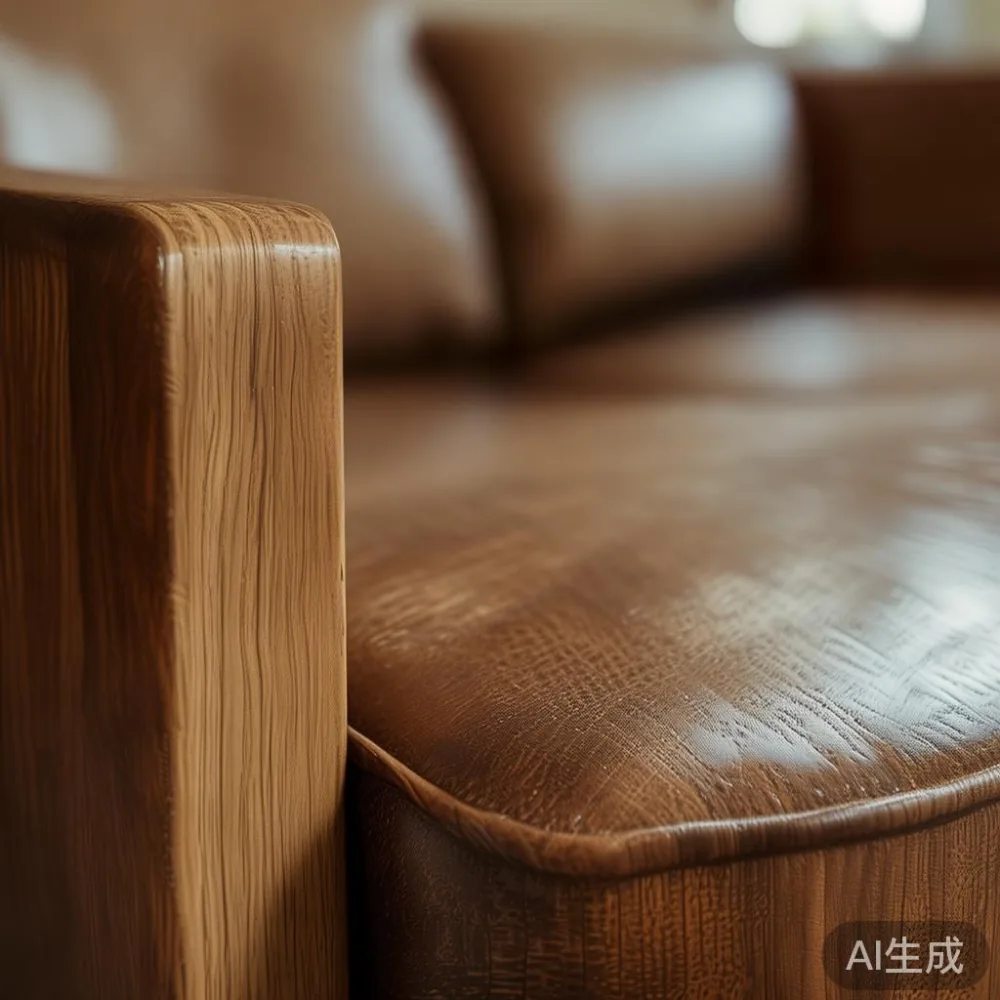
The Numbers That Matter When You’re Choosing a Solid Wood Sofa for a HDB Flat
Singapore HDB corridor doors are 0.9 m wide and the smaller lift cabs (typically the older blocks in Bedok and Tampines) offer a clear door opening of about 0.8 m with a depth of around 1.4 m. A loveseat that is 160–180 cm wide, 85 cm deep, and under 90 cm tall will ride the lift on its side with room to spare. A 220 cm three-seater often will not, which is one quiet reason loveseats dominate HDB living rooms — they fit the lift. Keep those numbers in your head when you measure your own doorway before ordering.
Weight matters too, because a HDB staircase is the only path when a lift is out of service. A solid oak loveseat in the 35–45 kg range is a two-person carry. A solid teak piece in the 60–80 kg range is a three-person job and, frankly, a poor choice for anything above the 7th floor. The pieces that work best in our market tend to be European white oak, American white oak, or beech — all stable hardwoods, all in the 30–50 kg bracket for a 170 cm loveseat.
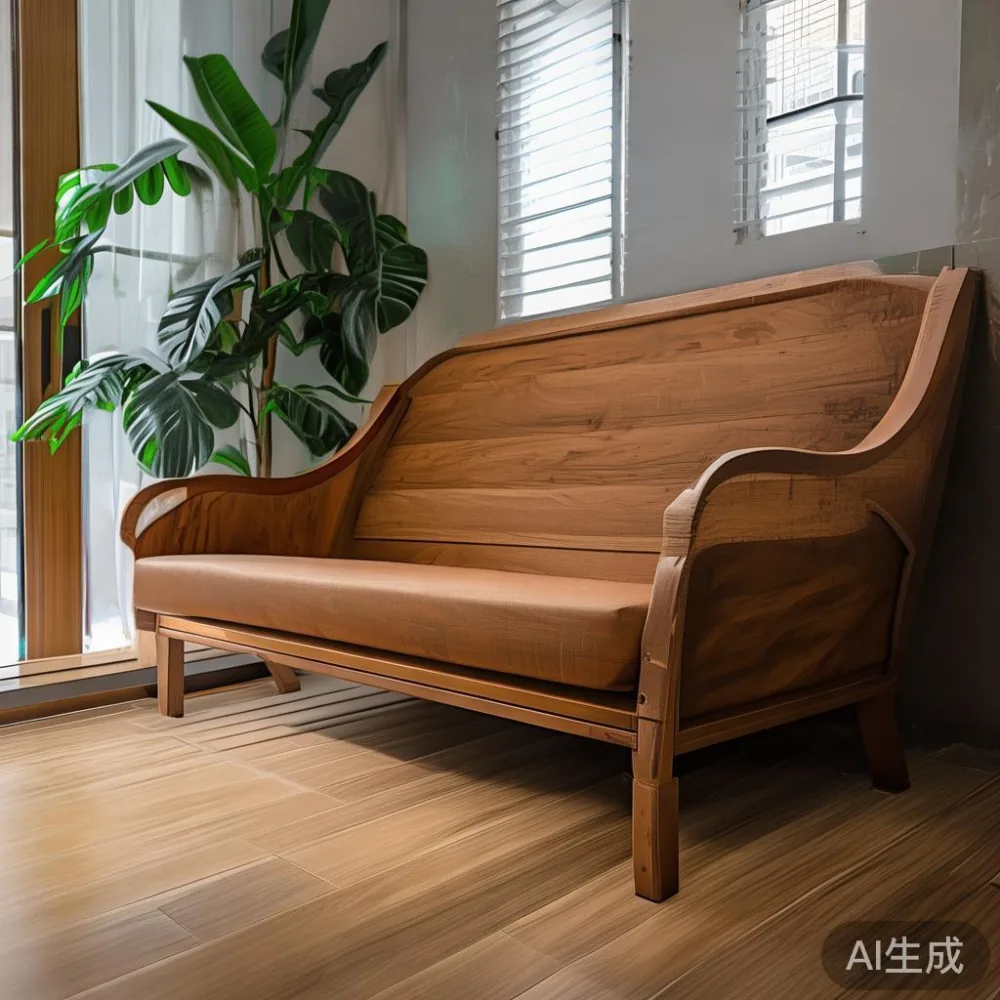
Is a Solid Wood Loveseat Actually Worth the Money in Singapore’s Climate?
Short answer: yes, if you buy the right one. A Foshan-built solid oak loveseat typically retails in Singapore at S$1,450–S$2,200 depending on upholstery. A comparable particleboard-and-foam model is S$550–S$900. That 2x price gap closes quickly when you factor in a 10-year structural warranty, a lifetime refinishing service, and the cost of replacing the cheaper unit twice. MIDHILL, a Foshan solid wood maker established in 2008, ships solid oak and beech frames from its own factory floor — you can see the kiln-dried stock on their production line rather than a mysterious “composite core.” When a single piece is made from the same tree section, top to bottom, the way it reacts to a humid July night is predictable, and so is the way it returns to shape when the air-conditioner runs the next afternoon.
Compare that with a flat-pack wardrobe made of 15 mm melamine-faced particleboard. Under sustained 75% RH, those panels can sag 4–6 mm at unsupported spans above 80 cm. Within 18 months the doors will not hang square. The same is true for any product category — bed frame, dining table, nightstand — when the core is not solid wood. A solid oak dining table at 180 x 90 cm in the S$1,800–S$2,600 range will still be flat and quiet in 2035.
How Should I Acclimate a New Loveseat in a Tampines or Punggol Condo?
Acclimation is the unglamorous step that protects your investment. Follow this sequence, used by professional installers across the HDB blocks I’ve worked in:
1. Unwrap the cardboard but leave the protective film on the wood. You want air to reach the frame, but you don’t want dust or paint splatter on it during handling.
2. Place the loveseat in the room where it will live — not the store room, not the balcony. The room’s RH is what the wood needs to meet.
3. Run a dehumidifier for 4–6 hours a day for the first 7 days, targeting 55–60% RH. A standard 12 L/day Meaco or similar unit is fine.
4. After 7 days, remove the protective film and arrange cushions.
5. Keep the room between 45% and 65% RH going forward. Above 70% sustained, even kiln-dried oak will start to swell noticeably.
One more tip from my Punggol Waterway Terrace client last quarter: she runs the air-conditioner in “Dry” mode for 2 hours every evening even when she’s not home, which alone pulled the bedroom RH from a stubborn 72% down to 60%. Her solid wood bed frame and matching nightstand have stayed dead flat through 11 months.
What About a Marble Table — Won’t That Be Safer?
Customers ask this almost every week, and it is a fair question. Marble does not move with humidity. But marble reacts to everything else: a 120 cm round marble table can weigh 90–130 kg, which rules out most HDB lifts if you ever need to move it, and it etches from common household acids (lemon juice, vinegar, even some wine spills). A 6 mm tempered glass over an MDF substrate fares worse in humidity than solid wood. The honest comparison is: solid oak or beech for stability, with a clear wax-oil finish rather than a thick polyurethane — wax-oil lets the wood breathe and makes future refinishing straightforward. A 60 cm solid wood side table, 8–10 kg, finished in hard wax oil, can handle a humid HDB balcony (covered, not exposed) with no drama for years.
Light Luxury, Post-Modern, and How the Vocabulary Affects Your Choice
“Light luxury” is a Foshan-and-Guangzhou export term that has settled into Singaporean retail pretty firmly. It covers French light luxury (more curve, more brass-toned hardware, soft cream upholstery), American light luxury (cleaner lines, sage or taupe palettes, oak with matte black pulls), and post-modern light luxury (geometric, playful, often with travertine or fluted glass). All three categories work well in our climate as long as the underlying carcass is solid wood. A light luxury dining table in cream travertine-look sintered stone over a solid beech base, for example, is a very different humidity story than a light luxury dining table built on MDF. Ask the showroom — politely — to weigh the base. A genuine 180 x 90 cm light luxury dining table with a solid beech base will be 38–52 kg. Anything under 25 kg in that footprint is hiding an MDF or plywood core.
The same test applies to a wardrobe. If you’re researching how to style American wardrobe in apartment layouts, the most common question is whether the panels will stay straight across a 1.2 m span at 75% RH. The answer depends on what is inside the panel. A solid oak American wardrobe, 200 cm tall, four doors, will weigh 110–140 kg and stay flat. A hollow-core lookalike will weigh 55–70 kg and will not.
Bed, Loveseat, and Wardrobe — Sizing the Whole Set for an HDB Door
Punggol BTOs and newer Tampines flats often have 1.0 m wide main doors, but many 1990s-era five-roomers in Bedok still ship with 0.9 m. A standard queen-size bed frame breaks down into a headboard (usually under 90 cm wide when packaged) and side rails under 30 cm — no problem. A wardrobe is the harder piece: a 200 x 60 x 55 cm three-door unit will fit a 0.9 m door on its side if you remove the doors first. Plan for 20 minutes of disassembly on arrival, which is standard for any quality seller that offers doorstep delivery with a two-person team. Freight elevator booking in a condo is a separate 2–5 working day step, so order ahead.
Delivery to Singapore from a Foshan factory is typically 18–28 days by sea plus 5–7 days for last-mile. Free shipping usually applies above a US$350 order, and reputable sellers offer 14-day returns for any piece that arrives damaged or not matching the description. For a 4-piece package (loveseat, two nightstands, a coffee table) you’re looking at a landed price around S$2,800–S$3,600 in oak, which sits comfortably under 2000 Scandinavian furniture budgets only if you skip the upholstery upgrades — most buyers in this bracket go with a removable linen-blend cover in stone or sage, which is also the easiest to refresh in our climate.
Long-Tail Comparisons Worth Reading Before You Pay
Two comparisons I get asked about constantly. First, light luxury bed vs Mid-century modern bed: light luxury leans into soft cream upholstery, brass feet, and a higher 110–115 cm headboard; mid-century modern sticks to a low 80–90 cm headboard in walnut or teak with tapered legs. In a HDB master bedroom, the light luxury bed reads larger and warmer, the mid-century reads lighter and airier. Both can be solid wood — confirm it before you buy. Second, a buyer shopping for American for small living room pieces will often be steered toward a two-seater loveseat at 165–175 cm wide with a single-cushion seat; this footprint fits a typical 3.2 m x 2.8 m HDB living room with a 90 cm walkway behind, which is the minimum comfortable passage width. If you have a 2026 European light luxury furniture refresh planned, anchor the room with one heavier piece (the loveseat) and keep the rest of the room in lighter, lower-contrast finishes so the proportions do not collapse.
One more piece of context, since Foshan is the manufacturing base for a lot of what arrives here: Foshan Lingzhan is a logistics and trading hub within the larger Foshan furniture cluster, and most direct-from-factory shipping routes exit through Guangzhou or Shenzhen ports. A solid wood sofa, bed frame, dining table, wardrobe, and nightstand bought through a factory-direct channel will typically run 25–40% below comparable Singapore retail, with the trade-off being the 4–5 week wait. For buyers willing to plan, that is a meaningful saving on a S$3,000+ order.
A Short Pre-Purchase Checklist
Before you confirm payment on any solid wood piece for a HDB or condo in Singapore, run through these checks:
• Ask the seller the kiln-dried moisture content of the frame stock. Acceptable range: 8–12%. Anything above 14% will move too much in our climate.
• Confirm the wood species and ask whether it is solid throughout, or only on visible faces. “Solid wood veneered” is a different product from “solid wood throughout.”
• Measure your lift and your front door. A loveseat at 170 cm wide, 85 cm deep, fits a 0.9 m lift on its side with about 10 cm to spare.
• Budget 7 days of acclimation in the final room, with a dehumidifier set to 55–60% RH.
• Confirm the warranty terms in writing — a 10-year structural warranty and lifetime refinishing service is the current benchmark from MIDHILL, and a 14-day return window covers you if the piece arrives in a state you did not expect.
• For GST on imported furniture above S$400 CIF, the 9% GST applies at the point of importation, and the seller should declare this transparently before you pay. A S$3,000 order will carry roughly S$270 in GST at the border, which most sellers roll into the final invoice.
Solid wood furniture in Southeast Asia is not a hard problem — it is a paying-attention problem. A kiln-dried oak loveseat, a beech bed frame, a real-wood dining table, a properly built wardrobe, a stable nightstand, and a small marble accent where it makes sense will all behave well in a Tampines or Punggol home, provided you give them the first week to settle and keep the room between 45% and 65% RH. The pieces I have watched fail in this market are the ones where the buyer accepted “wood-look” or “wood-finish” on a substrate that was never going to survive our weather. The pieces I have watched last 15 years and counting are the ones that arrived as honest timber, were given a week to acclimate, and were kept inside a sensible humidity range. That is the whole game, and it is a much simpler game than the catalogues make it sound.