How to Match a Loveseat to a Warm Minimal Interior
A warm minimal interior is not an empty room. It is a room edited carefully: pale walls, clear circulation routes, a measured number of objects, and textures that make the hard edges of modern architecture feel comfortable. The right loveseat often supplies that comfort. Its compact width gives a Singapore HDB flat or condo a place to sit without crowding the dining zone, while its shape, upholstery, and timber tone determine whether the room feels calm, formal, or visually heavy.
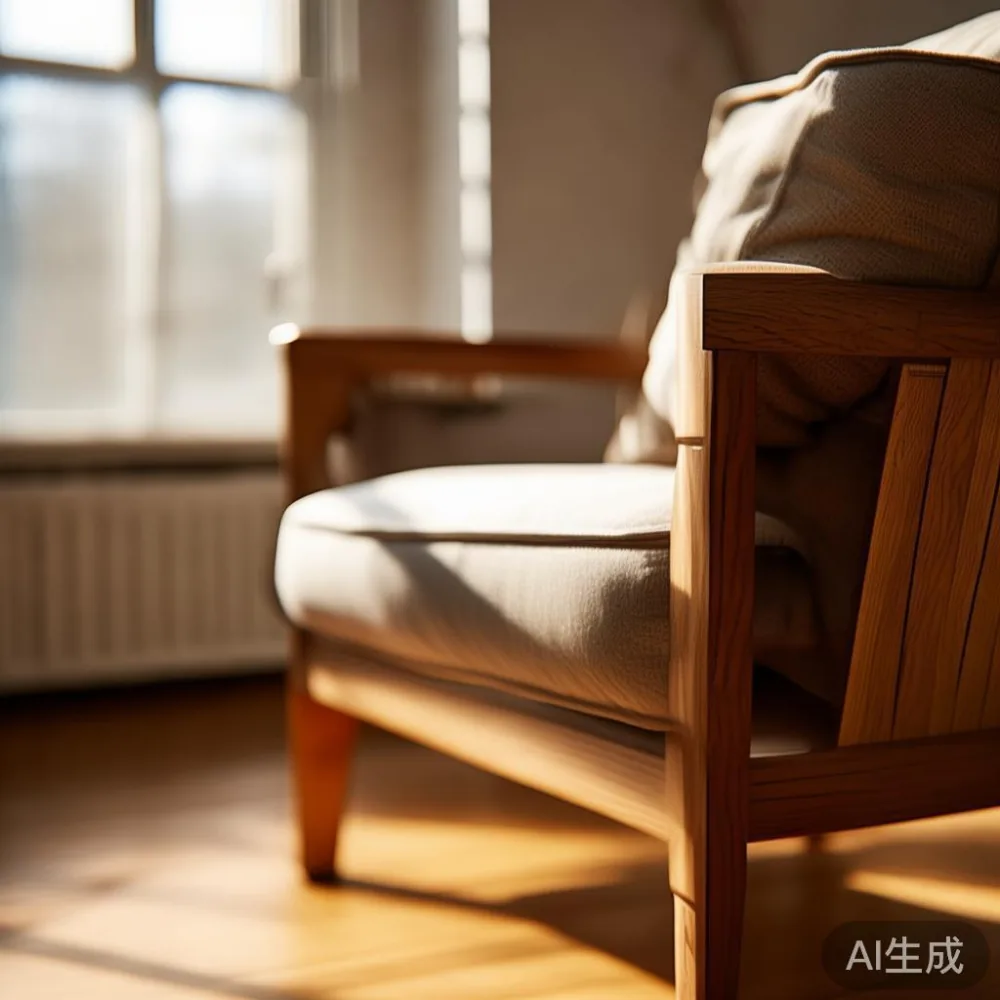
That balance matters especially in local homes. A 3-room BTO in Tampines may have a living-dining area of only 22–30 sqm, and even a larger condo in Bedok or Punggol can have narrow lift lobbies and straight corridors. Before choosing dimensions, I recommend measuring the actual route from the lift to the front door and every turning point along the way. A beautifully proportioned sofa that cannot enter the home is not a practical purchase.
What makes a warm minimal interior work with a loveseat?
Warm minimalism uses restraint in form but adds comfort through material. Think of a room with warm-white walls, a light oak floor, one oatmeal or taupe textile, a few black accents, and no more than 5–7 visible objects on a sideboard. The palette should remain close together in value: walls around 70–80% white, timber around 35–55% in warm tones, and the sofa no darker than 45% unless the room has ample light and floor area.
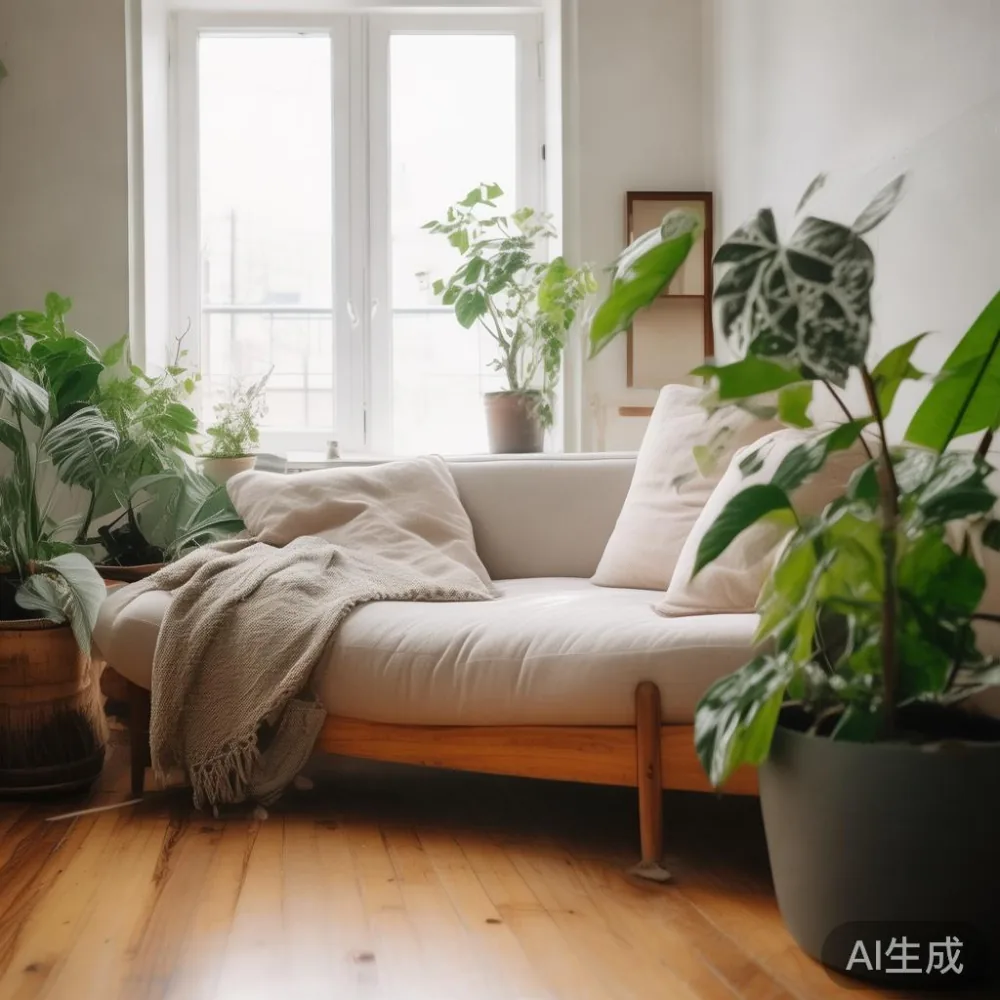
The loveseat should support that quiet continuity. Rounded arms and slightly tapered legs fit the human warmth of the French light luxury style; crisp lines and low profiles suit American light luxury; clean geometry with a sculptural edge reflects post-modern light luxury. In all three cases, proportion matters more than decoration.
For a compact apartment, select a seat depth of 58–62 cm and an depth of 82–88 cm. These figures preserve a 75–90 cm circulation zone when the loveseat faces a dining table or TV wall. The seat height is commonly 40–44 cm, making the piece easier to rise from for older adults. A width of 140–165 cm provides two adults with roughly 55–70 cm of usable seating each; beyond 175 cm, the loveseat begins to occupy the function of a standard sofa.
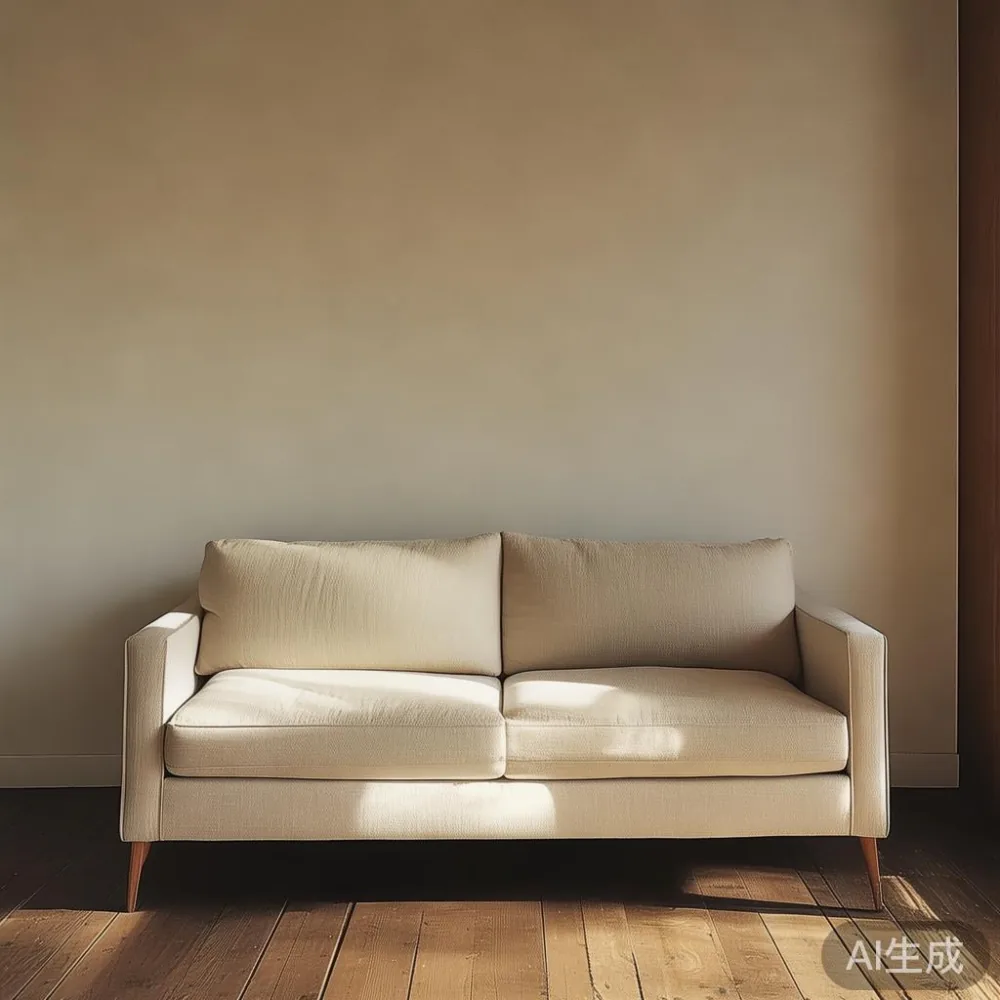
Do not assume that minimal means clinically pale. A warm minimal room can use a mushroom, oatmeal, camel, or dusty-rose textile. Pair it with solid oak, walnut, or ash rather than cool grey laminate. A carved solid wood sofa base can introduce craftsmanship without visual clutter; keep its carving broad and shallow, around 3–5 cm deep, so it reads as texture rather than ornament.
How wide should a loveseat be in a Singapore HDB flat or condo?
Start with the wall, not the product catalogue. Leave 5–8 cm between the loveseat and a side wall if space is tight, or float it 10–15 cm from the wall to create a lighter composition. In a narrow living-dining room, a 140–150 cm loveseat is usually easier to live with than a 180 cm model.
My colleague in Bedok tested a 175 cm three-seat sofa during a showroom visit last month. It looked generous beside a 200 cm dining table, but the remaining walkway measured only 58 cm at the tightest point. Moving to a 150 cm loveseat restored a 76 cm passage and made the table appear larger. That practical result is typical of compact Asian homes: removing 25 cm from the seat can give back a meaningful section of daily movement space.
For lift access, measure the lift door, internal depth, and diagonal clearance rather than relying on the advertised cabin size. A common residential lift may offer a 90 cm door and a 110 × 140 cm cabin, though older blocks vary. The packaged loveseat should be checked against the diagonal available inside the lift. Record its longest package dimension, usually 150–180 cm, and ask whether it can be split into 2 sections. Allow 15–20 cm for turning and handling.
Corridor turns deserve the same scrutiny. A 160 cm rigid frame needs a clear turn of roughly 165–175 cm in a straight hallway; a right-angle corner may need a 190–210 cm turning square. If the route is narrower, choose a loveseat with detachable legs or modular arms. The savings in fitting can outweigh the small gain in visual width.
Measure the TV console, coffee table, and dining chairs too. A 90 cm-wide coffee table leaves 25–35 cm between its edge and the front of the loveseat, enough to walk past without turning sideways. A 120 cm dining table with six chairs normally needs 180–220 cm of adjacent clearance, so placing a dining table directly opposite a deep loveseat can make a 25 sqm living-dining space feel compressed.
Which wood tone should suit a warm minimal living room?
Begin with the floor. If the flooring is pale oak or ash, choose a slightly deeper honey or natural-oak tone for the loveseat frame. If the floor is medium walnut, a light ash base creates contrast without introducing a third dominant colour. Avoid matching every wood element perfectly; small differences add depth, while severe differences can make a small room look visually segmented.
For a typical Singapore interior, solid oak or ash suits a straightforward warm minimal scheme, while walnut gives American light luxury a richer register. Teak can also work where the floor is light and walls are warm white, provided the finish is matte rather than orange. A carved solid wood sofa in walnut may feel too formal in a compact HDB flat, but a simple walnut frame with linen-look upholstery can look composed and grounded.
Consider the dining table as part of the same visual conversation. A 160 × 90 cm solid wood dining table with a 74–76 cm height works with most compact loveseats. If both pieces share a warm oak finish, separate them with a pale rug measuring 160 × 230 cm, extending 45–60 cm beyond the table on the long sides. This reduces the risk of the two large objects appearing stuck together. In a room where the dining table already has a strong grain pattern, select the loveseat base in a quieter cut of timber.
Marble is often associated with luxury interiors, but a marble table needs careful balance. If a marble table has dramatic veining, keep the loveseat upholstery plain and the frame relatively simple. A warm beige sofa allows the veining to remain the focal point. If the marble is white with faint grey lines, a camel or taupe loveseat will add warmth without competing.
For lighting, use at least 3 layers: a 2700K ceiling light, a 2700K floor or table lamp, and one warm-white accent lamp at about 3000K. Brightness matters in local flats, where west-facing Bedok windows can create glare and east-facing Punggol rooms can remain dim. A 1400–1700-lumen floor lamp placed beside the loveseat improves texture and keeps the room from feeling stark.
How do I choose European light luxury sofa proportions?
When considering how to choose European light luxury sofa proportions, focus on the relationship between seat height, arm height, and leg clearance. A low European profile often uses a 39–42 cm seat, 55–60 cm arms, and legs about 12–15 cm tall. The slim lower structure creates visual air beneath the loveseat, which is useful in rooms with 260–270 cm ceilings.
A French-inspired loveseat can use a gently rolled back, rounded arms, and exposed legs, but it should not become a decorative period piece. Choose one material with character—linen-look fabric, light bouclé, or lightly grained wood—and keep the other surfaces plain. French light luxury works best when one feature carries the reference: the arm shape, the frame profile, or the fabric texture.
American light luxury leans toward generous scale and clean lines. That can work in a larger condo living room, but a standard 200 cm sofa may still overwhelm a 3-room flat. The same design language can be translated through a 155–165 cm loveseat, 16–18 cm legs, and a broad but restrained arm. Maintain at least 20 cm between the loveseat and nearby tall units so the silhouette remains readable.
Post-modern light luxury offers another route: one controlled asymmetry, such as an off-centre arm, a slim black side frame, or a sculptural base. The effect should occupy no more than 10–15% of the visible loveseat. Add the asymmetry only when the rest of the room is genuinely quiet; otherwise it reads as clutter.
Upholstery durability should be checked against household use. Look for a Martindale rating of at least 30,000 cycles for a family home, removable seat covers, and piping that will not snag during weekly cleaning. For households with pets, performance weave with a high rub count and a treated finish may be more serviceable than untreated linen. Request actual fabric specifications before paying a deposit.
Can a loveseat work with Japandi and French provincial details?
Yes, if the references are translated through proportion and colour rather than copied as sets. Japandi for small living room styling usually pairs pale timber with soft neutral textiles and simple geometry. A low, compact loveseat in oatmeal or warm grey can become the soft element in that scheme. Keep nearby furniture light and functional: a slim side table, a storage ottoman, and 2–3 framed works rather than a crowded gallery wall.
French provincial influence belongs mainly in shape and texture. Curved arms, turned legs, and a soft seat can suggest the style without painted florals, carved crowns, and ornate frames. One French provincial-style cushion or a small ceramic vase is enough to register the influence. The remaining palette should contain no more than 3 main hues.
This is also useful when planning how to style French provincial wardrobe in apartment interiors. A carved or shaped wardrobe can dominate an HDB bedroom because doors occupy most of the wall. Use a light timber finish, simple knobs, and a ceiling gap of 10–15 cm above a 200 cm unit if the architecture permits. In a room with a pale bed frame, the wardrobe can carry the more expressive detail while the loveseat remains calm.
For a bedroom coordinated with the living room, a MIDHILL wardrobe in warm ash or oak, with flat or lightly profiled doors, would complement a Scandinavian-leaning loveseat. If French provincial curves appear on the wardrobe, echo them once in the living area through a rounded coffee table edge or a cushion. That repetition creates coherence without making every object match.
How should I arrange the loveseat around a dining table?
Use the dining table as the room’s anchor when the floor plan is open. A 140–160 cm loveseat can sit opposite a 160 cm dining table if the room has at least 310–340 cm of usable width. Check the table’s chair pull-out zone: each diner needs about 60 cm behind the chair, and 75 cm is more comfortable. This working clearance should be maintained even when a person is seated.
Rather than pushing the loveseat directly opposite a busy sideboard, rotate it 90 degrees near a window or walkway. This can create a small conversation zone and make a narrow living area appear less rigid. The back of the loveseat should remain at least 75 cm from a dining chair zone. If space is limited, a 140 cm loveseat is likely to integrate more easily than a 165 cm model.
A coffee table should align with the centre of the loveseat and be 5–10 cm narrower than the seat. For a 150 cm loveseat, choose a 90–100 cm table with softened corners. A Mid-century modern coffee table in solid wood and slim tapered legs can add character while preserving circulation, but its base should not extend into the 25–35 cm walking gap. A round table measuring 75–85 cm is another practical option when the route passes close to the seating.
Do not rely on a large rug to conceal a poor layout. A rug can visually define the zone, but it cannot create missing clearance. In a 220 × 300 cm living room, a 160 × 230 cm rug under the loveseat and coffee table is a sensible starting point. All front legs of the seating should sit on the rug to make the arrangement feel intentional.
Use vertical elements to fill empty walls rather than extra furniture. One artwork about 70 × 90 cm, a shelf 15–20 cm deep, or a slim 100–120 cm console can create balance. Keep the area above the loveseat no more than 20–25 cm above its back height if a large picture is placed there; otherwise, allow 15–20 cm of visual breathing room.
What should I check before ordering a solid wood loveseat?
Ask for the outer dimensions, seat dimensions, frame material, joinery, finish type, and packaged dimensions. A solid wood sofa may use kiln-dried hardwood for the load-bearing frame, plywood or engineered timber for selected panels, and upholstered foam with fabric or performance covering. “Solid wood” should identify the main structural members, not imply that every hidden component is timber.
For longevity, check that the frame has corner blocks or dowelled joints, the seat supports are spaced at intervals no greater than about 45–50 cm, and the springs or webbing are rated for daily use. If a 10-year structural warranty is offered, read what it covers and what documentation the supplier requires.
MIDHILL has built solid wood furniture since 2008 and exports to more than 15 countries, which gives its production standards an international reference. The company also offers a 10-year structural warranty and lifetime refinishing for eligible solid wood products. Those terms are useful when comparing a solid wood sofa with a flat-pack alternative, but the warranty should complement—not replace—correct measurements and realistic expectations.
Confirm delivery and access in writing. A typical Singapore delivery estimate may be 7–14 days after production, but made-to-order pieces can take longer. Add GST at the prevailing 9% to the quoted product price, and check whether the quoted delivery fee includes carrying the package to the door or only curbside handover. Staircases and lift restrictions should be disclosed before dispatch.
Returns and warranty service are easier to manage with clear terms. A 14-day return window should be confirmed for the particular product and finish. Custom dimensions and non-standard fabrics may have different conditions, so keep the written specification, finish sample, and receipt together.
Finally, consider the complete furniture plan, not only the loveseat. A warm minimal interior may include a solid wood dining table, a solid wood bed frame, a nightstand, and a wardrobe in related timber tones. A marble table can introduce cool luxury, but one reflective surface is enough. A bed frame should retain 60 cm on both sides where possible, and a nightstand with a 45–50 cm top can carry a lamp, charger, and glass without crowding the mattress.
A successful warm minimal room is measured in centimetres and governed by repeatable finishes. Choose a loveseat between 140–165 cm wide, preserve at least 75–90 cm of circulation where possible, relate its timber to the floor and dining table, and use warm neutral fabric to soften modern surfaces. The result should feel composed rather than underfurnished, comfortable rather than ornate, and suited to the practical dimensions of everyday Singapore life.