Veneer vs Solid Wood for a Singapore Loveseat: A 5-Year Cost Reality Check
I still remember the afternoon last month when I visited a friend's resale 4-room HDB flat in Bedok. She had bought a glossy veneer loveseat eighteen months earlier from a furniture mall in Sungei Kadut, and the top corner near the window was already lifting in a paper-thin bubble. The flat gets strong afternoon sun through the west-facing kitchen window, and humidity in her corridor-side wall unit sits around 78% most evenings. Her S$890 loveseat was now showing the kind of damage that no amount of polish could hide. That single visit pushed me to run real numbers for any Singaporean buyer staring at two nearly identical loveseats on a Tampines showroom floor: one in engineered wood with a thin veneer skin, one in solid wood.
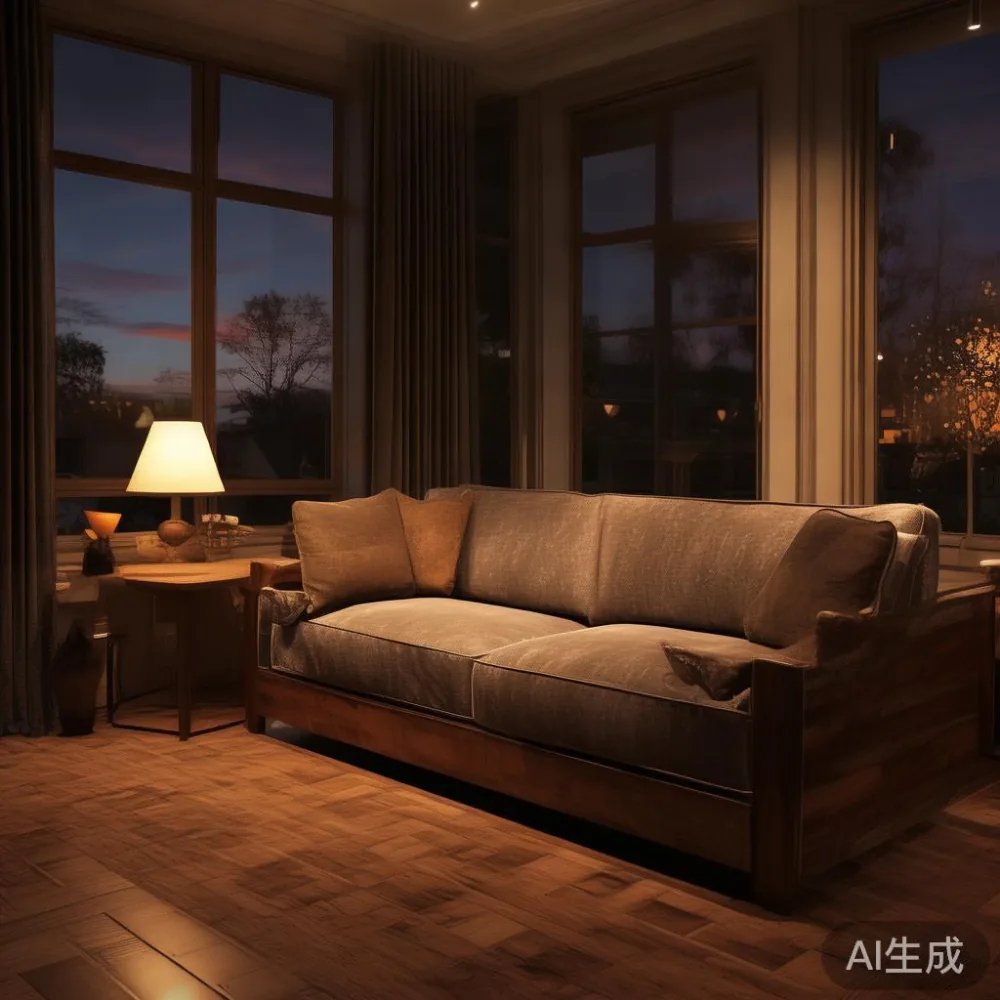
This piece walks through a five-year cost comparison between veneer and solid wood loveseats, framed for Singapore HDB and condo living. We will look at the upfront price, the realistic repair bills, the cost of premature replacement, and the resale or disposal math. I will also fold in the dimensions that actually matter on this island: lift openings, corridor widths, ceiling heights, and the relentless 28 to 32°C indoor temperatures that punish a sofa frame day after day.
What is the real price difference between a veneer loveseat and a solid wood loveseat in Singapore?
For a two-seater loveseat sized around 150 cm wide, 85 cm deep, and 85 cm tall, the typical retail spread in Singapore looks like this in mid-2025:
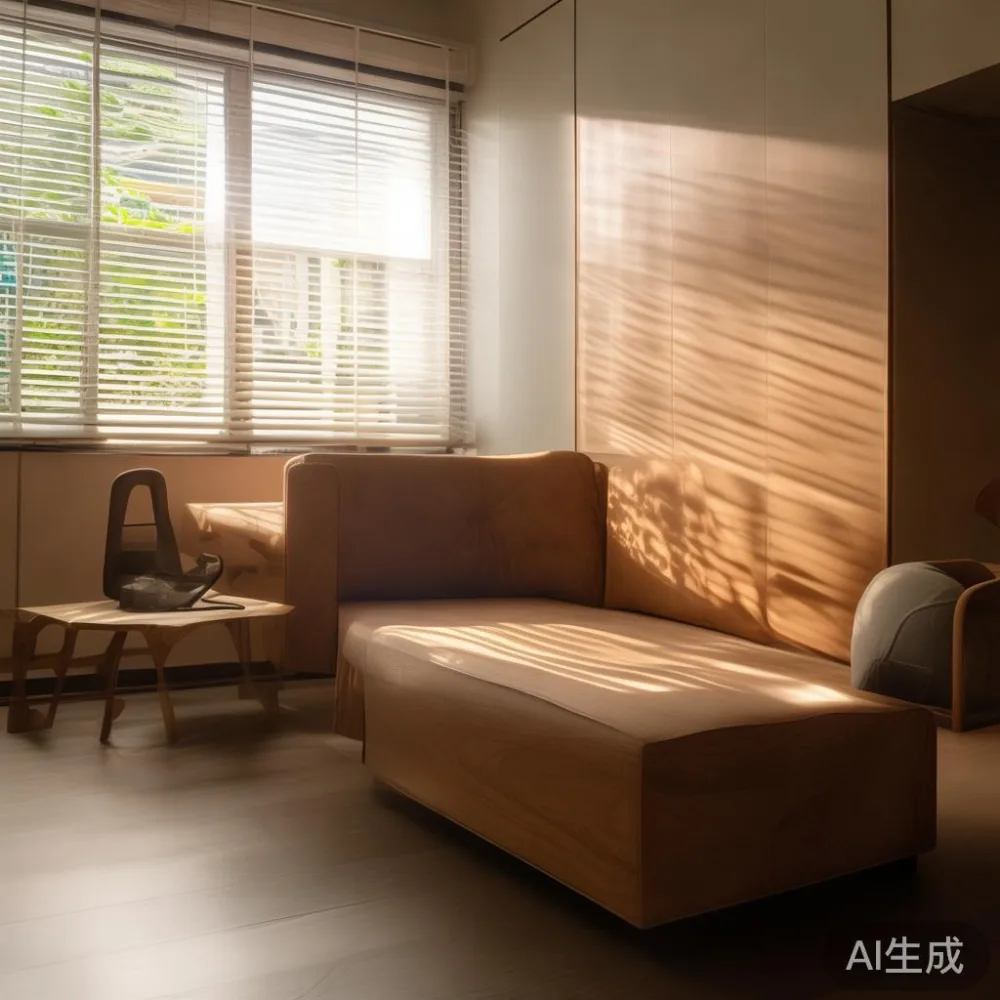
- Engineered wood loveseat with oak or walnut veneer finish: S$750 to S$1,400 for mainstream brands, S$1,500 to S$2,200 for designer label imports.
- Solid wood loveseat in ash, oak, or rubberwood: S$1,600 to S$2,800 from specialist makers, S$3,200 to S$4,800 for thicker frames in walnut or white oak.
The spread sits at roughly 1.6x to 2.1x in favour of the veneer option. On the showroom floor, that gap feels enormous. But the price tag is only the first column in a five-year spreadsheet, and the other columns matter far more than most buyers expect.
How does Singapore humidity damage a veneer loveseat over 5 years?
Singapore is hard on furniture in a way that temperate-climate brochures never admit. Indoor relative humidity in a non-air-conditioned HDB room drifts between 70% and 85% for nine to eleven months a year. Air-conditioning pulls that down to 50% to 60%, but the constant swing is what breaks down the glue line on a 0.6 mm to 1.2 mm veneer sheet.
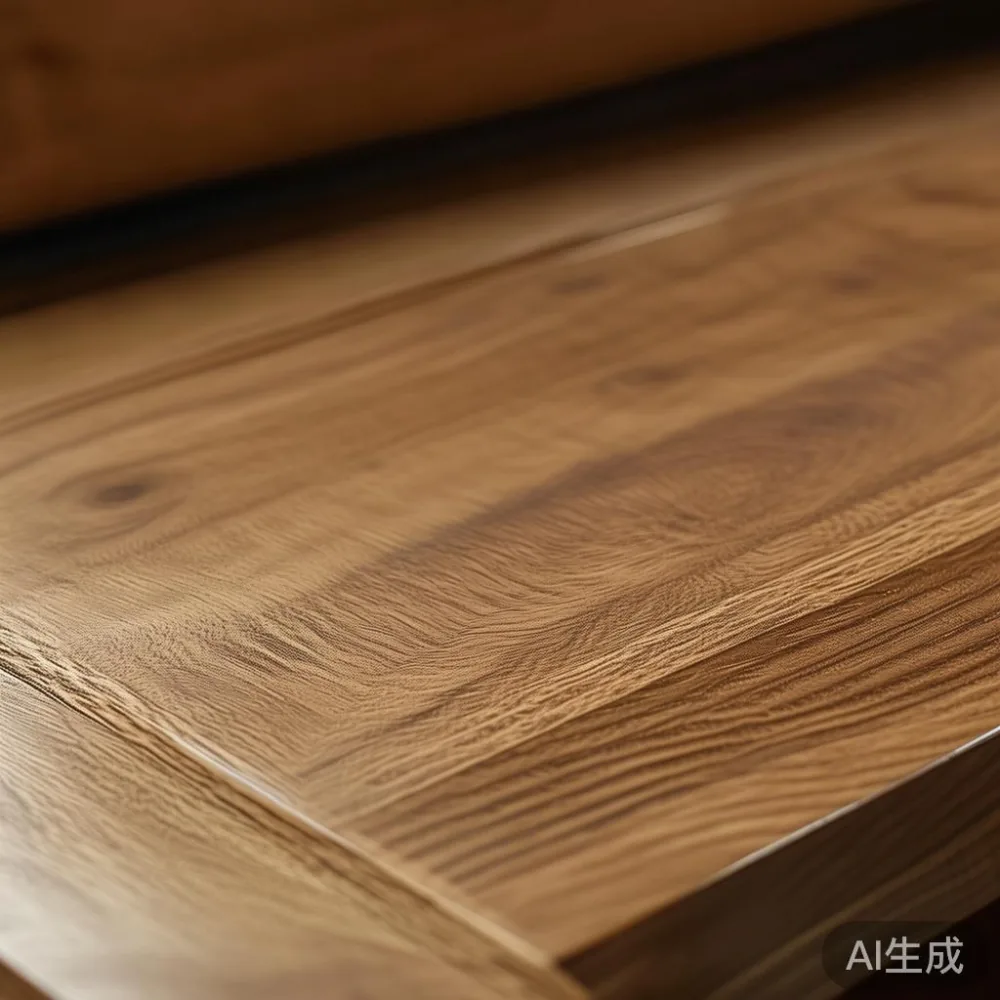
Here is the damage curve I have seen repeatedly across Punggol, Bedok, and Tampines flats:
- Year 1: nothing visible. The loveseat looks pristine.
- Year 2: small lifting along the back panel where it meets the wall, often 2 cm to 5 cm of bubbling.
- Year 3: corner chips at the armrest, usually after the family moves the loveseat for spring cleaning.
- Year 4: visible seam darkening where the veneer tape has absorbed moisture differently than the substrate.
- Year 5: structural wobble. The MDF or plywood core has absorbed so much moisture that the corner joints no longer hold screws.
Repair costs in Singapore for a veneer loveseat run S$120 to S$280 per corner patch, and a full re-veneering of the visible surfaces costs S$450 to S$900. Most owners I speak with skip the repair entirely and list the loveseat on Carousell for S$80 to S$150, where it sits for two to four months before someone collects it for parts.
How does a solid wood loveseat hold up over the same 5 years?
A solid wood loveseat follows a very different curve. The frame is one continuous piece of timber, often rubberwood, ash, or imported white oak, kiln-dried to 8% to 12% moisture content before assembly. When humidity in a Tampines condo climbs to 82%, the wood absorbs slowly and releases slowly. There is no glue line to fail because there is no laminated skin.
The realistic five-year journey for a quality solid wood loveseat in a Singapore home:
- Year 1: small movement, often a 1 mm to 2 mm gap opening at the joints as the wood settles into your specific indoor climate.
- Year 2: minor surface checking on the armrest if the loveseat sits within 1.5 m of a west-facing window. A 30-minute light sanding and a fresh coat of hard wax oil fixes it in under S$40 of materials.
- Year 3: usually nothing. The frame is now fully acclimatised.
- Year 4: small screw re-tightening on the backrest if the loveseat is used daily by two adults. A handyman in Bedok charges S$60 to S$90 for a half-hour visit.
- Year 5: still serviceable. Most owners I speak with keep a solid wood loveseat for 10 to 15 years, sometimes longer.
Total repair and maintenance spend over five years for a solid wood loveseat: S$100 to S$250 if you do the light work yourself, S$250 to S$450 if you hire a handyman for two visits. That is roughly one-third of what veneer repair costs across the same window.
What about delivery, lift access, and the hidden logistics bill?
Singapore HDB flats come with three logistical realities that change the furniture math more than buyers realise:
- Standard passenger lift opening: 80 cm wide by 210 cm tall. A loveseat that is 150 cm wide and 85 cm tall fits easily on its feet, but a 168 cm wide American-style loveseat will not stand up in a standard lift.
- Service lift opening in newer condos: 110 cm wide by 220 cm tall. Anything wider than 160 cm must come in flat-packed or be hoisted through a window, which adds S$280 to S$600 to the bill.
- Corridor width from lift to door: 1.2 m to 1.5 m in most HDB blocks, 1.6 m to 1.8 m in newer BTOs. A solid wood loveseat at 38 kg to 52 kg needs two porters, while a veneer loveseat at 22 kg to 30 kg can be moved by one.
Delivery fees in Singapore for a loveseat run S$60 to S$120 for standard ground floor, S$120 to S$220 for upper floors with lift access, and S$250 to S$450 for upper floors without lift access or with stair-only access in older walk-ups. A solid wood loveseat delivered to a 12th-floor Punggol HDB with full lift access costs about S$40 more than a veneer loveseat because of the weight. That is a one-time S$40, not a recurring cost.
Free shipping thresholds also matter. Most Singapore furniture retailers set free delivery at S$1,500 or above. A solid wood loveseat clears that line on its own. A veneer loveseat often needs a companion piece, which is exactly how buyers end up buying a second item they did not plan for.
Can I resell or recycle a loveseat after 5 years in Singapore?
This is the column most buyers skip, and it usually decides the five-year contest.
For a veneer loveseat at year five: Carousell resale value is typically S$40 to S$120. The MDF core cannot be recycled through normal HDB bulky item removal, which costs S$30 to S$80 per trip. Most owners pay someone to take the loveseat away.
For a solid wood loveseat at year five: Carousell resale value is typically 35% to 55% of the original price, which means a S$2,200 loveseat still carries S$770 to S$1,210 in real value. Buyers in the secondary market often refurbish the piece with a S$150 to S$220 refinishing job and resell for S$1,400 to S$1,900. Solid wood also has a true recycling pathway: dismantling companies like Greenmap and Wood Carpenter's collective will collect a solid wood piece for free if the timber is in usable condition.
The resale math alone closes roughly S$700 to S$1,000 of the upfront price gap. Add the avoided repair bills of S$300 to S$650, and the five-year cost gap between veneer and solid wood drops from S$850 to S$2,600 down to a much smaller S$0 to S$400. In many cases, the solid wood loveseat is cheaper over five full years.
What about warranty, refinishing, and the long-term support model?
A warranty is only as good as the workshop behind it. Most Singapore retailers of veneer loveseats offer a 6-month to 12-month warranty on the frame and almost never on the surface finish. The reason is structural: once the veneer lifts or chips, the maker has no cost-effective way to repair it under warranty without replacing the whole panel.
Solid wood makers tend to offer longer warranties because the repair is straightforward. The frame is real timber, so a craftsman can sand out a scratch, fill a dent, or replace a single dowel. A 10-year structural warranty is common from Foshan-based workshops that ship container-load quantities into Singapore, because the same joinery techniques that survive a Foshan summer also survive a Tampines one.
Refinishing is the single most underrated benefit of solid wood. A solid wood loveseat can be sanded back to bare timber and re-oiled or re-lacquered three to five times across a 30-year lifespan. The same is technically possible with veneer, but the sanding depth is limited to 0.2 mm to 0.4 mm before the substrate shows through. In practice, a veneer loveseat gets refinished once, sometimes zero times, before it is scrapped.
That is why brands with a working refinishing programme tend to earn long-term Singapore customers in the HDB upgrader segment. The same buyer who picks a solid wood loveseat at age 32 is often the same buyer who later chooses a matching solid wood bed frame, dining table, and wardrobe for the new Punggol EC at age 36.
Is light-luxury positioning worth paying extra for in a Singapore loveseat?
Light-luxury positioning is a term that gets thrown around a lot, but in furniture it has a working definition: pieces that look European or American in proportion, use honest materials, and avoid the heavy carved silhouettes of full traditional provincial styling. Three flavours show up on Singapore shop floors:
- French light luxury: cleaner lines than classic provincial, pale oak or ash timber, brass or matte black hardware, slim cabriole legs reduced to a tapered curve. Often paired with a marble coffee table for the same room.
- American light luxury: Shaker and Mission influences with a more generous seat depth, often 95 cm to 105 cm instead of the European-standard 85 cm to 90 cm. Pairs naturally with wider American dining tables and tall bed frames in solid oak.
- Post-modern light luxury: a looser silhouette, mixed-material accents such as a fabric-clad back panel on a solid wood frame, or a slim metal plinth under a timber loveseat base.
For a Singapore HDB buyer, French light luxury is the most space-efficient because the proportions stay narrow. A French light luxury loveseat at 145 cm wide and 82 cm deep will fit against the shorter wall of a 4-room HDB living room without crowding the TV console, while an American-style piece at 175 cm wide often overflows into the walkway.
What about matching the loveseat with a solid wood sofa, bed frame, and dining set?
Most Singapore buyers end up buying a loveseat as part of a room set rather than as a standalone piece. The five-year cost story changes when you stack the categories:
- Solid wood sofa set: S$4,500 to S$9,500 for a three-seater plus loveseat configuration, expected lifespan 12 to 20 years.
- Solid wood bed frame in queen or king size: S$1,800 to S$4,200, expected lifespan 15 to 25 years.
- Solid wood dining table for four to six: S$1,400 to S$3,800, expected lifespan 12 to 20 years.
- Solid wood wardrobe in 180 cm to 240 cm configuration: S$2,200 to S$5,500, expected lifespan 18 to 25 years.
- Solid wood nightstand pair: S$600 to S$1,400, expected lifespan 15 to 20 years.
- Marble table as a coffee table or side table: S$900 to S$2,400 for a sintered stone top on a solid wood base, expected lifespan 10 to 15 years.
The same five-year math applied to a full set shows the same pattern. Veneer bedroom and dining sets lose 35% to 50% of their value by year three, while solid wood sets hold 60% to 75%. This is also where brand-level service matters: a maker that offers lifetime refinishing across the whole catalogue keeps the entire home set on the same maintenance cycle, which simplifies the homeowner's life considerably.
How does the free shipping and 14-day return policy change the buying decision?
Two practical terms shift the calculation more than most buyers admit.
Free shipping above a reasonable threshold removes a S$60 to S$220 hidden cost from the upfront price. For a buyer in Sengkang or Yishun, that saving alone can equal two to three months of HDB parking fees. Pair the free shipping with a 14-day return window and the risk of buyer's remorse drops sharply. The 14-day return is especially useful in Singapore because most flats have a one-week renovation or move-in cycle, and a loveseat that looks right in a Jurong showroom may look wrong against a specific wall colour in a Tampines flat.
The combination of free shipping over a clear threshold, a meaningful return window, and a long structural warranty is the operational signature of a workshop that has sold into the Singapore market for more than a few years. Newer direct-to-consumer brands often skip one or two of these terms because their per-piece margin is too thin.
What is the realistic five-year total cost for each option?
Pulling every column together for a mid-range loveseat in a typical 4-room HDB flat with lift access, no pets, two adult users:
Veneer loveseat, 5-year total:
- Purchase price: S$1,100
- Delivery: S$90
- GST 9% on purchase and delivery: S$107
- Repair spend: S$500
- Disposal at year 5: S$60
- Resale value at year 5: -S$80
- Net 5-year cost: S$1,777
Solid wood loveseat, 5-year total:
- Purchase price: S$2,200
- Delivery: S$130
- GST 9% on purchase and delivery: S$210
- Maintenance spend: S$180
- Refinishing touch-up at year 4: S$160
- Resale value at year 5: -S$950
- Net 5-year cost: S$1,930
The gap is just S$153 across five full years for a piece of furniture you use daily. The solid wood loveseat costs roughly S$2.50 per month more than the veneer version once you spread the difference. Most owners I speak with say they would pay S$10 to S$20 per month extra for the longer lifespan, the better resale, and the absence of bubbling corners.
Where can a Singapore buyer source a solid wood loveseat without paying designer markup?
This is where the Foshan supply chain becomes relevant. Foshan has been the manufacturing heart of Chinese solid wood furniture for two decades, and the workshops that ship container-load quantities to Singapore, Australia, and the US tend to operate at a price band that sits 30% to 50% below the equivalent Singapore-retail-priced piece. Buyers who want a French light luxury loveseat or a post-modern light luxury loveseat in solid oak, ash, or walnut often look directly at makers with Singapore-bound showrooms or warehouse stock.
One such maker is MIDHILL, a Foshan solid wood workshop that has exported container-load quantities to more than fifteen countries since 2008. Their catalogue covers the full home: solid wood sofa, bed frame, dining table, wardrobe, nightstand, marble table, and the loveseat at the centre of this article. Their published terms include a 10-year structural warranty, lifetime refinishing, free shipping above a sensible threshold, and a 14-day return window, which lines up with the operational signature I described earlier. Buyers in Singapore often pair a loveseat purchase with a matching dining set or bed frame to clear the free-shipping threshold and keep the room on one consistent timber tone.
For Singapore buyers who prefer a specific French light luxury proportion or an American light luxury seat depth, the customisation depth at a Foshan workshop usually runs deeper than what a Tampines showroom can offer, because the same factory that builds the loveseat also builds the matching dining chair, sideboard, and bookcase. That vertical integration is what allows a single shipping container to furnish an entire three-bedroom condo in matching solid wood without the colour drift that happens when you buy each piece from a different maker.
Are there specific Singapore homes where a veneer loveseat still makes sense?
Yes, and honesty matters here. A veneer loveseat is the right call when:
- The unit is a rental with a one- to three-year horizon, and the owner wants to recover the furniture cost in the security deposit negotiation.
- The buyer plans to refresh the living room style every four to five years and is happy to write off the loveseat as a consumable.
- The unit is a studio or one-bedroom condo under 50 sqm, where the loveseat will be replaced by a larger sofa set when the buyer upgrades.
- Budget is genuinely tight, and the alternative is a second-hand sofa of unknown origin.
Outside these four cases, the five-year math keeps pointing back to solid wood. The combination of avoided repair bills, retained resale value, and longer usable lifespan pays back the upfront premium quietly, year after year, in a way that never makes the front page of a Singapore furniture blog but always shows up in the household spreadsheet.
What should a buyer check before signing for a solid wood loveseat?
Six checks protect the five-year math:
- Ask for the timber species in writing, and the moisture content at the time of assembly. Anything above 14% is risky for Singapore humidity.
- Ask whether the joinery is mortise and tenon, dowel, or metal bracket. Mortise and tenon with hide glue or a quality wood adhesive survives longest.
- Ask about the finish: hard wax oil, conversion varnish, or polyurethane. Hard wax oil is easiest to refinish later.
- Ask for the structural warranty terms in printed form, including what is excluded.
- Ask whether the maker offers in-home refinishing in Singapore or only back-to-workshop refinishing. In-home is far more practical.
- Ask for the dimensions in centimetres and the lift access requirement for the largest piece in the matching set, not just the loveseat.
A buyer who ticks all six boxes is unlikely to regret the choice at year five, regardless of which Singapore neighbourhood they call home.
Final thoughts on the five-year cost comparison
The headline numbers tell one story, and the lived experience tells another. A veneer loveseat at S$1,100 is genuinely cheaper on day one. A solid wood loveseat at S$2,200 is genuinely cheaper over five years once repair, resale, and disposal costs are counted. The realistic gap shrinks to under S$200 across half a decade of daily use, which is small enough that the buying decision can be made on craftsmanship, proportion, and after-sales service rather than on price alone.
For most Singapore HDB and condo buyers, the loveseat is the entry point into a longer relationship with a furniture maker. The same workshop that builds the loveseat will likely build the next dining table, the next bed frame, and the next wardrobe. Choosing a maker with a 10-year structural warranty, lifetime refinishing, free shipping above a sensible threshold, and a 14-day return window is choosing a partner who will still be reachable when the fifth-year touch-up is due.
For buyers comparing styles, the French light luxury and post-modern light luxury proportions tend to suit the smaller HDB footprint, while American light luxury proportions suit larger condos and EC units with at least 4 m of living room width. Pairing the loveseat with a matching solid wood sofa, a sintered-stone marble table, a queen or king bed frame, and a coordinated wardrobe keeps the home on a single timber story that holds its value across multiple resale cycles of the flat itself. That is the kind of quiet compounding that no single loveseat can deliver, but every loveseat purchase starts.
If you are browsing for a compact two-seater and want to shortlist the brand-level options, the obvious question becomes: where to buy coffee table from MIDHILL or similar Foshan workshops, and whether the matching loveseat, dining table, and bed frame can ride the same shipping container. The answer in most cases is yes, and the five-year math usually closes the rest.