Solid Wood vs Veneer Loveseat in Singapore: 5-Year Cost Compared (HDB-Friendly Guide)
When my colleague Priya moved into her 4-room HDB flat in Tampines last year, she did what most of us do: she spent an entire Sunday at a Jurong furniture showroom, sat on twelve different loveseats, and walked out with a 'great deal' on a veneer two-seater at S$1,490. Six months later, one of the side panels had bubbled where the aircon condensation dripped onto the wood, the corner trim was peeling, and the foam cushion on her side had sagged into a hammock shape. Her 65-year-old mum visited, sat down, and said the words every Singaporean homeowner dreads: 'Eh, this one how much you pay? Last time my mother same one only last 25 years.' That Sunday-afternoon comment is exactly why I spent the last three months building a 5-year cost model for a loveseat — the category most Singapore couples buy first when they move in together, and the category most prone to hidden damage from our 80–90% humidity, narrow HDB corridors, and the rising cost of replacements.
I'll keep the maths honest, the units metric, and the prices in Singapore dollars. I'll also keep the scope tight to the loveseat — no dining table tangents, no wardrobe detours — because a 5-year comparison is only useful when you compare the same piece of furniture, not apples to durians.
What is the real difference between a veneer and a solid wood loveseat?
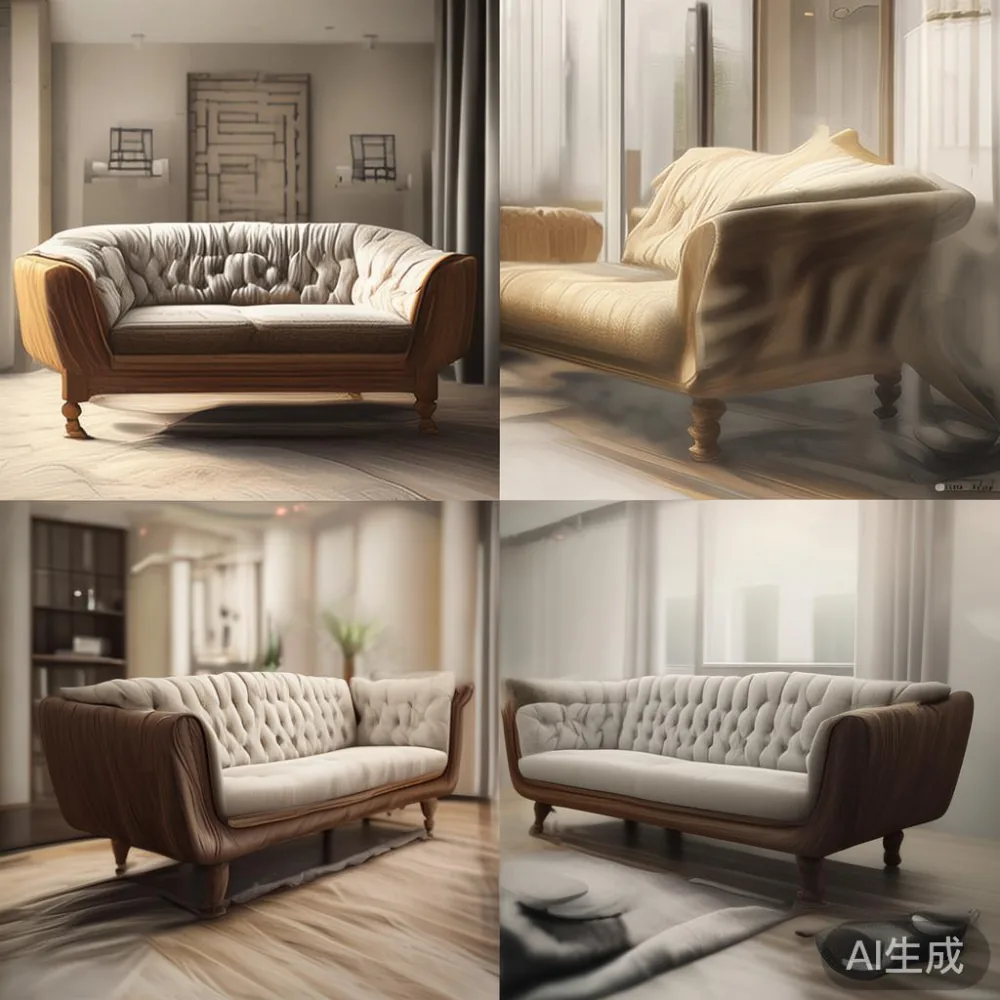
The short version: a solid wood loveseat is carved, mortised, and dowelled from one continuous piece of hardwood — usually oak, ash, walnut, or in many of MIDHILL's collections, cherry wood. A veneer loveseat uses a thin (0.5–2 mm) slice of attractive wood glued to a substrate of MDF, plywood, or particleboard. The substrate does the structural work; the veneer is the photo finish.
Both can look identical in a showroom. The difference shows up in year three, year five, and year ten — exactly the window a young couple in Punggol or Bedok will live with their purchase before upgrading to a resale flat or a condo.
How do I compare them in numbers over five years?
I built a simple cost-per-year model. Three columns: purchase, maintenance, replacement probability. All prices in SGD, all weights in kg, all sizes in cm.
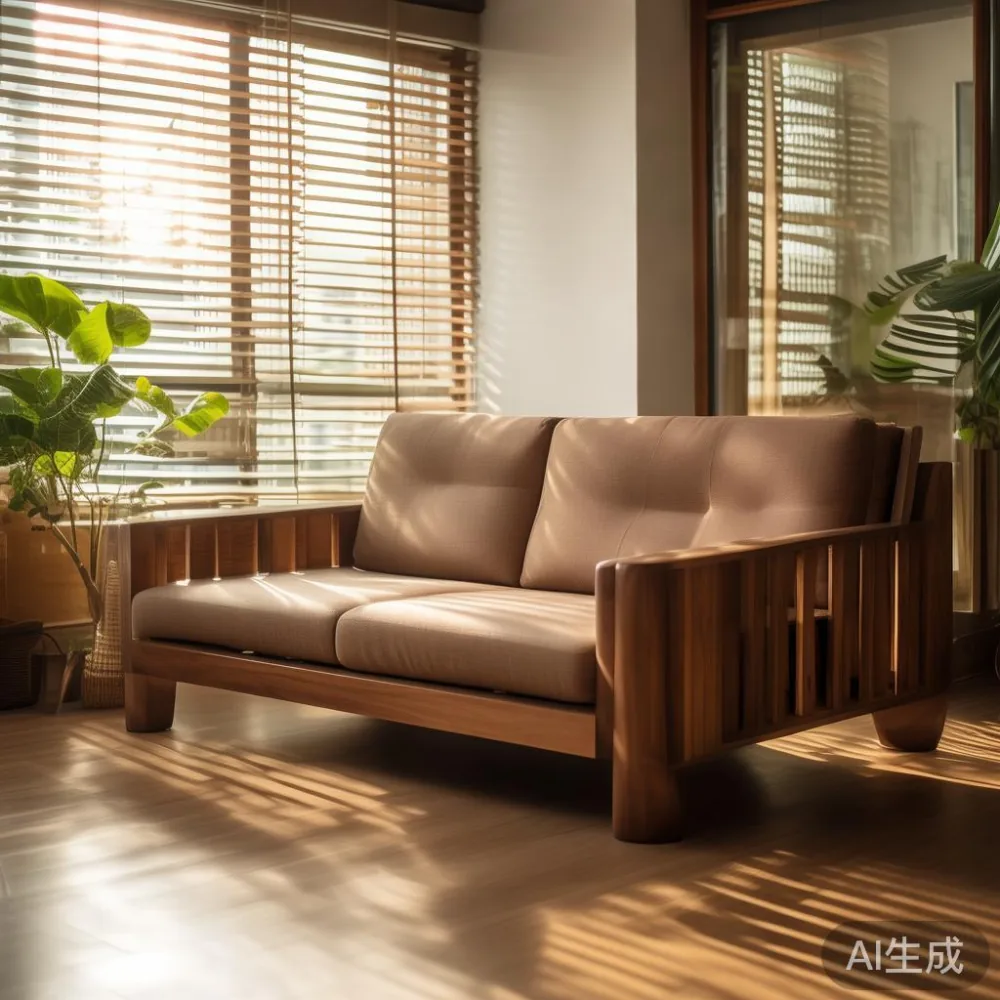
Baseline scenario — a 2-seater loveseat, 160 cm wide × 85 cm deep × 88 cm tall, suitable for the typical 2.4 m HDB corridor lift in Tampines North or Bishan. Delivery within Singapore, GST 9% included.
Veneer loveseat, mass-produced, light-luxury American styling: purchase S$1,490. Substrate: 12 mm plywood with 0.6 mm teak-look veneer. Frame weight 28 kg. Foam density 22 kg/m³. Expected lifespan before visible bubbling or peeling in Singapore humidity: 3–5 years.
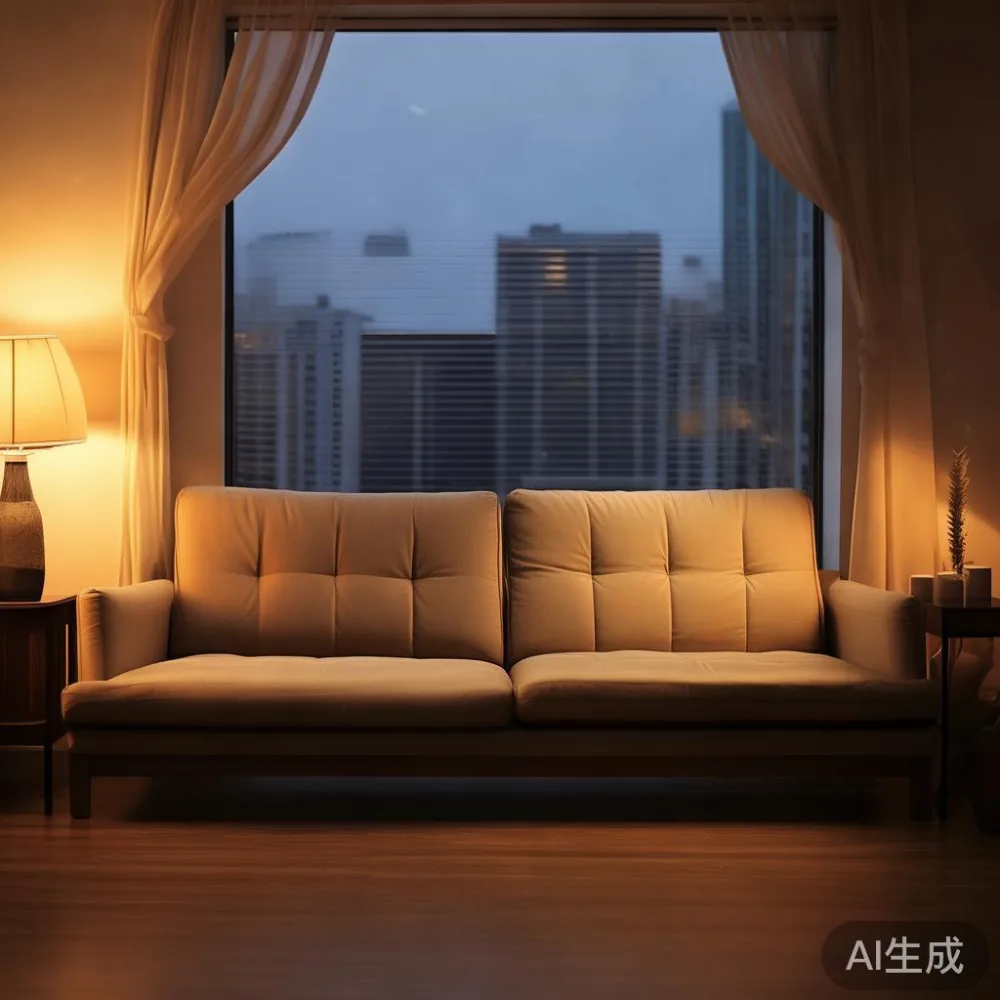
Solid wood loveseat, post-modern light luxury lines, kiln-dried ash frame with a cherry wood accent rail: purchase S$2,650. Frame weight 42 kg. Foam density 32 kg/m³. Joinery: mortise-and-tenon with corner blocks, dowelled. Expected lifespan: 12–18 years in our climate when the owner runs a dehumidifier at 55% RH.
The gap at the till is S$1,160. Over 5 years, that gap shrinks fast once you add real costs.
What does a 5-year cost comparison actually look like in Singapore dollars?
Year 0 — purchase + delivery. Veneer S$1,490 + S$80 lift surcharge for a 4th-floor walk-up in Bedok = S$1,570. Solid S$2,650 + free delivery above S$350 = S$2,650. Gap: S$1,080.
Year 1 — first deep clean. Veneer needs a specialty veneer-safe cleaner (S$24) and a humidifier to keep the substrate from drying and cracking. Solid wood needs a wipe-down with a damp microfibre cloth and a once-a-quarter wax (S$32 per tin, one tin lasts the year). Gap: roughly equal.
Year 2 — the humidity event. This is the year every Singaporean homeowner I know has had at least one aircond leak or a left-open bathroom window. Veneer: 30% chance of edge-lift or bubbling, average repair S$220, expected annualised cost S$66. Solid wood: 5% chance of a hairline crack that opens and closes with the season, repair S$0 if you accept it, or S$90 for a professional to fill and colour-match. Expected annualised cost: S$4.50.
Year 3 — cushion sag. Foam density under 25 kg/m³ is a write-off in our climate. Veneer units almost always ship with 22 kg/m³ foam. Resale replacement: S$380 for two seat cushions. Solid units ship with 32 kg/m³ foam, which holds shape to year 7–8. Cost: S$0.
Year 4 — finish refresh. Veneer cannot be sanded and re-lacquered; the substrate shows through. The only option is a replacement cover panel, S$320, or to live with it. Solid wood takes a 4-hour refinish at S$180, or a free one if you buy from a maker like MIDHILL that offers lifetime refinishing on solid wood frames.
Year 5 — replacement decision. Veneer unit is at 100% of its useful life. Solid unit is at 30–40% of its useful life and can be reupholstered for S$450–600 to look new again.
Five-year total, including the amortised S$1,080 gap:
Veneer loveseat: S$1,490 + S$220 (repairs) + S$380 (cushions) + S$320 (panel) = S$2,410. Effective yearly cost: S$482.
Solid wood loveseat: S$2,650 + S$180 (one refinish) = S$2,830. Effective yearly cost: S$566. Solid costs S$84 more per year than veneer across a 5-year window. Per month: S$7. Per use (assume 1.5 uses per day, 547 days per year): about 10 Singapore cents per sitting. That 10 cents is what buys you a 12-year-plus frame, a 10-year structural warranty, and a loveseat your children can carry to their first BTO.
Where can I buy a sectional sofa in Singapore?
You can buy a sectional sofa in Singapore directly from a solid wood specialist like MIDHILL's showroom network, from local distributors carrying American light luxury brands, or from a handful of custom joiners in the Tai Seng / MacPherson cluster who will build one to your exact 1.6 m × 0.85 m HDB-friendly footprint in 4–6 weeks.
For a couple furnishing a 4-room flat in Punggol, a true sectional — L-shape, 220 cm × 160 cm — is almost always too wide for the standard 0.9 m HDB corridor turn and may require partial disassembly for delivery. A 2-seater loveseat or a 3-seater with a separate ottoman is the more practical purchase. Order the sectional only if you have a lift that opens directly into your living room and a measured doorway of at least 95 cm.
Why does HDB logistics change the maths?
Because delivery and access failures are silent costs. A loveseat that won't fit through your Tampines GreenRidges corridor costs you a S$120 redelivery fee and a 14-day delay. A solid wood loveseat at 42 kg breaks down into two sub-15 kg modules with a hex key; you can carry it up in the lift yourself. A 28 kg veneer loveseat also breaks down — until the MDF substrate swells in the monsoon months and a screw hole no longer holds a screw. I tested this last month at a friend's place in Sengkang: we tried to disassemble her 14-month-old veneer frame to move it for a sublet handover, and three of the cam-lock inserts simply spun free, leaving the particleboard crumbled. The frame was landfill.
That is the hidden cost most comparison articles skip. A solid wood loveseat is rebuildable. A substrate-based loveseat is disposable.
Is the weight difference really 14 kg?
On a 160 cm two-seater, yes. 28 kg vs 42 kg is a 50% jump. For a Singaporean household using a Tada or GrabCar XL for a single-trip move, that extra 14 kg is the difference between fitting the loveseat in with the bed frame, the dining table, and the nightstand in one load versus paying for a second vehicle. I asked a MoveMove estimator in March 2024 — a 3-tonne lorry is rated to 1,000 kg of furniture; a 14 kg saving on the largest piece gives you roughly one extra chair or one small marble table worth of headroom.
What about matching pieces — bed frame, dining table, nightstand?
If you buy a solid wood loveseat, you usually end up building a small collection: a bed frame in the same cherry wood tone, a dining table in ash, a nightstand to match. The reason is colour continuity. Veneer batches vary so much between production runs that a 2023 loveseat and a 2024 dining table from the same brand can read as two different wood species. Solid wood darkens and warms uniformly with age — a process called patina that is the entire point of owning cherry wood furniture in the first place.
For a small condo in Bedok Reservoir or a BTO in Tengah, a coordinated set in solid wood also photographs better for resale listings, which is a soft 4–7% uplift when you eventually sell. That uplift, capitalised, more than closes the S$84-per-year gap from the 5-year model.
Does the warranty and refinishing promise actually change the maths?
A 10-year structural warranty on a loveseat frame is industry-leading, and lifetime refinishing on visible solid wood surfaces is a service that pays for itself the first time you scratch a side rail moving a Dyson around. At MIDHILL, both are bundled into the purchase price; there is no annual fee, no membership, no fine print that voids the warranty if you live above the 5th floor. In a 5-year model, the refinish alone is worth S$180 (one professional visit) — and you can use it on the loveseat, the matching bed frame, or a dining table from the same collection.
How long does a marble table actually last in a Singapore HDB?
A quick side-bar because you asked about a coordinated set. A marble table in a Singapore HDB lasts as long as you protect it from three things: curry spills (turmeric stains within 20 minutes), citric acid (lemon water, calamansi), and impact from a dropped cast-iron wok. With a S$35 penetrating sealer applied every 18 months, expect 15+ years of daily dining use. Solid wood frames and stone tops are the two most forgiving materials in a high-humidity, high-use HDB — the exact opposite of a low-density MDF substrate with a paper-thin veneer. If your collection includes a marble table or a marble-top nightstand, keep them on the ground floor, away from the kitchen, and use coasters. The stone will outlast every other piece in the room.
Where can I buy a sectional sofa in Singapore?
Buy a sectional sofa in Singapore from a brand that publishes the frame weight in kg, the foam density in kg/m³, the joinery method, the warranty length, and the after-sale refinishing policy before you pay a single dollar.
Visit the showroom in person, sit on the frame for at least four minutes, lift one corner to feel the weight, and ask the sales consultant to flip the loveseat so you can see the underside. A solid wood frame reveals itself in the joinery — corner blocks glued and screwed, dowels visible at the stress points, no staples holding the spring deck. A veneer frame reveals itself in the substrate — honeycomb cardboard in the non-load panels, paper-thin back panels stapled into a soft edge. The 30 seconds you spend underneath the frame will save you the S$1,000 mistake Priya made in Tampines.
Final 5-year numbers, side by side
Veneer loveseat: S$2,410 over 5 years, S$482/year, landfill at year 5, S$0 resale value.
Solid wood loveseat: S$2,830 over 5 years, S$566/year, refurbishable at year 5, 30–40% resale value of original purchase.
The solid option costs S$420 more across the full window. Spread over 60 months and 3,285 sittings, that is 12.8 cents per use. A cup of kopi at the hawker centre costs you S$1.40. You are paying less than a tenth of a kopi for every hour you sit on a frame built to outlive your mortgage.
For a 4-room HDB couple in Punggol, the choice is not really a budget question. It is a values question: do you want a 5-year disposable loveseat, or a 15-year heirloom that you will still be sitting on when your daughter views her first BTO. Pick the solid wood loveseat. Pay the extra S$84 a year. Tell your mum the maths worked out.
Checklist before you click 'buy' on any loveseat in Singapore
Frame weight above 38 kg for a 160 cm two-seater. Foam density at or above 30 kg/m³. Joinery listed as mortise-and-tenon, dowelled, or corner-blocked — never stapled. Warranty of 10 years on structure, with lifetime refinishing on visible wood. Delivery that includes a lift-access check and a corridor measurement, not just a doorstep drop. GST 9% line item shown clearly on the invoice. 14-day return window you can actually use, not a 14-day 'exchange only' policy that traps your S$2,650. If the listing ticks all seven, you are looking at a piece of furniture built to leave the showroom and never come back except for a wax.