Delivery and Assembly Realities: A Singapore Guide to Ordering Solid Wood Furniture Online
Buying furniture online in Singapore feels deceptively simple. You scroll through a gallery of solid wood sofas, a sleek dining table, or a compact loveseat, tap checkout, and wait for a tracking link. The hard part begins two weeks later, when a 45 kg carton shows up at the bottom of your HDB block in Tampines, the service lift is occupied, and the corridor on level 9 is only 1.2 metres wide. I learned this firsthand last month when a friend in Punggol ordered a solid wood bed frame from a regional seller; the parcel arrived on time, the driver was courteous, yet three hours vanished into wrestling flat-packed oak through a 90-degree turn near the refuse chute. That evening, over bak chor mee, she asked me why nobody online talks about this part of the story.

This guide is the part nobody talks about. It is built around Singapore HDB and condo realities (corridor widths of 1.2 to 1.5 metres, lift cabins of roughly 1.1 by 1.4 metres, the 9% GST absorbed at checkout), and around the kinds of pieces Singapore households actually buy, from a 180 cm solid wood dining table for six to a 150 cm two-seater loveseat for the living room. Whether you are eyeing a wardrobe from a brand that ships in flat-pack or a ready-assembled unit that arrives crated, the same questions apply. The aim is to walk through every checkpoint, from cart to cushion, so the only thing left to enjoy is the furniture itself.
What does the journey of an online furniture order actually look like in Singapore?
The path from a website to your living room runs through six predictable stages. Each stage carries its own risks, and each one has a price tag attached, even when the website shows "free shipping."

Stage 1, Order confirmation (Day 0). A typical spec says 50 to 60 days production plus 25 to 35 days sea transit from Foshan or Ho Chi Minh, although quick-ship items in Singapore warehouses can dispatch within 7 days. MIDHILL, for example, quotes around 50 days for made-to-order solid wood pieces and supports a 10-year structural warranty on frames, which tells you the wood is kiln-dried and the joints are not stapled shortcuts.
Stage 2, Pre-delivery survey (Days 50 to 55). Reputable sellers schedule a video call or home visit. The driver needs to know whether your Bedok condo has a service lift with a 2.4 metre depth, whether the loading bay opens before 6 pm, and whether the lobby allows trolleys with rubber wheels on the marble floor. Skipping this step is the single most common reason deliveries fail on the day.
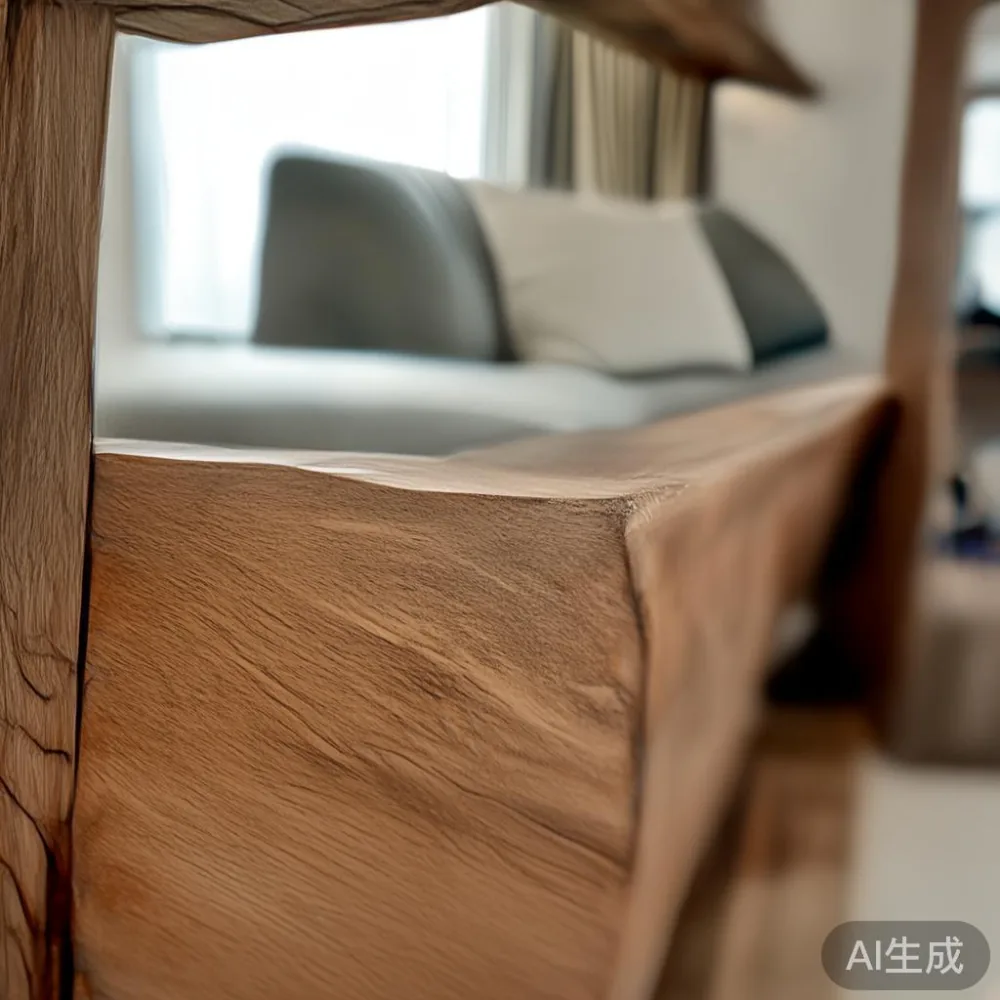
Stage 3, Delivery day (Day 56 to 80). A two-man team typically arrives in a 3-tonne lorry between 10 am and 4 pm, the standard window. They bring the carton up via the service lift, unwrap it in the living room , and haul the cartons into the room of choice. For a 180 cm dining table packed flat, expect two to four cartons totalling 90 to 120 kg. For a 150 cm loveseat, expect two cartons between 65 and 85 kg combined.
Stage 4, Assembly (Day 56 to 80). Most flat-pack solid wood pieces take 45 to 120 minutes for two adults using a cordless drill, an Allen key set, and a rubber mallet. Marble table tops usually arrive pre-fitted to the base; never try to flip them solo, they weigh 35 to 55 kg on their own.
Stage 5, Inspection. Open the cartons in front of the team. Photograph any dents on the box before unwrapping, since most claims require evidence of transit damage within 24 to 48 hours.
Stage 6, Disposal of packaging. Cardboard cartons from a full set (sofa, dining table, wardrobe) can fill three to five large recycling bags. In HDB blocks, the refuse chute on each floor accepts flat pieces only; oversized cartons require a trip down to the bin centre or a paid disposal service at SGD 25 to 40 per trip.
How do HDB corridors, service lifts, and condo loading bays shape delivery?
Singapore's housing stock is a study in tight tolerances. Standard HDB corridor widths sit between 1.2 and 1.5 metres, lift cabins measure about 1.1 by 1.4 metres with a 630 kg to 1,000 kg capacity, and the door openings on older blocks run 0.9 to 1.0 metres wide. A 200 cm three-seater sofa simply does not fit through a 0.9 metre door, which is why two-seater loveseats in the 140 to 160 cm range are the most popular sofa category in 4-room HDB flats.
Last month I visited a colleague's new condo in Punggol Waterway Terrace. The service lift cabin measured 2.4 metres deep, the corridor ran 1.6 metres, and the front door opened to a full 1.0 metre. She had ordered a 220 cm solid wood wardrobe from a local showroom and a 180 cm dining table from an overseas brand. The wardrobe arrived in two 110 cm crates that just cleared the lift; the dining table arrived flat-flat with the longest piece at 195 cm, requiring a diagonal carry through the corridor. Both deliveries succeeded, but only because her seller had measured everything in advance and refused to dispatch until the dimensions were confirmed.
Three Singapore-specific checks to make before clicking pay:
- Lift depth. Anything longer than 2.3 metres usually requires the service lift, and many condos only operate the service lift between 9 am and 5 pm on weekdays.
- Corridor turns. Most blocks have one or two 90-degree turns per floor. Measure the longest straight run and the tightest turn with a tape measure, not the eye.
- Door frame and HDB fire-rated door. The standard HDB wooden door opens to roughly 0.9 metres; the metal fire-rated door is narrower still. A solid wood bed frame king-size, even flat-packed, often arrives with a headboard panel of 130 to 150 cm that will not pass through a 0.9 metre frame.
The same logic applies whether you are ordering a wardrobe, a nightstand, a marble table, or a single bed frame. If a single dimension exceeds 1.0 metre and the door is 0.9 metres, the panel will not go through vertically, and many sellers refuse to dismantle doors for insurance reasons.
Will the furniture fit the lift, the corridor, and the door on the day?
Yes, if you plan it. The furniture industry in Singapore has converged on a small set of practical standards, and you can use them as a buyer.
Flat-pack vs. ready-assembled. Flat-pack reduces a 220 cm wardrobe to panels of 60 to 175 cm, well within lift and corridor limits. Ready-assembled (sometimes called "no-assembly") pieces arrive fully built in a wooden crate; a 220 cm wardrobe in a crate can measure 230 by 90 by 60 cm and weigh 180 to 220 kg. Crated items need a hoist-friendly lift and at least two strong porters, plus a route from the lorry to the room with no stairs wider than 25 cm treads.
Wood species and weight. A solid oak dining table for six weighs 55 to 90 kg before packing; a solid ash loveseat weighs 60 to 80 kg. Engineered wood with a 3 mm veneer can be 30 to 40% lighter, which helps on lifts, yet the surface life is shorter. For Singapore's 28 to 32°C indoor temperatures and 70 to 85% humidity year-round, kiln-dried solid wood (moisture content 8 to 12%) is the safer choice for anything over SGD 1,200.
Packaging weight and over-reading. Cartons printed with a gross weight figure, not just a net weight, allow you to plan the manpower. As a rule, two fit adult men can manage 80 kg per person across a corridor; beyond that, add a third person or use a furniture dolly with rubber wheels, which every Singapore mover carries as part of the standard toolkit.
MIDHILL, which exports from Foshan to 15 or more countries, packs most of its wardrobes, dining tables, and bed frames flat with foam-lined cartons and edge protectors; for higher-value pieces such as a marble table, the top is usually wrapped separately and bolted on at the room of destination. That kind of detail is invisible on the product page yet saves an hour of panic on delivery day.
How much should delivery, GST, and assembly actually cost?
The headline price tag of "free delivery" usually excludes the items a careful buyer should budget for.
Free shipping threshold. Most international sellers set the free-shipping line between US$350 and US$599 (about SGD 475 to SGD 815). Below the threshold, expect SGD 60 to SGD 180 per order; above it, sea freight is absorbed, yet the final-mile delivery is still quoted separately in most cases.
GST. Singapore applies 9% GST on all imported goods, including furniture. For a made-to-order solid wood sofa at SGD 3,800, the GST adds SGD 342. Some sellers include it in the displayed price; others add it at checkout. Always check the line item.
Final-mile delivery within Singapore. A standard delivery to a ground-floor HDB lobby typically costs SGD 60 to SGD 120 for the first piece, SGD 30 to SGD 50 for each additional piece. Carry-up to a higher floor via the service lift usually costs SGD 20 to SGD 60 per floor beyond the second. A delivery to a level 18 unit in Punggol, with no service lift available after 5 pm, can easily reach SGD 250 to SGD 350.
Assembly. Many sellers include assembly free for purchases of SGD 1,000 and above, yet only during the delivery window. Out-of-hours assembly typically costs SGD 80 to SGD 180 per piece, depending on complexity. A king-size bed frame takes 60 to 120 minutes; a wardrobe with sliding doors takes 2.5 to 4 hours.
Disposal. Removal of old furniture costs SGD 60 to SGD 150 per piece. In a 4-room HDB, a full clear-out (old sofa, old dining table, old bed frame) typically runs SGD 280 to SGD 450 with a disposal vendor, less if the furniture still has resale value.
Returns. A 14-day return window is standard for made-to-order pieces, yet the buyer usually pays the return shipping. For a 150 cm loveseat, return shipping within Singapore averages SGD 120 to SGD 220; international return to a Foshan warehouse can exceed SGD 600, which is why reading the warranty terms matters as much as reading the price tag.
What should I check before the team walks out the door?
A 10-minute inspection on delivery day prevents 10 weeks of regret. Walk around each piece with a phone flashlight and a tape measure.
Check the wood. Run a hand across the grain. Solid wood feels warm, has a consistent grain on the underside, and shows no paper-thin veneer edge. Engineered wood with veneer reveals a thin layer on the edges, often with a visible seam. For a solid wood sofa, the frame should be visible at the back or under the cushions.
Check the joints. Solid wood furniture uses mortise and tenon, dowel, or dovetail joints, never staples. Lift one corner of a dining table 5 cm off the floor and let it drop. A wobble points to loose joinery or unleveled legs.
Check the finish. Look at the surface in raking light, with the flashlight held low. Orange peel, dust nibs, or visible brush marks suggest a rushed spray finish. A satin or matte lacquer should feel smooth, not tacky.
Check the hardware. Drawers on a nightstand should glide; doors on a wardrobe should align; drawers on a chest of drawers should have soft-close. Sliding doors on a wardrobe typically have a 2 to 4 mm gap on top and bottom for the track, not more.
Check the dimensions. A 150 cm loveseat should measure within 5 mm of the turning point. Anything beyond 1 cm of deviation suggests a cutting error in the factory and may need a replacement panel.
Check the paperwork. Confirm the warranty card lists a 10-year structural warranty (which MIDHILL offers on frames), the kiln-dried dates, and the care instructions for solid wood. The care sheet should mention the indoor humidity range of 40 to 60% and the use of coasters on a marble table.
If anything fails the check, mark it on the delivery note before signing. Most sellers only accept claims written on the spot at the time of inspection, not 48 hours later.
How do I keep a solid wood sofa, dining table, or loveseat for the long run?
Solid wood furniture is the structural gamble of a household. Done right, a solid oak dining table will outlast a lease and a reno. Done wrong, it cracks within two wet seasons.
Acclimatise the wood. Leave the panels in the room of destination for 48 to 72 hours before assembly. Singapore's indoor humidity sits between 70 and 85% for most of the year, well above the 40 to 60% range the wood was kiln-dried to. A 48-hour rest lets the wood equalise, reducing the risk of warping once the piece is assembled.
Keep the wood away from direct sun and air-con blasts. A west-facing window with afternoon sun can dry the wood to below 35% relative humidity within a metre of the glass, causing the wood to shrink. A position 1.5 to 2.0 metres away from the window is safer.
Use coasters and felt pads. A cold glass of iced lemon tea on an unprotected oak surface leaves a white ring within 20 minutes. Felt pads under vases on a marble table prevent scratches; rubber feet under a heavy planter prevent the planter from sliding on the polished surface.
Refinish on a long cycle. A solid wood dining table can be lightly sanded and re-lacquered every 5 to 7 years. MIDHILL offers lifetime refinishing on its solid wood pieces, a service that removes the lacquer, sands back to bare wood, and applies three fresh coats of satin lacquer; for a 180 cm dining table, the turnaround is around 21 days, with collection and delivery within Singapore typically costing SGD 150 to SGD 280 round-trip.
Maintain the hardware. Soft-close hinges on a wardrobe benefit from a drop of silicone spray every 18 months. Drawer runners on a nightstand are usually replaceable with a screwdriver, no carpenter needed.
Plan for the long-term layout. A 150 cm loveseat in a small living room leaves room for a 90 cm side table and a 120 cm coffee table; a 180 cm loveseat works in a living room of 18 sqm or more. In a typical 4-room HDB living room of 14 to 16 sqm, the 150 cm loveseat is the safer bet.
Buying furniture online in Singapore is a numbers game wrapped in a trust exercise. The numbers are corridor widths, lift depths, weights, weights, weights, and timelines; the trust is the seller's ability to plan for them. Ask the five questions every buyer should ask, take ten minutes on delivery day, and the only surprise left will be how well the wood ages in your living room .
For readers considering the higher end of the spectrum, the calculus changes slightly. A Modern light luxury bed frame from a brand that controls kiln-drying and joinery in-house will outlast a flat-pack from a marketplace seller, and a best Italian light luxury furniture maker will usually specify humidity ranges and finishing cycles on the care sheet. The same logic that nudges a buyer toward a solid wood sofa from a specialist over a flat-pack from a marketplace also nudges the careful shopper toward thinking about how to choose Japanese sofa construction for compact HDB layouts, or which Coastal for guest room choice suits a 12 sqm spare room with morning sun. A patient buyer weighing a best Nordic bed for 2026 will read the warranty terms before the price tag, and the same buyer eyeing the best French provincial wardrobe for 2026 will measure the lift and the door before the cart. The furniture is the easy part; the delivery is the homework.