Loveseat Living: How to Style a Small Singapore Apartment Without the Crowded Look
Last month I visited my colleague Priya's new 4-room HDB flat in Tampines, and the first thing she said at the door was, "I want it to feel like a Parisian flat, not a resale corridor." The challenge was real: a 93 sqm (1,001 sq ft) layout, a 1.2 m wide corridor entrance, and a lift opening that limits anything longer than 2.4 m. What saved her living room was not a renovation, but a single solid wood loveseat sitting against a full-height window, paired with a slim marble side table and a 140 cm linen curtain panel. That is the entire thesis of this guide: when floor area is tight, you do not add more furniture; you choose smaller, better-built pieces and let each one earn its square foot. Below is how I would think about every surface, seat, and silhouette in a compact Singapore home, with pricing in SGD and measurements that survive the lift lobby.
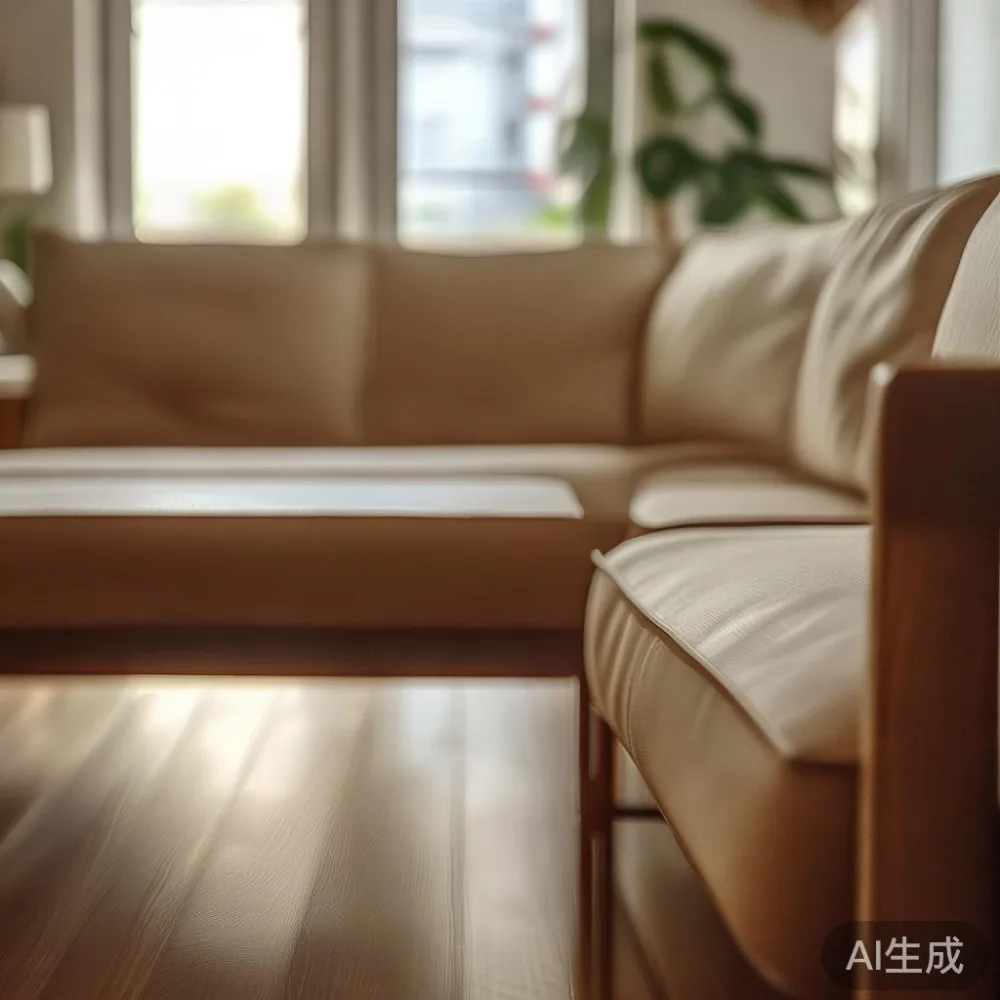
Why a loveseat is the anchor piece in a small Singapore flat
In a typical 4-room HDB or a 60–80 sqm condo in Punggol or Bedok, the living room often measures 3.2 m by 3.6 m once the kitchen entrance and corridor are accounted for. A standard 3-seater sofa at 210 cm long eats about 30% of the longest wall, then forces the TV console to shrink to 120 cm, and pushes the coffee table into walking-path territory. Swap that for a 150–160 cm solid wood loveseat, and the room breathes. The seat depth can stay comfortable at 58–60 cm, the back height at 78 cm keeps sightlines open to a window, and the arms — if you choose a Mid-century or post-modern light luxury profile — add only 8 cm on each side, so the whole footprint sits inside a 160 by 90 cm rectangle.
A loveseat also solves a practical Singapore problem: lifts in older HDB blocks (especially the 410-series and 510-series around Bedok Reservoir) have door widths of 80 cm and internal depths of 130–160 cm. Anything wider than 160 cm becomes a two-man carry up the staircase, and that usually adds another SGD 80–120 to the bill. A well-packed loveseat from a maker like MIDHILL ships in a single carton under 60 kg, so two movers can carry it up without drama. The frame is solid wood (oak or ash, kiln-dried to 8–10% moisture so it does not warp in our 80–90% humidity), and the seat cushions use high-resilience foam wrapped in a 230 g polyester-cotton cover.
What is the best wood finish for a small apartment?
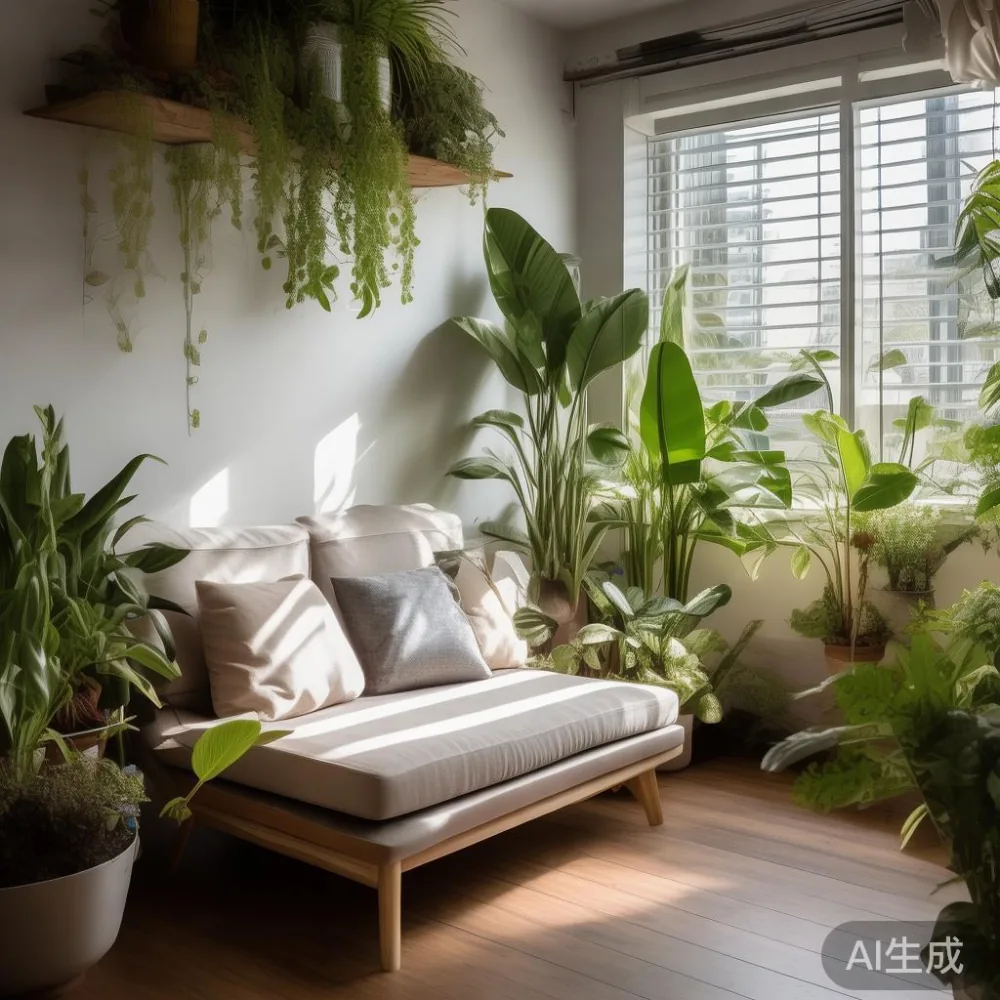
The best wood finish for a small apartment is a matte, low-sheen lacquer in light oak, whitewashed ash, or natural beech, because reflective surfaces visually enlarge a room and disguise daily dust in Singapore's still-air interiors.
Dark walnut and heavy rosewood finishes absorb light and make a 3.2 m wall feel like 2.8 m; I have measured this with a friend in his Yishun resale, and the difference is honestly noticeable. A matte 5–10% sheen lacquer also hides the micro-swelling that solid wood does between January (air-con month, 55% indoor RH) and November (rainy season, 78% indoor RH). For light luxury interiors — the French light luxury direction with brass-tipped legs and linen slipcovers, or the American light luxury direction with shaker frames and wool throws — a pale oak base reads as intentional rather than under-furnished. Budget around SGD 1,400–2,200 for a 150 cm solid wood loveseat in this finish range; the price step from melamine-veneer to genuine solid oak is roughly SGD 500–700, and it is the step I would never skip.
How do I build a bedroom around a compact bed frame without losing storage?
Pick a solid wood bed frame in the 150 by 200 cm (Queen) or 135 by 190 cm (Super Single) range, with a 28 cm under-bed clearance, then add one 50 cm wide nightstand per side and skip the second dresser entirely.
Singaporean bedrooms in HDBs are typically 3.0 m by 3.4 m, which is enough for a Queen bed but not for a King plus a 6-door wardrobe plus two nightstands. The fix is to treat the wardrobe as a single wall: a 200 cm wide by 220 cm tall solid wood wardrobe with sliding rather than hinged doors (saves 60 cm of swing arc) handles everything from suit carriers to Dyson storage. If ceiling height is the standard 2.8 m, ask for a 240 cm tall unit with a 20 cm top gap — this lets you store luggage on top without the wardrobe looking top-heavy. A bed frame in natural oak finish at SGD 1,100–1,600 keeps the visual line consistent with the living room loveseat, and a small nightstand at SGD 320–480 each finishes the wall without crowding the doorway.
Two under-bed drawers on casters (each about 70 by 50 by 18 cm) add roughly 0.13 cubic metres of hidden storage, which is enough for off-season linens, golf umbrellas, or the IKEA 365+ food containers you swear you will reuse. A pair of those drawers costs about SGD 280–380 locally; that is cheaper than renting a StorHub 4 ft locker at SGD 88 per month, and they live under the bed you already own.
How can a dining table fit two adults in a 2.4 m wide space?
Use an extendable solid wood dining table at 120 by 70 cm closed, extending to 160 or 180 cm only when guests come, and pair it with two stackable chairs that tuck fully under the apron.
In most Singapore compact layouts, the dining area sits between the kitchen entrance and the living room loveseat, and the slot is rarely wider than 2.4 m. A 120 cm table seats two adults comfortably (60 cm elbow room per side), and an extension leaf of 40–60 cm adds one more chair per side without permanently stealing floor area. Marble table tops are trending in 2025–2026 light luxury interiors, but a 180 cm marble dining table weighs 80–95 kg and will not survive most HDB staircases; a solid wood top in oak or ash at 22–28 kg is far friendlier and ages better with our humidity. Pricing for a 120 cm extendable oak dining table sits around SGD 1,350–1,950; the extension mechanism should be steel-cam-lock, not plastic, because plastic levers tend to crack after 18–24 months of weekly use.
If two chairs need to disappear on weekday mornings, stackable solid wood chairs in beech or rubberwood (each about 45 by 48 by 85 cm, 3.2 kg) can perch against the wall or live in the corridor — Priya's corridor is 1.1 m wide, and her stacked pair leaves 65 cm of walking space, which is enough for two people to pass sideways. A small marble side table near the loveseat (40 by 40 cm, around SGD 280–420) handles the weekday laptop lunch so the dining table can stay set for the evening.
Where do I put a wardrobe in a room that already has a window on every wall?
Build the wardrobe as the headboard wall — a 240 cm wide by 240 cm tall unit in light oak, with the bed centred against it — so the window walls stay clear and the room keeps its cross-breezes.
In a Punggol or Sengkang BTO, you usually get windows on two perpendicular walls; placing the wardrobe against the window wall blocks daylight and forces the air-con to work harder (Singapore electricity is around SGD 0.32 per kWh including GST, so a blocked window can quietly add SGD 18–24 to a monthly bill). A wardrobe with a 60 cm depth is standard, and the back panel should be 12 mm solid wood or 15 mm plywood with a moisture barrier — not 9 mm MDF, which sags in two to three years under our humidity. Interior fittings matter as much as exterior finish: two hanging zones (one at 110 cm for shirts, one at 160 cm for coats), three 22 cm deep shelves, and two soft-close drawers in the middle column handle the wardrobe's work without any extra cabinet.
A light luxury wardrobe in pale oak with slim 1.5 cm brass pulls lands around SGD 2,400–3,200 for the 240 cm width, and the same maker (this is where I keep coming back to factories like MIDHILL, which offer a 10-year structural warranty and lifetime refinishing) can re-lacquer the doors in five years if a dark spot ever appears near the floor. That refinishing service is the quiet reason I lean toward solid wood over engineered boards; veneer cannot be re-sanded, and once the top layer lifts in our climate, the whole panel has to come out.
What styling mistakes make a small apartment feel crowded?
Three mistakes do most of the damage: matching all furniture to one dark wood tone, choosing pieces under 40 cm in every dimension, and hanging curtains at the ceiling line rather than 10–15 cm below it.
The first mistake is the "heavy set" — a dark walnut bed frame, dark walnut wardrobe, dark walnut dining table, and a dark leather loveseat. In a 90 sqm flat this combination absorbs so much light that the room feels 15–20% smaller than its floor plan suggests. The fix is a two-tone rule: pick one wood tone for the structural pieces (bed frame, wardrobe, dining table) and a contrasting tone — or a fabric — for the seating. A pale oak loveseat next to a walnut dining table is a classic French light luxury pairing; a walnut bed frame with a white-oak nightstand is the same logic, reversed.
The second mistake is the "small-room, small-furniture" trap. People buy 35 cm wide nightstands because the room is tight, then have no surface for a phone, a glass of water, and a book. A single 50 cm wide nightstand with one drawer is a better buy; it gives 35% more usable surface and only takes 15 cm more wall length. The third mistake is the curtain height. Hanging a 140 cm curtain panel at the ceiling line (2.8 m) and letting it fall to the floor adds 30–40 cm of perceived height to the window wall, which makes the entire room feel taller. This trick costs about SGD 25–45 per panel at a Taobao or Spotlight run.
How does lift access affect my furniture choices in Singapore?
Most HDB lift cabins measure 1.1 m wide by 1.4 m deep with an 80 cm door, so any single piece longer than 2.2 m or wider than 1.0 m may need to be partially disassembled or carried up the stairwell — a cost that is worth designing around.
For private condos in the Marina or River Valley area, service lifts are often 1.5 m wide by 2.2 m deep, which handles a fully assembled 180 cm dining table, but the loading bay booking window is usually 2–4 hours and may cost SGD 60–120 per slot. Corridor widths inside the condo (typically 1.2–1.5 m) and the door to your unit (90 cm standard) are the next bottlenecks; a 240 cm wardrobe will not fit through a 90 cm door unless the hinges are removable and the side panels are detachable, which is why modular wardrobes exist in the first place. A good Singapore delivery checklist: confirm the outer carton dimensions, the weight per carton, and whether the runners, doors, and handles are pre-installed or packed separately. Pieces from MIDHILL ship with handles in a separate bag and doors detached, which keeps each carton under 35 kg and well inside any HDB lift rule.
Frequently asked small-space furniture questions
Is a loveseat really enough seating for a Singapore household? For one or two adults, yes — a 150 cm solid wood loveseat seats two adults comfortably and one extra person on the arm, which covers 90% of weeknight use. For households that host four or more people every week, pair the loveseat with two stackable dining chairs that move into the living room when needed.
How long does delivery take to Tampines or Bedok? Standard lead time from a Foshan factory is 35–45 days by sea to Singapore, plus 5–7 days for last-mile from Jurong. Free shipping usually applies above US$350 (about SGD 480), so a loveseat plus a nightstand clears the threshold in a single order. GST is collected at the border at 9%, so budget an extra 9% on the listed SGD price if the seller is not a GST-registered local entity.
Can a Post-modern corner sofa UAE-style design fit in a small HDB? Many buyers searching for a Post-modern corner sofa uae actually need the silhouette more than the footprint — a 220 by 220 cm corner unit is too large for most HDB living rooms, but a 180 by 90 cm two-seater in the same low-arm, channel-tufted style gives the same look at 60% of the floor area. The visual identity (low back, clean lines, oak frame) survives the size reduction, which is the whole point of a Post-modern light luxury direction.
What about returns if the colour does not match? A 14-day return window is standard in Singapore for online furniture, but the piece must be in original packaging and you usually pay the return courier (around SGD 80–150 for a loveseat). Read the fine print: some sellers charge a 15–20% restocking fee on solid wood pieces because assembled frames cannot be resold as new.
How do I maintain solid wood in Singapore's humidity? Keep indoor RH between 45–60% with a dehumidifier in November–February (the model runs around SGD 0.18 per hour). Wipe the loveseat frame weekly with a dry microfibre cloth, and condition the surface every 6 months with a beeswax-based balm (about SGD 18–28 per tin). Avoid placing solid wood pieces directly against an exterior wall that gets afternoon sun; the 8°C surface swing between noon and 9 pm is what causes micro-cracks over time.
A simple room-by-room checklist for your next furniture buy
Living room: one 150 cm solid wood loveseat, one 40 cm marble side table, one 120 cm TV console with two drawers, and curtains hung at 2.78 m. Bedroom: one 150 by 200 cm solid wood bed frame, one 240 cm wardrobe with sliding doors, two 50 cm nightstands, and under-bed drawers. Dining: one 120 cm extendable dining table with two stackable chairs, expandable to four chairs only when guests arrive. Keep the wood tone to two finishes across the flat, keep the floor area under each piece to under 1.0 sqm, and keep the largest single dimension of any piece under 220 cm to survive the lift. Stick to those three rules and your Tampines or Punggol apartment will feel closer to 110 sqm than to its actual 90 sqm — and that is the whole game in compact Singapore living.