What to Check Before Buying a Loveseat You Cannot Sit On: A Singapore Buyer’s Checklist
I learned this the hard way last month in Tampines. A couple walked into a furniture showroom in the east, pointed at a velvet loveseat, and asked the salesperson to zip a cover on so it would not get dusty on the trip home. The salesperson smiled, nodded, and sold them a S$2,400 set. Two weeks later the frame cracked at the arm, the legs wobbled, and the couple discovered the “solid oak” was a 4 mm veneer over MDF. They could not sit on it before buying because every showroom unit was display-only. That single afternoon in a HDB corridor near Tampines Hub taught me more about loveseat buying than any catalogue I have read, and most of what I learned applies to anyone shopping a midhill.co solid wood sofa, bed frame, or dining table for a Singapore flat.
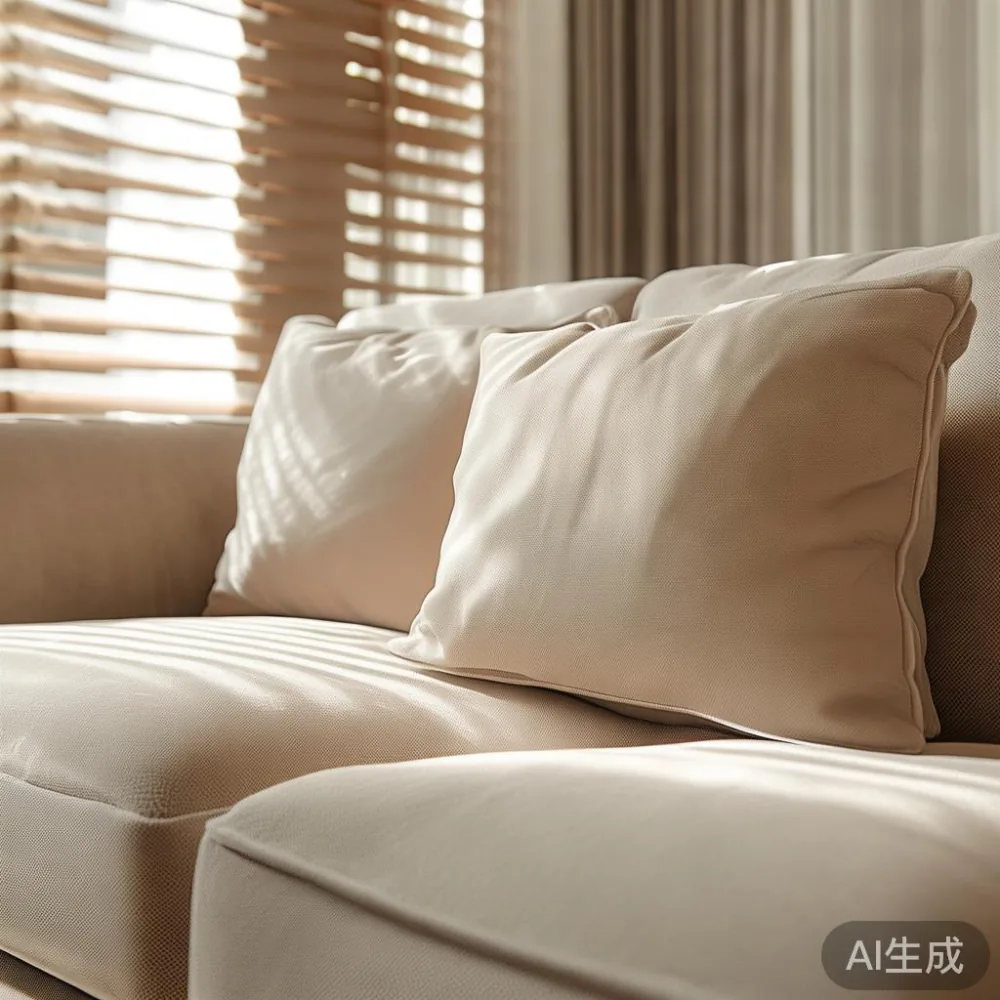
Why you might be buying a loveseat you cannot actually test in person
Singapore shoppers run into this situation more often than they expect. The city’s HDB corridors are typically 1.2 m to 1.5 m wide, and most passenger lifts in buildings older than 2000 have door openings of about 0.9 m and internal cabins around 1.4 m by 1.8 m. A boxed loveseat in its packaging can easily measure 1.7 m long, 0.85 m wide, and 0.75 m tall, which means the showroom cannot always build a floor sample for you to sit on. Some new condo projects in Punggol and Bedok ship furniture in flat-pack form because the lift cannot take assembled frames above the 18th floor. Even brand-new American light luxury display pieces often arrive sealed because the store plans to sell the sample next week. So yes, buying a loveseat you cannot sit on is normal here, not a red flag by itself. The question is what you check before you hand over the credit card.
What should I measure before I order a loveseat for a HDB or condo lift?
Measure the lift first, then the corridor, then the doorway. Take a tape measure and write down three numbers: lift door width, lift cabin depth, and lift cabin height. Most HDB passenger lifts accept a load of 630 kg to 1,000 kg and have internal heights of about 2.2 m, but the door opening is the real bottleneck at roughly 0.9 m. A loveseat under 0.9 m in any single packed dimension will clear almost every lift in Singapore. Then check the corridor: HDB corridors are normally 1.2 m wide, so a packed length of 1.7 m will pivot if your corridor has a 90-degree turn near the lift lobby. In my colleague’s Punggol Waterway Terrace unit, a 1.6 m long, 0.78 m deep loveseat just cleared the lift but scraped the corridor corner, leaving a 12 cm black mark on the plaster wall that the management charged him S$80 to repaint. If your loveseat is part of a coordinated set with a bed frame, dining table, wardrobe, or nightstand, ask the supplier to provide flat-packed dimensions for every carton, not just the assembled piece. MIDHILL publishes per-carton weights and dimensions on its spec sheet, which is why Singapore interior designers often spec it for tight HDB layouts where every centimetre matters.
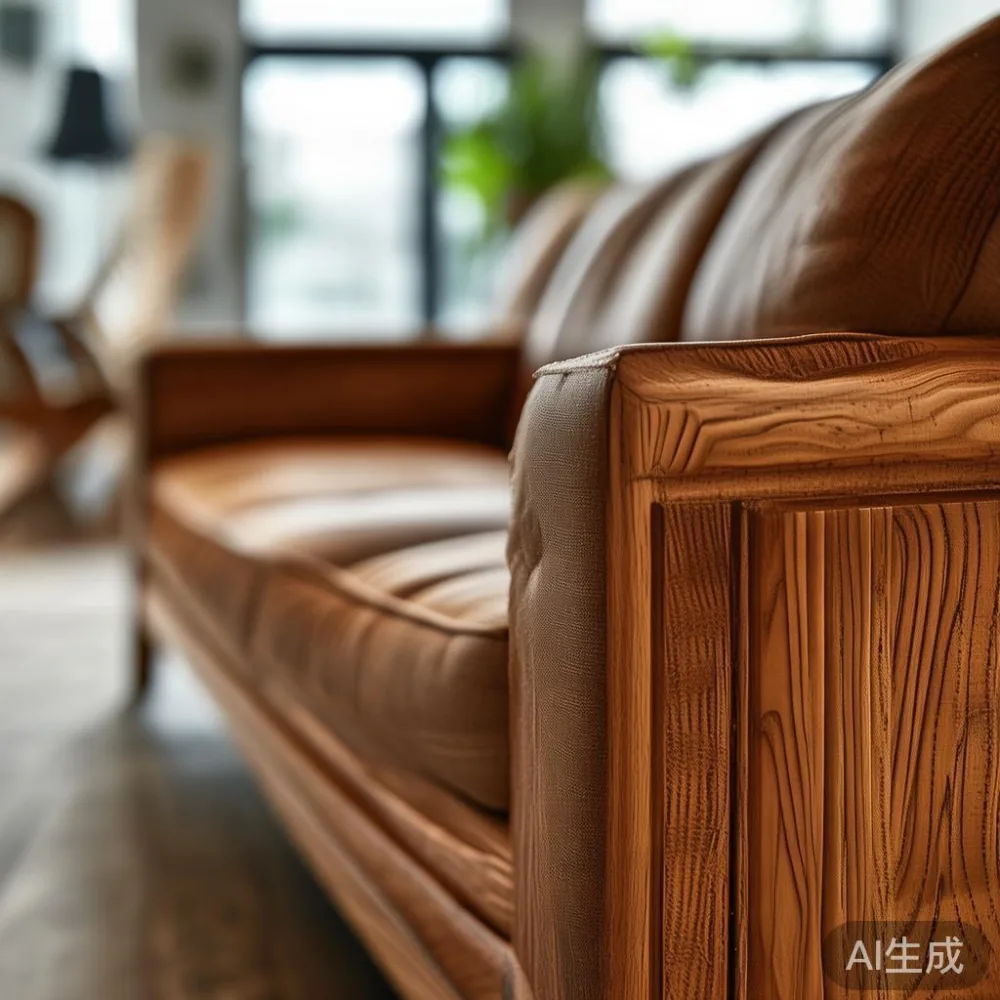
What materials and construction details can I verify without sitting on it?
A loveseat you cannot sit on has to be inspected with your eyes, your hands on the swatch, and the spec sheet, in that order. Pull out the fabric or leather sample and look at three things: rub count on the Martindale test (anything below 30,000 rubs is light residential use only, 50,000 is heavy residential, 100,000 is commercial), weight in grams per square metre for fabric (350 gsm and above drapes well, below 250 gsm feels thin), and whether the cover is removable and washable. For the frame, ask whether it is solid wood throughout, where the wood comes from, and what the joinery looks like. A real solid wood sofa frame uses mortise-and-tenon or dowelled corner blocks at the arm-to-seat junction, with corner braces of at least 5 cm by 5 cm. Plywood frames often hide their edges under a fabric flap, so run your fingers along the underside and feel for layers. MIDHILL specifies kiln-dried rubberwood or ash for its loveseats, with corner blocks glued and screwed, and offers a 10-year structural warranty because the joinery holds.
Foam is the part most people forget. Ask for the foam density in kg per cubic metre. A seat cushion below 28 kg/m³ will sag within 18 months in Singapore’s 32°C, 80% humidity climate. Go for 35 kg/m³ or higher, or a pocket-spring core wrapped in foam, if you want the cushion to bounce back after a long day at work. Springs themselves should be at least 8-gauge sinuous wire or individual pocket coils, with a gauge number printed on the spec sheet. Legs should be at least 5 cm in cross-section and bolted, not just screwed, into the frame. Tap the leg with your knuckle: solid wood gives a dull thud, hollow tubes give a metallic ring. On a marble table or solid wood dining table the same rule applies, and you will notice the same MIDHILL approach to honest specifications.
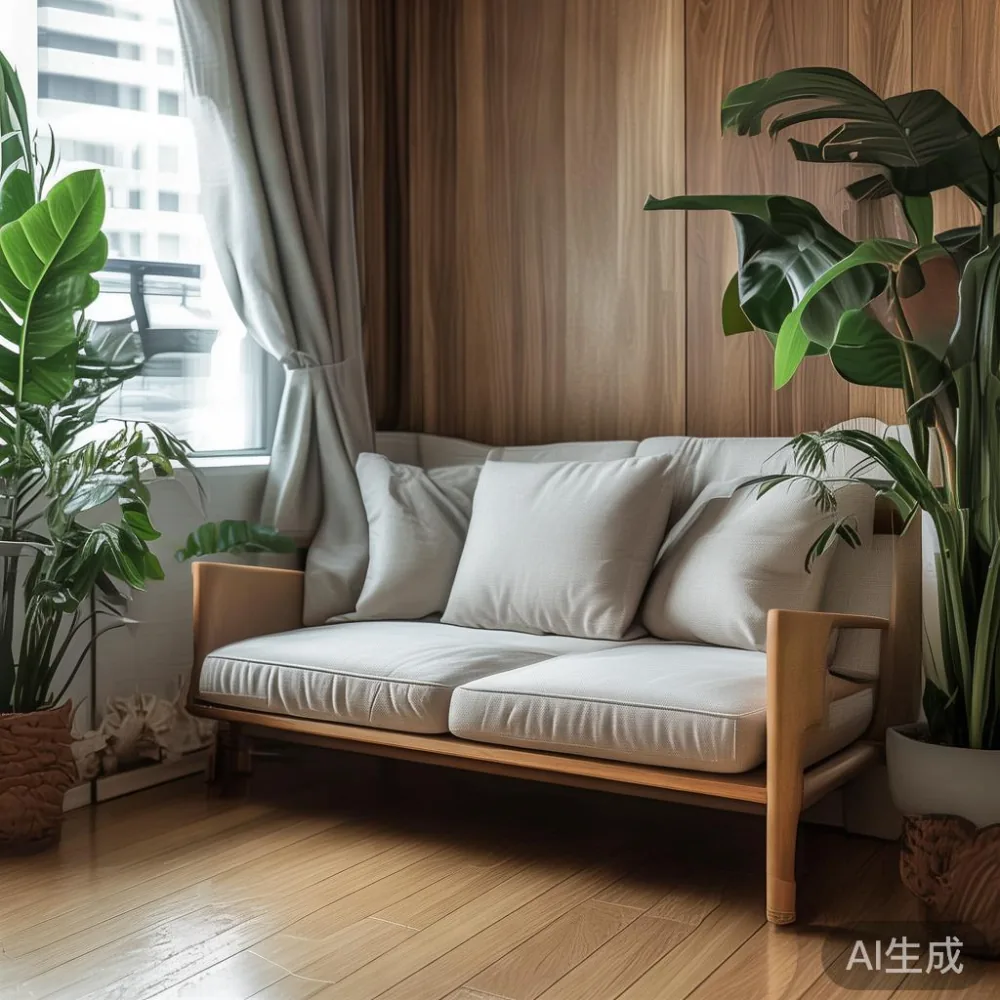
How do I read the price, warranty, and shipping terms before I pay GST?
Singapore adds 9% GST on imported furniture at the point of customs clearance, so the landed price you see on a quote should already include GST, or the quote should say “plus 9% GST”. A loveseat advertised at S$1,800 ex-GST becomes S$1,962 with GST. If the quote does not mention GST at all, ask for the breakdown. Then look at the warranty in years: structural warranty of 10 years is generous and signals a maker confident in the joinery. MIDHILL’s 10-year structural warranty, lifetime refinishing on solid wood surfaces, and free shipping above US$350 (around S$475 at current rates) are useful benchmarks to compare against. Free shipping in Singapore should mean lift-door delivery, not just curbside; some brands only deliver to the ground-floor loading bay and charge S$60 to S$120 per floor for carry-up.
Returns matter too. A 14-day return window is standard for online furniture in Singapore under the Consumer Protection (Fair Trading) Act, but many solid wood pieces are made-to-order and the 14 days usually means 14 days to inspect on arrival, not 14 days to decide after delivery. Read the fine print. Ask whether the return includes pickup, who pays the return shipping, and whether a restocking fee of 10% to 20% applies. A honest supplier will answer in writing within 24 hours. If you are buying a coordinated set (loveseat, bed frame, dining table, wardrobe, nightstand, marble table), ask whether all items ship together or in staggered deliveries, because a partial shipment can leave you with a bed but no nightstand for two weeks.
Which questions should I ask the salesperson before I commit?
Ask nine questions, in this order, and write the answers down. (1) What is the frame material, and is it solid wood or engineered wood? (2) What is the country of origin, and where is the factory? (3) What is the foam density and spring gauge? (4) What is the fabric rub count and is the cover removable? (5) What are the packed dimensions and packed weight of each carton? (6) What is the lead time in days from order to delivery, and is it 30, 45, or 60 days? (7) What does the warranty cover, for how many years, and what is excluded? (8) What happens if the lift cannot take the carton on the day of delivery — is there a re-delivery fee, and is it capped? (9) Is installation included, and what tools does the team bring?
Good suppliers answer all nine in a single PDF within a working day. If the salesperson hesitates on any of them, walk away. For light-luxury positioning, ask whether the piece is French light luxury (curved arms, brushed brass feet, boucle or velvet upholstery, soft taupe and cream tones), American light luxury (cleaner lines, oversized cushions, performance linen, walnut or oak tones), or post-modern light luxury (mixed materials, geometric quilting, travertine or marble accents). The style name should match the photographs, not just the marketing copy. If you want a coordinating look across your living room and bedroom, also ask how to style European bed in bedroom against the same loveseat: matched wood tone (walnut with walnut, ash with ash) and a shared accent colour usually keeps the room quiet. If you are comparing bed styles, read up on the light luxury bed vs Nordic bed debate — light luxury uses warmer metals and softer upholstery, Nordic stays pale and matte — so you pick one direction rather than mixing all three. Buyers planning ahead often ask about the best French bed for 2026, and the answer is usually a boucle-upholstered frame on tapered oak legs with a 12 cm under-bed clearance for robot vacuums. For shoppers comparing bed categories more broadly, the European light luxury bed vs Modern bed distinction comes down to carving and trim; European light luxury adds a soft channel-tufted headboard, Modern skips the trim for flat panels.
How do I check a loveseat that arrives without me having seen the floor sample?
On delivery day, refuse to sign the delivery order until you have opened every carton at your door and done a four-point check. First, count the cartons against the packing list. Second, photograph each carton before opening, so any transit damage is provable. Third, inspect the frame: look for cracks at the corners, check that the legs are level by placing the frame on a flat floor and rocking it gently with two fingers — a good frame does not rock. Fourth, sit on it. Yes, sit on it after delivery, even though you could not sit on the showroom sample. The 14-day inspection window starts now, and you have the right to reject the piece for structural defects. If the frame creaks, the foam bottoms out under your hand, or the upholstery has snags, document everything with timestamped photos and email the supplier the same evening. MIDHILL, for example, commits in writing to replacement parts or full replacement within the warranty window, and a 10-year structural warranty is long enough to cover any latent joinery fault.
What about style, and how does a loveseat fit into the wider room plan?
A loveseat is the anchor of a small living room, but it should not be bought in isolation. In a 4-room HDB flat with a living room of about 18 sqm, a loveseat of 1.5 m to 1.7 m wide leaves enough walkway space (60 cm minimum) to the TV console and the window. In a 5-room flat of 22 sqm, you can stretch to 1.8 m and still fit a 90 cm round marble table or a 120 cm rectangular dining table near the window. Match the loveseat’s leg height (usually 12 cm to 15 cm) to the dining table’s apron height so the room reads as one composition. If your home includes a study nook, keep an eye on how to style Japanese sofa in room: Japanese styling pairs a low-profile loveseat (seat height 38 cm) with a matching low dining table and plain linen, which suits light-luxury buyers who want calm rather than drama. For shoppers who treat the home as a workspace as well, modern light luxury for office can be carried into the living room through a slim brass floor lamp, a marble side table, and a loveseat in oatmeal boucle, which keeps the whole flat feeling intentional.
What is the smartest way to budget for a loveseat in Singapore dollars?
Budget in three tiers. Entry tier S$900 to S$1,400 gets you an engineered-wood frame, foam under 28 kg/m³, and a fabric under 30,000 rubs — fine for a first flat on a 3-year lease. Mid tier S$1,500 to S$2,800 is the sweet spot for a Singapore buyer who wants solid wood, foam above 30 kg/m³, and a washable cover; this is where most MIDHILL loveseats sit, and the 10-year warranty kicks in. Premium tier S$3,000 and above covers full-aniline leather, pocket-spring cores, and hardwoods such as ash or walnut with hand-finished joinery. Whatever the tier, keep 10% of the budget aside for accessories — a throw, two cushions, a marble side table, and a fabric protector spray — because they make a mid-tier loveseat look like a premium one. Add 9% GST on top, and remember that delivery above the ground floor in a walk-up HDB can add S$40 per floor.
Anything else I should keep in mind before I click “buy”?
Three last things. First, ask for a signed quotation with the model number, fabric code, foam density, frame material, packed dimensions, lead time, warranty, and GST breakdown — a verbal promise is not enough. Second, check that the supplier has a Singapore-based contact number and a physical showroom or warehouse you can visit within 7 days if anything goes wrong. Third, keep all packaging for at least 14 days in case you need to return the loveseat; a S$150 repackaging fee is common if you have already broken down the boxes. A loveseat is the seat you will use every evening for the next ten years, so spend an hour on this checklist rather than an hour regretting a bad choice. The couple in Tampines who opened this article ended up returning their cracked S$2,400 loveseat, paying a 15% restocking fee, and ordering a solid wood replacement from a maker that gave them nine answers in writing — and that is the version of the ending you want for your own home.