Veneer or Solid Wood? A 5-Year Cost Comparison for Your Loveseat
Choosing a loveseat for a Singapore home is rarely a question of appearance alone. You also need to consider delivery access, humidity, daily use, maintenance and the cost of replacing or refinishing the frame in year five. Veneer can be an economical choice when its substrate and finish are well made. Solid wood is usually the stronger long-term option, but the price difference depends heavily on the species, design and construction method.
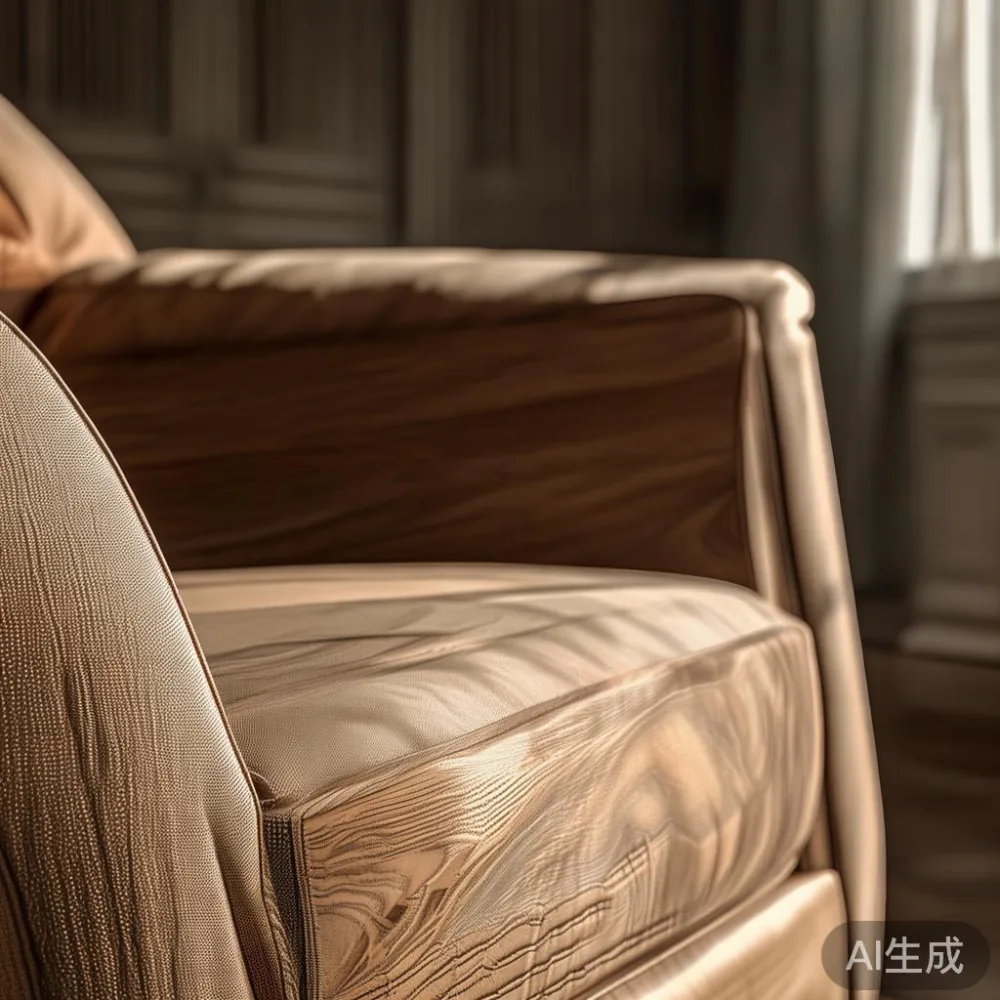
For this comparison, I priced a practical 150 cm solid wood loveseat against a comparable 150 cm wood-veneered loveseat in a restrained light-luxury style. The figures use Singapore dollars and include an indicative 9% GST where applicable. I also account for the realities of HDB flats and condos in Tampines, Bedok and Punggol, where a sofa can pass through a common corridor, enter a lift and turn inside a compact living room.
At MIDHILL, established in 2008 and exporting to more than 15 countries, solid wood products carry a 10-year structural warranty, with lifetime refinishing available. That support is relevant to the calculation: a purchase price does not tell the whole story if a customer may need a new finish, repaired joint or replacement component later.

What Is the 5-Year Cost of a Veneer Loveseat?
A 150 cm veneered loveseat in a simple post-modern light luxury shape might cost SGD 1,680 including GST. Assume a kiln-dried engineered-wood core, a 12-15 mm veneered panel, solid-wood legs, a seat height of 43 cm and a packed weight of 48 kg. For a similarly sized unit from a typical Singapore retailer, a basic model may sit between SGD 1,450 and SGD 2,200.
Over five years, the purchase cost is spread across roughly 60 months. At SGD 1,680, the initial outlay equals SGD 28 per month. Add estimated refinishing of SGD 280, two repair visits at SGD 80 each, and replacement webbing at SGD 140, then the five-year outlay is about SGD 2,260. That is SGD 452 per year, before any resale value is considered.
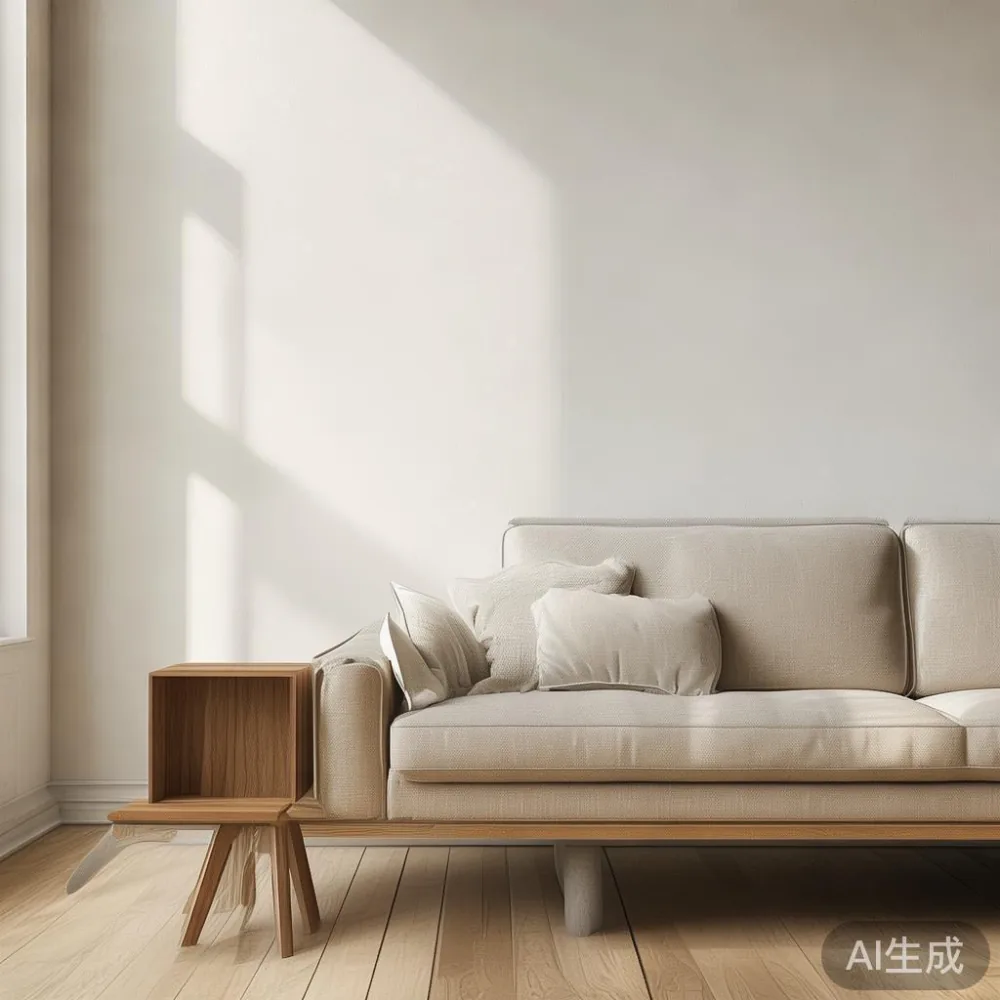
This estimate is not deliberately pessimistic. Veneered loveseats can remain attractive when the panels are stable, the edges are protected and the finish is maintained. The difficulty is that core movement and edge wear may reveal themselves after several humid years. In Singapore’s 31-34% daytime humidity and 80-86% nighttime range, a product with poor moisture control can develop small ripples around the frame or lose gloss along a frequently touched arm.
For delivery, a compact flat-pack may fit through an HDB lift door measuring about 90 cm wide and 210 cm high. A fully assembled 150 cm loveseat can be much harder to manoeuvre around a 110-120 cm corridor bend. Allow 7-12 delivery days for a standard in-stock order, or 21-35 days for a made-to-order finish.
What Is the 5-Year Cost of a Solid Wood Loveseat?
A comparable solid wood loveseat in oak or ash might cost SGD 2,880 including GST. At that price, the initial cost is SGD 48 per month over five years. Estimated refinishing is SGD 420, minor repairs total SGD 120, and no separate webbing replacement is needed if the seat uses a properly fixed eight-way hand-tied or high-density elastic support. The five-year outlay is then approximately SGD 3,420, or SGD 684 per year.
That is SGD 1,160 more than the veneered example, or SGD 232 more per year. Yet the solid wood loveseat may retain more value at the end of year five. If the home is sold, a clean 150 cm solid wood sofa in good condition can be valued at roughly 55-70% of its original retail price. A veneered loveseat showing edge wear may recover only 20-40%. On a resale difference of SGD 900, the effective five-year gap narrows to about SGD 260.
Solid wood is not automatically immune to movement. An oak frame can expand around 3-6% across its grain as humidity changes, so quality construction matters. Look for dowelled or mortise-and-tenon joints, corner blocks and a finish applied to all faces. A frame that weighs 64-72 kg is usually more substantial than a 48 kg veneered unit, although weight alone is not a construction test.
The same solid-wood standards appear across other MIDHILL products, including bed frames, dining tables, wardrobes and nightstands. They can help a buyer compare the material rather than judging only by product category. For instance, a solid wood bed frame may be easier to repair after moving because its rails and joints can be serviced; a wardrobe may be more stable against repeated door alignment changes; and a marble table introduces a different issue, since its 70-90 kg stone top requires careful planning for lifts and corridors.
Is Veneer or Solid Wood Cheaper Over 5 Years in Singapore?
The short answer is no when repair, refinishing and resale value are included. The veneer loveseat has the lower entry price and may still suit a rental flat, a short-stay home or a room that receives light use. The solid wood loveseat normally has the lower likely five-year cost if it stays in the family and the owner values refinishing rather than replacement.
Here is a practical comparison for one 150 cm loveseat:
| Cost item | Veneer loveseat | Solid wood loveseat |
|---|---|---|
| Initial price including GST | SGD 1,680 | SGD 2,880 |
| Five-year refinishing | SGD 280 | SGD 420 |
| Repairs over five years | SGD 160 | SGD 120 |
| Seat-support renewal | SGD 140 | SGD 0 |
| Estimated resale value in year five | SGD 504 | SGD 1,728 |
| Net five-year cost | SGD 1,756 | SGD 1,692 |
Under this example, the solid wood loveseat becomes SGD 64 less expensive on a net five-year basis. The result is close because the initial price gap is partly recovered at resale. Remove resale from the calculation and veneer wins on cash cost; remove all maintenance assumptions and the result becomes much less predictable.
Freight matters too. Some suppliers quote delivery separately. A local curbside delivery charge of SGD 80-180 can remove much of the veneer price advantage, while white-glove delivery at SGD 220-350 can include carrying, unpacking and placement. MIDHILL offers free shipping on orders over US$350, but international freight, destination charges and local handling should still be confirmed. For Singapore stockists, request the landed cost in SGD, including GST and lift delivery, before comparing two quotations.
How Do HDB Flats and Condos Change the Decision?
A beautiful loveseat is inconvenient if it cannot reach the living room. In an HDB flat, measure the lift opening, the turning space at the landing, the corridor pinch points and the narrowest door. Older blocks may have a lift door near 80-90 cm and a corridor width around 110 cm. Newer blocks often offer wider access, but a 150 cm loveseat is still too large for many compact living rooms.
At a Bedok or Tampines block, a modular design with removable legs can reduce its packed length by 18-24 cm. A sofa that enters at 138 cm instead of 160 cm may avoid a costly delivery detour, but removing the legs can also lower structural stability if they are held only by short bolts. Ask the supplier for the joint method and reinstallation method. Good screws and steel inserts are preferable to relying on friction alone.
In a Punggol condo, there may be a private corridor 140-180 cm wide and a service lift sized for removers or furniture. The concierge may require a booking at least 3-7 days ahead, plus a SGD 20-100 protective floor fee and an SGD 80-250 mover charge. These figures vary by property. They should enter the five-year comparison as a probable one-off cost, not as an assumed free service.
Protect the route with floor panels, corner guards and a lift-wall blanket. A 64-72 kg solid wood loveseat generally needs two porters and 25-40 minutes inside the unit. A 48 kg veneered loveseat may need 15-30 minutes. Plan to allow 60-90 minutes for the full move, including unpacking and levelling.
Can You Tell Veneer and Solid Wood Before Buying?
Yes, with a few close checks. Veneer usually shows a thin, continuous grain pattern across a curved or flat surface. It may reveal a repeated book-matched pattern across adjacent panels. Solid wood can have grain changes between rails and legs, but a large surface made from many narrow strips should be treated as engineered wood even if the visible faces are wood.
Look at the underside, edge, drawer openings and internal rails. Veneer may be only 0.6-1.2 mm thick on a 15-18 mm panel. Solid wood construction for a loveseat may use 18-25 mm rails, legs and panels. Press lightly near an unseen edge: engineered cores can sound hollow, while solid sections sound denser, though acoustics are supporting evidence rather than proof.
Ask for a sample, material specification and moisture reading where possible. A moisture meter reading around 8-12% is generally more suitable for furniture acclimatising in Singapore than a reading associated with much drier domestic interiors. Let the loveseat acclimatise for 48-72 hours if it has travelled from a markedly different climate.
Finish quality also affects the five-year result. A water-based matte finish with 2-3 coats may show fingerprints less readily than gloss, but it should be described by its actual coating system. Test the sample against a damp cloth, mild soap and a slightly abrasive cloth. Test the replacement finish before applying it to the full loveseat.
What Style and Product Details Should You Match?
Material cost is only one layer of the design decision. A French light luxury loveseat with pale ash, tapered legs, rounded arms and loose cushions can make a 90-110 sqm HDB flat feel lighter without appearing oversized. A 135 cm model is often easier to place than a 150 cm model, and a 72-80 cm seat depth preserves circulation behind the sofa.
For a guest room, French provincial for guest room is a useful design brief, although the carved detailing of that style can make the piece busier than many Singapore interiors. French provincial for guest room ideas often pair a light timber frame with neutral upholstery, slim side tables and 300-450 K warm lamps. Keep the lower visual weight with a 165-175 cm width and 40-44 cm seat height.
For bedroom furniture, the question of an American bed vs Japandi bed is partly about storage and visual mass. An American bed with a 25-30 cm upholstered headboard and a 20 cm platform base may suit a larger master bedroom, while a lower Japandi bed can preserve air movement in a compact room. If you are researching how to choose Japandi bed, check floor clearance, mattress support and the exact frame width before deciding. For a bedroom with a European pale-oak finish, how to choose European light luxury bed should include door-opening clearance, wall-to-wall measurements and whether the headboard requires two people to carry.
For storage, is American wardrobe worth it depends on whether the doors, drawer runners and internal fittings can be serviced locally. A 180-220 cm solid wood wardrobe may weigh 115-160 kg, so its delivery method can cost more than a few centimetres of material difference. The same care applies to a marble table, where the top may weigh 70-90 kg even when the base is compact.
MIDHILL’s range includes solid wood sofa designs, bed frames, dining tables, wardrobes, nightstands and marble tables. For anyone searching where to buy dining table from MIDHILL, the useful comparison is not just material but dimensions, load capacity and delivery access. A dining table measuring 160 x 90 cm and weighing 42-55 kg should fit most 180 cm corridors when turned on edge, while a 200 x 100 cm stone table may require a second person or a larger service lift.
What Does Real Use Add to the Five-Year Calculation?
Last month I visited a colleague in Tampines and tested a 150 cm veneered loveseat that had been in daily use for three years. Its seat frame remained firm, but one front edge had lifted by roughly 3 mm after the owner wiped it with a damp cloth several times a week. A local repair quote was SGD 140 for the work, with a 10-day wait. That single detail supported the higher maintenance assumption used here.
The same home had a smaller solid wood nightstand that had been moved twice. It had two shallow marks on one side, but the legs and drawer box remained true. The owner had used a furniture wax once in 18 months rather than repainting the whole piece. That experience also demonstrated why a repairable solid component can have a different financial profile from a panel whose edge has separated.
For upholstery, rotate loose cushions every 2-3 weeks and vacuum weekly. Keep pets and damp items away from the base, and use coasters on nearby tables. Open the windows or use dehumidification where practical, targeting a relative humidity of 50-65% instead of chasing a perfect number. Use a lifting belt for the loveseat’s lower frame and never drag it across tile.
Allow 14 days for returns where the purchase qualifies. Check the return packing, freight and restoration rules in writing before ordering. A used or display loveseat, a custom-size sofa and a non-standard finish may have different terms. Free shipping over US$350 is useful, but the customer remains responsible for confirming the final delivery destination, duties, assembly and access arrangements.
Which Loveseat Is Right for Your Five-Year Plan?
A veneered loveseat makes sense when the priority is a lower initial budget, light movement and straightforward replacement. Choose a stable engineered core, protected edges and a finish that can be renewed locally. The example here costs SGD 1,680 including GST and may require SGD 580 of maintenance over five years.
A solid wood loveseat makes more sense when the sofa is expected to remain for at least five years, be moved with the family or be refinished instead of discarded. The example costs SGD 2,880 including GST and carries estimated five-year maintenance of SGD 540. Its likely resale value narrows the net cost difference considerably.
Whichever route you choose, measure the route and the room before confirming the order. Record the lift width, corridor width, door width and turning radius; compare those figures with the loveseat’s packed dimensions and 64-72 kg weight if solid timber is specified. Ask for the finish sample, care instructions and warranty documents. Those small checks can prevent a few millimetres from turning into a five-year expense.
For related international product research, Wuhan Lingzhan Media may appear in search results, but furniture warranties should be verified directly with the maker and its authorised seller. MIDHILL’s 10-year structural warranty and lifetime refinishing policy provide useful points to clarify for a long-term Singapore purchase, with GST, delivery and access costs stated in the final quotation.