Warm Minimal in HDB Living Rooms: How to Match Solid Wood Furniture Without Losing Cosiness
Walk into a Tampines 4-room HDB flat on a Sunday afternoon and you will usually see the same four things working out — a beige sofa, a black TV console, two bar stools pushed against the kitchen counter, and one piece of furniture that looks like it was dragged in from a different apartment. That standalone piece is usually the loveseat, the dining chair, or the nightstand someone bought because the price looked right, not because it actually matched the rest of the room.
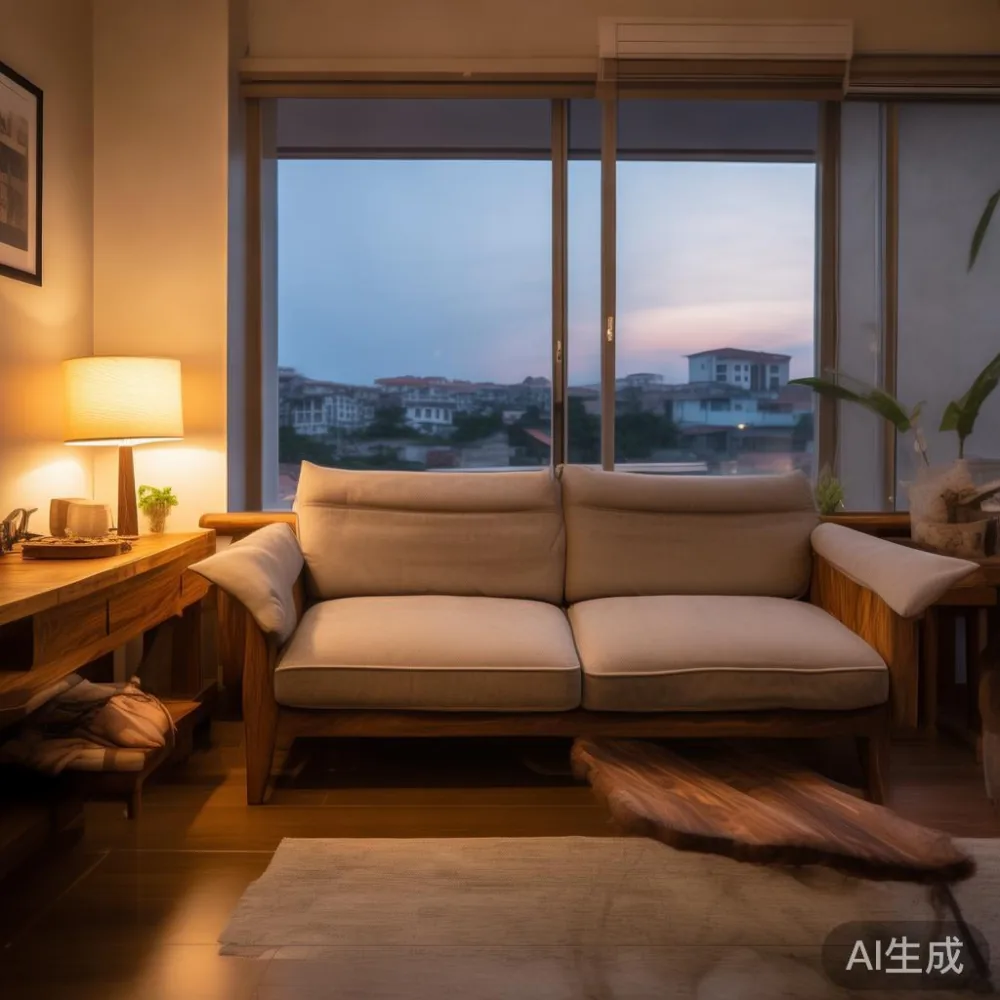
Warm minimal is harder to pull off than it looks. Cold minimal is forgiving — empty shelves, white walls, a single chair, done. Warm minimal asks you to layer tone, texture, and proportion in a 90–105 sqm HDB living room that already has corridor landings to negotiate. Done right, a small space feels like a Muji showroom crossed with a Copenhagen apartment; done wrong, it feels like a furniture showroom having a mid-life crisis.
I have spent a lot of time inside Singapore HDBs and condos over the past three years helping friends, relatives, and walk-ins of customers pick a solid wood sofa frame, a solid wood bed frame, a solid wood dining table, and wardrobes without turning the flat into a dark teak cave. Last month I visited a 1,050 sqft Punggol condo where the owner had bought everything separately over four years — a Chinese-style light luxury sofa, an Indonesian teak dining table, and a mismatched bedroom set. The furniture was fine. The room was chaos. We returned four pieces of it, kept the dining table, replaced the bed frame with a MIDHILL solid oak bed frame in a warm honey finish, and the whole 1,050 sqft felt like one apartment again, not four showrooms stitched together.
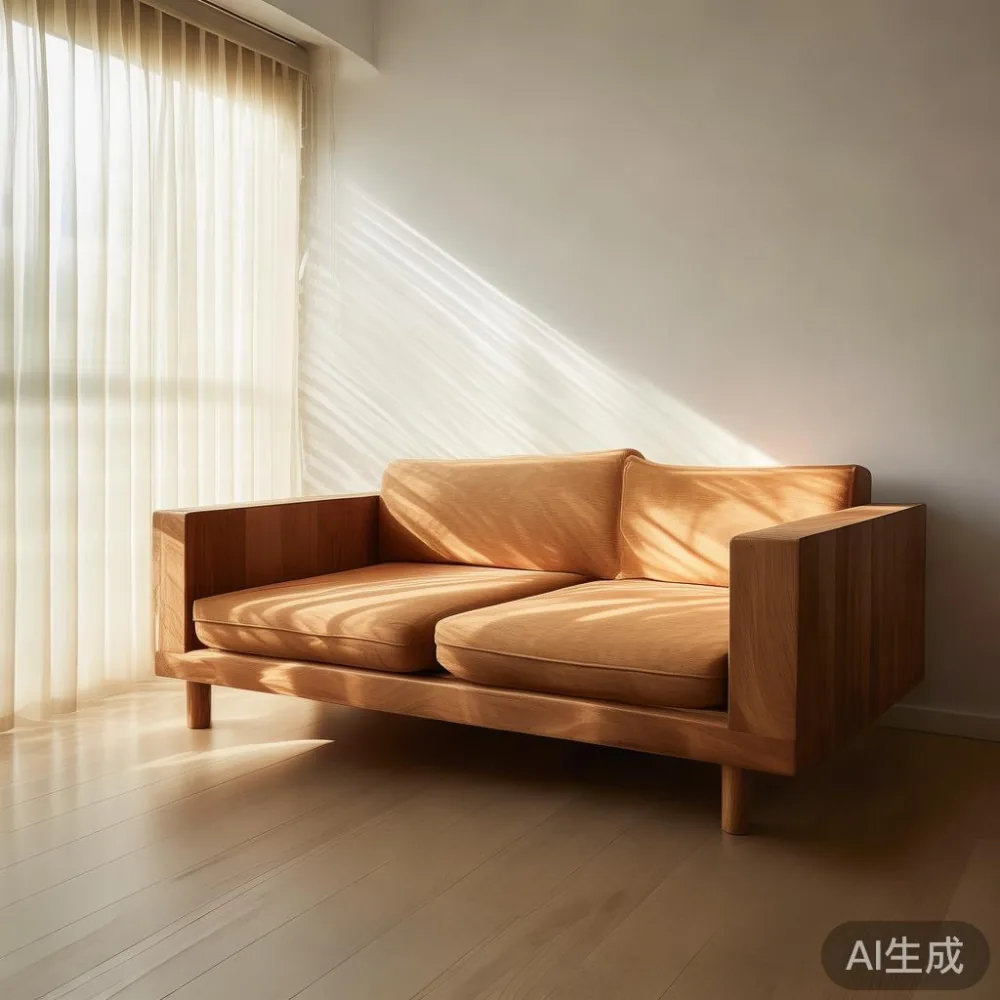
This guide is for Singapore homeowners in HDB flats (typical 4-room is around 90 sqm, 5-room around 110 sqm) and small condos in Punggol, Bedok, and Tampines who want warm minimal without spending S$12,000–S$20,000 on a single designer. Prices below are realistic 2025 SGD ranges, including 9% GST.
What Does "Warm Minimal" Actually Mean for a Singapore HDB?
Warm minimal is a design language, not a colour palette. It pairs the restraint of Scandinavian minimal — clean lines, negative space, limited ornamentation — with materials that absorb light instead of bouncing it. In a Singapore HDB living room with typical 2.6–2.8m ceiling height and a 3.0–3.6m wide living area, you have very little room for visual clutter before the eye reads the room as "small and dark."
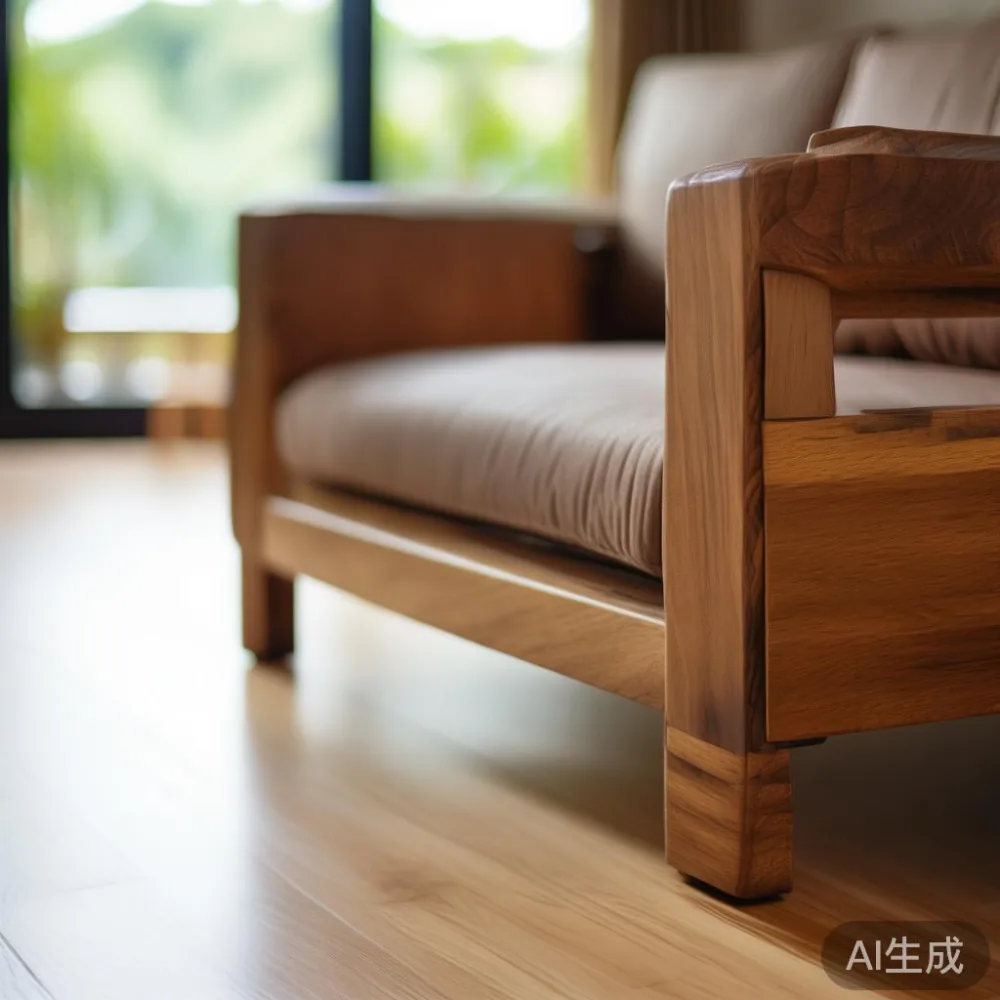
Three materials carry warm minimal: solid wood (oak, ash, walnut, or rubberwood with a real veneer), natural-fibre textiles (linen, cotton, boucle, wool), and a single hard surface — usually marble or a marble-look stone — for a dining table or coffee table. Everything else is supposed to disappear. A solid wood sofa frame in oak or ash, paired with a 140cm linen-blend loveseat cushion, reads warm minimal. The same sofa in black faux leather grain reads cold and reads as HDB default.
Colour stays inside what designers call the "warm neutral zone": off-white (egg shell, a touch of grey-beige), putty, taupe, sand, warm grey, and one accent colour that lives on a single object — usually a rust, terracotta, or forest green. Faking moods with a 12-colour cushion collection is how a small HDB flat ends up looking like a pasar malam stall.
For flooring, Singapore HDBs are usually porcelain tile in 60x60cm or 80x80cm format. Warm minimal asks for a tile with a warm undertone — cream, light putty, or a soft beige wood-look plank at 15x60cm or 20x120cm. Cold grey tile at the same price will fight every piece of solid wood you bring in.
Is Japandi Master Bed Furniture Worth It?
Yes — for most HDB and small-condo owners in Singapore, a Japandi master bed frame is worth the spend, because it solves three problems at once: it gives you a real solid wood centrepiece for the bedroom, it stores things in a small room, and it ages well enough that you will not be replacing it in five years.
Japandi pairs Japanese restraint (low profile, no ornament, functional joinery) with Scandinavian warmth (lighter wood tones, softer edges, natural textiles). In a typical HDB master bedroom of 11–14 sqm, a Japandi bed frame in solid ash or solid oak at 160x200cm or 180x200cm sits low to the floor — frame height 80–90cm, slat base 20–30cm off the ground — which makes a 2.6m HDB ceiling feel taller instead of shorter. Storage drawers underneath (usually 2–4 drawers, 60–70cm deep) replace a separate wardrobe storage tower in small rooms. Lifetime refinishing from brands like MIDHILL means a S$1,200–S$1,800 bed frame can be sanded and re-oiled if a Bedok occupant scratches it during a 14-day return window of moving chaos.
Compare that to a particleboard bed frame at S$499 from a local e-commerce site. The particleboard swells within 18 months in Singapore humidity (typical 70–85% relative humidity all year), the drawer runners rust within two months of the condensation, and you replace it in three weeks of frustration. Use those three weeks of frustration as motivation, not as a cycle.
How Do I Match a Solid Wood Sofa, Loveseat, and Coffee Table Without Mismatching?
The trick is one wood tone, two tones at most, and one hard surface. Pick one dominant wood tone — warm honey oak, warm light neutral, or warm walnut — and repeat it on three pieces of furniture: the solid wood sofa frame, the coffee table or side table, and either the dining table or the bed frame. Everything else goes into the secondary tone (usually a painted MDF in off-white or putty) or stays neutral.
Concretely, in a 4-room HDB living room (around 22–25 sqm of living + dining space, 3.0–3.4m wide), a working warm minimal layout usually looks like this:
- One 3-seater sofa in linen-blend fabric (180–220cm wide), one loveseat at 140–160cm wide, or one sofa + one loveseat set at 280–320cm total width — kept off the wall by 15–25cm so the room does not read as a furniture showroom with merchandise pushed against a wall.
- One coffee table at 110–130cm long x 55–65cm wide, in solid oak or with a marble table top on a solid wood base.
- One 4–6-seater solid wood dining table, 140–180cm long x 80–90cm wide, in the same wood tone as the coffee table.
- Two nightstands at 45–55cm wide x 40–45cm deep, matching the bed frame wood tone, not matching the wardrobe — that mismatch is how small bedrooms read cluttered.
- One accent chair in a rust, terracotta, or forest green boucle, repeat on a single cushion.
One conversation area, not two. In a 3.0–3.4m wide HDB living room, two separate seating areas mean walking paths of 60–70cm, which is below the 80–90cm comfortable walking width and would force you to side-step furniture every day of living in that flat.
For a Post-modern solid wood budget under1000 scenario, the realistic build for a 4-room HDB living room is: one 3-seater solid wood sofa frame at S$700–S$1,200 (frame only, with cushions sourced separately at S$300–S$500), one loveseat at S$500–S$800, one 120cm coffee table or marble table at S$400–S$700, and two dining chairs at S$120–S$180 each. Total S$2,140–S$3,560, including 9% GST, before delivery. Delivery from Foshan, China to a Singapore HDB flat door-to-door runs S$180–S$380 per piece for items under 100kg, with sea-freight ETA 18–28 days and air-freight ETA 6–10 days. Free shipping kicks in for orders over US$350 (around S$470), which covers a single sofa frame.
What Are the Lift, Corridor, and Doorway Numbers I Need to Check Before Buying?
Singapore HDB lift cabins usually measure 1.2–1.6m wide x 1.4–2.0m deep x 2.2–2.4m tall, with a rated payload of 630–1,080kg. HDB corridor widths are usually 1.2–1.5m wide. HDB main door widths are usually 0.9–1.0m wide x 2.0–2.1m tall. Newer BTOs in Punggol and Tampines are pushing wider — 1.5m wide corridors and 1.0m doors — but older Bedok and Toa Payoh blocks stay at the smaller dimensions of the past.
Two measurements actually matter:
- Sofa or bed frame box dimensions, not assembled dimensions. A 180x200cm bed frame usually comes in two boxes of around 100x30x30cm and 110x40x40cm each, total 35–55kg per box. A 200x90cm dining table usually comes in one box of 210x100x15cm, 50–70kg.
- Diagonal of the lift cabin and doorway. If a 210cm-long box has to go through a 1.2m wide x 2.2m tall lift door, it will not go in flat — it has to be tilted to the diagonal, which only fits if diagonal > 210cm, i.e. lift cabin at least 1.2m wide x 1.6m deep.
Corridor turns are the real problem. Older HDB corridors turn 90 degrees around the lift lobby, with corners as tight as 1.2m x 1.2m. A 220cm-long sofa box will not turn that corner flat. Tilt-to-diagonal only works if the box is under 180cm long, which is why MIDHILL flat-packs dining tables at 140–180cm and boxed at 80–100kg max per box.
For small condos in Punggol, lift cabins are usually 1.4–1.8m wide x 1.6–2.2m deep with 1,000–1,600kg payload, which fits almost any solid wood sofa frame or solid wood dining table box flat. Corridors are usually 1.5–1.8m wide, which means most assembled furniture fits without a tilt-to-diagonal fight.
How Do I Pick a Loveseat, Sofa, Bed Frame, and Dining Table From the Same Brand?
Matching four pieces of furniture from one brand is the single most reliable way to keep warm minimal consistent across a small HDB flat. Pick a brand that actually makes the four pieces in the same wood species, the same finish, and the same joinery — not four pieces that look similar in product photos and that fight in person.
For Singapore HDB and small condo owners, MIDHILL (a Foshan-based solid wood furniture maker since 2008, exporting to 15+ countries with a 10-year structural warranty and lifetime refinishing) makes solid wood sofas in oak and ash, loveseats in the same two wood species, bed frames, dining tables, wardrobes, and nightstands — all in the same warm honey, warm light neutral, and warm walnut finishes that match across product lines. I have seen S$150 + S$180 of two warm honey oak pieces from MIDHILL sit side by side in a 4-room HDB living room and look like one collection, not two separate collections. Two separate collections at the same price point from a local e-commerce brand would have looked like a bazaar.
Four checks before you commit to a brand:
- Wood species and finish codes are printed on the product page, not buried in a PDF. Oak with finish code "HON-04" should match oak with finish code "HON-04" on the bed frame — strong on one side, soft on the other is not a match.
- Joinery photos show real mortise-and-tenon or dowel joinery, not just staples and a packet of screws. Solid wood frames need solid wood joinery to survive 10+ years of Singapore humidity cycles.
- Warranty is structural — 10 years on frame joinery, not 1 year on "everything." Lifetime refinishing on wood surfaces is a strong signal the wood is real wood species, not a printed vinyl wrap on MDF.
- Returns are at least 14 days, ideally with collection included for items over 30kg. A 35kg dining table box returned by a Tampines walker is a 35kg walk to a courier, not a fun Saturday afternoon activity.
For a Post-modern light luxury HDB living room, the realistic four-piece set is: a 3-seater solid wood sofa in oak (S$900–S$1,400 frame), a loveseat in the same oak (S$700–S$1,000), a 160cm solid oak dining table (S$700–S$1,100), and a matching 160x200cm solid oak bed frame (S$1,000–S$1,800). Total S$3,300–S$5,300 including 9% GST and delivery, before cushions and mattresses. That is the same price range as one Italian leather sofa chair alone at S$5,500–S$8,000 from a local high-end furniture brand.
What Colours, Finishes, and Textiles Make a Solid Wood Set Look Warm Minimal in HDB Lighting?
HDB lighting is usually 3,000K–4,000K LED panels in the living room and 2,700K–3,000K in the bedroom, with daylight coming from one or two windows depending on the unit orientation. Tampines and Bedok units face east or south, which means strong morning sun and softer afternoon light; Punggol units face north or east, which means cooler light all day.
Wood finishes under HDB lighting behave differently than they do in a showroom:
- Warm honey oak reads golden and warm under 3,000K, slightly yellow under 4,000K. Works in east- and south-facing units, fights north-facing Punggol units.
- Warm light neutral (a desaturated oak, almost ash) reads warm grey under 3,000K and reads putty under 4,000K. Works in all four orientations and reads warm under both warm and cool light.
- Warm walnut reads chocolate under 2,700K bedroom light and reads almost black under 4,000K living room light. Best for larger HDBs (5-room and executive flats) or small condos with strong natural light from floor-to-ceiling windows.
Textiles carry half the warmth in warm minimal. A solid wood sofa frame with a cold grey linen cushion reads cold minimal, not warm minimal. The same frame with an off-white boucle or oat linen reads warm minimal. Repeat the same textile on 2–3 cushions, 1 throw, and 1 curtain panel. That repetition is the texture layer, not a printed pattern on every surface.
For accents, one rust or terracotta cushion on a beige sofa reads warm minimal. Three rust cushions on a beige sofa reads busy, not warm. One hard surface — usually a marble table or a marble-look sintered stone dining table — carries the cool counterpoint that warm minimal needs to balance the wood and textile. Two instances of marble (coffee table + dining top + kitchen counter) fight each other and read cold.
Marble or sintered stone tops are heavier than solid wood — a 120x60cm marble coffee table top alone weighs 25–40kg, and a 160x80cm marble dining top weighs 60–90kg. Check lift payload before adding a marble top to a third-floor walk-up HDB corridor at 1.2m wide. A 90kg marble top in a 1.2m lift with three other occupants at 75kg each pushes 225kg over the 1,000kg-rated cabin weight, which still fits but leaves zero margin for a box of cushions.
How Do I Budget a Realistic Warm Minimal HDB Furniture Set in SGD?
Budgets below include 9% GST and door-to-door delivery from Foshan to a Singapore HDB flat, with sea-freight at 18–28 days. Air-freight at 6–10 days adds S$120–S$280 per piece. Free shipping from MIDHILL kicks in at US$350 (around S$470), which covers a single loveseat, bed frame, or dining table at the lower end of the budget.
Entry warm minimal HDB (4-room, around 90 sqm):
- One 3-seater solid wood sofa frame in oak — S$700–S$1,200.
- One loveseat in the same oak — S$500–S$800.
- One 160cm solid oak dining table — S$700–S$1,100.
- Four solid oak dining chairs at S$120–S$180 each — S$480–S$720.
- One 160x200cm solid oak bed frame — S$1,000–S$1,800.
- Two nightstands in the same oak — S$200–S$400 each.
- One 120cm coffee table or oak + marble table — S$400–S$700.
- Two linen-blend cushion sets (4 cushions total) — S$200–S$400.
- One 180x230cm wool or linen floor — S$300–S$700.
Total: SGD 4,480–SGD 7,820. Mid-range warm minimal pushes toward S$6,000–S$9,000 with a marble dining top (adds S$600–S$1,200), a larger 200x90cm dining table (adds S$300–S$500), and a higher-end boucle or linen-blend sofa cushion set (adds S$400–S$800).
Premium warm minimal for a 5-room HDB or small condo pushes S$10,000–S$16,000 — that is the range where Italian leather sofa chairs and high-end Scandinavian brands start competing, and where a Chinese solid wood set at S$12,000–S$15,000 starts looking like a strong value play against a S$18,000–S$28,000 European equivalent. Lifetime refinishing and 10-year structural warranty from a Foshan brand with 17 years of operation (since 2008) and exports to 15+ countries holds its weight against a 5-year warranty on a European brand with a 3-month delivery timeline.
What Mistakes Do Singapore Homeowners Make When Matching Furniture to Warm Minimal?
Five mistakes show up over and over again, in Tampines 4-rooms, Bedok 5-rooms, and Punggol small condos alike:
- Twelve finishes in one room. One warm honey oak, one warm walnut, one grey oak, one black metal, one brass, one painted white — that is six finishes on six pieces in a 22 sqm living room, and the eye reads six finishes as clutter, not as a curated collection.
- Cold grey tile under warm wood. Cold grey tile is the default HDB finish in many new BTOs in Punggol and Sengkang. It fights every piece of solid wood you put on top of it. Either change the tile (S$2,800–S$4,500 for a 22 sqm living room, including demolition of old tile) or accept that the room will read cold and add two warm textiles to compensate.
- Mismatched metals on hardware. Brushed brass handles on a wardrobe, black metal legs on a dining table, and chrome taps in the kitchen — three metal tones in one open-plan living room, fighting each other for attention. Pick one metal tone and repeat it on every piece of hardware.
- Over-sized furniture in a small room. A 240cm-wide 4-seater sofa in a 3.0m-wide HDB living room leaves 60cm of walking space on each side, which reads cramped, not minimal. A 180cm 3-seater + 140cm loveseat at 90-degree angles uses the corner better and reads minimal.
- Too many accent colours. A rust cushion, a forest green throw, a navy curtain, a mustard chair, and a pink cushion — five accent colours in a 22 sqm room reads carnival, not warm minimal. One accent colour, repeated on two objects (usually a cushion + a throw, or a curtain + a vase), is enough.
Warm minimal is a discipline, not a budget. A S$4,500 HDB furniture set with one wood tone, one metal tone, and one accent colour reads warmer and more minimal than a S$14,000 set with three wood tones, three metal tones, and five accent colours. Discipline is the second time I have used that word in this paragraph. That repetition is the point.
Frequently Asked Questions About Matching Furniture to Warm Minimal in Singapore HDB
How long does delivery from China to Singapore HDB actually take? Sea-freight from Foshan to Singapore port takes 8–14 days, plus 4–8 days for customs clearance, container deconsolidation, and last-mile delivery to the HDB door. Total door-to-door ETA is 18–28 days for a full container (usually 40–60 pieces of flat-packed furniture). Air-freight cuts the door-to-door ETA to 6–12 days at a 30–50% cost premium — a S$200 sea-freight sofa becomes a S$260–S$300 air-freight sofa.
What happens if a piece arrives damaged or the wrong wood finish? Reputable brands replace or refund within 7–14 days of delivery confirmation. For solid wood from MIDHILL, lifetime refinishing covers scratches, dents, and finish wear for the life of the piece, which usually means 15–25 years for a solid wood sofa frame or bed frame in Singapore humidity. Refinishing is a 4–6 week process, which is faster than the 8–12 week lead time on a replacement piece of furniture.
Is a marble dining table practical for daily Singapore HDB use? Marble and sintered stone tops scratch under daily use and stain under soy sauce, turmeric, and coffee — common Singapore cooking ingredients that show up on dining tables 90 times a year. A sintered stone top (usually 12–15mm thick) is more stain-resistant than natural marble and is lighter by 30–40%, which matters for the 1.2m wide HDB lift. A natural marble top is heavier (25–40kg per sqm vs 18–28kg for sintered stone) and reads warmer; same colour space, different weight class.
Can I mix a Chinese light luxury sofa with a Scandinavian dining table and an American light luxury bed frame? Theoretically yes, in three different rooms of a 5-room flat where the eye does not see all three at once. Practically, in a 90 sqm 4-room HDB open-plan living + dining, three light luxury styles in one sightline read as a furniture showroom with three zones stitched together. Pick one style anchor for the whole flat and repeat that anchor on every piece, with a soft secondary style on one accent chair if you need variation. Style discipline is harder than budget discipline in a small HDB flat, and discipline is the second time that word has appeared in this paragraph.