How to Read a Furniture Warranty Without Getting Caught Out (Especially When Buying a Loveseat in Singapore)
I still remember standing in a Tampines HDB lift last month, watching a delivery crew struggle with a sofa box that just would not fit. The buyer had picked a loveseat online because the dimensions looked perfect on the website, but the corridor turn at her 4-room flat in Bedok was 1.1 m wide and the box needed 1.25 m. Nobody had read the warranty's "site access" clause, and now the courier was shaking his head at the contract she had signed electronically. That single afternoon taught me more about furniture warranty fine print than any trade show I have attended.

A warranty is not a marketing brochure. It is a legal contract written by people whose job is to limit what the company must pay for. When you are spending SGD 1,800 to SGD 6,500 on a solid wood sofa, a bed frame, a dining table, a wardrobe, or even a small marble table for the living room , the document underneath matters more than the colour of the upholstery. Below is the field-tested checklist I now run through every time I unbox a warranty PDF for clients in Punggol, Toa Payoh, and the private condos around Orchard.
What does "structural warranty" actually cover?
Structural warranty is the part of the contract that protects the frame, the load-bearing joints, and the welded or mortise-and-tenon connections of your loveseat, dining table, or wardrobe. It is the part the maker is most confident about, and for good reason: a kiln-dried solid wood frame from a seasoned Foshan workshop can carry 180 kg of static load for years. When MIDHILL publishes a 10-year structural warranty, that is what they mean — the skeleton, not the skin.
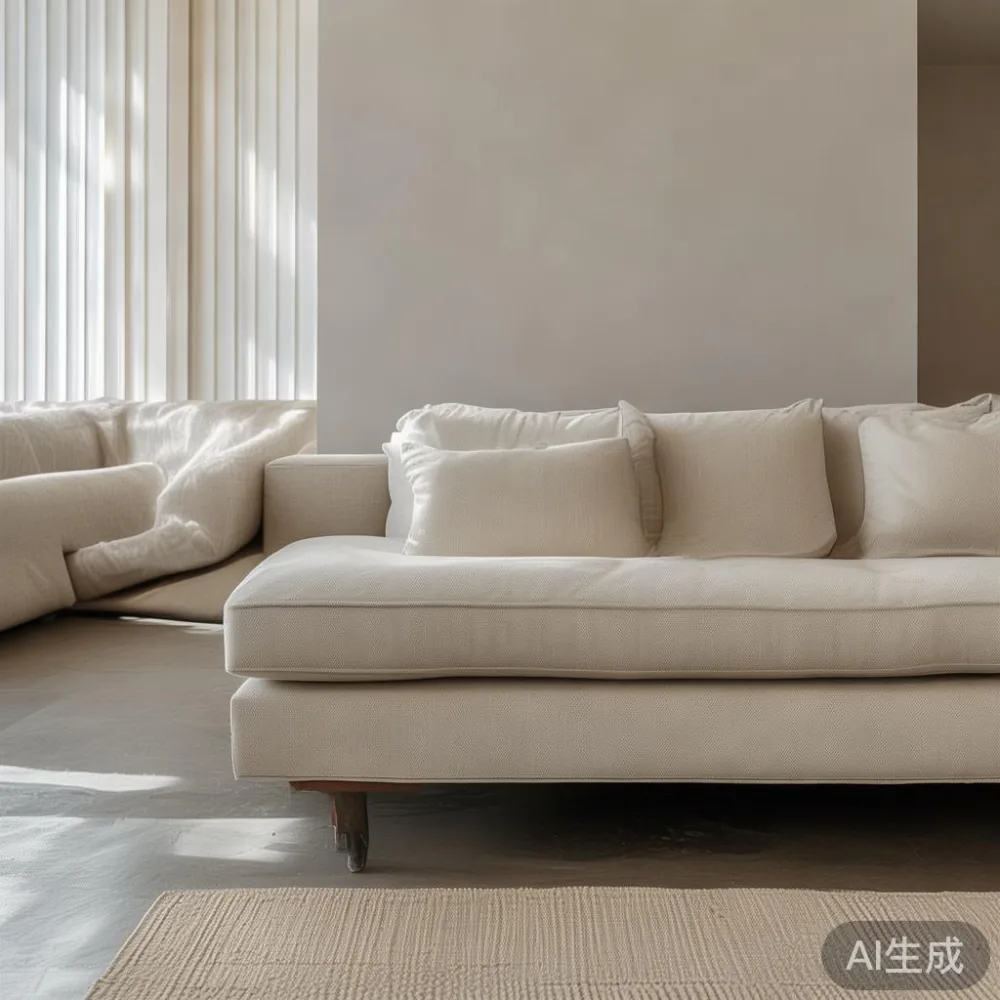
The skin is everything else: the fabric, the foam, the lacquer finish, the drawer slides, the soft-close hinges, and the marble veining on a side table. Most brands separate these into a shorter "cover" warranty of 6 months to 2 years. Read the schedule at the back of the booklet, not the headline on the cover. A 10-year promise on the frame with a 12-month promise on the cushion fill is normal. A 10-year promise on the frame with nothing on the cushion is a red flag.
Look for two numbers in particular: the warranty period in years, and the pro-rata percentage the company will pay if you claim in year three, five, or eight. Some European light-luxury brands use a 100/75/50 schedule, meaning you get 100 % in year one, 75 % in year two, and 50 % in year three. After that, you are on your own. Others go straight from 100 % to zero on day 366. Both are legal. Neither is friendly. Choose accordingly.
How long should a real solid wood warranty last in Singapore's humidity?
Singapore sits at roughly 1 ° north of the equator, with average relative humidity of 80 % and indoor temperatures between 24 °C and 32 °C year-round. That environment is a stress test for any piece of furniture. Oak, ash, and rubberwood expand and contract with moisture; MDF and particleboard swell at the edges when humidity climbs above 70 % for six weeks straight, which happens every monsoon season from November to January.
A serious warranty for solid wood sofa frames, bed frames, and dining tables sold in this market should be 8 years minimum on structure. Anything shorter means the maker is betting on the first humid summer to do their job for them. The Chinese light-luxury segment — what some call post-modern light luxury with slim bronze legs and travertine-look marble tops — has matured quickly, and the better factories now offer 10 years on frame plus lifetime refinishing on lacquer surfaces.
Refinishing is the part Singapore owners forget to ask about. Lacquer yellows under UV through floor-to-ceiling windows in newer condos at Punggol Waterway or Tanjong Pagar. A lifetime refinishing promise means the maker will strip and re-lacquer your nightstand or dining table top for a service fee (usually SGD 80 to SGD 220 per piece) instead of leaving you with a SGD 3,200 paperweight. MIDHILL, for example, lists this as a free pick-up service for warranty customers — the kind of quiet detail that signals a factory has been in the business long enough to know what fails.
Does my warranty cover the lift, the corridor, and my front door?
This is the clause the Tampines buyer never saw. Most Singapore-focused furniture contracts include a "site access" or "delivery conditions" paragraph that shifts responsibility to the buyer the moment the truck arrives at your lobby. If the item does not fit in the lift (typical HDB passenger lift: 1.1 m wide, 1.4 m deep, 2.1 m tall) or around the corridor turn (often 0.9 m to 1.2 m corner radius), the courier is allowed to leave it at the ground floor and charge you a second delivery fee, usually SGD 90 to SGD 160.
Always measure three things before you order: lift door width, lift cabin depth, and the tightest corridor turn from lift lobby to your unit door. For a loveseat in a 3-seater box, the seat-and-back assembly alone can be 1.6 m long and 0.95 m deep, while the carton stretches to 1.75 m. If your corridor turn is under 1.2 m, you need the maker to ship the loveseat unassembled in flat-pack, or you need a maisonette with a service lift.
Private condos in the River Valley and Marina Bay area usually have wider service lifts of 1.3 m to 1.6 m and a loading bay. Confirm with the management office before delivery day; a refusal to use the service lift can void the white-glove clause. Ask the seller to write, in writing, what happens if the item fails to enter your home. The honest ones will say "we retry once free, then charge SGD 120 per attempt or refund 70 %" — and that is a fair, defensible policy.
How do I style a nursery furniture in a modern Singapore home?
Pick pieces with rounded corners, water-based low-VOC finishes, and a 10-year structural warranty so the frame outlasts two children and one cross-border relocation.
That single sentence is what I would tell any parent shopping in Singapore today. Nursery furniture takes more abuse than any other room: the cot converts to a toddler bed, the chest of drawers becomes a toy library, the small wardrobe doubles as a hospital gown rail during chicken pox week. Style it for year zero and you will fight the layout by year three. Style it for year ten and the room grows with the child.
In a 90 sqm HDB four-roomer in Sengkang, I would anchor the nursery with a solid wood convertible bed frame (around SGD 1,150) in natural ash, then layer in a low wardrobe (SGD 1,680) with three soft-close drawers and a hanging rail at 110 cm — easy reach for a five-year-old. Add a small marble table or solid oak nightstand for the bottle station; wipe-clean lacquer matters more than Instagram looks at 2 a.m. Keep the palette to two warm neutrals and one accent, repeat the brass tone from the wardrobe handles in the lamp base, and the room reads as intentional rather than assembled.
What about GST, returns, and the 14-day cooling-off period?
From 1 January 2023, GST in Singapore sits at 9 %, and every overseas shipment above SGD 400 is taxed at the point of import by the seller if the brand is GST-registered. Many Foshan exporters now quote GST-inclusive landed prices to avoid the awkward moment at customs when a SGD 2,400 dining table becomes SGD 2,616. Ask the seller, in writing, whether the quoted price includes GST, delivery to your door, and any lift-access surcharge. If the answer is "depends", walk away.
The 14-day return window in Singapore is governed by the Consumer Protection (Fair Trading) Act, but only for transactions with a local entity. If you buy direct from a factory on Alibaba or a brand's .com site, the return clause in the warranty document overrides the Act — another reason the fine print matters. A trustworthy seller offers 14 days from the date of delivery, with the buyer paying return shipping only when the item is not defective. Free shipping over US$350 is a Foshan-exporter norm; in SGD terms that is roughly SGD 480, and most factories apply the threshold to the pre-GST subtotal.
Is the warranty still valid if I move to Johor Bahru or a new HDB in Punggol?
Yes, provided the warranty is tied to the piece, not to the original delivery address — but you must notify the seller in writing within 30 days of the move and pay any relocation fee.
Most Chinese light-luxury brands write their warranties to follow the serial number, not the buyer, which is good news for expats rotating between Singapore and a second home in Kuala Lumpur or a family unit in Woodlands. A few American light-luxury labels still tie coverage to the original delivery postcode, a holdover from their domestic logistics model. If you anticipate even one cross-border move, ask the seller to confirm transferability in writing before you pay the deposit.
When a piece does fail — a cracked stretcher on a dining table, a sagging pocket spring on a loveseat, a delaminating marble top on a nightstand — the claims process usually runs like this: email photos and the serial number, wait 3 to 7 working days for a triage reply, receive a courier inspection within 14 days, then a repair, replacement, or refund within 30 days. Anything longer means the brand is outsourcing warranty to a third party. For a piece in the SGD 2,000 to SGD 6,000 range, that is too slow. Hold the maker to a 30-day resolution clock.
Five warranty clauses I now treat as non-negotiable
First, the frame warranty must be at least 8 years on solid wood and clearly state "frame and load-bearing joints", not the vague "construction". Second, the cushion, foam, and fabric cover must carry a separate 2-year warranty with replacement, not pro-rata repair. Third, lacquer and finish defects must be covered for at least 3 years against peeling, yellowing beyond 5 ΔE units, and cracking — the latter is a factory cure problem, not a humidity problem. Fourth, the warranty must remain with the piece for the original owner and one subsequent owner, not "original purchaser only". Fifth, the seller must publish a Singapore-based service contact — a hotline, a WhatsApp, an email that a human reads — not just a Shenzhen factory line.
Skip any one of those five and the loveseat in your living room is a risk you do not need. A solid wood bed frame or a marble-topped dining table in this climate is a 10-to-15-year relationship. The contract you sign today is the conversation you will have with the seller in 2031 when something finally moves the way it should not. Read it now, measure your lift now, ask the awkward questions now, and your future self will thank you when the next Tampines monsoon rolls through and the sofa is still tight, quiet, and square.