Choosing the Right Loveseat Size for a Singapore HDB Living Room: A Practical Sizing Guide
Buying a loveseat for a Singapore HDB flat sounds simple until you stand in your Tampines 4-room living room with a measuring tape and realise that every centimetre matters. Standard 3-seater sofas often swallow the room whole, and oversized recliners block the corridor into the kitchen. A well-proportioned loveseat — usually between 120 cm and 170 cm wide — solves the puzzle: comfortable seating for two adults, room to breathe, and a shape that suits compact HDB layouts from Bedok to Punggol. I measured three different units last month with my colleague Wei Ling, and we were surprised how a 15 cm difference in depth changed the whole flow of the room.
Why HDB Living Rooms in Tampines, Bedok and Punggol Need a Different Sizing Logic
HDB living rooms in mature estates like Tampines and Bedok typically measure around 3.2 m to 3.6 m wide, while newer Punggol BTO flats often come with a slightly longer rectangular layout of roughly 3.4 m × 4.1 m. That sounds generous on paper, but you lose 45 cm to 60 cm to a television console, another 25 cm to skirting, and at least 50 cm of walking path between the sofa and the TV set. Add a 45 cm-deep coffee table and a side cabinet, and the actual seating zone shrinks to about 2 m deep.
This is exactly why a loveseat between 130 cm and 160 cm wide, with a seat depth of 55 cm to 60 cm, tends to fit the brief. A full-size 3-seater at 210 cm will press against the corridor door, especially in 4-room flats where the living-to-kitchen passage is only 90 cm to 100 cm wide. Lift access is another quiet constraint: most HDB passenger lifts in Singapore have an internal cabin of about 1.1 m × 1.4 m with a door opening of roughly 80 cm. A loveseat packaged under 165 cm long and 75 cm wide will clear the lift without forcing the delivery crew to angle the box diagonally, which protects the solid wood sofa frame during transit.
How Do I Measure My HDB Living Room Before Ordering a Loveseat?
Grab a steel tape measure, a piece of A4 paper, and 20 minutes. Start by measuring the wall where the sofa will sit, then subtract the width of any TV console, sideboard or window ledge. Note the depth of the room from that wall to the opposite surface (TV cabinet, window, or kitchen partition). Mark down the corridor width leading to the kitchen and the lift opening on your floor. A practical worksheet is to record four numbers: wall length, usable depth, corridor clearance, and lift door width. Anything wider than the smallest of those four numbers will not reach your living room in one piece.
Last month I helped a couple in Punggol measure their 4-room flat, and their usable sofa wall was only 268 cm once they removed 60 cm for a built-in display shelf. A 145 cm loveseat left them with a comfortable 60 cm breathing gap on each side — enough for a small floor lamp and a stool, but tight enough to feel intentional. If you want a loveseat with a chaise, remember to keep at least 90 cm of clearance in front of the chaise so that someone can still walk around it without stepping over a reclining foot.
What Loveseat Dimensions Work Best for HDB and Condo Living Rooms?
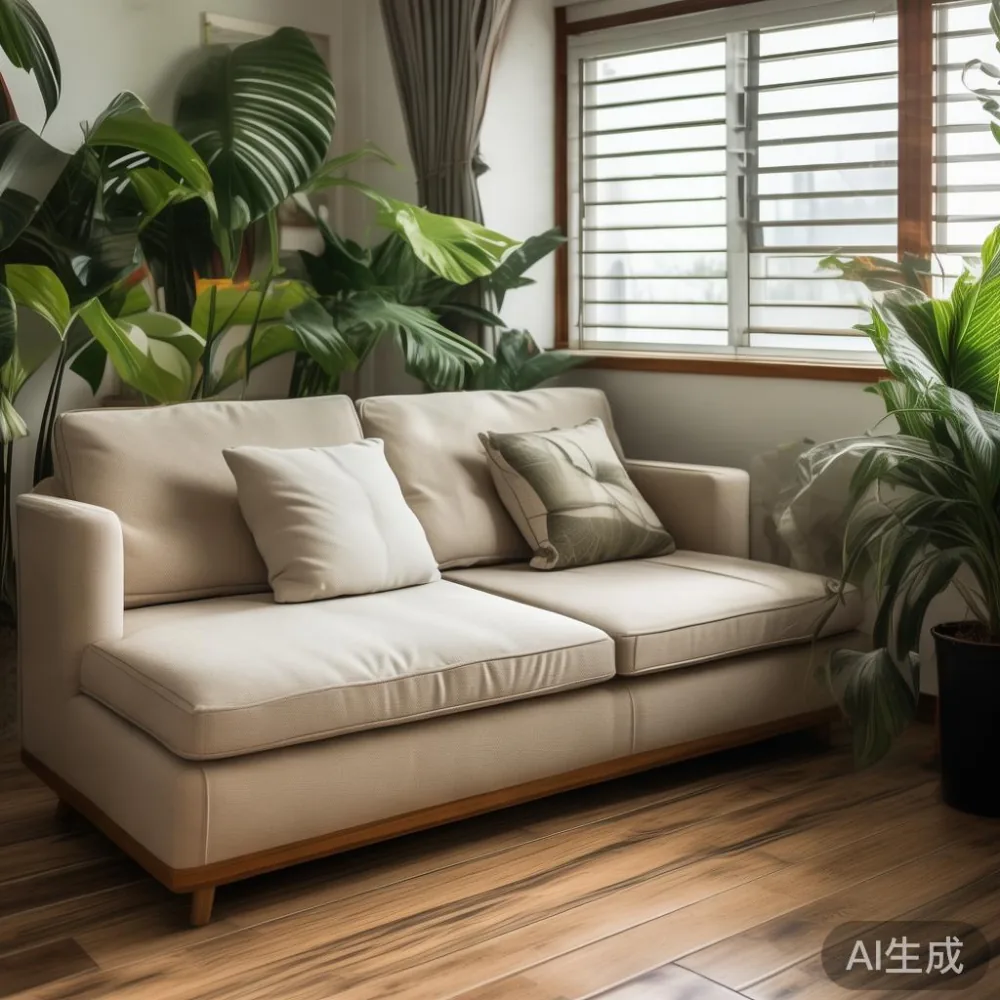
For most HDB living rooms, a loveseat with an outer width of 135 cm to 160 cm, an outer depth of 80 cm to 90 cm, and a seat height of 42 cm to 46 cm is the sweet spot. Seat depth of 55 cm to 60 cm suits Singaporean users who tend to sit upright rather than lounge cross-legged, and a backrest height of 38 cm to 45 cm keeps the silhouette low enough not to clash with a wall-mounted TV at 110 cm to 130 cm from the floor. If you want a loveseat that doubles as a guest bed for visiting relatives during Chinese New Year, look for a click-clack or pull-out model with an extended length of 180 cm to 200 cm.
For premium projects, French light luxury or American light luxury proportions tend to run a little deeper (seat depth 60 cm to 65 cm) and taller (backrest 45 cm to 50 cm) because the design language favours sculpted cushions and flared armrests. If your living room follows a post-modern light luxury palette — think travertine marble table, brass accents, and boucle fabric — the same loveseat dimensions still apply, but you may want to push the width up to 165 cm to balance the visual weight of a heavier marble coffee table. A standard 90 cm round marble side table, for example, anchors a 150 cm loveseat nicely without crowding the room.
Will the Loveseat Fit Through the HDB Lift and Corridor?
Yes, in 9 out of 10 cases — but only if you check three numbers first. The lift door on most HDB blocks is 80 cm wide, the lift cabin internal width is about 1.1 m, and the corridor between the lift lobby and your unit door is usually 1.2 m to 1.5 m wide. Sofas are generally shipped in cartons that add 10 cm to 15 cm to the actual dimensions, so a 160 cm loveseat will arrive in a 175 cm-long box. That fits comfortably through an 80 cm door as long as you stand the carton on its narrow end (roughly 80 cm × 80 cm cross-section for most loveseats).
Corner units are a different story. If your heart is set on an L-shape, measure the diagonal of the lift cabin — roughly 1.65 m to 1.75 m — and compare it to the packaged diagonal of the longer segment. In Punggol and Sengkang, where blocks tend to be taller, the lifts are usually a little larger, but I have still seen deliveries in Bedok 610-series blocks where the only option was to bring the loveseat up the staircase in two halves. Many retailers, including MIDHILL, will split a shipment into two cartons if you ask, which adds roughly S$60 to S$120 to the delivery cost but protects the frame and saves a 30-minute struggle at the lift lobby. Delivery timelines from Foshan to Singapore typically run 18 to 28 days by sea, with GST at 9% payable on the landed value above S$1,000 personal relief thresholds for most households.
How Much Should I Budget for a Solid Wood Loveseat in Singapore?
A well-built solid wood sofa in Singapore retails from about S$1,800 to S$4,200 for a loveseat, depending on frame, fabric, and brand origin. Entry-level options at S$1,200 to S$1,800 tend to use mixed hardwood or plywood with a thin veneer, while a true solid oak or ash frame with mortise-and-tenon joinery lands closer to S$2,800 to S$4,200. Add S$200 to S$400 for performance fabric upgrade, and S$150 to S$350 for a premium foam-and-down seat fill. Once you factor in delivery at S$80 to S$200, GST at 9%, and disposal of your old sofa at around S$60 to S$120, the total project budget sits between S$2,400 and S$5,200 for most HDB buyers.
Look beyond the headline price and check the structural warranty — anything under 5 years is a red flag for a load-bearing frame — and whether refinishing is offered. A 10-year structural warranty on the frame, plus lifetime refinishing on scratches, is the kind of after-sales commitment that separates a serious maker from a dropshipper. At MIDHILL, for example, every solid wood sofa and dining table ships from a Foshan factory that has been operating since 2008 and exports to more than 15 countries, so spare parts and replacement cushions are not a gamble. If you are also kitting out the rest of the home, the same factory makes matching bed frame, wardrobe, and nightstand pieces that align with the loveseat finish, which is far easier than mixing three suppliers with three different wood tones.
Which Sofa Style Suits a Light-Luxury HDB Interior?
French light luxury interiors tend to pair curved silhouettes, cream boucle, and soft brass with a low-profile loveseat that has rolled arms and a seat depth of 58 cm to 62 cm. American light luxury, by contrast, leans towards boxier lines, channel-tufted backs, and walnut-toned solid wood frames that read a little heavier — a 145 cm to 160 cm loveseat with a 45 cm backrest is a signature proportion. Post-modern light luxury borrows from both: think asymmetric chaise, neutral bouclé, and a slim brass leg at 15 cm to 18 cm high that lifts the frame off the floor and makes a small HDB room feel airier.
For readers cross-shopping a sofa alongside a bed, the same proportion rules apply. The decision between a light luxury bed vs Modern bed often comes down to ceiling height — HDB standard floor-to-ceiling is 2.6 m, so a tall 130 cm upholstered headboard can dominate the room if the bed is pushed against a low window. If you are researching how to style European light luxury bed in bedroom, keep the headboard under 110 cm and balance it with a slim nightstand in matching solid wood. A best Nordic bed for 2026 will tend to run a low 95 cm headboard and exposed timber legs, which suits smaller HDB bedrooms from 9 sqm to 12 sqm. And if you are weighing a European sofa vs Italian light luxury sofa for the living room, remember that Italian silhouettes are typically 5 cm to 8 cm deeper and 3 cm to 5 cm taller, so a compact HDB layout will thank you for the European profile.
What About Coordinating the Loveseat With Other Furniture Pieces?
A loveseat is rarely the only new piece you buy. In a typical HDB renovation cycle, buyers refresh the sofa, a dining table, and either a bed frame or a wardrobe within a six-month window. Keeping the wood tone consistent across a solid wood sofa, a dining table in matching oak or ash, and a wardrobe in the same grain saves you from a clash of yellows and reds. A MIDHILL bed frame in the same honey oak as your loveseat, for instance, ties the master bedroom and living room together without forcing you into a one-brand-fits-all scheme. The same logic applies to nightstands: a 45 cm-wide two-drawer nightstand at 55 cm tall sits comfortably beside a queen bed and keeps the bedside lamp within reach.
For wardrobes, the question of how to choose American wardrobe comes down to internal layout more than external size. American-style wardrobes usually have a deeper 60 cm carcass (versus 55 cm European), which suits bulkier bedding and luggage but eats into bedroom floor space. In a 12 sqm HDB bedroom, a 180 cm-wide sliding-door wardrobe in solid wood is a safer bet than a 200 cm swing-door version, because the swing door eats 60 cm of clearance. If you want built-in storage without committing to a full renovation, consider Mid-century modern with storage — a low-profile loveseat with a lift-up seat, or a bed frame with two pull-out drawers, can add 0.3 cum to 0.5 cum of hidden storage without taking an extra square metre.
What Common Mistakes Should I Avoid When Ordering a Loveseat for HDB?
The three most common mistakes are under-measuring the lift, choosing a seat depth over 65 cm, and ignoring corridor turns. A loveseat with a 70 cm seat depth feels luxurious in a 30 sqm condo but cramps a 20 sqm HDB living room and pushes the coffee table too close to the TV. Buyers also forget that the HDB corridor into the unit sometimes turns 90 degrees at the security door, which means a 1.6 m-long box needs a 1.6 m-wide turning circle — measure the diagonal of that turn before you commit.
Other pitfalls include ordering a loveseat in a fabric that cannot be spot-cleaned (HDB living rooms see a lot of kopi and teh spills), choosing a leg height under 10 cm that traps dust and robot vacuums, and skipping the white-glove delivery option. White-glove delivery in Singapore typically runs S$120 to S$280 and includes carrying the carton up the lift, assembling the loveseat in your living room, and removing the packaging — a small price for protecting a S$3,000 frame and your freshly painted walls. Free shipping over US$350, or roughly S$480, is a useful benchmark when comparing retailers, because it usually signals that the supplier absorbs the sea-freight cost rather than adding it as a surprise at checkout.
How Do Returns and Refinishing Work if I Change My Mind?
Most reputable Singapore furniture retailers offer a 7-day to 14-day return window for change-of-mind, provided the piece is unused and in its original packaging. A 14-day return policy is generous and gives you enough time to test the loveseat against your daily routine — sit on it with a laptop, watch a movie, host a friend for kopi — before committing. Refinishing, however, is a longer story. Lifetime refinishing on solid wood frames means the factory will sand, re-stain, and re-seal your loveseat if it picks up deep scratches or sun damage over the years, usually for a small service fee covering transport and materials (S$180 to S$450 is typical).
Before you place the order, photograph your living room from three angles, share the photos with the retailer, and ask them to mark up where the loveseat will land. Many Foshan factories will produce a 1:1 paper template for S$30 to S$60, which you can lay on the floor to confirm the footprint. It sounds excessive, but it has saved more than one Bedok customer from a 170 cm loveseat that would have blocked the aircon switch. Treat the loveseat as a 10-year companion — pick the right size once, and you will not need to repeat the exercise until your next renovation cycle.