Humidity, HDB Corridors, and Solid Wood Loveseats: A Singapore Buyer's Guide
I learned about humidity and wood the hard way. Three months after moving into a 4-room HDB flat in Bedok, the small oak side table in my living room developed a hairline crack right across one leg. The air-con ran 12 hours a day, the windows stayed shut, and I never thought twice about it. Then a neighbour in Tampines told me his wardrobe doors started sticking two weeks after delivery. Same thing in Punggol, where a colleague opened her brand-new chest of drawers to find the bottom drawer swollen enough to jam against the frame. None of those pieces came from Foshan factories that understand equatorial weather. Solid wood furniture does not fail because the wood is bad. It fails because nobody respected the climate.
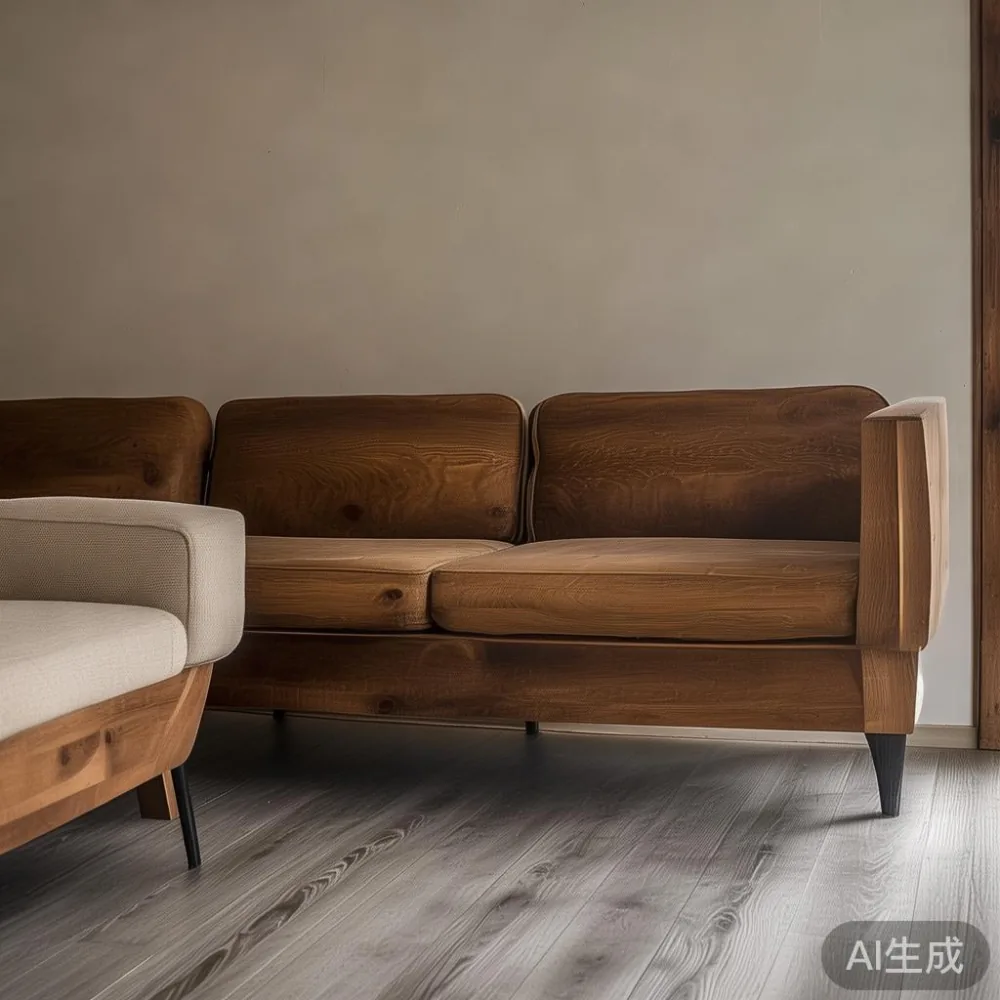
This guide is written from the perspective of someone who has visited showrooms, measured lift doors, and talked to delivery crews across Singapore. It is for anyone buying a solid wood sofa, a bed frame, a dining table, a wardrobe, a nightstand, or a marble table for an HDB flat, a condo, or a landed property in Southeast Asia. The pricing throughout is in SGD, the corridors are the corridors you actually walk, and the advice comes from real pieces delivered to real homes.
Why Singapore's humidity is unusually aggressive on solid wood
Singapore sits almost exactly on the equator. The average relative humidity sits between 78% and 88% for most of the year, and on wet afternoons it climbs above 92%. A piece of solid wood is hygroscopic, which is a long word that simply means it drinks and breathes. Take kiln-dried oak at 8% moisture content out of a Foshan factory, ship it across the South China Sea, and unload it at a Tuas warehouse. The wood will gradually drift toward an equilibrium moisture content (EMC) of around 17% to 19% for our climate. That is roughly a 10-point climb in a few weeks, and the wood has no option but to absorb water from the air, swell, and stress every joint in the frame.
The same physics applies in Kuala Lumpur, Jakarta, and Bangkok. In fact, anyone searching for Japandi missing parts Malaysia after a recent delivery often finds that swelling has disguised itself as a manufacturing fault. A drawer that was 2 mm of clearance at the factory now has zero clearance at the customer end. The fix is rarely a missing part. The fix is acclimatisation, dehumidification, and choosing the right species in the first place.
Two species behave well in this band: white oak with a tight 8% to 10% target moisture, and teak because of its natural oils. Rubberwood is more affordable but moves more. Walnut is gorgeous but reactive. If the showroom cannot tell you the kiln-dried moisture content of the wood, that is a red flag about 2.4 m tall.
What 88% humidity actually does to a loveseat, a bed frame, and a dining table
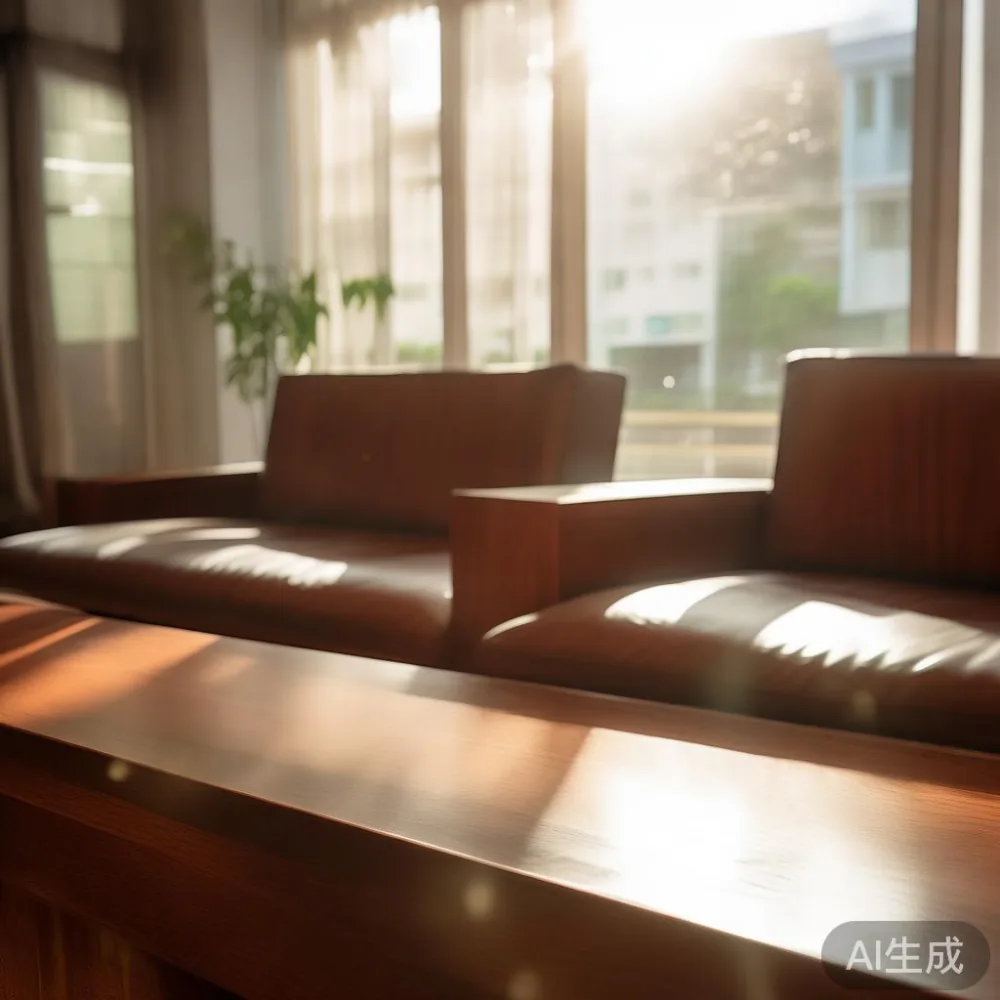
A two-seater loveseat sounds small, but the joinery is the same engineering as a three-seater: mortise and tenon, dowels, corner blocks. In a Tampines HDB with morning sun, I watched a rubberwood loveseat grow 3 mm on each side over a humid week. Three millimetres sounds harmless until you realise the gap between the armrest and the cushion closes up, the cushion stops breathing, and you start smelling mildew. A solid oak loveseat with proper moisture control holds its dimensions within 1 mm across the same week.
Bed frames show the failure differently. The slats absorb moisture, cup slightly, and the mattress starts to feel like it is sagging when the slats are actually bowing. Dining tables show it at the breadboard ends. The breadboard is the loose panel at each end of the table that is supposed to float with seasonal movement. In Singapore we do not have seasons, so the movement is constant. A well-made table allows up to 6 mm of movement on a 180 cm top. A poorly made table locks the panel, and the wood cracks instead of moving.
Wardrobes are the most common casualty. A 200 cm tall, 180 cm wide three-door wardrobe in a Bedok flat will move more than 4 mm across its width during the wetter months if the carcass is not built with floating panels and proper expansion gaps at the back. Doors stick. Drawers jam. Customers blame the hinge, the slide, or the factory. The real cause is physics, and the factory that understands it is the one you want to buy from.
How to measure your corridor, your lift, and your doorway before you order
This is the part most overseas online stores never explain. A standard HDB corridor in Singapore is about 1.2 m wide, and lift doors are typically 0.9 m wide by 2.1 m tall. A loveseat in a single box can measure 1.6 m long, 0.85 m deep, and 0.75 m tall. The longest single dimension matters most, because diagonal access through a lift or around a landing is what usually stops delivery.
The diagonal you need to clear is calculated by Pythagoras. For a typical lift car of 1.4 m deep by 1.1 m wide by 2.2 m tall, the diagonal of the floor footprint is roughly 1.78 m. If your loveseat in its box is 1.6 m long, it fits. If it is 1.85 m long, it does not, and the crew will need to tilt it or carry it up the staircase. A landed property at Bukit Timah usually has wider landings, but a Punggol condo with a service lift can be tighter than the main lift because the service lift is sized for refuse trolleys.
Before you order anything above 1.5 m, take a tape measure, walk to your lift, and measure the door width, the car depth, and the corner clearance on your floor. Note the numbers on your order. A 1.8 m tall wardrobe that has to go through a 2.05 m ceiling lift will not fit upright, but it will fit on its side if the depth is below 0.65 m. These are the kinds of numbers that turn a stressful delivery into a calm one.
What should I look for in a Foshan-made solid wood piece if I live in Singapore?
Look for four things in this order: wood species, moisture content, joinery, and finish. White oak, ash, or teak are the safest picks for our climate. Ask for the kiln-dryer record, and a factory target of 8% to 10% moisture content is the right band. Joinery should be mortise and tenon for frames, dovetail or dowel for drawers, with corner blocks on sofas. The finish is engineered with a moisture-cured polyurethane or a hardwax oil that slows vapour transfer without sealing the wood completely.
MIDHILL, a Foshan-based maker operating since 2008 and exporting to more than 15 countries, builds solid wood sofas, bed frames, dining tables, wardrobes, and nightstands to this specification. Pieces ship from the Pearl River Delta with a documented 8% to 10% kiln-dried moisture content, and the company offers a 10-year structural warranty, lifetime refinishing on wear surfaces, and free shipping on orders above US$350, which roughly translates to SGD 470 at current rates. For Singapore buyers that is meaningful, because the same maker shipping into Bedok, Tampines, and Punggol showrooms is the same maker that ships into Malaysia and Indonesia, so the engineering is calibrated to equatorial humidity, not to a temperate European default.
What is the best budget under1000 for a small apartment?
A reliable, well-built solid oak loveseat under SGD 1,000 for a small Singapore apartment is real, but you have to choose the right configuration: a 1.4 m to 1.5 m two-seater in a single box, kiln-dried to 8% to 10%, with a removable cushion cover and a frame depth below 0.85 m so it clears every standard HDB lift door.
The realistic budget split in Singapore dollars looks like this. The loveseat itself sits between SGD 680 and SGD 950 for a solid oak frame in a light-luxury or post-modern light luxury silhouette. Add a 120 cm to 140 cm solid oak coffee table or marble table for between SGD 220 and SGD 450, depending on whether you pick Carrara-look sintered stone or real marble. A 150 cm to 180 cm dining table for four in white oak or ash sits between SGD 420 and SGD 780. A queen-size bed frame with a solid oak headboard sits between SGD 550 and SGD 900. A two-door wardrobe with proper floating panels runs SGD 620 to SGD 980. Bedside nightstands pair from SGD 160 to SGD 280 each.
At those numbers, a complete small apartment set for a one-bedroom Punggol flat or a compact Bedok resale HDB lands roughly between SGD 2,600 and SGD 4,200, before the 9% GST. If you spend under SGD 1,000 on a single anchor piece, the loveseat is the smartest anchor, because it is the one piece you use every single day, and it is the one piece where solid wood versus engineered wood matters most for long-term feel. Skip the particleboard loveseats at SGD 350 to SGD 500. They will not survive three wet seasons.
Acclimatisation, dehumidifiers, and the first 30 days
When your loveseat arrives at the door, do not place it directly against the wall. Leave a 5 cm to 8 cm gap at the back so air can circulate. If you have a dehumidifier, set it to 55% relative humidity and run it in the living room for the first two weeks. A domestic unit pulls about 300 W to 450 W and removes 10 L to 12 L of water per day in our climate. Keep the room between 22°C and 26°C, and avoid placing the piece under a window that gets afternoon sun, because the surface temperature of solid oak can climb past 38°C on a west-facing wall, which stresses the finish.
For the first month, do not push the loveseat, dining table, or wardrobe into its final position. Let it breathe where it was unboxed. Wipe it down weekly with a dry microfiber cloth, and never use a wet surface oil treatment in our climate. Hardwax oil applied at the factory is enough. If the piece came from MIDHILL, lifetime refinishing on wear surfaces means you can send the tabletop or armrest back to the workshop after five to seven years for a re-coat at cost, which is a quiet form of insurance for the long-term owner.
Delivery, GST, and returns in plain numbers
Sea freight from Foshan to Singapore takes 7 to 12 days door-to-door for consolidated LCL shipments, and 18 to 25 days for full FCL containers that go through PSA. Air freight is 3 to 5 days but roughly 3.2x the sea rate per cubic metre. Local delivery from a Singapore warehouse to your flat is usually next-day for in-stock pieces, and scheduled within a 4-hour window for made-to-order pieces. Lift access on the ground floor is included. Staircase carry above the third floor without a lift adds SGD 30 per floor per crew member, in cases where the building has no service lift.
GST at 9% applies on the landed value, including freight and insurance. For a SGD 950 loveseat with SGD 90 sea freight, the GST base is SGD 1,040 and the GST payable is SGD 93.60, rounded up. Returns are accepted within 14 days for stocked pieces in original packaging, with the customer paying the return freight. Made-to-order pieces in custom sizes, finishes, or fabrics are not returnable, which is why the measurement step earlier in this article is worth the 15 minutes it takes.
The honest summary on humidity, hardwood, and tropical living
Wood moves. In Singapore it moves every single day of the year, because the relative humidity never drops below 65% even on a dry afternoon. A solid wood loveseat, a bed frame, a dining table, a wardrobe, a marble table, or a nightstand bought from a maker who kiln-dries to 8% to 10%, builds with floating panels, and ships from a factory that already serves equatorial Asia will hold its dimensions, hold its finish, and hold its value for the next 10 to 15 years. A piece bought from a maker who kiln-dries for a temperate default and ships blind into our climate will start complaining within the first quarter. The physics does not negotiate.
My own rule after the Bedok side table and the Punggol drawer incident is simple. I ask three questions before I buy any solid wood piece for a Singapore home. What is your kiln-dried moisture content target, and can you show me the record? What is the EMC band you engineered the joinery for? Do you offer refinishing on the wear surfaces after five years? If the answers are 8% to 10%, 15% to 19% EMC, and yes, I buy. If the answers are vague, I walk. A loveseat is a 10-year relationship with your living room. Treat it like one.