Humidity in Southeast Asia and Your Solid Wood Loveseat: A Practical Guide for Singapore Homes
I learned this the slow way. Last month I visited a friend's new BTO in Punggol, a 4-room HDB with the typical 92 cm corridor and a lift door opening of around 90 cm wide. He had bought a beautiful two-seater solid wood loveseat from a local showroom six weeks earlier, and one of the front legs was already showing a 2 mm gap where the wood had shrunk away from the dowel. The relative humidity outside was 82%. Inside, with the air-con set to 24 degrees, the meter on the wall still read 68%. That single number explains a lot about why Southeast Asian homes behave differently from temperate ones when you bring solid wood in.
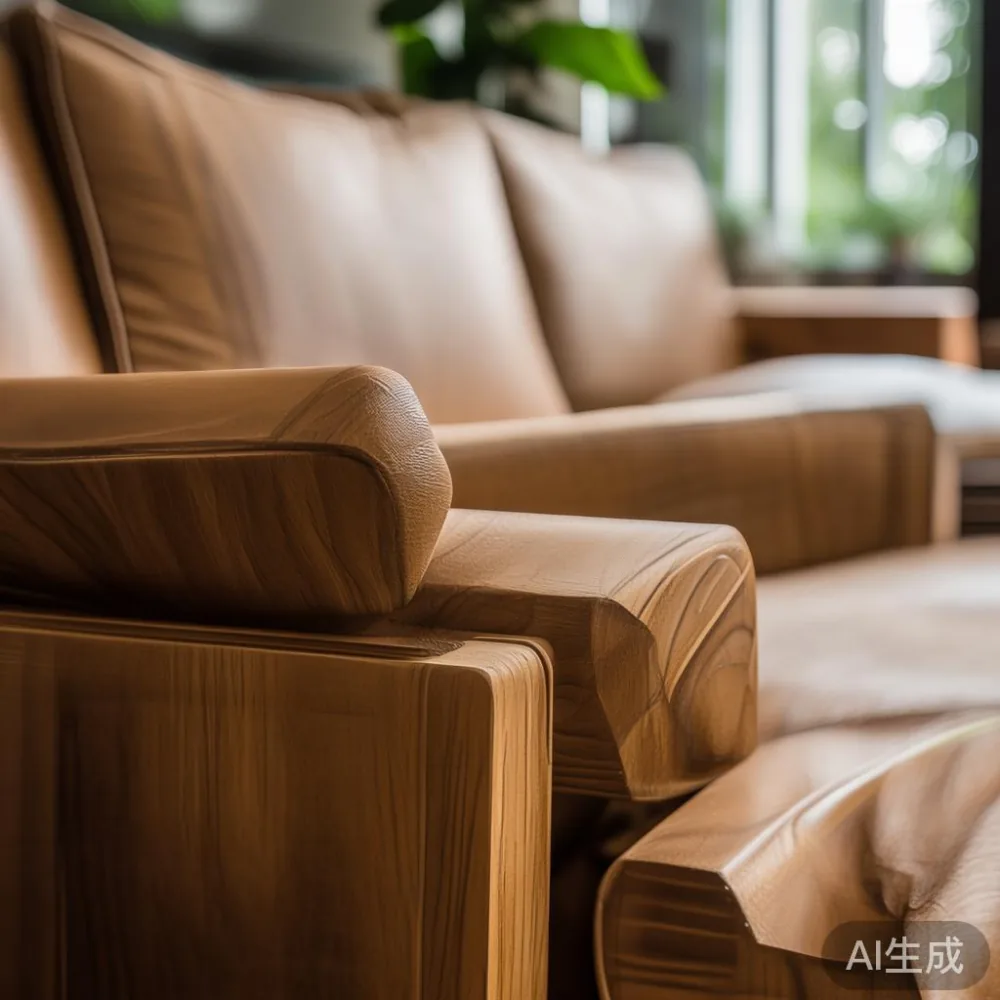
This guide is written for Singapore owners of HDB flats and condos, and it leans on the same logic we use at MIDHILL when we talk to buyers in Tampines, Bedok, and Punggol. The goal is simple: help you pick a solid wood sofa, bed frame, dining table, wardrobe, nightstand, or marble-top table that actually survives the climate, and explain what is happening to the wood under your feet.
Why does humidity in Southeast Asia cause wood furniture to swell, shrink, and sometimes crack?
Because solid wood is hygroscopic. It absorbs and releases moisture until it matches the air around it. Singapore's outdoor relative humidity sits between 70% and 90% for most of the year, while an air-conditioned bedroom typically runs 45% to 60%. That swing of 25 to 35 percentage points is enough to push a 180 cm oak plank through several millimetres of movement over a single season.
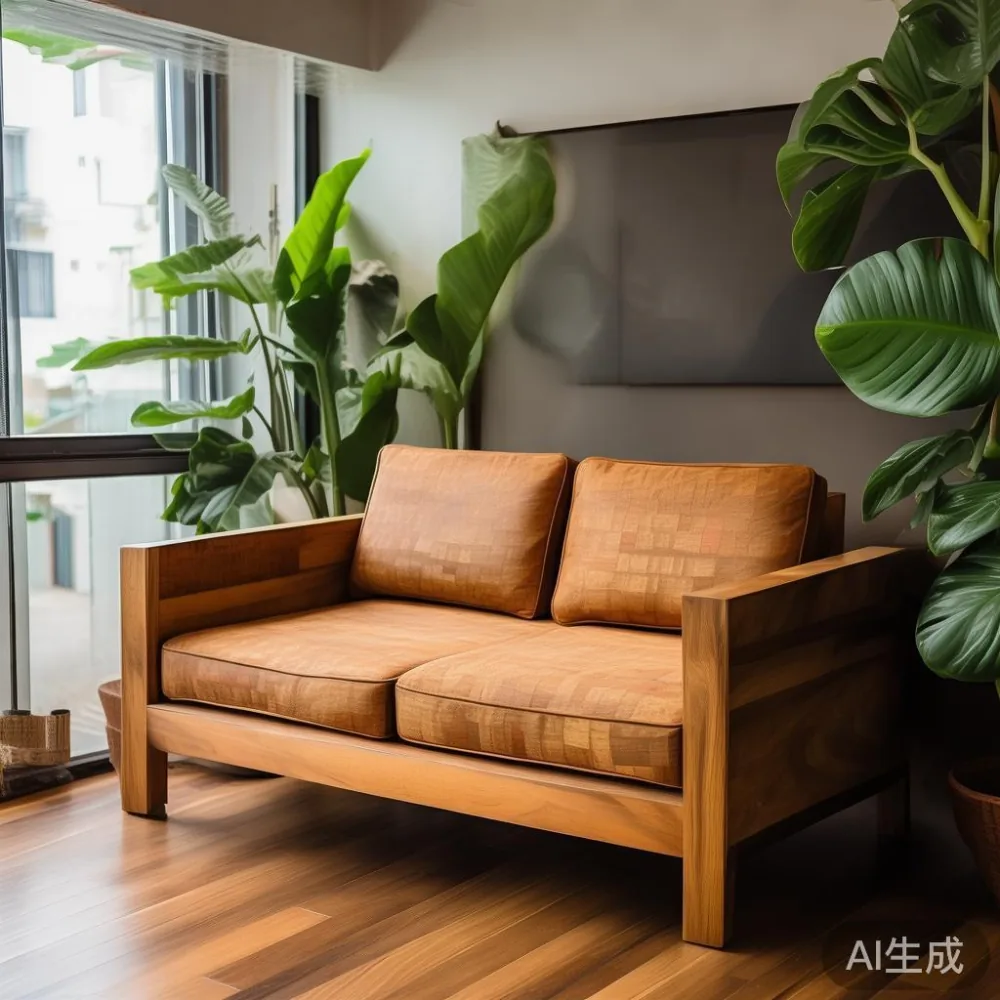
When humidity rises, wood cells swell and the piece grows slightly in width and thickness. When humidity drops, the same cells shrink. Over time, repeated cycling leads to hairline surface checks on tabletops, slight openings at mitre joints on a dining table, and that tiny leg-to-rail gap I saw on my friend's loveseat. Engineered boards, by contrast, use cross-laminated cores or plywood that resists this movement, which is part of the conversation around compact furniture vs solid wood: one trades authentic feel for stability, the other trades stability for character and longevity when properly dried.
What is the difference between American country bed and modern furniture?
An American country bed is built from thicker solid wood components (often 4 to 5 cm face frames and 3 cm slats), uses visible joinery like mortise-and-tenon or dowel construction, and accepts seasonal wood movement as part of its design; a modern bed frame is typically thinner, often combines solid wood with engineered panels or metal, hides joinery behind flush surfaces, and is built for a narrower humidity tolerance band of about 40% to 60% RH.
In a Punggol HDB where the master bedroom averages 55% RH with the air-con running, both styles can survive, but the American country bed will forgive a forgotten window open during a thunderstorm, while the modern frame will mark the event with a small surface check. This is also why MIDHILL kiln-dries its bedroom collections to roughly 8 to 10% moisture content before container loading, so the wood arrives closer to a 55% indoor target rather than a Guangzhou outdoor reading.
Which humidity range is actually safe for a solid wood loveseat in a Singapore flat?
A safe indoor range for solid wood furniture is 45% to 65% RH, with 50% to 55% being the sweet spot for most temperate hardwoods like white oak, ash, and walnut. Stay below 35% for long stretches and you risk surface checks and joint gaps; stay above 75% for weeks and you invite mould on unfinished undersides and slow swelling that can crack a marble-top side table's substrate.
A SGD 35 digital hygrometer from a Tampines mall is the cheapest insurance you can buy. Place it next to your loveseat or bed frame, not on an exterior wall. Run the air-con at 23 to 25 degrees, which usually keeps RH in the 50s. If you read 40% for three days running, drop a small bowl of water near (not touching) the wooden piece. If you read 70% for a week, switch on the air-con or a dehumidifier set to 50%.
How do I move a solid wood dining table through a 90 cm HDB lift without damaging it?
Measure first, then disassemble. A standard 6-seater solid wood dining table is 180 cm long by 90 cm wide, often too wide to tilt past the lift door or around the corridor turn. Most quality tables separate into a top and two pedestal bases using 8 mm hex bolts; removing the top reduces the largest piece to around 180 cm by 90 cm by 8 cm, which still needs a careful tilt into the lift. Plan for at least two people and 15 minutes per floor, including the lift waiting time at peak hours.
Wrap each component in moving blankets (around SGD 12 per piece at a Bedok storage shop) and secure with stretch film. Protect corners with 5 mm foam strips. If the table has a marble inlay or a marble-top accent, separate it from the wood base and carry it on edge, never flat. A 1.9 m by 0.9 m Carrara marble insert weighs roughly 38 kg, so budget for a third person. Always check the lift's inner dimensions: in most HDB blocks from the 2010s onward, the cabin is about 1.1 m wide by 1.4 m deep with a door opening of 0.9 m, which is tight for an 8 cm-thick solid wood top laid flat but workable when tilted.
Is a marble table or a solid wood dining table easier to live with near a kitchen?
A marble table is easier to wipe clean but more sensitive to acid (a splash of lemon juice or vinegar will etch a polished surface within seconds) and to impact (a dropped cast-iron pan can chip a corner). A solid wood dining table forgives daily knocks, accepts water rings if you use coasters, and can be sanded and refinished every 8 to 12 years to remove surface marks. In a HDB kitchen with no door, where cooking steam drifts toward the dining area, both materials need protection, but wood will mark less visibly and recover more gracefully.
If you entertain often and want a statement piece, a light-luxury dining setup with a sintered stone or marble top on a solid wood base gives you the clean look with a forgiving substrate. If you have small children eating three meals a day at the table, an all-solid-wood top in white oak or ash, finished with a hardwax oil, is the more forgiving choice for the next 15 years.
What daily habits actually protect a wardrobe, nightstand, and bed frame from Singapore humidity?
Three habits: keep the air moving, keep the wood away from walls by 3 to 5 cm, and wipe with a dry microfibre cloth weekly. Air movement prevents the still, damp pockets where mould spores settle. The wall gap lets the back panel breathe and prevents moisture wicking from the plaster. Dry-cloth dusting removes the thin salt-and-humidity film that dulls a lacquer finish over 6 to 12 months.
For a 210 cm tall x 180 cm wide x 60 cm deep wardrobe, leave at least 5 cm behind it and avoid pushing it against an exterior wall that faces the afternoon sun. For a nightstand, rotate it 180 degrees every quarter so the LED lamp heat does not dry one side unevenly. For a bed frame, vacuum the slats every two months; dust on slats attracts moisture and can mark the mattress underside. If you own a solid wood sofa or loveseat with loose cushions, fluff and rotate the cushions weekly for the first three months while the foam settles and the wood frame finds its equilibrium.
How does MIDHILL handle Southeast Asian humidity before the container is even sealed?
MIDHILL kiln-dries solid wood to a target moisture content of 8 to 10%, then conditions the finished pieces in a Foshan humidity chamber that simulates 70% RH for 14 days before export crating. This pre-stabilisation step reduces the amount of movement a piece will undergo during its first six months in a Singapore home. Containers are loaded with desiccant bags (roughly 1.5 kg per cubic metre) and moisture barriers, and pieces ship in 25 to 35 day ocean transit from Yantian to Singapore.
On arrival, customers in Tampines, Bedok, or Punggol typically receive their order within 3 to 5 working days after customs clearance, with free delivery for orders over US$350 (about SGD 480). Every structural component carries a 10-year warranty, and refinishing service is available for the lifetime of the piece. For a 1.8 m solid wood dining table or a 2 m wardrobe, the same delivery team also handles room-of-choice placement, which matters when the lift is too narrow for a flat carry.
Are post-modern light-luxury pieces a good match for compact HDB interiors?
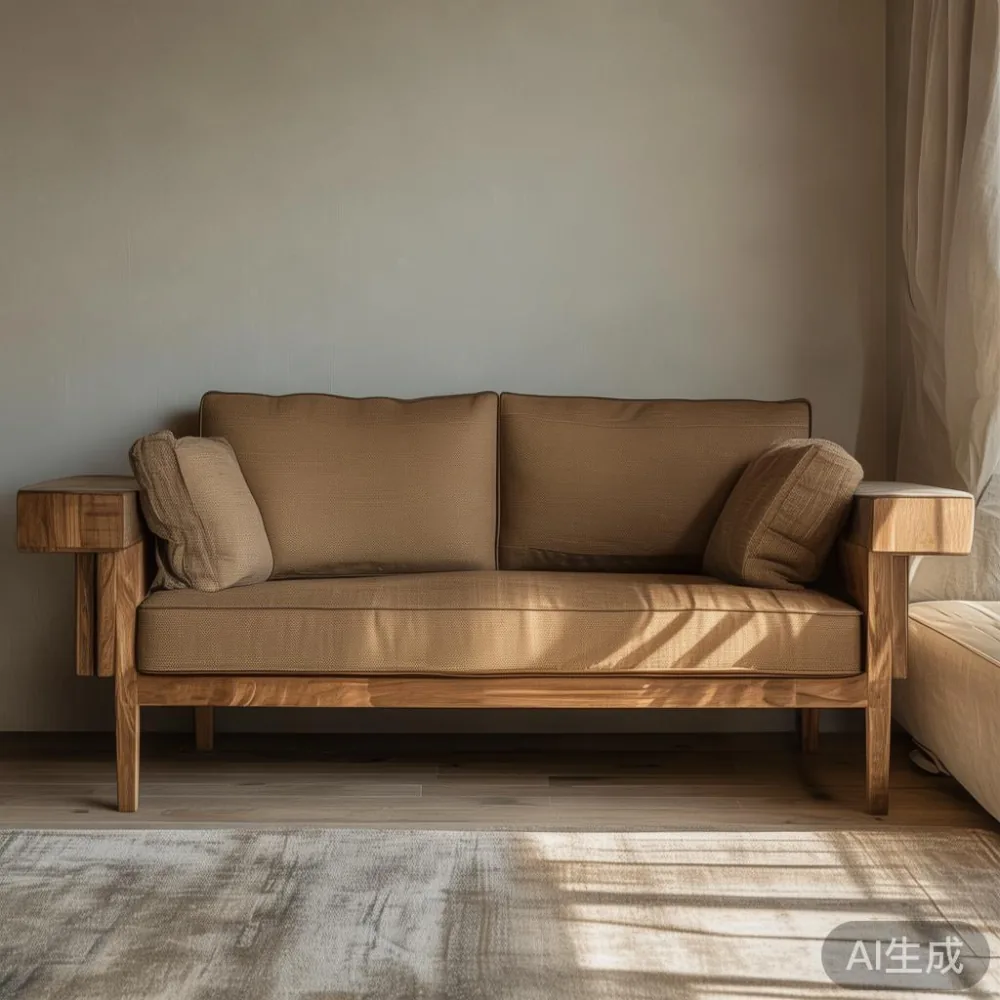
Yes, if you respect the proportions. Post-modern light luxury favours slim 4 to 6 cm profiles, mixed-material accents like brushed brass or sintered stone, and softer curves that read well in a 90 to 110 sqm HDB. A solid wood loveseat in this style, with a 55 cm seat depth and 65 cm arm height, fits a 3 m by 3 m living room without crowding the walkway. A matching marble-top coffee table at 110 cm by 60 cm leaves room for circulation, and a slim 4 cm-thick TV console at 180 cm wide anchors the wall without overpowering it.
The light-luxury vocabulary also tends to use lighter oak and ash tones, which suit the bright, neutral palettes common in Singapore condos. Pair a white-oak loveseat with a boucle or linen-blend throw, a marble accent table, and a slim brass floor lamp, and the room reads as considered rather than cramped. Avoid pieces over 90 cm deep in living rooms under 12 sqm; the eye reads them as walls and shrinks the perceived space.
What should I check during the 14-day return window on a new solid wood piece?
Check five things in the first 14 days: (1) run your hand across all visible joints and feel for any 1 mm+ step between adjoining surfaces, (2) place a spirit level on the top and confirm it sits within 2 mm across the full length, (3) open and close every drawer and door 10 times to confirm alignment, (4) inspect the underside of every tabletop for planer marks or moisture readings above 12% with a pin meter if you have one, and (5) photograph every face under daylight and lamp light to record the finish colour for future reference.
These five checks cover the issues that show up within the first two weeks: joint separation from poor dry-fit, uneven legs from a soft floor, misaligned drawers from rushed assembly, residual high moisture from incomplete kiln-drying, and finish colour drift that becomes obvious once a piece sits in your specific lighting. If anything fails, a 14-day return window gives you a clean exit; document with timestamped photos and contact the supplier within 24 hours of spotting the issue.
A short checklist before you buy any solid wood piece for a Singapore home
Ask for the kiln-dried moisture content reading (target 8 to 10%), the country of origin for the hardwood, the joinery method at stress points, the warranty length on structure, and the refinishing policy. For HDB and condo delivery, ask whether the team will remove packaging in your corridor and whether room-of-choice placement is included; in blocks with single-load lifts under 1.2 m deep, this can be the difference between a smooth Saturday and a three-hour struggle.
Plan your budget with GST in mind: on a SGD 3,200 solid wood dining set, add 9% GST (SGD 288) and ask whether the supplier quotes GST-inclusive or extra. Delivery for orders over US$350 is free to Singapore addresses, and a typical 4-piece dining set, a bed frame, or a two-seater loveseat clears this threshold easily. If you are furnishing an entire 4-room BTO in stages, group your orders by quarter to ride the same delivery slot and reduce handling.
Singapore's humidity is not a problem to be solved; it is a parameter to be designed around. Pick solid wood that has been properly dried, place it with breathing room, keep your indoor RH between 45% and 65%, and check it during the first 14 days. Do those four things, and a well-built solid wood sofa, bed frame, dining table, wardrobe, nightstand, or marble-accented piece will outlast two or three renovations in the same flat.