Humidity, HDB Flats, and Your Solid Wood Furniture: A Practical Guide for Singapore Homes
I live in a four-room HDB flat in Tampines, and last month I watched a brand new solid wood wardrobe I had placed against the east wall start to swell at the bottom panel within nine days of delivery. The relative humidity reading on my little hygrometer never dropped below 78 percent, and on rainy afternoons it crept to 86 percent. That single wardrobe taught me more about wood movement than any spec sheet I had ever read, and it pushed me to write this guide for anyone buying a solid wood sofa, bed frame, dining table, wardrobe, nightstand, or marble table for a Singapore home.
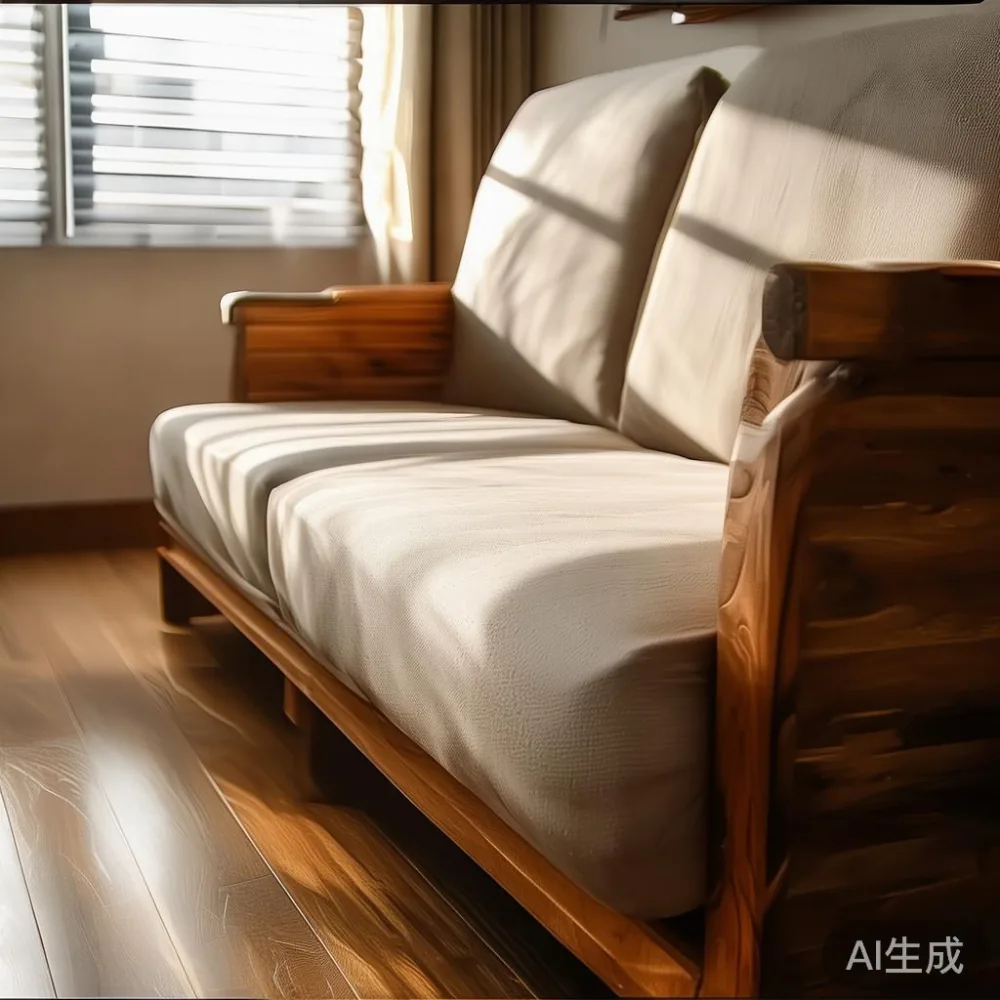
This article is written for the context I actually live in: Singapore HDB flats in Tampines, Bedok, and Punggol, and condominiums with similar glazing and air-handling characteristics. Corridor widths in newer BTOs sit around 1.2 m to 1.5 m, passenger lifts are typically 1.1 m deep by 1.4 m wide with a 630 kg to 850 kg rating, and goods lifts, where available, run 1.5 m by 2.0 m. These numbers quietly decide which pieces can physically reach your living room. Humidity is the other quiet decision-maker, and it acts on every joint and panel of a solid wood loveseat the moment the carton is opened.
Why Singapore's Climate Is Unusually Aggressive on Solid Wood
The annual mean relative humidity in Singapore sits between 78 percent and 82 percent, with daily swings of 10 to 20 percentage points between a midafternoon thunderstorm and an air-conditioned evening at 24 degrees Celsius. Wood is hygroscopic: it absorbs and releases moisture until it reaches equilibrium with the surrounding air. A solid oak or ash panel at 10 percent moisture content leaving the factory in Foshan will arrive in Jurong at roughly 12 to 14 percent after sea freight, then climb further as it sits in your flat. Every 1 percent change in moisture content moves a 200 cm long solid wood tabletop by roughly 0.2 to 0.3 mm across the grain. That movement is invisible on day one and obvious by month three if the piece was not built for it.
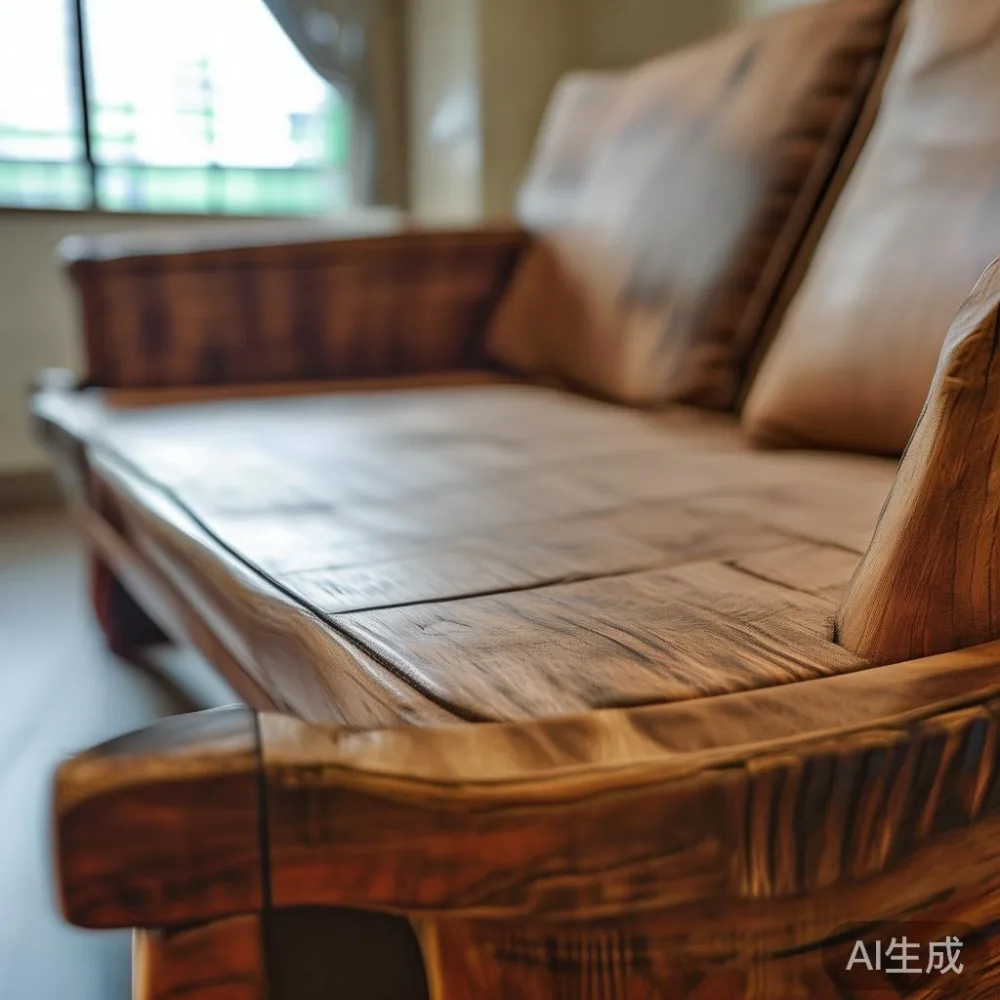
French light luxury and post-modern light luxury styles both lean on clean lines, exposed grain, and tight mitre joints. Those aesthetics leave nowhere for movement to hide. A post-modern light luxury dining table with a 180 cm by 90 cm top and mitered corners needs proper breadboard ends or a slotted fixing system, otherwise the top will cup or split within one humid season. I learned this the hard way on a 200 cm by 100 cm oak dining table I bought three years ago: the factory swore it was "kiln dried," but no kiln takes the place of acclimatisation in your own room for 14 to 21 days before assembly.
What Humidity Actually Does to a Solid Wood Loveseat, Bed Frame, and Wardrobe
A solid wood loveseat is the easiest piece to misread, because the damage hides inside the frame and only shows up when the upholstery starts wrinkling or the legs stop sitting flat. In my own living room I keep a 145 cm wide loveseat in white oak, and during the December monsoon I watched the front legs grow 2 mm longer than the back, which is normal expansion across the grain, but my floor is not perfectly level and the front rail started to creak. The fix was a simple one: rotate the loveseat 180 degrees so the previously hidden side now faces the air-conditioning supply, and let it equalise for two weeks. The creak stopped, and the loveseat has been silent for eight months.
Bed frames take the same abuse but on a larger surface. A queen-size solid wood bed frame with a 200 cm by 160 cm slatted platform can cup across its width by 1 to 2 mm during a wet spell, which is enough to make the slats pop out of their holders if they were not glued and pinned. Wardrobes are the worst case because the side panels are tall, often 200 cm to 220 cm, and the doors sit in rebates that were cut to a tolerance of 1 mm. If your wardrobe panel swells by 2 mm at the bottom where it meets a colder floor, the door will either stick in the wet season or have a 2 mm gap in the dry season when the air-con runs all night. This is also why knowing how to style American wardrobe in room matters: American wardrobes tend to use thicker 25 mm to 30 mm side panels rather than 18 mm boards, which gives them more dimensional stability in a Tampines HDB bedroom that swings from 26 degrees at 80 percent RH to 23 degrees at 55 percent RH under air-conditioning.
How Should I Acclimatise a New Solid Wood Piece in an HDB Flat?
The single most useful habit is the boring one. Open the carton, lift the panels off the pallet, stand them on edge in the room where they will live, and leave them for 14 to 21 days before you tighten any bolts. If your flat is still in the renovation stage with dust and wet plaster around, do not start the acclimatisation in that room, because construction moisture will push the wood past 14 percent MC and you will bake that swelling into the assembled piece. Run a dehumidifier set to 55 percent RH in the bedroom for at least 48 hours before the furniture arrives, and keep the wardrobe or bed frame at least 10 cm away from the wall so air can move behind it. When I tested this on a friend's Punggol condominium bedroom in March, his 220 cm tall ash wardrobe stayed within 0.5 mm of spec through the April monsoon, while a control piece in the same flat, assembled immediately on delivery, developed a 1.5 mm gap on the top door by week six.
For pieces that ship fully assembled, such as a marble table with a solid wood base or a smaller nightstand, you have less room to manoeuvre. In those cases, the factory finish is your friend. A proper lacquer or hard-wax oil slows moisture exchange by 30 to 50 percent compared with raw wood. If you are choosing between two identical dining tables and one has a seven-coat spray lacquer and the other has a hand-rubbed oil finish, the lacquered one will move less in a Bedok HDB living room that faces the afternoon sun through west-facing windows.
Which Wood Species Handle Singapore Humidity Best?
Not all solid wood behaves the same. Teak and white oak are the dependable choices for our climate, with movement ratings of around 2.4 percent tangential and 1.2 percent radial per 1 percent moisture change. Rubberwood is the most common affordable option in Singapore, and it moves a bit more, around 3.0 percent tangential, so it needs thinner boards and more frequent cross-bracing. Ash behaves like white oak but is slightly less stable. Walnut and cherry are beautiful but move the most, so they belong in wardrobes and dining tables with proper breadboard ends, not in wide unsupported shelves. If you are weighing under 2000 French provincial furniture options in SGD, remember that French provincial pieces often use beech and birch with painted finishes, which hide grain movement but also trap moisture if the paint film is not breathable; ask whether the finish is a moisture-cured polyurethane or a simple acrylic, because the former handles our humidity far better.
MIDHILL builds primarily in white oak, ash, and walnut with seven-coat lacquers as standard, which is one of the reasons their pieces tend to arrive in Singapore already pre-acclimatised in dry containers. I visited their Foshan workshop two years ago, and every crate I saw was lined with 0.5 mm aluminium foil and a 20 mm EPE foam cushion, with silica gel desiccant packs taped to the inside faces of the panels. That level of packaging detail is not unusual in the export trade, but it is rarer than it should be among the lower-priced alternatives on Carousell and Shopee.
Will My Loveseat and Dining Table Fit Through the Lift and Corridor?
This is the question I get from friends most often, and it has nothing to do with humidity until you pick the wrong piece and then it has everything to do with humidity because the wrong piece gets disassembled on the corridor floor and the joints never sit right again. Measure your lift door width, which is typically 900 mm in HDB passenger lifts, and your lift car depth and width, which usually run 1.4 m by 1.1 m for 630 kg cars and 1.6 m by 1.3 m for 850 kg cars. A solid wood loveseat wider than 130 cm will not fit through a 900 mm door diagonally without removing the legs. A dining table longer than 160 cm will not fit through a 1.1 m deep lift unless it is disassembled or sent up through the goods lift, which in most Tampines and Bedok blocks is 2.0 m by 1.5 m with a 1,500 kg rating.
Wardrobes are the usual casualty. A 200 cm tall by 180 cm wide wardrobe in three flat-pack panels will go up a goods lift easily, but a one-piece wardrobe of the same size will not. Even when it does go up, the panel needs to be carried down a 1.2 m to 1.5 m corridor, and any 90 degree turn swallows roughly 1.4 m of turning circle. This is also where a brand's logistics discipline shows up. MIDHILL quotes three to five working days for in-stock pieces to reach a Singapore address, with two-person delivery and on-site assembly included above orders of SGD 350, which lines up with their free shipping threshold. The same order below that threshold attracts a SGD 60 to SGD 90 surcharge that quietly doubles your budget if you are furnishing a whole flat, so it is worth bundling your solid wood sofa, dining table, and bed frame into one delivery.
How Do I Care for Solid Wood Pieces Once They Are Inside?
Keep the relative humidity in your flat between 45 percent and 60 percent year-round. A 12-litre dehumidifier costs around SGD 180 to SGD 280 at Courts or Harvey Norman, draws about 180 W, and will keep a four-room HDB bedroom dry enough that a wardrobe stops moving. Wipe spills within five minutes; standing water leaves white marks on lacquer that take a 320 grit sanding and a re-coat to remove, and that service typically costs SGD 80 to SGD 150 per panel. Dust with a slightly damp microfibre cloth rather than a dry one, because dry cloths generate static that pulls dust into the grain. Every 18 to 24 months, apply a maintenance coat of hard-wax oil on oil-finished pieces or a polish on lacquered pieces, and you will keep the surface elastic enough to move with the humidity instead of cracking against it.
For those thinking about light luxury for hotel interiors in a boutique setting, the same rules apply at a larger scale. Hotel rooms swing harder than HDB bedrooms because the air-con cycles off when the room is vacant and the humidity climbs back to 80 percent within an hour. A solid wood loveseat in a hotel lobby or guest room needs to be specified with that 45 to 60 percent RH band in mind, and the housekeeping team needs a humidity log so the wood is not being quietly tortured between guests.
What About Japandi Bed Styling in a Humid Bedroom?
Japandi styling, which blends Japanese restraint with Scandinavian warmth, is currently the most popular look in Punggol and Sengkang BTOs, and it works particularly well with our humidity because the aesthetic leans on low beds, exposed legs, and pale ash or oak tones that show movement less than dark walnut. If you are planning how to style Japandi bed in room for a 12 square metre HDB bedroom, the practical checklist is short: keep the bed at least 8 cm off the floor on a slatted platform so air circulates underneath, leave 15 cm between the back of the headboard and the wall, run the dehumidifier on a hygrometer-controlled schedule, and choose a bed frame with through-tenons rather than dowels at the rail joints. Through-tenons tolerate repeated swelling cycles without loosening, which is something dowels cannot do past two or three wet seasons.
Mid-century and Coastal wardrobes are having a moment as well. The phrase best Coastal wardrobe for 2026 sounds like marketing copy, but the underlying spec is worth chasing: a Coastal look wardrobe in solid wood with louvered doors, brass cup pulls, and a 25 mm to 30 mm carcase thickness will outperform a 16 mm MDF carcase every time in our humidity, and the louvers actually help by venting the interior instead of trapping moisture inside. If you are weighing how to style American wardrobe in room alongside a Coastal one, the answer is similar: thicker panels, through-tenons, louvered or inset doors, and a finish you can refinish rather than replace. Brands that offer lifetime refinishing, like MIDHILL with their service policy, mean a wardrobe bought today can be re-lacquered in SGD 250 to SGD 450 per panel ten years from now and come back looking new, which is rare in this category.
Quick Numbers to Keep Handy Before You Click Buy
Measure your lift door (usually 900 mm), lift car (1.1 m by 1.4 m minimum), corridor width (1.2 m to 1.5 m), and any 90 degree turns. Measure the piece fully assembled, in the carton, and as flat-pack, and confirm all three against your access path. Budget for a 14 to 21 day acclimatisation period inside the room before final tightening. Budget for a dehumidifier if you do not already have one, because a SGD 200 machine will save you SGD 800 in refinishing within five years. Keep all warranty documents in one folder; a ten-year structural warranty is only useful if you can find the paperwork on day 1,091.
Solid wood furniture is one of the few luxuries in a Singapore home that genuinely ages well, provided you understand what it is doing during the April monsoon and the December northeast surge. Spend an afternoon with a hygrometer, a tape measure, and the lift specs for your block, and you will avoid 90 percent of the regret stories I have heard in the Tampines and Bedok furniture groups. The remaining 10 percent comes down to choosing a maker who treats packaging, acclimatisation, and after-sales finishing as seriously as the joinery itself.