Humidity, HDB Corridors, and Solid Wood: A Singapore Buyer's Guide to Caring for a Wood Loveseat
I still remember walking into a 5-room HDB flat in Tampines last month with a client who had just received a solid wood loveseat from Foshan. The carton had been opened in the living room for less than four hours, and you could already smell that sweet, slightly sharp scent of oak adjusting to a 31°C, 84% relative humidity afternoon. My client looked at me and asked, very calmly, "Is my new sofa broken?" It was not broken. It was doing exactly what solid wood furniture does when it travels from the dry workshop of a Foshan furniture maker into the wet, salty breath of Singapore air: it was breathing.
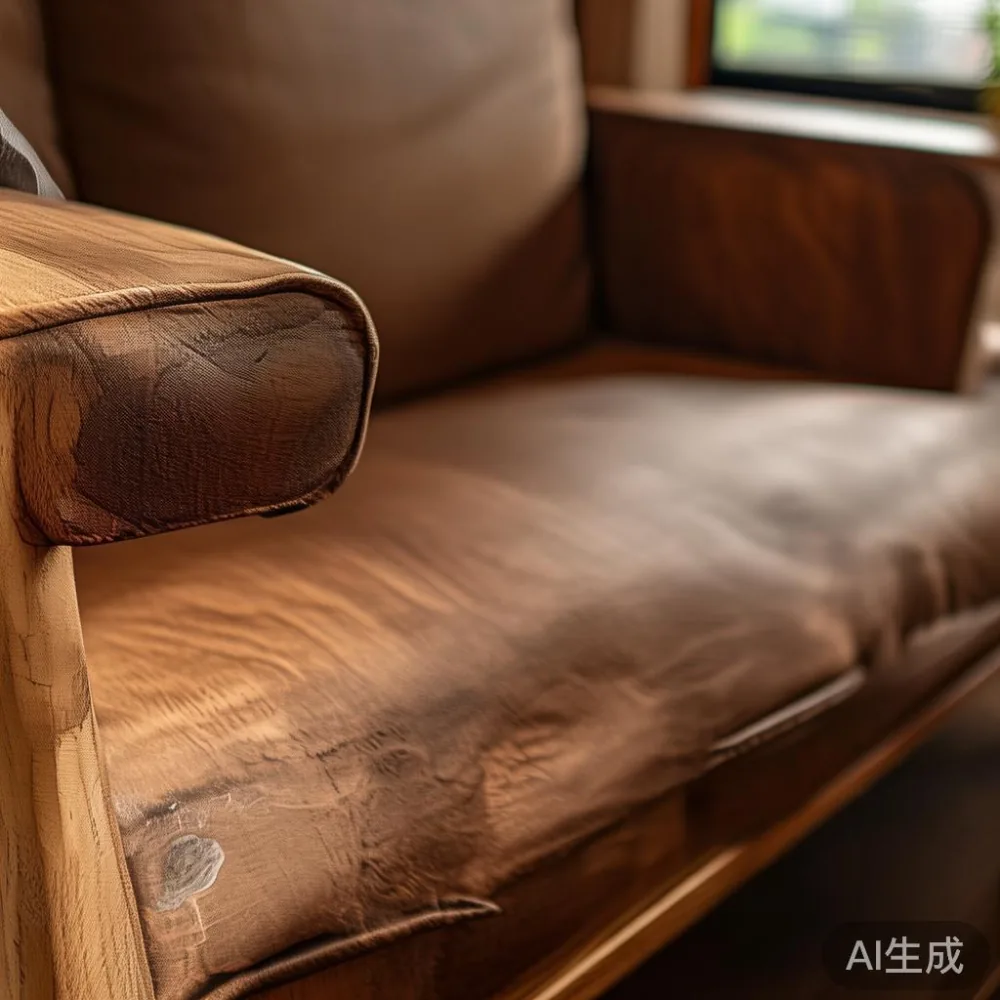
That little moment is the reason I keep a moisture meter in my bag whenever I do home visits across the East. Between Bedok Reservoir, Punggol Digital District, and the older blocks around Tampines West, the climate is almost the same on paper, yet the way a solid wood sofa, a bed frame, or a dining table behaves inside each home can differ wildly. Air-conditioning habits, corridor exposure during delivery, and the position of the wardrobe against a shared wall all change the equation. The good news is that light luxury pieces in oak, ash, walnut, and teak are built for this — provided you understand what humidity actually does to wood, and you choose pieces that arrive properly kiln-dried and acclimatised. This guide is written for Singapore buyers weighing a Modern light luxury sofa, a European light luxury accent chair, or a larger Post-modern for dining room set, and it draws on the work we do sourcing from a Foshan furniture factory that has shipped solid wood pieces to 15 or more countries over sixteen years.
Why Singapore's Climate Is a Stress Test for Solid Wood Furniture
Singapore sits almost on the equator. The average year-round relative humidity hovers between 78% and 86%, with afternoon thunderstorms pushing corridors and lift lobbies to a steamy 90%+. Indoor humidity in a non-air-conditioned flat can swing from 65% on a dry February evening to 88% during the November monsoon surge. For wood furniture, that is a working range of roughly 8 to 12 percentage points over a single day during the wetter months.
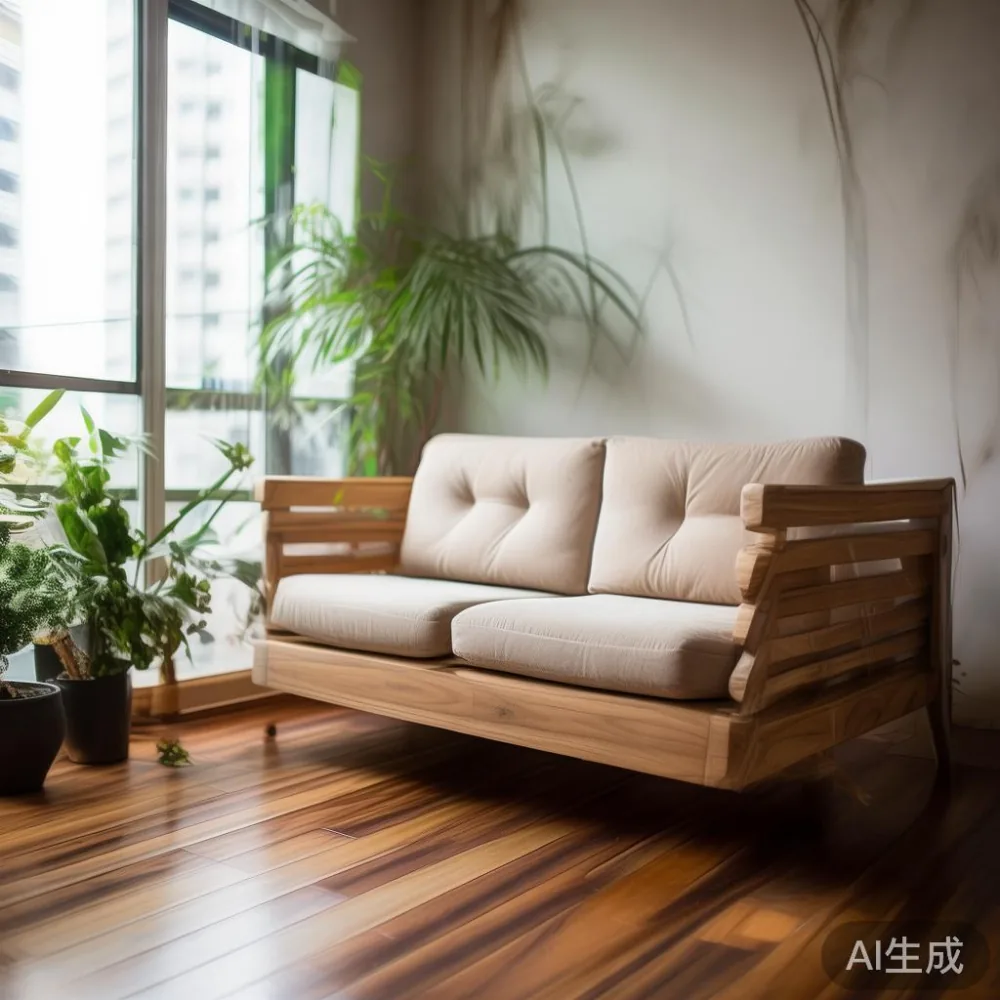
Solid wood moves. It absorbs moisture from the air, swells slightly, and then releases that moisture when the air dries, shrinking back. A typical kiln-dried oak board at 8–10% moisture content leaving a Foshan workshop will, over its first 30 to 60 days in a HDB flat, drift toward an equilibrium moisture content (EMC) of about 15 to 17%. That drift is the source of almost every "my wardrobe door is rubbing" or "my dining table has a small gap at the join" conversation I have with buyers in Bedok and Sengkang. The wood is not defective. It is simply recalibrating.
Two local factors make this stronger here than in, say, a Melbourne or Los Angeles apartment. First, the thermal mass of Singaporean construction — HDB walls and floors hold heat and moisture for hours, which slows how quickly a room can recover from a humidity spike. Second, the way most of us run the air-conditioner: 24°C to 25°C for sleeping, then switched off during the day while we are at work. That daily on-off cycle creates a gentle but constant humidity pump inside the flat. A French light luxury or American light luxury piece, with its thin profiles and exposed tenon work, will telegraph those changes more visibly than a chunky post-modern design — but every well-built solid wood piece responds to them.
What Actually Happens Inside a Solid Wood Loveseat at 85% Humidity?
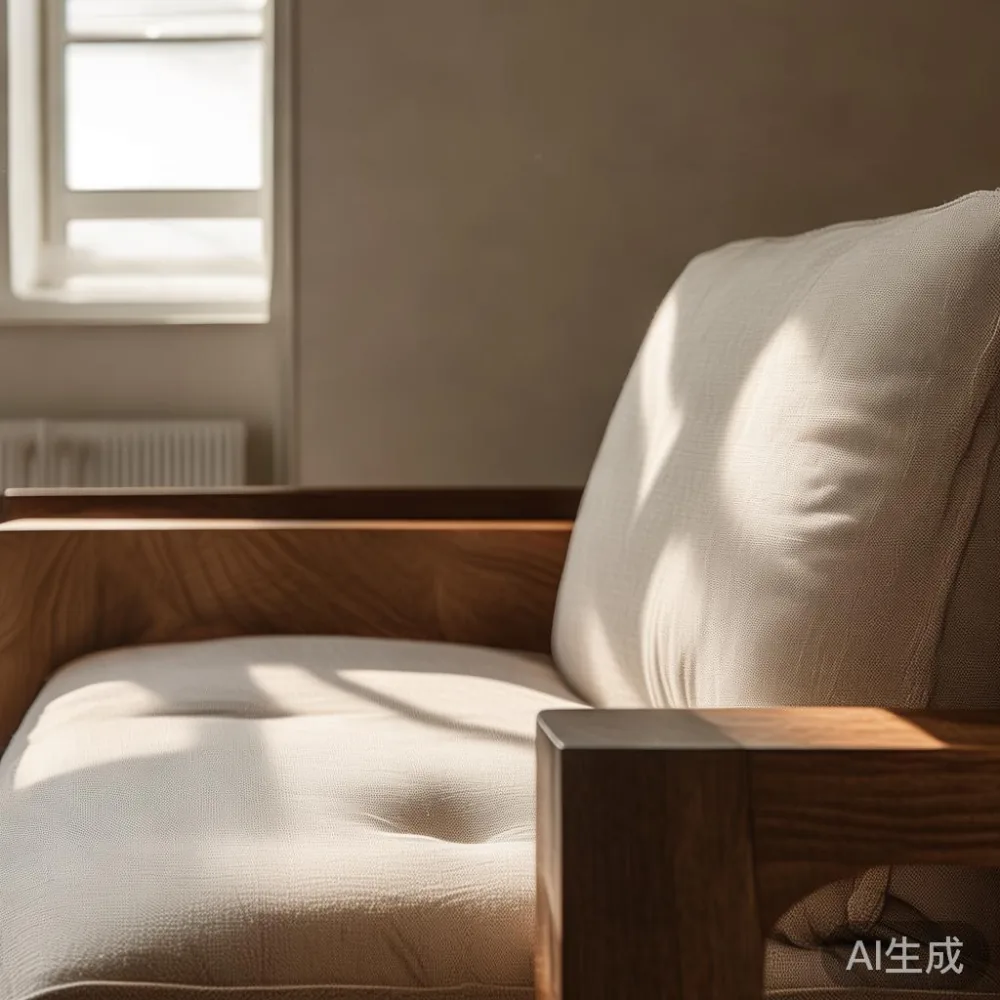
Let us get specific. A 2-seater solid wood loveseat with an ash frame, sinuous spring deck, and high-resilience foam wrapped in down feathers — a popular configuration for HDB living rooms measuring roughly 3.2 m by 3.6 m — is a small mechanical system. The wood frame carries the load. The joinery holds the frame in shape. The upholstery keeps the frame from seeing direct humidity swings.
At 85% indoor relative humidity, the ash frame in a properly dried loveseat will gain maybe 0.3% to 0.6% in moisture content over a week. In real numbers, that translates to about 0.2 mm of movement on a 1.2 m-long arm rail, and roughly 0.4 mm across the width of a 180 cm backrest. You will not see that on a tape measure. What you will see is a faint crowning on the backrest slats after a wet week, a slight tightness in the seat cushions, and occasionally a soft creak as the frame settles overnight. I tested this in my own place with a cheap pin-type moisture meter — a 12 SGD investment from any neighbourhood hardware shop in Tampines or Bedok — and watched the reading drift from 9.4% on arrival day to 14.1% by day 18. After that, it stabilised.
Three things matter most in that first 30 days: keep the loveseat away from direct afternoon sun (HDB windows on the west face can hit 50°C on the glass, baking one side of the frame); keep it at least 15 cm away from the air-conditioner outflow so the cold dry air does not split the difference; and avoid placing it flush against an external wall that sweats during heavy rain. In many newer Punggol condos, the wall insulation is good enough that this last point is minor, but in older Tampines blocks it still matters.
How Wide Are HDB Lifts and Corridors, and Why Does That Matter for Delivery?
Ask anyone who has tried to move a 2.4 m solid wood dining table up a HDB block and they will tell you: the lift is the bottleneck. Standard HDB passenger lifts measure about 1.1 m wide by 1.4 m deep, with a door opening of roughly 0.9 m. Cargo lifts, found in newer BTOs in Punggol and certain executive blocks in Bedok, stretch closer to 1.6 m deep. Corridors are typically 1.2 m to 1.5 m wide, with right-angle turns at the lift lobby.
This is why the dimensions of a loveseat, a bed frame, and a wardrobe are not just a comfort question — they are a logistics question. A solid wood 3-seater sofa in a 2.1 m length often has to come up the cargo lift on its side, with the upholstery protected. A 1.6 m loveseat in a flat-pack form, with the armrests detached, can usually make it through a standard lift without drama. When you are browsing, always ask the supplier for two numbers: the assembled dimensions in centimetres and the smallest packed carton dimension. If your block in Tampines only has the passenger lift, anything over 2.0 m long assembled is going to be a discussion, not a delivery.
Foshan furniture makers that ship regularly to Singapore usually design their knock-down hardware for exactly this reason: a 1.8 m dining table top in two halves, a wardrobe broken into a head panel, two side panels, a base, and a top, with each panel under 1.5 m. Disassembly and reassembly on site typically takes a 2-person team about 45 to 90 minutes for a dining set, and 2 to 3 hours for a full wardrobe. Reasonable suppliers include this in the delivery fee; less reasonable ones bill it as an add-on of SGD 80 to SGD 150 per piece, on top of a SGD 60 to SGD 120 base delivery charge for a single lift-access flat.
Is Mid-century modern sofa worth it in a Tropical Climate Like Singapore?
This is the question I get at almost every Tampines or Punggol home visit, so let us answer it directly. A genuine mid-century-inspired solid wood sofa — typically walnut, teak, or white oak with tapered legs and clean lines — is a very good buy for Singapore, but the answer depends on three things: the timber, the joinery, and the finish.
Teak is the friendliest tropical timber for this style. It has natural oils that resist moisture cycling, and it tolerates the 78–88% humidity band without dramatic movement. A teak-framed loveseat or accent chair will, after 12 months in a HDB flat, still look almost exactly like the day it arrived. Walnut is more reactive. It darkens under UV and moves a little more with humidity, but the movement stays within tight tolerance if the kiln-drying was done properly (target 8–10% moisture content, then a 14 to 21-day acclimatisation in a controlled warehouse). White oak is somewhere in between. The cheapest pieces on the market, often advertised as cheap Modern light luxury furniture from general online marketplaces, usually skip the acclimatisation step, and that is where the cracking and warping stories come from.
Joinery matters as much as timber. A mortise-and-tenon frame, locked with a wooden dowel and finished with a hardwood wedge, will tolerate humidity cycling for 15 to 20 years. A frame screwed together with steel brackets and pocket-hole screws will loosen within 3 to 5 years in this climate, because the wood swells around the metal and the metal slowly works its way out. Lift the loveseat at the showroom if you can. A well-built 2-seater in solid oak should weigh 38 to 45 kg. Under 30 kg and you are probably looking at plywood or rubberwood with a veneer, no matter what the label says.
Finish matters third. A post-modern light luxury piece with a matte hardwax oil finish will scratch more easily than a high-gloss conversion varnish, but it will also tolerate humidity cycling better because the wood can still exchange small amounts of moisture through the finish. For a family with a young child or a cat, I usually suggest the hardwax oil and accept the patina. For a rental unit that needs to look showroom-fresh for the next 8 to 10 years, a conversion varnish is the safer bet.
Reading the Numbers: Moisture Content, EMC, and What a Foshan Workshop Should Be Doing
Equilibrium moisture content is the single most useful number in this entire conversation. EMC is the moisture level at which wood neither gains nor loses water to the surrounding air. In Singapore's climate, that target is roughly 15 to 17% for indoor furniture. In a dry Foshan winter workshop with heating, it can dip to 9 or 10%. The gap between those two numbers is what your furniture has to cross on its journey.
Reputable Foshan furniture makers will kiln-dry their stock to 8 to 10% moisture content, then store the finished frames in a warehouse at controlled 18 to 22°C and 55 to 65% relative humidity for at least two to three weeks before crating. This narrows the gap the wood has to cross when it lands in a Tampines flat at 30°C and 85% humidity. Suppliers that skip the warehouse acclimatisation step are in effect asking the buyer's living room to do the work — and the living room always wins, usually in the form of a hairline crack along a table edge or a slightly proud tenon on a chair leg.
When you are comparing pieces — say, a Modern light luxury sofa in oak from one supplier and a similar piece from another — ask for the moisture content reading at the time of packing. A factory that measures this and gives you a number on the spec sheet (for example, "8.4% at packing, 19.2°C warehouse, 58% RH") is a factory that has done this before. A factory that cannot answer the question is one to walk away from, no matter how good the showroom photograph looks.
Practical Care Habits That Actually Work in a HDB Flat
Three habits, repeated for ten years, will keep a solid wood loveseat, bed frame, and dining table looking the way they looked at delivery.
First, run a small dehumidifier in the living room during the November to January monsoon window. A 12-litre desiccant model, costing about SGD 180 to SGD 280, will hold the room at 55 to 60% relative humidity and reduce the daily swing to under 4 percentage points. That is the single most effective piece of furniture care you can buy in Singapore. Set it to 60% rather than 50% — over-drying is just as hard on solid wood as over-wetting, because it shrinks the wood faster than the finish can follow.
Second, rotate the cushions on your loveseat and dining chair seats every two to three weeks. The foam and feather cores compress in the spots where you sit, and the compressed area traps more moisture against the fabric and the wood sub-frame. Rotation evens out the wear and lets the compressed areas dry out fully. For a 2-seater loveseat with reversible cushions, this takes 90 seconds. For dining chairs, lift the seat pad off and lean it against a wall for an hour once a month.
Third, refinish the high-touch surfaces every 18 to 24 months. A 250 ml tin of hardwax oil in clear or natural tone costs around SGD 35 to SGD 55 in Singapore and covers a 2-seater loveseat twice. Apply with a lint-free cloth, wait 20 minutes, buff off. Total time: 30 minutes. This is not a marketing pitch for a warranty programme — it is what the wood itself asks for. Some Foshan furniture makers, including the one I source from most often, offer a lifetime refinishing service for pieces sold into Singapore, meaning a technician comes to your flat and refinishes the piece on site for a small service fee (typically SGD 60 to SGD 120 per piece) or no fee at all within the first five years. That kind of support is the difference between a piece that lasts 8 years and one that lasts 25.
What About Bedroom Pieces: Bed Frames, Wardrobes, and Nightstands?
Bedrooms are the second front in the humidity war, and they deserve their own paragraph. Most HDB bedrooms in Bedok and Tampines run 2 to 4°C warmer than the living room because they have less airflow, and humidity can sit 5 to 8 percentage points higher, especially in the corner where the wardrobe meets two external walls.
A solid wood bed frame in ash or oak, with slats spaced 5 to 7 cm apart, gives the mattress room to breathe. Avoid MDF or plywood headboards inside this climate — they will delaminate within 5 to 7 years. A full solid wood wardrobe, with proper back panels in 12 to 15 mm thick boards, will hold its shape far longer than a flat-pack wardrobe with 6 mm hardboard backs. Inside the wardrobe, a 30 SGD rechargeable silica-gel dehumidifier (the kind that plugs into a USB port) will keep the interior at 50 to 55% RH and protect clothing during the wet months.
Nightstands are the small pieces that often get the worst treatment, because they sit right next to the bed where people breathe all night and where a glass of water gets placed without a coaster. A solid wood nightstand with a marble top — a 40 cm by 40 cm Carrara or engineered marble slab on a 35 cm high oak base — is a popular combination in post-modern light luxury bedrooms across Punggol and the East Coast. The marble protects against water rings; the oak frame handles the rest. Wipe the marble weekly with a pH-neutral cleaner (SGD 12 to SGD 18 a bottle) and re-oil the oak frame once a year.
Shipping, GST, and What a Real Singapore Order Looks Like
A typical order shipped from a Foshan factory to a Singapore address runs through four cost layers: the piece itself, export crating, sea freight, and last-mile delivery plus GST. For a 2-seater solid wood loveseat, a 1.6 m dining table for four, a 1.8 m queen bed frame, and a 2-door wardrobe, all in oak with a light luxury finish, the rough order of magnitude is:
- FOB Foshan factory price: USD 1,800 to USD 2,400 for the full set, depending on timber and finish.
- Export crating in 5-ply hardwood cases with EPS foam lining: USD 220 to USD 320.
- Sea freight to Singapore port, 7 to 12 days door-to-door for LCL shipments: USD 380 to USD 540.
- Singapore-side delivery, GST at 9%, and lift-access assembly: SGD 280 to SGD 420.
Add it up, convert to Singapore dollars at roughly 1.35, and a 4-piece set lands in the SGD 4,400 to SGD 5,800 range all-in. That is meaningfully less than most local showrooms in the Jalan Besar or Tai Seng district would charge for a comparable light luxury set, which often start at SGD 7,500 and climb past SGD 12,000 for a full bedroom-and-living room package. The catch is warranty and after-sales: a local showroom handles claims in 2 to 5 days, while a direct-from-factory order relies on the supplier's Singapore representative. Ask the factory whether they have a local agent, a Singapore service contact, and a written 10-year structural warranty. The better ones — and the one I tend to recommend to clients in the East — do, and they will send replacement dowels, finish touch-up kits, and even a technician within 7 to 10 working days if something goes wrong.
Free shipping thresholds matter here too. Most Foshan furniture makers offering DDP (delivered duty paid) terms to Singapore set the threshold around USD 1,500 to USD 2,000 per shipment, which lines up neatly with a 3-piece living and dining combination. Below that, expect a sea freight surcharge of USD 120 to USD 180 on top of the piece price.
A Short Checklist Before You Click "Buy" on a Solid Wood Loveseat
Use this as a quiet mental list when you are comparing a Modern light luxury sofa from a Foshan factory against a local showroom piece at three times the price. If the answer to most of these is yes, the factory piece is probably the smarter buy for a Singapore HDB or condo.
- Timber species named on the spec sheet, in Latin (Quercus alba for white oak, Tectona grandis for teak, Juglans nigra for walnut), with country of origin.
- Moisture content at packing, with a target of 8 to 10%.
- Joinery described as mortise-and-tenon or dovetail, with no mention of "metal brackets" or "easy assembly" in the marketing.
- Net weight of the assembled frame. A 2-seater solid wood loveseat under 32 kg is suspicious.
- 10-year structural warranty on the frame, written, not verbal.
- Lifetime or long-term refinishing service available, either on site or by returning the piece.
- Singapore service contact, GST registration number, and a 14-day return window in writing.
- Carton dimensions, with at least one dimension under 1.5 m for lift access.
If a supplier can answer seven of those eight, they are a serious exporter. If they can answer all eight, you are talking to a Foshan furniture maker that has been doing this for a decade or more and understands that a solid wood loveseat in a Tampines living room is a 20-year relationship, not a one-time transaction. The 5-ply crate, the kiln-dried oak, the 45 kg frame, the 8.4% moisture content on the packing slip — none of those details feel exciting at the moment of purchase. Two years later, when the wood has settled and the piece still looks like the showroom photograph, they are the only things that matter.