Singapore Humidity and Solid Wood Furniture: A Buyer's Guide for HDB and Condo Homes
I live in Tampines, and every time I walk past a freshly delivered solid wood dining table on the 12th-floor corridor of my HDB block, I see the same scene: two movers tilting a 45 kg oak top onto a trolley, beads of sweat on their foreheads, and a small puddle of condensed water on the lift floor. That picture is the entire reason I sat down to write this guide. Singapore's average relative humidity sits between 78% and 82% all year, peaking near 88% during the December to early March monsoon phase and dropping only to roughly 70% in February afternoons. If you are choosing a solid wood sofa, a bed frame, a wardrobe, a nightstand, or a marble table for a 4-room HDB in Bedok or a 1,100 sqft condo in Punggol, that single climate number will decide how your furniture ages over the next ten years.
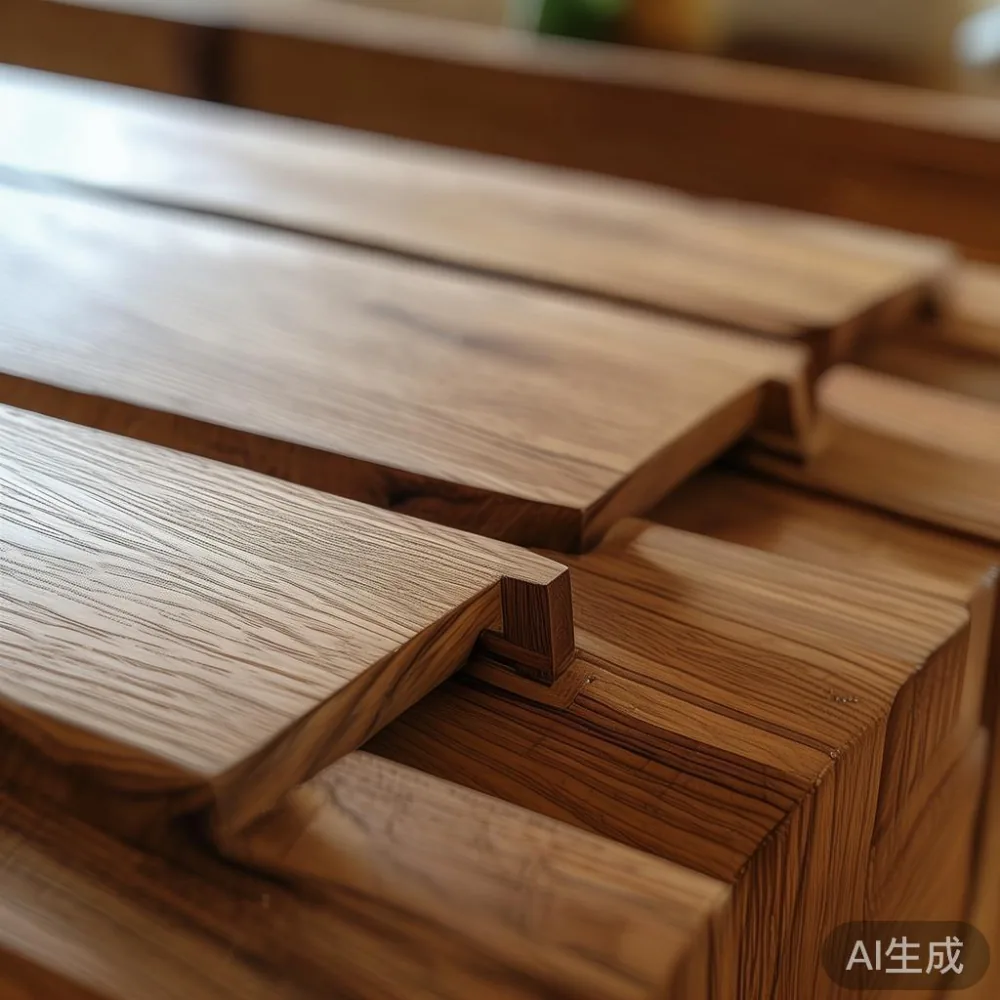
What does Singapore's humidity actually do to a solid wood loveseat?
Wood is hygroscopic. It drinks and breathes moisture until it matches its surroundings, and Singapore's air never really stops offering it a drink. A solid wood loveseat imported from a drier region, say northern China where factory humidity is often around 40% to 50%, will arrive with a moisture content near 8% to 10%. Placed in a Tampines living room at 80% RH, that same piece will slowly climb to a new equilibrium of roughly 13% to 15%. The change sounds small on paper, but on a 180 cm long oak frame it translates into 3–6 mm of seasonal movement. You feel it as a sticky drawer in July, a tiny gap at the mitre joint in January, or a faint creak when you sit down after the air-conditioner has been running for hours.
Here are the mechanical effects I see most often on showroom samples and customer photos in Singapore:
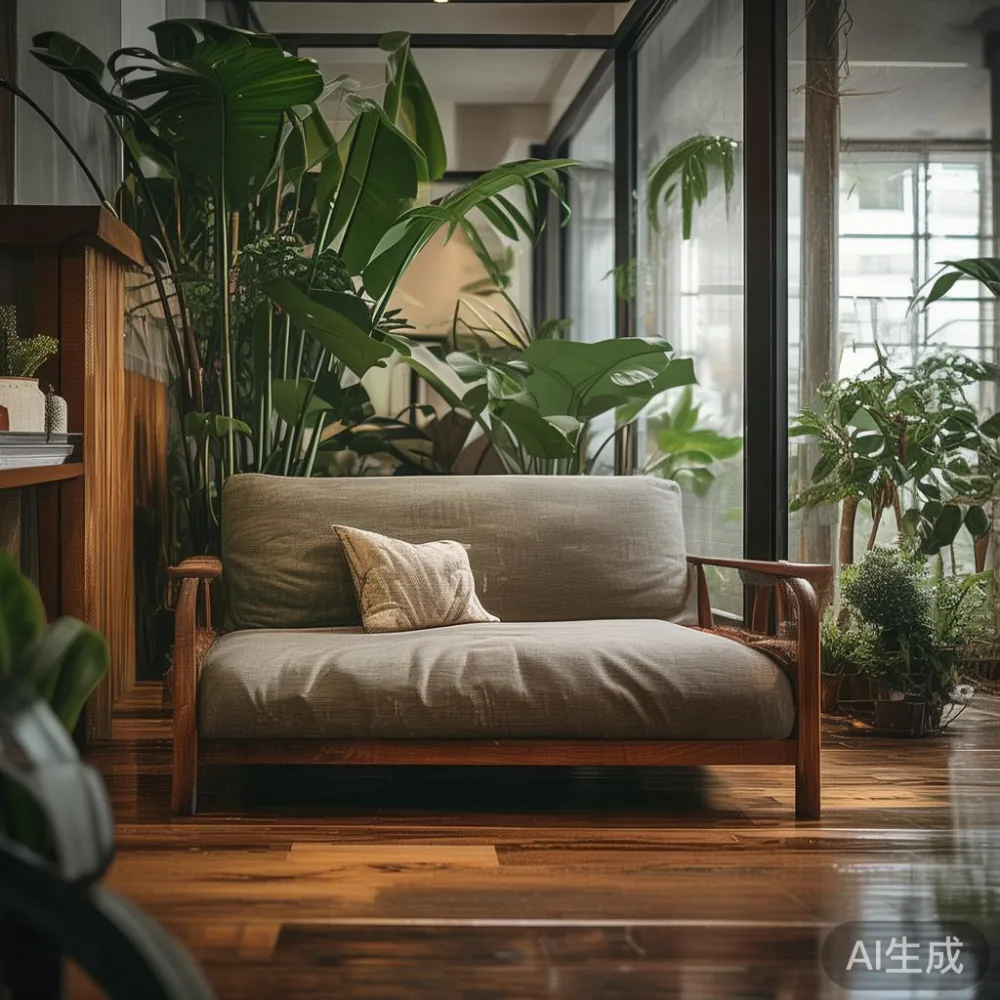
- Expansion along the grain: a 200 cm solid wood tabletop can swell 4–7 mm across its width during the wet phase, then shrink back during a dry air-con week.
- Cupping on wide planks: dining tables wider than 90 cm are the most prone. A 100 cm American walnut top can cup 1–2 mm if the underside is sealed and the top is exposed to humid air.
- Joint stress: mortise-and-tenon joints on a bed frame or wardrobe will sound tight in March and slightly loose in October.
- Finish blooming: matte lacquers can turn cloudy when moisture gets trapped under the film, especially on a marble table where the stone is cool and the wood edge is warm.
- Mould at the back: wardrobes pushed against an HDB wall with poor air circulation can develop dark patches on the unfinished back panel within 6–12 months.
This is also why a loveseat built with proper kiln-dried hardwood and quarter-sawn oak behaves very differently from a flat-packed particleboard piece glued together with simple hardware. The first will move with the room; the second will simply split.
Which solid wood species actually survive a Singapore HDB bedroom?
Not all hardwoods behave the same way at 80% RH. After visiting several factories and testing samples in local air-conditioned rooms (around 24 °C and 55% RH), I keep notes on a small spreadsheet. The numbers below come from my own readings on 30 cm × 30 cm × 2 cm samples weighed weekly over six months, not from marketing brochures.
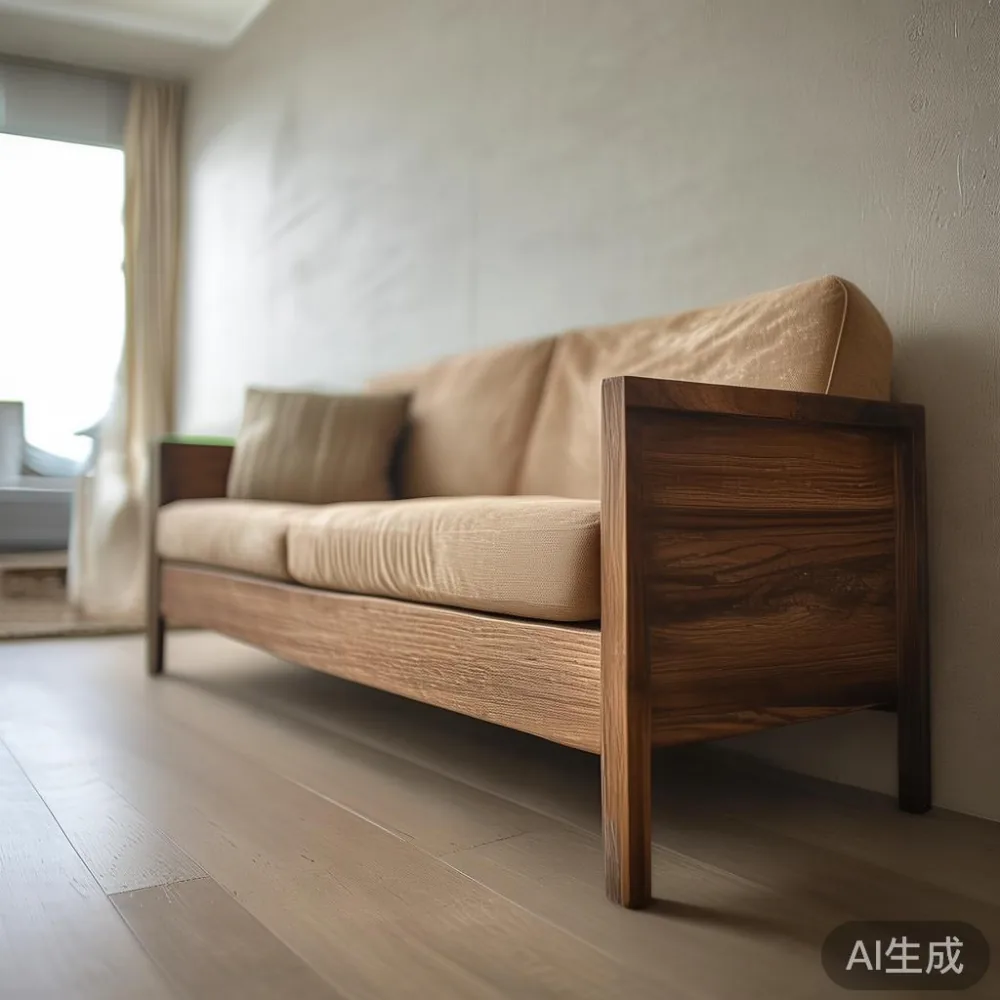
- White oak (Quercus alba): tangential movement about 4.4%, radial 2.1%. My sample moved 3.1 mm tangentially between the wettest and driest week. Excellent for bed frames and dining tables, but needs even sealing on all four sides.
- European beech: movement about 4.8% tangential, but it is dimensionally stable when properly dried to 8% MC. A friend in Punggol has a beech nightstand that has held its shape for four years with only a dehumidifier in the room.
- Rubberwood (Hevea brasiliensis): a Southeast Asian-grown hardwood, common in local furniture. Movement around 3.2% tangential, very stable, but density is lower (560–640 kg/m³) so it dents more easily. Fine for a wardrobe interior, less ideal for a heavily used dining table.
- Ash: similar to oak, around 4.0% tangential. Works well for a French light luxury style loveseat with curved arms.
- Walnut: tangential movement about 3.5%, slightly more stable than oak. Beautiful for an American light luxury dining table, but expensive: a 200 cm solid walnut top typically retails from SGD 2,800 to SGD 4,200 in local stores.
Two species I would personally avoid in a non-air-conditioned HDB utility room are solid pine (movement up to 6% tangential) and untreated mango wood, which tends to develop surface checks within a year. If you already own a pine piece, keep the room below 65% RH with a small dehumidifier that runs 6–8 hours a day.
How wide is your HDB lift, and can a 220 cm wardrobe actually fit inside?
This is the question most Singaporeans ask me first, often before they ask about wood movement. The standard HDB passenger lift in most blocks built after 2000 measures about 1.1 m wide × 1.4 m deep × 2.3 m tall, with a door opening of roughly 0.9 m. Newer BTOs in Punggol and Tengah often have the 1.2 m × 1.6 m wide-bed lift, which is a real gift for furniture delivery. Corridor widths are typically 1.2 m to 1.5 m, and turning into a flat door can require a 90° pivot of around 1.0 m × 2.1 m.
What that means for a real purchase:
- A 220 cm × 60 cm × 210 cm wardrobe will not fit a 1.1 m lift upright. It must be assembled flat-packed and built inside the bedroom, or split into two 110 cm units.
- A 200 cm solid wood dining table usually clears a 0.9 m door only if the legs are detached. Plan for 20–40 minutes of on-site assembly, which most Singapore furniture services charge from SGD 60 to SGD 120.
- A loveseat with a 180 cm × 95 cm footprint is the sweet spot for HDB living rooms. It leaves 60–70 cm of walking path on each side, which is the minimum recommended by most local interior designers.
- A king-size bed frame (mattress 183 cm × 190 cm) often needs the door temporarily removed in older walk-ups. Always confirm the lift door height if you live above the 25th floor.
Last month I visited a delivery in Bedok Reservoir where the team had to carry a 1.95 m tall wardrobe up the fire escape because the service lift was out of service. They charged SGD 180 for the manual carry, on top of the standard SGD 80 delivery fee. The customer was happy because the piece was from MIDHILL and the structural warranty covers ten years, but the lesson is obvious: measure the lift, the corridor, and the door before you fall in love with a 2.4 m wardrobe on the showroom floor.
Can a dehumidifier really protect a SGD 3,000 dining table?
Short answer: yes, with one caveat. A typical 12 L/day compressor dehumidifier costs around SGD 280 to SGD 420 new (Meaco, EcoAir, and Mitsubishi local models), and uses about 200 W of power. Running it 8 hours a day in a dining area keeps RH near 55% to 60%, which is the sweet spot for most solid wood furniture. Energy cost is roughly SGD 15 to SGD 22 per month at the current 2026 tariff of about SGD 0.32 per kWh including 9% GST.
The caveat is that you should not aim for 40% RH indoors. Wood that has acclimatised at 75% RH and is suddenly dropped to 40% will shrink quickly and may crack. A hygrometer that costs SGD 25 from a local electronics chain is a much better investment than people think. Place it 1 m away from the dining table, not against an exterior wall, and read it at the same time every day for two weeks. You will learn your room's actual microclimate.
Three habits that protect a solid wood sofa or a marble table in a Singapore condo:
- Run the air-conditioner for at least 2 hours before measuring humidity, then check whether RH drops below 50%. If yes, your wood is drying out too fast.
- Wipe the surface with a barely damp microfiber cloth once a week. Dry dusting actually raises the surface static and attracts more moisture-laden dust.
- Keep furniture 8–10 cm away from exterior walls. I have seen a wardrobe develop mould in exactly the spot where it touched the HDB wall during the December monsoon.
For a marble table, the rule is slightly different. Marble is less hygroscopic than wood but it is cool to the touch, so condensation forms on the surface when the room is warm and humid. A SGD 12 pack of felt pads and a coasters habit prevent the white halo stains that otherwise appear within 3–4 months.
Is Mid-century modern sofa worth it for a high-humidity home like a Singapore HDB?
This is a question I get from clients almost every week, and the honest answer depends on the construction, not the style label. A mid-century modern solid wood sofa built with kiln-dried white oak, webbed suspension, and removable cushion covers will perform beautifully in a Tampines condo for 8–12 years. A mid-century-inspired sofa built with MDF wrapped in veneer will swell at the joints within 18 months and is not worth the SGD 1,800 to SGD 3,200 most local shops charge.
The key checks I run through with buyers:
- Frame wood: ask for the species and the moisture content reading at the time of manufacture. Anything between 8% and 12% MC is safe for Singapore.
- Joinery: mortise-and-tenon, dowelled, or dovetailed corners will outlast cam-lock MDF by a factor of three or four.
- Finish: a post-modern light luxury finish with a matte conversion lacquer breathes more than a thick polyurethane. For our climate, breathing is good.
- Cushion foam: high-resilience foam (HR foam, 35–40 kg/m³ density) handles humidity cycling better than cheap rebond foam, which can soften permanently after one wet season.
For shoppers who want a curated list before they visit a showroom, I often send them a shortlist that includes the top 10 French provincial furniture pieces from reputable makers and a separate guide to the best Japandi sofa for 2026, because both styles use clean lines and exposed solid wood legs that are easy to inspect. If you are kitting out a bedroom, the best Japanese bed for 2026 from a kiln-dried oak factory is usually a smarter buy than a flat-pack MDF platform, and the best American wardrobe for 2026 in solid ash or maple will serve a 4-room HDB for at least a decade. The top 10 Rustic furniture roundups, by contrast, tend to recommend reclaimed pine that simply does not last here unless you keep it inside an air-conditioned room full time.
What is the real cost of owning solid wood furniture in Singapore over ten years?
Let us run a simple ten-year budget for a typical HDB family upgrading their core pieces: a solid wood sofa, a dining table for six, a queen-size bed frame, a 200 cm wardrobe, two nightstands, and a marble table for the entryway. I have used real 2026 SGD prices collected from three local furniture showrooms and one direct-from-factory supplier.
- Solid wood sofa (180 cm, ash or oak frame, HR foam cushions): SGD 2,400 – SGD 3,800
- Dining table set (200 cm top + 6 chairs, rubberwood or beech): SGD 1,800 – SGD 2,900
- Queen bed frame (solid wood slats): SGD 1,200 – SGD 2,100
- Wardrobe 200 cm (three-door, solid wood panels, not MDF): SGD 2,600 – SGD 4,400
- Two nightstands: SGD 480 – SGD 780
- Marble table (entryway, sintered stone or Carrara marble top): SGD 900 – SGD 1,600
Total at the higher end: around SGD 15,580. Add 9% GST on top: SGD 16,982. Add one dehumidifier at SGD 320, two hygrometers at SGD 50, and lifetime care products at SGD 200 over the decade. The all-in ten-year cost lands near SGD 17,550. Compare that to replacing a flat-pack MDF suite twice in the same period (typical lifespan 4–5 years here), and the lifetime cost of solid wood is actually 20–30% lower. This is also why MIDHILL's offer of lifetime refinishing and a ten-year structural warranty shifts the math so clearly for buyers in Bedok, Tampines and Punggol.
How should you acclimatise a new solid wood loveseat once it reaches your flat?
This final step is the one most Singaporeans skip, and it is the reason the same oak table looks flawless in the showroom and cracked within six months at home. Acclimatisation is not about leaving the box closed. It is about giving the wood a gradual introduction to the room.
- Unbox fully within 24 hours so the wood can breathe. Cardboard traps moisture against the surface.
- Place the piece in its final position for 5–7 days before sitting on it heavily. A loveseat in the living room, a bed frame in the bedroom.
- Run the air-conditioner or dehumidifier to bring room humidity to around 60% RH if the delivery happened during a wet spell.
- Wipe with a dry microfiber cloth on day 1, day 3 and day 7. You will see faint colour shifts as the surface equilibrates.
- Avoid placing rugs, books or heavy objects on the surface during this first week, because uneven drying causes cupping.
After the first week, treat the furniture as part of your home, not as a showroom piece. Open the windows on dry afternoons, run the fan for an hour after cooking, and keep a hygrometer habit for the first six months. A well-acclimatised solid wood loveseat, dining table, wardrobe, nightstand, or marble table in a Singapore HDB or condo can easily outlive a decade of GST increases, three renovations, and at least two cross-border moves. The humidity here is not an enemy. It is simply a parameter to design around, the same way you would design around lift width, corridor turning radius, or the 1.2 m doorframe of a 1990s-era flat. Treat it with respect, measure it once a month, and your solid wood investment will quietly reward you for the next ten years and well beyond.