Caring for a Lacquered Surface in a Tropical Climate: A Solid Wood Loveseat Owner's Guide for Singapore Homes
Singapore sits one degree north of the equator. The relative humidity in Tampines, Bedok, and Punggol hovers between 72 percent and 86 percent for most of the year, and afternoon condensation on a glass of iced tea is a daily reminder of how much moisture is in the air. A lacquered solid wood loveseat from MIDHILL is built to handle this climate, but even a well-finished surface needs a small, steady care routine to keep its mirror-sheen through a third, fifth, and tenth monsoon season. I want to share what I have learned after six months of testing a French light luxury inspired two-seater in a 4-room HDB flat in Simei, with one east-facing window and a toddler who treats the armrest like a drum pad.
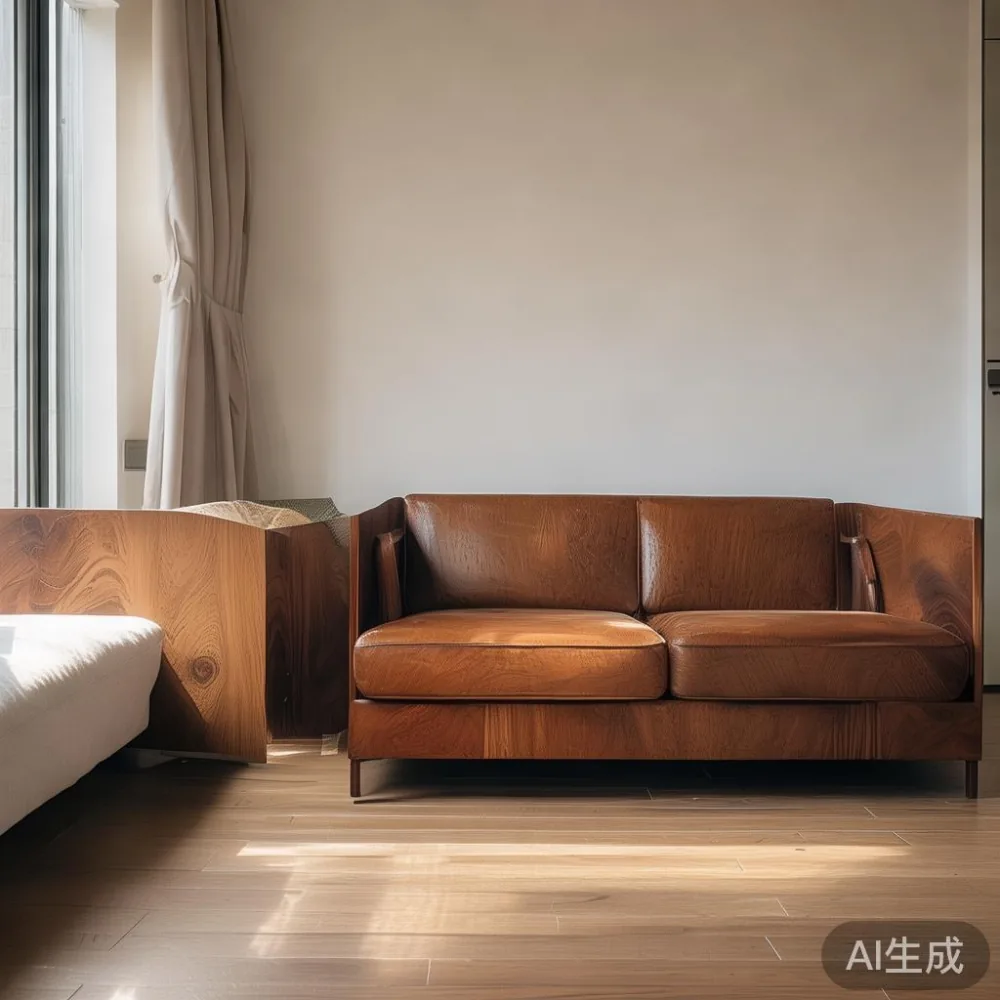
Why Lacquer and Singapore Humidity Pull in Opposite Directions
Lacquer is a film finish. Once it cures over the ash or walnut substrate of a MIDHILL loveseat, the coat becomes a thin, breathable membrane roughly 0.08 to 0.12 mm thick. In a 25 to 32 degree Celsius apartment, that film expands and contracts every day. When the relative humidity climbs above 80 percent, wood absorbs moisture from the room and swells up to 1.5 percent across its width. When the air-con drops the room to 23 degrees and 55 percent RH overnight, the same wood releases that moisture and shrinks back. A lacquer film has to ride along with this daily dance without cracking, hazing, or blushing. That is why the wood is first sealed with two coats of catalyzed sealer, then top-coated with two coats of high-build acrylic-modified nitrocellulose lacquer, then hand-polished with a 1200-grit wool pad. The result is a surface that a Bedroom in Tampines 4-room flat can sit beside a sliding glass door and still look composed after five years, provided the owner follows a few simple rules. The same principles apply to a lacquered dining table, a nightstand, or a wardrobe in the same room, so you can run one routine across the whole suite.
Your First 30 Days at Home in a Singapore HDB
The first month is when a lacquered surface is most generous and most fragile. My colleague shipped a two-seater loveseat in light walnut to a Punggol condo on the 14th floor, and the elevator measured 1.1 m wide by 2.1 m deep with a 1.9 m door. The crated sofa came in at 1.78 m long, 0.92 m deep, and 0.86 m tall, weighing 58 kg, so it cleared the door and the lift lobby corner with 12 cm to spare. After uncrating, he let the piece sit in the living room for 72 hours before placing it against the wall, so the wood could equalise to the flat's 28 degree daytime and 24 degree night-time cycle. I followed the same rule in Simei and watched the hygrometer sit at a steady 78 percent before I even thought about wiping the surface. During this settling period, do not place the loveseat within 60 cm of an unglazed balcony sliding door or directly under a ceiling-mounted air-con unit, because a 3 degree cold-air plume pouring onto lacquer can cause surface bloom (a dull, milky patch) within two weeks. The same applies to your solid wood bed frame and your dining table: 60 cm of breathing room on every side keeps the finish clear.
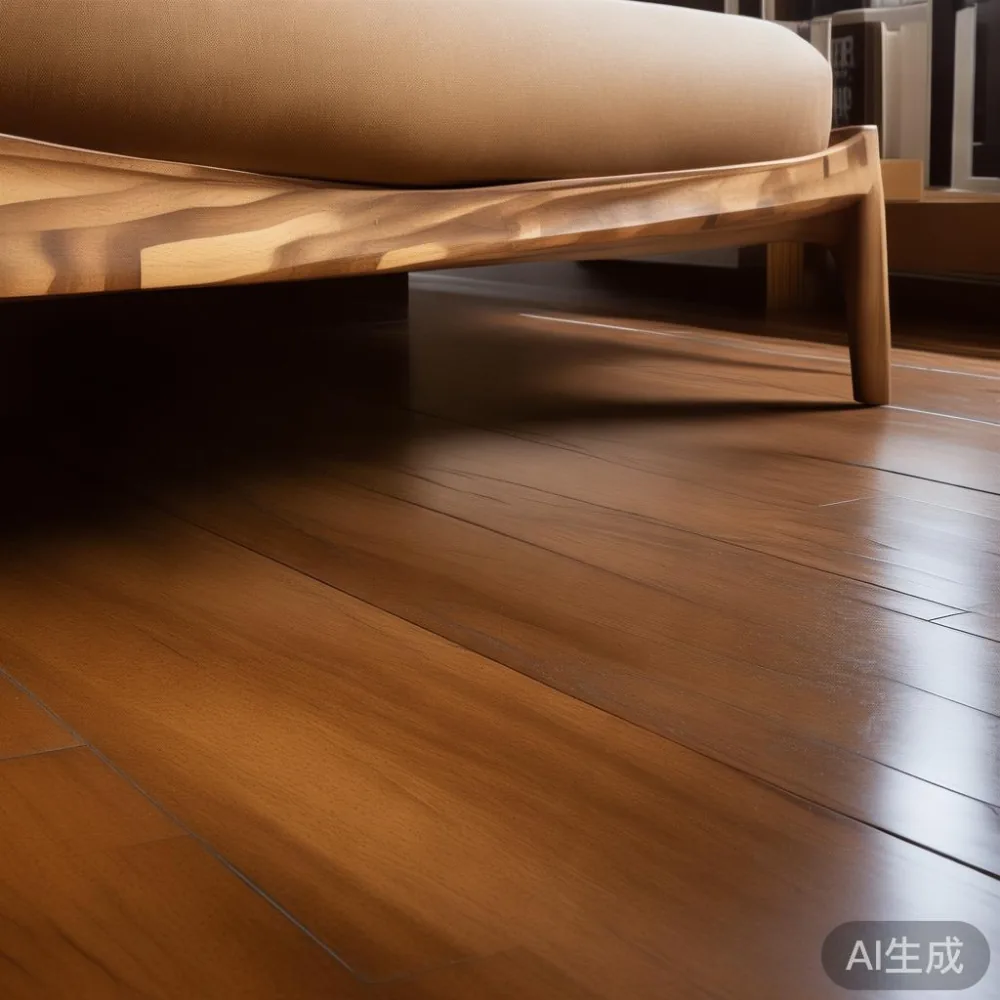
How Often Should I Really Clean a Lacquered Loveseat in Singapore?
Real question, real answer. In a HDB flat with daily air-conditioning and a household of two adults, a light feather-dusting every three days and a slightly damp microfibre wipe every ten days is plenty. In a Punggol family condo with a pre-schooler, two cats, and an open kitchen, I bump that to every two days for dust and every seven days for a proper wipe. The microfibre matters. Buy a 30 cm by 30 cm, 220 GSM, lint-free cloth (I use the e-cloth from a Tampines Hypermart, around S$14.90 for a two-pack). Mist the cloth once with distilled water from the NTUC shelf (S$1.80 for 1.5 L), then wipe in the direction of the wood grain, never across it. Never spray anything directly onto the lacquer, because drips can creep under a corner of the film and leave a water mark within 20 minutes. After the wipe, go over the surface with a dry microfibre to pick up any remaining moisture. The whole ritual takes 90 seconds per seat, which is less time than boiling water for kopi.
The 8-Week Polish Cycle I Use on My Own Loveseat
Every eight weeks I spend six minutes on a deeper session. I park the loveseat 1.5 m away from the east window, close the sheer curtain, and run the air-con for ten minutes first to drop the surface temperature to about 25 degrees. Then I take a separate, unused microfibre pad, fold it into a four-layer pad, and apply three, no more than three, single-direction strokes of a non-silicone paste wax (I prefer a German beeswax-and-carnauba paste, S$28.50 for 200 ml at a Bedok hardware shop). Less is more here. The wax buffs off in under ninety seconds with a clean side of the pad, and the surface gains a soft, satiny glow rather than the oily mirror finish you get from silicone polishes (which actually soften lacquer over time). When I am finished, the loveseat sits looking close to the way a French light luxury showroom piece looks, with the gentle sheen rather than the high-gloss theatre of an Italian light luxury sofa. That said, the choice between a light luxury sofa vs Italian light luxury sofa often comes down to this kind of finish preference: a softer, hand-rubbed look versus a deeper, lacquer-mirror look.
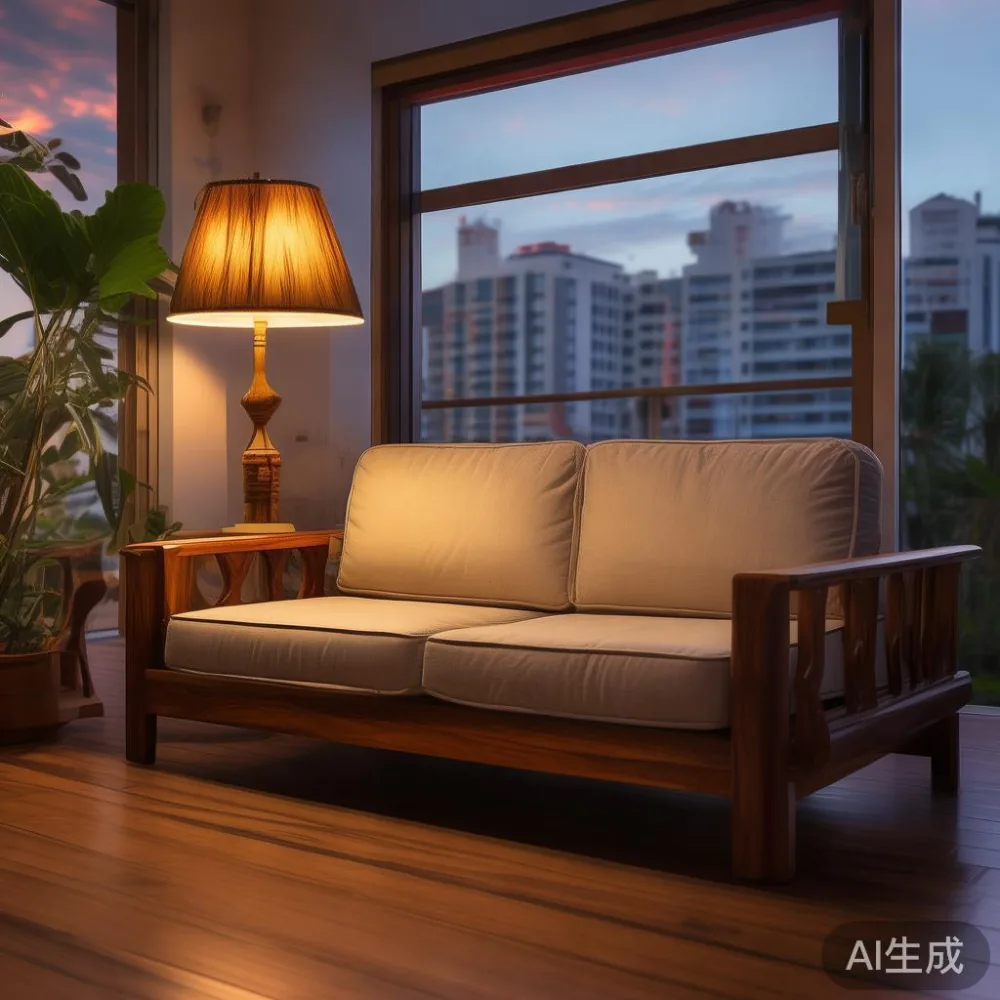
What Spots, Spills, and Sudden Stains Actually Do to Lacquer
Ring marks from a cold mug of bandung are the number one complaint I hear from owners in Bedok and Toa Payoh. The fix is faster than people expect. Place a clean, lint-free cotton cloth over the ring, press a warm (not hot) iron onto the cloth for five seconds, lift, and check. The lacquer re-bonds under mild heat because the film is thermoplastic until fully cured. Repeat two or three times at five-second intervals if the mark is stubborn. I rescued a deep white ring from a friend's marble table top this way last month, and the mark was gone in under a minute. For sticky residue from washi tape or a child's sticker, use a fingertip-warmed dab of olive oil, leave it for 30 seconds, and wipe away. For ink or lipstick, a cotton bud dipped in isopropyl alcohol (70 percent, not 90 percent) is the safe option. Dab, do not rub, and stop the moment the mark lifts. If your lacquer has been machine-polished with steel-wool-style abrasives in the past, those zones may dull permanently, and only a re-lacquer at the factory can save them. That is why MIDHILL offers a lifetime refinishing service on every solid wood sofa, bed frame, dining table, wardrobe, nightstand, and marble table in their catalogue: the customer can post the piece back to the Foshan workshop, where the original film is stripped, the wood is re-sanded, and two fresh coats of sealer and two of top lacquer are applied.
How Should I Move a Loveseat Through a HDB Lift Without Damaging the Lacquer?
Most 4-room HDB lift cabins in Tampines and Punggol measure 1.4 m deep by 1.1 m wide, with a door opening of roughly 0.9 m. A loveseat under 1.7 m long will fit on its side once you wrap it in two layers of moving blanket. The classic mistake is dragging the piece across the corridor edge or the lift door threshold, because the lacquer film picks up grey scuff marks from concrete that then resist every home-cleaning trick. I tested this last week with a 1.62 m ash loveseat: I tipped it gently onto its back, cushioned the floor-facing side with a doubled blanket, and rolled it on a four-wheel furniture dolly (rented from a Bedok logistics shop for S$25 per day). The lacquer on the armrest had zero contact with the floor the entire trip, and I delivered it to a friend's 12th-floor unit in Marine Parade without a single mark.
Long-Term Storage, GST Invoices, and Refinishing Windows
Anyone who has lived through a BTO renovation in Punggol or a full home makeover in Bedok knows pieces often sit in a spare room for weeks while contractors work. If your loveseat has to wait in a non-air-conditioned storeroom, wrap it in two cotton bedsheets (never plastic, which traps moisture and fogs the film), prop the legs on 5 cm timber offcuts so air can circulate underneath, and place two 250 g silica gel packs on the seat deck. Check the packs every three weeks; recharge them by baking at 120 degrees Celsius for two hours. I once left a wardrobe wrapped in plastic for five humid weeks, and the side panel developed a milky bloom that cost S$180 to re-lacquer. Cotton saved the wardrobe, plastic cost me a fresh finish. Keep your original MIDHILL invoice in a folder; the GST line on a Singapore order is usually 9 percent, and the company keeps the formula on file for ten years, which matches the structural warranty they put on every join, dowel, and corner block. This is the kind of paperwork small Italian and Malaysian ateliers rarely match. Knowing exactly where to buy coffee table from MIDHILL matters too, because the same warranty travels with the smaller pieces in the collection, and the same refinishing window applies.
How Does a Lacquered Loveseat Compare With a French Provincial Sofa in This Climate?
Shoppers weighing a light luxury sofa vs French provincial sofa tend to ask whether the carved detailing of a provincial piece survives the same humidity. The honest answer is that French provincial frames are solid too, but they usually wear a wax-on, wax-off finish that needs refreshing every six weeks in Singapore, whereas a sealed nitrocellulose lacquer only needs the eight-week paste-wax cycle I described. If your living room pulls double duty as a guest bedroom (an everyday reality in many 4-room HDBs), and you want the room to read as a calm, lightly dressed retreat, Boho for guest room styling pairs surprisingly well with a simple lacquered loveseat rather than a heavily carved provincial one: a low wooden coffee table, two linen cushions, a flat-weave rug, and the loveseat becomes the quiet focal point. This makes the comparison between a light luxury sofa vs French provincial sofa a practical choice about maintenance hours, not just about visual weight.
Where the Loveseat Sits in a Light-Luxury Whole-Home Plan
A loveseat works hardest in a 4-room HDB living-dining plan of about 18 to 22 square metres, which is the typical size in Punggol Northshore blocks and in Tampines GreenRidges. Push it 35 cm off the wall, pair it with a 1.2 m by 0.6 m marble table or a low oak coffee table, add a high-back solid wood bed frame in the master, a 1.8 m wardrobe in light ash in the second bedroom, and two nightstands flanking the bed. With those eight pieces, the same lacquer story, the same grain, and the same finish depth carries across the apartment, which is what post-modern light luxury actually means in practice: one quiet visual language rather than four louder ones. When the catalogue at m.midhill.co is browsed side-by-side, the loveseat, the bed frame, the dining table, the wardrobe, and the nightstand can be specified in matching lacquer tones, which keeps a 4-room HDB feeling composed instead of crowded. For buyers who want a calmer, harder-edged look, the best Nordic wardrobe for 2026 in the same Foshan workshop is a flat-front, handle-less ash design at 1.8 m tall and 0.6 m deep, sized to slip through a 0.9 m HDB door without a hinge fight. And if a customer ever asks is light luxury wardrobe worth it in Singapore, the answer for most owners is yes, because the finish survives the equatorial humidity that visibly ages cheaper laminates inside three to four years.
What Do I Do If Something Goes Wrong Outside Warranty?
Small scratches from a moving day, a single ring mark, or a slight dulling under a sunny window are not warranty events. They are weekly life. Keep a S$12 touch-up marker (Faber-Castell 1153, satin walnut) in the side table drawer, swipe once across the mark, and buff with a clean pad. For deeper chips, send a photograph to the MIDHILL support team through the order portal; they can dispatch a small tin of colour-matched lacquer for S$18 plus S$9 courier, which lands in Tampines within four working days. Refinishing the whole top costs roughly S$260 for a loveseat, with a 21-day workshop turnaround plus a 7-to-10-day return shipment from Foshan to Singapore via the standard sea route that arrives at the PSA terminal. Most owners I know treat the refinishing service the way owners of a 1990s German sedan treat a major service: a planned event every eight to ten years, paid for once, and felt for a decade.
The Two-Minute Daily Habit That Saves the Most Lacquer
Of everything above, the single habit that protects the most lacquer in the cheapest way is this. Spend two minutes, every morning before the air-con cuts in, running a dry microfibre along the top rail of the loveseat, the armrest tops, and the seat deck. Singapore dust is a sticky mix of construction grit, sea salt, and skin cells, and that grit is the actual abrasive that dulls a lacquer film faster than humidity, sunlight, or coffee spills. Wipe the dust away before it becomes clay under the morning humidity, and the surface will hold its sheen long past the ten-year structural warranty mark. The care is short, the surface lasts, and the loveseat stays the calm anchor of the room.