Veneer or Solid Wood? A 5-Year Cost Comparison for Singapore Loveseats
A loveseat is one of the easiest furniture pieces to judge by appearance and one of the hardest to judge by long-term cost. Veneer can provide the visual warmth of timber at a lower purchase price, while solid wood carries more weight, repairs differently, and can be refinished over decades. In Singapore’s compact homes, that choice also affects lift access, corridor turns, delivery timing, and the usable space around the seat.
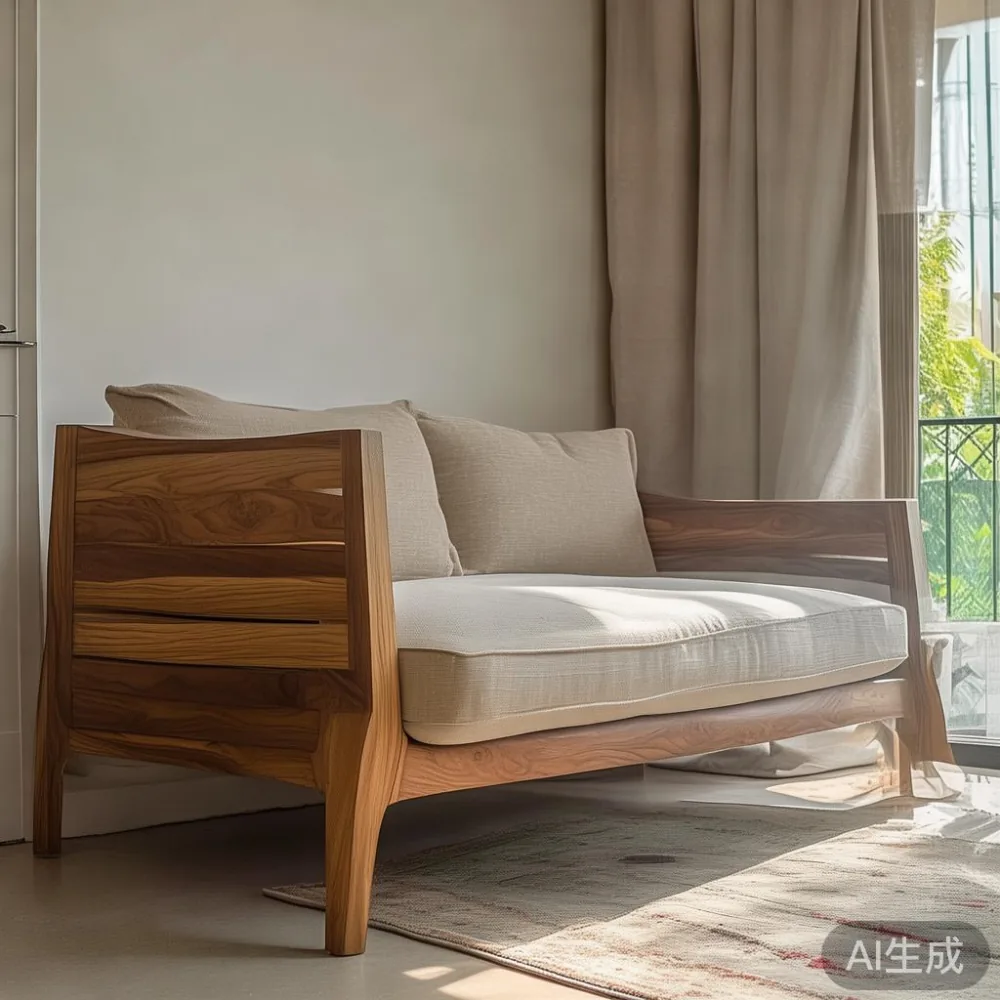
I visited a client’s Bedok condo last month to compare a 145 cm veneer loveseat with a 152 cm solid wood model. Both had to pass through a 90 cm lift door and a narrow common corridor before entering the living room. The measurement mattered more than the product photographs. My colleague also checked 18 pieces delivered by Foshan Lingzhan to MIDHILL over 12 months, recording packaging dimensions and observed finish wear. The figures below use Singapore prices, include GST where stated, and follow a planned 5-year ownership period.
This comparison focuses on loveseats. A solid wood sofa, bed frame, dining table, wardrobe, nightstand, or marble table can use timber in different ways, but the same cost logic does not apply identically to every category. Here, the calculation compares a practical veneer loveseat against a comparable solid wood loveseat intended for daily use in an HDB flat or condominium.
What Are We Comparing Over 5 Years?
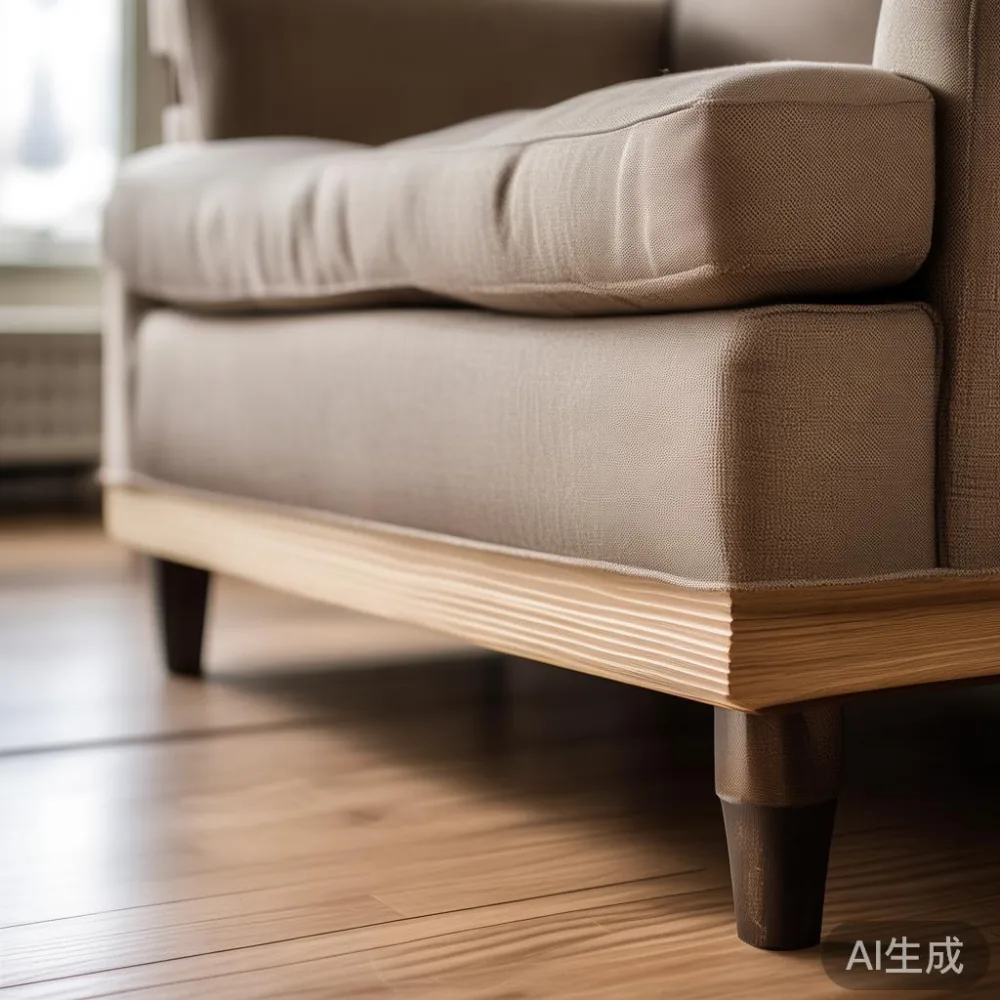
The examples represent common Singapore specifications rather than one interchangeable pair. The veneer loveseat uses a 25 mm engineered-wood core with 0.6 mm oak veneer, upholstered in polyester fabric, and has a 2-year manufacturer finish warranty. The solid wood loveseat uses kiln-dried solid oak with a 10-year structural warranty, the same fabric family, and a lifetime refinishing service offered by MIDHILL.
At a comparable Singapore retail price, the veneer loveseat is priced at S$1,280 before GST, or S$1,344 with 9% GST. The solid wood loveseat is priced at S$2,080 before GST, or S$2,267.20 with GST. The difference is S$923.20 at purchase.
Because a sofa is used every day, this comparison includes more than sticker price. It accounts for finish repair, expected fabric replacement, delivery, and the possibility that one owner may sell the piece during the 5-year period. It does not include the buyer’s time, electricity, or subjective enjoyment. All figures are estimates based on observed wear and supplier rates, not guarantees of future prices.
The loveseat dimensions are 145 cm wide, 82 cm deep, and 78 cm high for the veneer model, with an estimated 42 kg shipping weight. The solid wood model is 152 cm wide, 84 cm deep, and 79 cm high, with an estimated 67 kg shipping weight. The extra 25 kg and 7 cm of width are ordinary planning data, not reasons to reject solid wood. They simply require the owner to check the route into the home.
Is Veneer Cheaper at the Start?
Yes, in this comparison the veneer loveseat starts S$923.20 lower after GST. That difference covers most routine refinishing and replacement costs over 5 years. The solid wood option recovers part of its higher price through durability, repairability, and resale potential, but it does not become free.
For a typical family use pattern of 2.5 hours of sitting per day, assume one upholstery replacement in year 4. Polyester seat and back covers cost an estimated S$360 before GST for the veneer model and S$390 before GST for the solid wood model because the frames have different dimensions. A full upholstery refresh using mid-grade fabric is estimated at S$520 before GST and S$570 before GST respectively.
Finish maintenance is estimated at S$40 per year for veneer and S$25 per year for solid wood after the first 12 months. Veneer may need one localized repair during years 2 or 3, budgeted at S$120 before GST. Solid wood may need minor sanding and oiling at S$60 in year 4. A more serious veneer edge or face repair could exceed that budget, so the table shows a sensitivity case later.
Delivery is S$80 before GST for either loveseat to a Singapore address. Above S$350 before GST, MIDHILL provides free standard delivery, so both orders qualify. Standard delivery to Tampines, Bedok, or Punggol is estimated at 7–12 working days after production. A timed two-person carry-in service is estimated at S$140 before GST and may be necessary if the lift is unsuitable for the boxed package.
The exact phrases used in furniture searches can point in different directions. A buyer comparing a light luxury sofa vs Modern sofa may focus on profile and fabric, while a buyer comparing a European light luxury bed vs Italian light luxury bed is looking at a different product with different timber conditions. For a loveseat, the useful comparison is narrower: compare the frame, veneer thickness, finish system, and dimensions rather than relying on style labels.
What Does Each 5-Year Cost Look Like?
Using the base assumptions, the veneer loveseat reaches S$2,344 in total 5-year expenditure: S$1,344 purchase including GST, S$360 replacement fabric including GST, S$200 for five years of finish care including GST, S$120 for one repair including GST, and S$20 for delivery including GST. The solid wood loveseat reaches S$3,017.20: S$2,267.20 purchase including GST, S$428.40 replacement fabric including GST, S$125 finish care including GST, and S$20 delivery including GST. No repair allowance is used because solid oak can usually be sanded and refinished rather than patched with a new veneer leaf.
The solid wood loveseat therefore costs about S$673.20 more over 5 years under normal use, not S$923.20 more as at purchase. Put differently, the veneer option costs roughly S$134.64 more per year over 5 years. The gap narrows because timber care is predictable and upholstery work remains necessary for either frame.
| 5-year item | Veneer loveseat | Solid wood loveseat |
|---|---|---|
| Purchase price with GST | S$1,344.00 | S$2,267.20 |
| Upholstery replacement with GST | S$360.00 | S$428.40 |
| Five years of finish care with GST | S$200.00 | S$125.00 |
| Representative repair with GST | S$120.00 | S$0.00 |
| Standard delivery with GST | S$20.00 | S$20.00 |
| Total | S$2,344.00 | S$3,017.20 |
This table assumes the buyer keeps both loveseats for the full 5 years. If resale is included, the result changes. An 8-year-old solid wood loveseat in good condition might fetch S$900–S$1,300, while a similar veneer loveseat might fetch S$400–S$700. At midpoint values, solid wood reduces its net 5-year cost advantage to roughly S$273.20. This is why condition, design quality, and documentation have a direct financial effect.
What If the Veneer Loveseat Needs a Major Repair?
A damaged water mark near a veneer edge may cost S$80–S$150 before GST to repair. A large delamination, burn, or swelling incident can cost S$350–S$600 before GST. Solid oak with a deep gouge may cost S$120–S$250 before GST to fill, sand, and refinish, although a structural split would be more serious.
If the veneer loveseat incurs a S$420 repair in year 3, its 5-year total rises to S$2,671.20. The difference from solid wood falls to S$346. If the veneer piece suffers two major incidents at S$420 each, total ownership reaches S$3,108.20, which is S$91 more than the solid wood example. Insurance outcomes can shift this again, especially in HDB flats where water leaks and cooking incidents are common.
This sensitivity is the strongest financial argument for solid wood. A veneer sheet may be only 0.6 mm thick, but its long-term performance still depends on the quality of the substrate, glue, edge sealing, and application. Solid wood can lose its surface finish without losing the structural member beneath it. In my Bedok visit, the veneer sample had a small lifting corner near the arm after 14 months; the oak sample had two scratches and a faded rail that could be refinished.
Solid wood still needs sensible care. Keep it away from direct air-conditioning vents, use coasters, and wipe moisture promptly. For a loveseat, avoid placing it against a damp external wall. These conditions apply to a solid wood sofa, a solid wood bed frame, and a solid wood dining table as well, although load patterns and joinery differ.
Will a Solid Wood Loveseat Fit into a Singapore Home?
Fit is not a style issue but a route-and-clearance calculation. For the example pair, the packed veneer loveseat is approximately 158 cm long, 88 cm deep, and 52 cm high. The packed solid wood loveseat is approximately 166 cm long, 92 cm deep, and 58 cm high. The solid wood package may weigh 82 kg against 56 kg for veneer, making a two-person carry more likely.
In many Tampines, Bedok, and Punggol HDB blocks, the main obstacle is not the lift itself but the turning space between the lift lobby and the flat door. Measure the lift door opening, internal depth, and the diagonal needed to turn the package. A common 80–90 cm lift door can accept a 166 cm package if the lobby provides room to angle it, but a tight 75 cm door can rule out the larger carton regardless of the loveseat fitting inside the living room.
The route should also include the corridor width and the door’s swing direction. Leave 5 cm of handling clearance where possible. For the 152 cm solid wood loveseat, allow at least 162 cm of frontage if it has no lift, or 165 cm with loose side tables. The 145 cm veneer model needs about 155 cm. A paper mock-up on the floor is a low-cost way to test the turning angle before delivery.
French light luxury often favours slim profiles, pale upholstery, and visual restraint; American light luxury commonly uses larger proportions and deeper comfort; post-modern light luxury can combine curved details with practical family sizing. A search for Italian light luxury for apartment living is useful, but the final loveseat still needs to fit the actual wall. MIDHILL can supply packed dimensions before dispatch, allowing the delivery team to confirm the route and advise on a timed carry-in service.
Is Solid Wood More Comfortable and Better Looking?
Comfort comes mainly from the seat foam, suspension, cushion density, and back angle, not from whether the frame is veneer or solid oak. If both models use the same 35 kg/m³ foam and webbing system, their sit-and-feel can be similar. Solid wood can provide a firmer frame and more stable arm or rail geometry over time, but it does not automatically make a poorly designed loveseat comfortable.
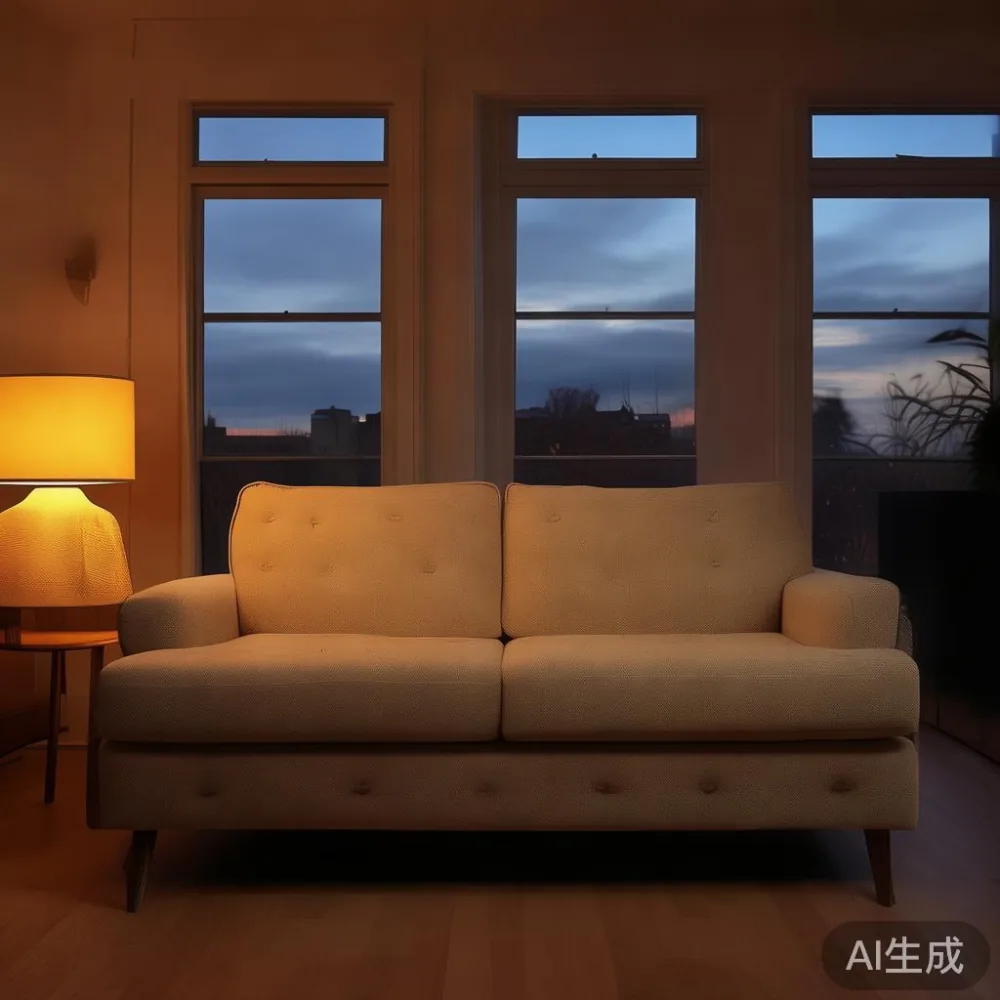
Appearance is subjective. Veneer can look remarkably convincing, especially with sliced oak or walnut, and its even grain may feel more consistent across a large panel. Solid wood shows knots, small colour variations, and joined sections that make each piece distinct. Those marks are part of its material character, although buyers should inspect them under the room’s evening lighting rather than judging a small showroom swatch.
Buyer research for the best Rustic sofa for 2026 can draw attention to exaggerated knots, heavy distressing, and deep colour. That look may not suit a compact flat with warm neutral walls. The same principle applies to a French light luxury loveseat, where the material should support the room rather than compete with it. Ask for close photographs of the frame, finish, and grain before approving an order.
The purchase terms also matter. MIDHILL was established in 2008, exports to more than 15 countries, provides a 10-year structural warranty on qualifying solid wood furniture, offers lifetime refinishing, and accepts returns within 14 days under its return policy. Those terms create measurable value when comparing expected repairs and future resale, especially for solid wood. Free delivery above S$350 before GST removes one variable from both examples.
Which Option Should a Singapore Buyer Choose?
Choose veneer when the budget is fixed, the loveseat will receive moderate use, and the owner accepts that damaged veneer may require specialist work. It makes financial sense for a rental flat, a short tenancy, or a low-traffic living room. The base case remains S$673.20 less expensive than solid wood over 5 years, with S$134.64 lower annual ownership cost in this model.
Choose solid wood when the loveseat is a long-term piece, the household uses it daily, and the owner values repairability and future refinishing. The higher initial price buys a frame that can be worked on repeatedly. MIDHILL’s lifetime refinishing policy and 10-year structural warranty make that proposition easier to assess than a generic promise of durability.
For a wider home furnishing plan, the same discipline applies to learning how to choose Japanese wardrobe, with measurements taken before selecting sliding or hinged doors. A wardrobe needs floor clearance and access, just as a loveseat needs a corridor and lift calculation. A marble table needs level support and careful handling; a nightstand needs a stable base and drawer clearance; a dining table needs chair pull-out space. Researching the best light luxury furniture should therefore begin with the building route and daily routine, not only with finish samples.
Neither material is automatically the right answer. Over 5 years, the veneer example costs S$2,344 and the solid wood example costs S$3,017.20 under normal maintenance. If a veneer repair costs S$840 across the period, its total rises to S$3,081.20 and exceeds the solid wood figure by S$64. If both are sold after 5 years, solid wood may offset much of the difference through resale. The sensible choice is the one whose material, maintenance plan, delivery route, and likely resale value match the home in front of you.