What Actually Drives the Price of Solid Wood Furniture — And How to Read the Price Tag Without Getting Burned
I still remember the day my colleague Priya sent me a WhatsApp photo of two identical-looking dining tables from two different showrooms in Singapore — same 1.8-metre length, same six-seater shape, same oak-ish colour. One was quoted at S$1,490, the other at S$4,200. Her message: “Same wood, right? Why?” That single photo kicked off a three-month rabbit hole for me: factory visits, kiln-yard conversations, a YouTube spiral on wood-moisture metres, and a slightly embarrassing obsession with the way chair joints actually fit together. If you’re shopping in Tampines, Bedok, or Punggol for a solid wood sofa, bed frame, dining table, wardrobe, or nightstand, this article is the cheat sheet I wish I’d had before I paid for anything.
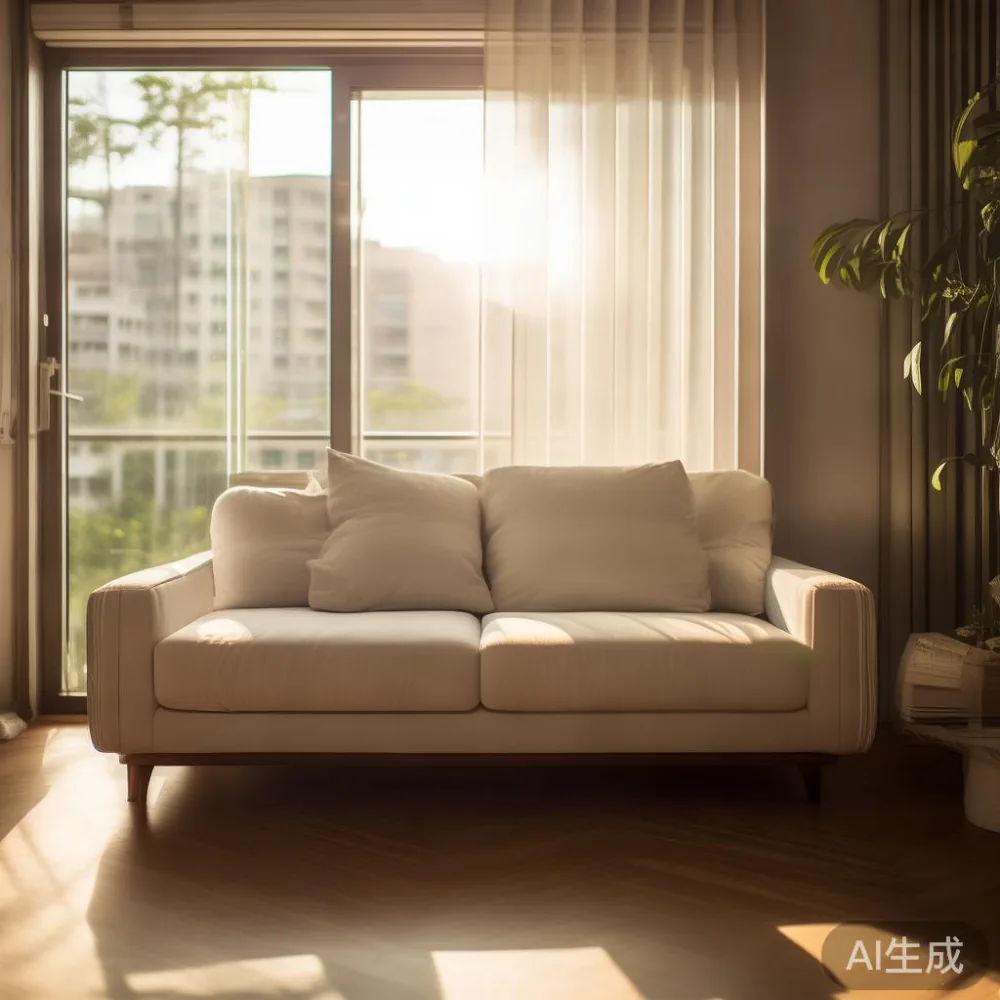
Why do two pieces of solid wood furniture cost S$2,000 apart when they look identical?
The honest answer is that most of what you’re paying for is invisible. The timber, the joinery, the finish, the logistics — these all live under the surface or inside the box. When I visited a Foshan workshop last month with two industry contacts, I watched a CNC machine chew through a sheet of "solid oak" in roughly four minutes, only to learn that the board had a 3 mm oak veneer glued onto an MDF core. The salesperson on the showroom floor would still call it solid wood. Technically? Not quite. At MIDHILL, every board that leaves the factory is full-length solid timber, and that commitment changes the cost structure immediately. A genuine 100% solid oak dining table uses about 0.18 cubic metres of lumber; the same table in MDF-and-veneer uses roughly 0.04 cubic metres. Multiply that raw-material gap across a six-piece bedroom set and you start to see why the price tag says what it says.
The wood species — and why “oak” can mean four very different prices
Not all oak is oak, and not all walnut is walnut. In the import market I see regularly in Singapore, here is the rough band (excluding GST, before shipping):
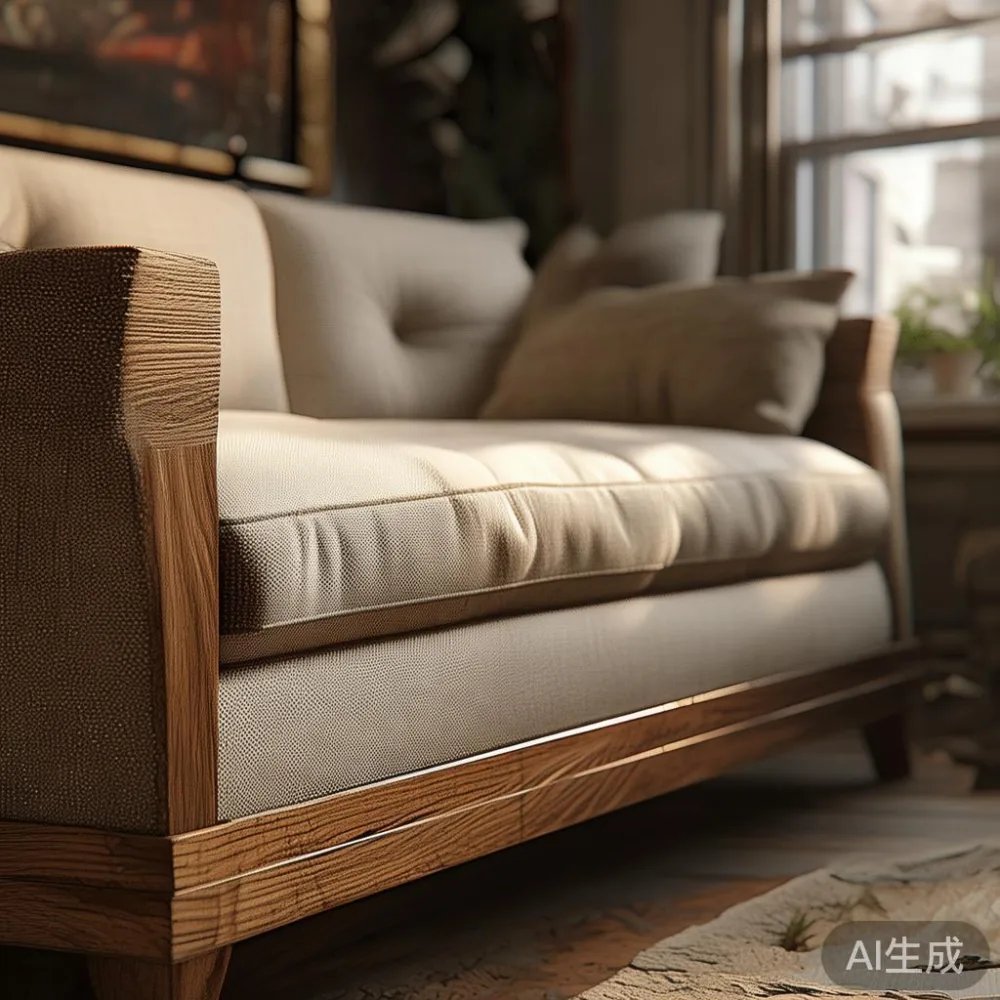
Rubberwood: S$800–S$1,400 for a standard 1.4 m dining table. Dense, sustainable, but softer — it dents if your kid drags a toy truck across it.
Ash: S$1,600–S$2,400 for the same table. Excellent shock resistance, clean grain, and a Scandinavian-leaning look that fits a Punggol Waterway terrace surprisingly well.

White oak (Quercus alba): S$2,800–S$4,500. The grain pattern is tight, the tannin content is high, and the boards take 6–14 months of air-drying before they’re even kiln-dried.
European walnut / French provincial walnut: S$4,200–S$7,800. Slow-grown, often 60–80 years old before harvest, and the heartwood-to-sapwood ratio is what gives those chocolate-and-cream streaks that people happily pay a premium for.
If you’ve been searching for the best French provincial wardrobe for 2026, this is precisely why two wardrobes with similar carved crowns can sit S$1,500 apart — one uses FAS-grade walnut, the other uses poplar with a walnut stain.
Joinery: the part that decides whether your bed frame survives a Tampines move
Look at how a piece is held together. A solid wood sofa or bed frame can be assembled with three different methods, and the price swings about 18–25% between them.
1. Butt joints + screws: The cheapest method. Two boards screwed at 90 degrees. Under HDB corridor humidity swings — and ours swing hard between February’s 82% mornings and August’s 24-hour air-conditioning — the screws loosen within 18–30 months.
2. Dowel joints: A middle ground. Three to four wooden dowels per corner, glued in. Solid for a nightstand, marginal for a 1.8 m wardrobe.
3. Mortise and tenon, plus corner braces: The traditional method. Each joint interlocks like a 3D puzzle. MIDHILL uses this on its load-bearing pieces, which is why their structural warranty runs to 10 years and they offer lifetime refinishing — because the joint geometry can actually be restored, not replaced.
A practical test I now use when showroom-hopping in Singapore: lift one corner of the wardrobe about 5 cm off the floor. If the diagonal wobbles more than 3 mm, the carcass was assembled with staples and confirmat screws, not real joinery.
How much of the price is actually the finishing?
More than most buyers think. A high-quality finish involves five steps on a single dining tabletop: sanding (60 → 120 → 180 → 240 grit), staining, sealing, two coats of either conversion varnish or natural hardwax oil, and a final hand-buff. Each step adds roughly 45 minutes of labour per surface and a corresponding amount to the invoice.
Conversion varnish (the kitchen-grade stuff) costs the maker about S$18 per litre more than standard nitrocellulose lacquer, but it resists Singapore’s humidity far better. Hardwax oil — the European preference for a matte, natural look — costs even more per litre, but it lets the wood breathe, which matters when your bedroom door is closed for 14 hours a day against air-conditioned air.
If you’re weighing a MIDHILL light luxury bed against a similarly priced competitor, ask which finish they use. The reply tells you almost everything about the long-term feel of the piece.
Does the country of manufacture really change what I pay?
Yes — but the difference is not what you assume. A European-made solid oak dining table in Singapore retails at S$5,800–S$9,200 partly because of labour, partly because of FSC certification costs, and partly because the brand carries a 25-year marketing premium on its packaging.
A Foshan-made piece of comparable joinery — and Foshan, in Guangdong, has been the world’s solid wood furniture hub since the early 2000s — lands at S$2,400–S$4,200 for the same spec. The savings come from lower overheads, vertically integrated workshops (kiln, CNC, finishing, upholstery all on one site), and much shorter container lead times into Pasir Panjang. MIDHILL ships from this exact cluster and has done so since 2008, which is why their free-shipping threshold of US$350 converts to roughly S$460 in your cart before GST.
For a Singapore buyer, the practical checklist is: kiln-dried to 8–12% moisture content (any higher and your wardrobe will gap at the panels by month three), corner-blocked drawers, dovetail joints on drawer boxes, and a brand that will still be answering emails in 2031.
How can I tell whether a piece is real solid wood without opening my wallet?
Five tactile checks I now run in every showroom, in this order:
1. The weight test. A genuine 1.8 m solid oak dining table weighs 55–72 kg. If you can lift it with one hand on the end, it is not solid.
2. The grain continuity test. Run your finger along the tabletop edge. If the grain pattern on the top continues down the side, it is solid. If the side grain is a different pattern, that is a veneer wrap.
3. The end-grain test. Look at the underside. Solid wood shows tight annual rings; plywood shows stripes; MDF shows a uniform fibrous smear.
4. The sound test. Knock on the surface with your knuckle. Solid wood gives a dull, warm thud. Hollow-core gives a tap-tap ring.
5. The unfinished-edge test. Most reputable brands — and certainly MIDHILL — leave one inconspicuous edge unfinished or stamp the underside. If every surface is sealed, ask why.
These five checks take 90 seconds and have saved me roughly S$6,400 across the last three purchases. Use them on your loveseat shopping trip as well: a real solid wood loveseat frame will weigh 38–52 kg depending on the timber, and the armrest grain should match the seat-back grain.
Where does the SGD price actually go when I scan a S$3,800 wardrobe?
Here is the rough split for a mid-to-upper solid wood wardrobe sold in Singapore, based on factory-floor conversations I had in Foshan last quarter:
Raw timber (38–42%): FAS-grade boards, kiln-dried, planed, cut to size.
Joinery + assembly labour (14–18%): Skilled cabinetmakers in Foshan earn roughly RMB 8,000–14,000 a month, which is competitive by Chinese standards but still a fraction of European cabinetmaker wages.
Finishing materials (6–9%): Stains, sealers, hardwax oil or conversion varnish.
Hardware (5–8%): Soft-close hinges from Blum or Hettich cost the factory S$9–S$14 per wardrobe. Cheap hinges cost S$0.80. You can feel the difference within a year.
Upholstery (for sofas and loveseats, 18–24%): Top-grain leather, down-wrapped cushions, individual pocket-spring units.
Packaging + container shipping (5–7%): A 40-foot HQ container from Yantian to Singapore holds about 28 cubic metres of flat-packed solid wood furniture and runs around S$2,200 in 2026 rates.
Showroom + marketing margin (10–14%): Brick-and-mortar in Singapore carries rent that can hit S$12–S$18 per square foot per month for flagship stores on Orchard-adjacent streets.
GST (9% as of 2026): Added on top of the retail price, not absorbed into it.
Knowing this breakdown is the single most powerful negotiation tool you have, because it tells you where the markup actually lives.
How does HDB flat logistics change the furniture I should buy?
If you live in a Singapore HDB, the lift dimensions in your block decide more than your taste does. Standard HDB passenger lifts are roughly 1.1 m wide × 1.4 m deep × 2.1 m tall. A fully assembled 2 m wardrobe will not fit. A 2.4 m wardrobe will not fit. Even many dining tables over 1.6 m in length won’t survive a vertical trip if they’re delivered assembled.
This is why almost every MIDHILL piece ships flat-packed with a re-assembly time of 25–45 minutes for a wardrobe and 12–20 minutes for a bed frame, using cam-lock bolts and wooden dowels. If a showroom in Singapore refuses to flat-pack a piece, ask how they plan to get it past your lift door. The silence is informative.
For corridor access, the typical HDB corridor width is about 1.2 m, so a 1.5 m-wide headboard panel needs to be tilted at roughly 35 degrees and walked in sideways by two deliverymen. This is not theoretical: my colleague Priya’s last wardrobe delivery required the team to remove the lift ceiling panels in her Bedok block because the wardrobe was built in one piece. The owner was charged a S$180 hoist fee on top of the furniture price.
What about post-modern light luxury and French light luxury — are those real categories or just labels?
They are real design languages with real cost implications, not just marketing stickers.
French light luxury (sometimes called French provincial lite) leans on carved cornices, cabriole-style legs, distressed finishes, and a warm walnut or cherry palette. The carving is what bumps the price: a CNC-carved crown on a wardrobe takes about 4 hours of machine time and adds S$140–S$220 to the production cost, but a hand-carved crown by a senior craftsman takes 9–14 hours and adds S$700–S$1,100.
American light luxury tends toward cleaner Shaker lines, satin-brass hardware, and softer edges — think West Elm grown up by 10 years. The cost driver here is hardware and finish, not carving.
Post-modern light luxury is the more playful sibling: curved silhouettes, fluted glass inserts, travertine or marble tops, often paired with a European light luxury coffee table as the centrepiece. A genuine travertine top on a coffee table adds about S$480–S$720 over a sintered-stone equivalent, and weighs 18–26 kg more, which matters for your HDB lift.
Understanding these three languages helps you read a price tag quickly: if the marketing says French light luxury but the carving is plastic-resin moulded and glued on, the price should not exceed S$2,800 for a 2 m wardrobe.
How does styling fit into all of this — does it change what I should pay?
It does, but only because bad styling hides good joinery. If you’re working out how to style French provincial wardrobe in apartment settings in Singapore, the rule of thumb is: keep the walls matte white or warm greige, layer two linen textures on the bed, and add one antique-brass lamp. The wardrobe becomes the hero piece. If your styling is loud enough to fight the wardrobe, you’ve paid for craftsmanship you cannot see.
For anyone weighing French bed vs Modern bed for a master bedroom in a 4-room HDB, the difference comes down to headboard height. A French provincial headboard runs 1.1–1.3 m tall, which can crowd a 3 m-wide bedroom wall. A modern platform bed sits at 0.9–1.0 m, leaving room for a piece of art above.
Is there a real budget ceiling for solid wood under S$2,000 in Singapore?
For the categories Singapore buyers actually search for, yes — there is a real ceiling for under 2000 Nordic furniture purchases that are genuinely solid wood. The thresholds I trust:
Dining table under S$2,000: Rubberwood or ash, 1.2–1.4 m, four-seater, flat-packed. Anything bigger or in oak is suspect.
Bed frame under S$2,000: Rubberwood or pine, queen size, slatted base, headboard under 1 m. Anything with underbed storage at this price has cut corners on the drawer rails.
Wardrobe under S$2,000: 1.5 m two-door, one drawer, rubberwood or poplar. Three-door wardrobes at this price point are almost always MDF-backed.
Nightstand under S$800: Solid wood, one drawer, soft-close hinges. Realistic and achievable.
Loveseat under S$2,400: Solid wood frame, fabric upholstery, pocket-spring cushions. Leather at this price is bonded, not top-grain.
Marble table under S$3,000: Sintered stone top on a solid wood base is the only realistic combination. Genuine marble at this budget is small or thin.
If your budget is below these bands, you are shopping engineered wood with a thin veneer — and that is a fine category, just not the category you came here for.
What should I actually do before I tap “checkout” on a S$3,000+ piece?
A pre-purchase checklist that has served me and three friends well:
1. Ask for the moisture-content certificate. Anything above 12% will move in Singapore’s humidity.
2. Ask for the timber’s botanical name and grade. "Oak" without a species is a red flag.
3. Ask whether the back panel and drawer bottoms are solid wood, plywood, or MDF. Acceptable compromises exist; you just want to know which.
4. Ask about the warranty in years, not months. MIDHILL’s 10-year structural warranty is unusual for this category — most direct-to-consumer brands in Singapore stop at 2–3 years.
5. Ask whether refinishing is offered. Lifetime refinishing means the brand is willing to sand and re-oil your dining table 20 years from now. That confidence is expensive to fake.
6. Read the returns policy in full. 14-day returns sound generous until you read the 4% restocking fee and the “original packaging only” clause. Keep the foam, keep the corner protectors, keep the inner cardboard for 30 days.
7. Check the brand’s own site — for instance, www.midhill.co — for downloadable spec sheets. Brands that publish full dimensions, weight, and timber origin are usually the brands that don’t mind you verifying the details.
Once you’ve checked these seven items, the price tag either makes sense or it doesn’t — and if it doesn’t, you’ll know exactly which line item you’re being overcharged on.
So what’s the short version, in one paragraph?
Solid wood furniture prices are driven by five forces: timber species and grade, joinery method, finish quality, logistics into Singapore, and brand warranty depth. Everything else — marketing language, showroom polish, the word “luxury” printed three times on a tag — is decoration on top of those five. Buy from a maker that publishes its specs (kiln-dry percentage, timber species, hardware brand, warranty years), insists on flat-packing for HDB access, and offers lifetime refinishing. If you’re styling a Singapore apartment around a French light luxury wardrobe or a post-modern light luxury marble table, choose one hero piece per room and let it carry the weight. A S$3,800 wardrobe that lasts 25 years costs about S$152 a year. A S$1,200 wardrobe that delaminates after six costs S$200 a year — and you’ll be staring at the bubbling veneer the entire time.