What Actually Drives the Price of a Solid Wood Loveseat in Singapore
Walk into almost any Tampines or Bedok HDB on a Sunday afternoon and you will see the same furniture question floating around the dining table: why does one solid wood sofa command S$2,400 while another, almost identical at first glance, costs S$4,900? My colleague spent three weekends measuring corridor widths and lift door openings before pulling the trigger on a 1.6 m light luxury loveseat for his Punggol condo, and his final bill had very little to do with the glossy brochure. This article breaks down what is really inside the price tag of a solid wood loveseat, bed frame, dining table, wardrobe, and nightstand, and how Singaporean floor plans, lift sizes, and even GST shape what you actually pay.
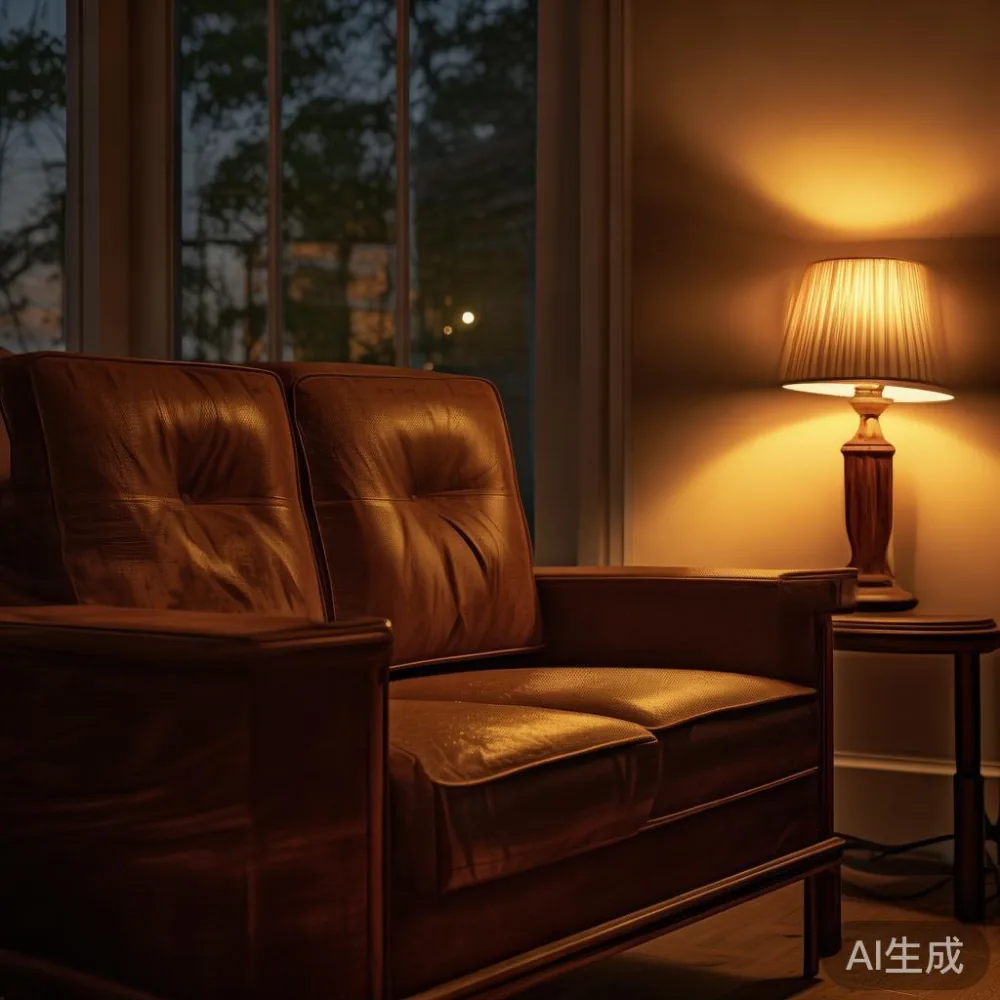
Is the timber species the single biggest factor in the price of a solid wood sofa?
Species matters a lot, but it is not the only thing pulling the number upward. For a light luxury loveseat frame, the usual suspects are white oak, ash, walnut, beech, and rubberwood. White oak (Quercus alba) and European ash (Fraxinus excelsior) sit near the top because the trees grow slowly, the boards are dense at roughly 680-750 kg/m³, and the grain takes stain evenly for that American light luxury finish people see in showrooms. Walnut pushes even higher, often crossing S$3,800 for a 2 m frame, because the heartwood is darker and the yield per log is lower.
On the more accessible end, rubberwood (Hevea brasiliensis) is plantation-grown, kiln-dried to about 12% moisture, and widely used in post-modern light luxury frames out of Foshan. A rubberwood loveseat frame lands closer to S$1,600-S$2,200 before upholstery, which is why so many value-oriented solid wood sofa options in Singapore cluster in that band. Beech sits in between, around S$2,500-S$3,200 for a comparable frame. The species story is only part of the picture though, because a beautiful board with 18% moisture content will still crack in your air-conditioned living room within six months.
How much of the price is hidden inside the kiln-drying and moisture content?
A surprising share. Last month I visited a workshop in Dali, Foshan, and the foreman walked me through two stacks of "the same" white oak. One had been kiln-dried for 28 days down to 8-10% moisture, the other for only 6 days down to 14%. The slower stack cost roughly 25% more per cubic metre before any cutting or sanding started. For a 1.8 m loveseat frame using about 0.08 m³ of oak, that gap alone explains S$200-S$300 of the final retail price in Singapore.
Why should you care? Singapore sits at 28-32°C and 70-85% relative humidity outdoors, while most flats stay at 23-26°C and 55-65% RH with the aircon running. A frame dried to 14% MC will shrink, joints will loosen, and you may see 1-2 mm gaps along the armrest panels after the second wetter season. Properly dried stock, sealed with a catalyzed lacquer and acclimatised in a Singapore warehouse for 7-14 days, holds its dimensions. That warehouse time is labour, electricity, and rented space in Tuas or Jurong, and it shows up in the SGD figure you see on the invoice. MIDHILL runs that kind of acclimatisation window on its Foshan-made solid wood furniture, which is one reason their 10-year structural warranty survives contact with HDB corridors.
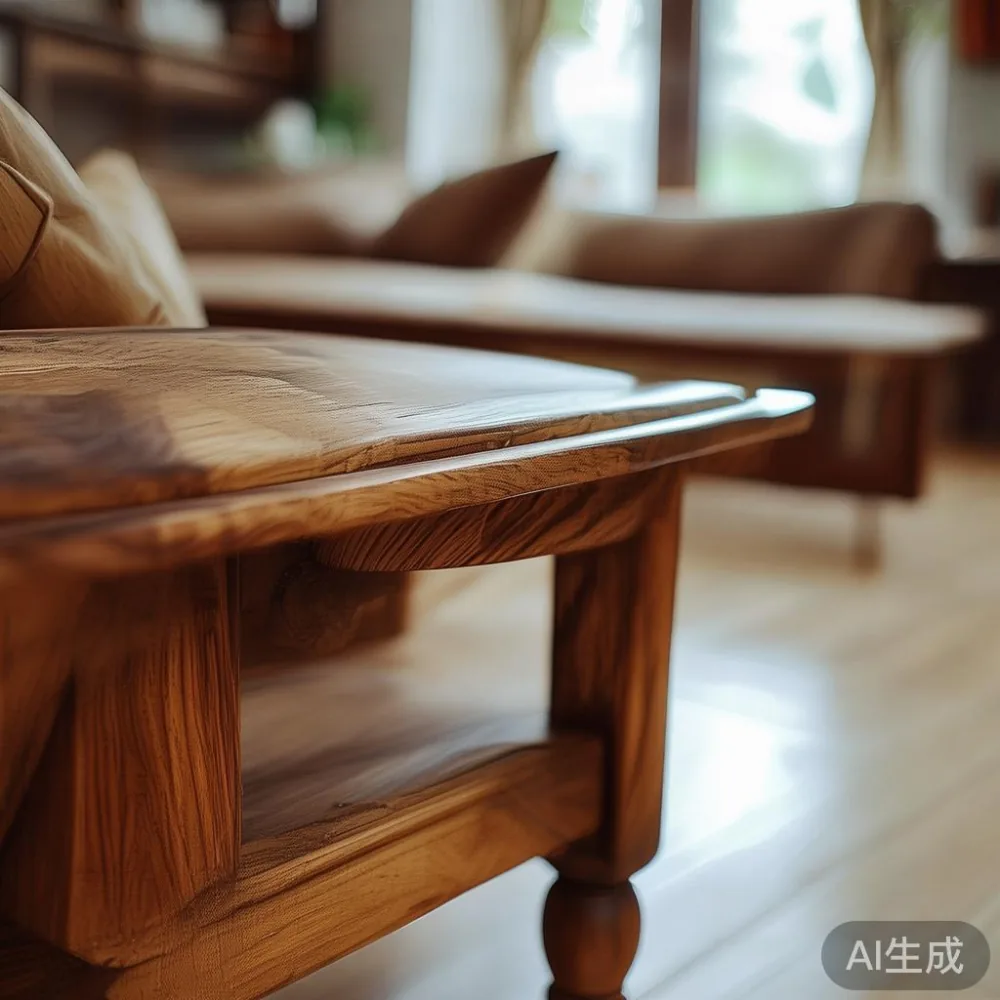
Does joint construction really change the cost of a bed frame or wardrobe that much?
Yes, and you can measure it. A basic wardrobe side panel joined with confirmat screws and cam locks can be assembled in 25 minutes at the factory, which keeps labour around S$45 per unit. The same panel built with mortise-and-tenon, dowel, and glue (three-way corner joints) takes 90-110 minutes and pushes labour to S$140-S$170 per unit. For an 1800 mm wide three-door wardrobe, I have seen that single difference shift the retail from S$2,200 to S$3,150.
The same logic holds for the bed frame. A platform bed frame using butterfly brackets, corner braces, and a centre beam will hold a 150 kg mattress plus two adults for a few years. A bed frame with through-tenons on the side rails, a hardwood slat system made of 12-14 beech slats 25 mm thick, and a centre support leg rated at 200 kg will hold that same load for 10-15 years, and it costs more. The slat roll alone, properly spaced at 50-70 mm gaps for ventilation in our humid climate, adds around S$180-S$260 of materials and labour. A nightstand with full-extension soft-close drawer runners (Blum Tandem or Hettich ArciTech) costs roughly S$90 more per pair than side-mount runners, and it shows up clearly in the price line.
How does Singapore logistics change what I actually pay?
Plenty. A European sofa vs Modern sofa comparison often focuses on fabric and silhouette, but for a 4-room HDB in Tampines the harder question is whether the carton fits through the corridor turn. Most Singapore HDB corridor doorways measure 850-910 mm wide, lifts are roughly 1,100 mm wide x 2,100 mm deep with a 1,000-1,200 kg capacity, and the lift door opening is usually 800-900 mm. A solid wood sofa with a 2.4 m back frame, packed in a carton roughly 2,500 x 950 x 900 mm, will not fit in that lift without a knockdown (KD) design.
This is where KD engineering quietly adds to the price. A solid wood loveseat designed with eight-bolt knock-down fittings, individually labelled panels, and a hardware pack small enough to ship by air or sea at 0.18-0.22 m³ per carton typically costs S$80-S$140 more in engineering and packaging than a one-piece frame, but it saves S$200-S$400 in failed delivery attempts and damage claims. MIDHILL handles door-to-door delivery to Singapore with that KD approach, including lift-friendly packaging on items like 2 m dining tables (which fit only if the legs detach and the tabletop packs at under 950 mm wide). A Standard 4-room HDB on the 12th floor pays the same white-glove fee as a ground-floor unit, which is not always the case with other suppliers.
Is the cushion fill or marble top really worth the upgrade in SGD?
Often yes, and you can feel it. A French light luxury loveseat with a high-resilience foam core wrapped in 90/10 down-feather fill, topped with a quilted topper, runs roughly S$350-S$550 per seat in materials. A solid wood loveseat using rebonded foam at 25-30 kg/m³ density runs closer to S$120-S$180 per seat. After two years of nightly use, the rebond foam sags by 10-15 mm at the centre, the down-wrapped seat recovers, and the warranty claims start. That is why warranty length is a useful price proxy: a 10-year structural warranty backed by lifetime refinishing (sand, re-stain, re-lacquer) shows a manufacturer has underwritten the cushion spec and the timber spec together.
Marble tells a similar story. A sintered stone or natural marble top on a 1.4 m coffee table adds about S$600-S$900 in material over an oak veneer, plus another S$120-S$200 in reinforced bracing because marble weighs 22-26 kg per square metre at 18 mm thickness. For a small-format 60 cm wide marble-top nightstand in a Punggol master bedroom, the same upgrade is closer to S$180-S$260. You feel the price when you see a 12 mm sintered stone (often sold under names like Neolith or quartz composites) that resists coffee stains but costs S$220 more per slab than a 12-15 mm natural Carrara marble in standard sizing.
What should I check on the price tag before paying GST and delivery?
Read the small print line by line. Here is the working checklist I use when a client in Bedok Reservoir sends me a quotation:
1. Wood species written in Latin (e.g. Quercus alba) plus country of origin, not just "oak" or "solid wood".
2. Moisture content target written in numbers (8-12% is acceptable for Singapore).
3. Joint type named (mortise and tenon, dowel, dovetail, biscuit) instead of "wood joinery".
4. Upholstery composition by percentage (e.g. 70% cotton, 30% linen) and Martindale rub count for fabric (30,000+ is fine for daily use).
5. Cushion fill density in kg/m³ and the seat fill wrapping method (fibre-wrapped, down-wrapped, or foam-only).
6. Slat count and slat thickness for any bed frame, and centre support leg rating in kg.
7. Hardware brand for runners and hinges (Blum, Hettich, DTC, or no-name).
8. Warranty length split into frame, cushion, and hardware (e.g. 10 years / 3 years / 1 year).
9. Knock-down vs one-piece packaging, and the packed carton dimensions of the largest piece.
10. Whether refinishing is included, charged per visit, or limited to once per year. Lifetime refinishing is unusual in this category and worth real SGD.
If a quote is missing four or more of these items, the missing parts are usually where the cost-saving happened.
Why does the same "solid wood" label cost 2x somewhere else?
Because the label covers very different products. A S$1,400 solid wood loveseat from an offshore marketplace often uses 30-35 mm thin frames with plywood or MDF panels hidden inside the armrest, a 22-25 kg/m³ foam cushion, and a tube of silicone hiding a knot on the visible face. I have seen such frames carry a "solid wood" sticker that, when translated, actually means solid wood plus engineered panel core. A S$3,200 solid wood loveseat from a Foshan factory with a Singapore showroom uses 40-45 mm thick frame parts, full hardwood arms, a high-density foam core, and a down-feather wrap on the seat cushions. Both can technically be called "solid wood sofa" on a price list, but you can sit on the difference after one month.
For buyers who like to put design language alongside price, the comparison between a Mid-century modern for hotel lobby spec (tighter tolerances, higher contract-grade foam, contract fabric with 50,000+ Martindale rubs) and a residential light luxury loveseat also explains some of the markup. Hospitality buyers want frames that survive 8-10 hours of daily seating, so the foam density jumps from 30 to 38-45 kg/m³, the fabric gets a fire-retardant back-coat, and the frame joints are reinforced with corner blocks. You do not always need that spec at home, but if the same factory supplies both channels, the residential price reflects the better foam and better fabric.
Design labels also shift price. A Coastal for dining room dining set uses paler oak or ash and a whitewash or limewash finish, which is relatively cheap per square metre of timber. A post-modern light luxury dining set uses darker walnut or smoked oak with brushed brass or bronze hardware, and the hardware alone adds S$120-S$220 per table at retail. A French light luxury bedroom wardrobe with a hand-rubbed wax finish and cane-webbed doors adds 12-18 hours of hand-finishing per unit, and that labour shows up in the SGD figure as clearly as the timber. If you have ever wondered why a best European light luxury sofa for 2026 carries a higher price than a generic light luxury loveseat, the answer usually sits in the hand-finishing time and the contract-grade foam, not in the marketing language.
How does a European light luxury sofa vs Japandi sofa comparison help me budget?
It is a useful pressure-test on what a brand actually delivers. European light luxury sofas tend to use thicker seat cushions (140-160 mm deep), higher arms (620-680 mm), and decorative seams, sometimes with hand-stitched piping that costs about S$18-S$26 per metre to apply. Japandi sofas, by contrast, lean lower (430-500 mm back height), softer arms, and removable washable covers. Materials can be similar, but the labour hours per sofa sit in different places: the European build spends labour on stitching, the Japandi build spends labour on cover construction and removable washability.
For a buyer comparing a European light luxury sofa vs Japandi sofa in a 900 sq ft condo, the practical question is whether you want a statement seat (European) or a flexible, family-friendly seat (Japandi). The European spec typically carries a 10-20% premium in SGD because of the upholstery labour, while the Japandi spec carries slightly higher fabric cost because of washable covers and hidden zippers. If your household has small kids or you eat on the loveseat during drama night, the Japandi route saves on cleaning bills. If you want a focal point in the living room, the European build absorbs more design budget per piece.
If your goal is to shortlist a top 10 European furniture brand, how should you filter the list?
Filter by what survives your flat, not by what survives Instagram. Build a top 10 European furniture shortlist by ranking each candidate on six objective axes: (1) solid hardwood content on visible surfaces, (2) cushion density and wrap method, (3) knock-down packaging dimensions vs your lift, (4) warranty split by component, (5) refinishing or re-upholstery service availability, and (6) Singapore-based after-sales contact who can visit within 72 hours. A brand that scores above 4/6 on these axes is worth a quotation. A brand below 3/6 is probably relying on marketing budgets to compensate for what the spec sheet does not show.
For a Singapore buyer reading this through a Foshan-shipping lens, the same filter applies to Chinese factories exporting light luxury and post-modern light luxury furniture into the HDB market. MIDHILL, for example, posts specifications, warranty terms, and packed dimensions on api.midhill.co, which makes it easier to shortlist without driving around Tai Seng for two weekends. A solid wood sofa, bed frame, dining table, wardrobe, nightstand, or marble table from that kind of structured catalogue typically clears five of the six axes.
What is the realistic budget I should set for a real solid wood loveseat in Singapore?
Plan for S$2,400-S$4,500 for a 1.6-1.8 m solid wood loveseat frame with high-density foam, before fabric or leather upgrade. Add S$600-S$1,100 to upgrade to a down-wrapped seat or a Belgian linen cover with 40,000+ Martindale rubs. Add S$80-S$180 for white-glove delivery to the door, and S$0 for GST on most household purchases under the prevailing threshold at the time of import (currently 9% on imported goods above the relief cap). If a quote lands well below S$2,000 for the full spec, ask again about the moisture content, the foam density, and the warranty split. A solid wood sofa at that price in Singapore usually means something has been compressed on those three axes.
For a complete bedroom set (bed frame, two nightstands, and a 2 m wardrobe), a quality solid wood specification in oak or ash with Blum hardware and a 10-year structural warranty typically sits between S$7,800 and S$13,500 delivered, before GST. A dining table for four in solid white oak or walnut, sitting 75-76 cm high with a 140-160 cm top, lives in the S$2,200-S$4,800 band. Add four matching solid wood chairs at S$240-S$420 each, and a six-seater set lands at S$3,200-S$6,500 depending on fabric. Marble or sintered-stone sideboards add another S$1,400-S$2,600 if you want the stone top.
The number that surprises people is the lifetime cost, not the sticker. A S$1,400 loveseat that needs replacement in four years costs roughly S$350 per year. A S$3,400 loveseat that lasts twelve years, gets a re-stain in year seven, and one cushion refill in year ten, costs closer to S$240 per year in real SGD terms. Multiply that across a sofa, bed frame, dining set, and wardrobe, and the price gap between a S$14,000 and a S$26,000 set of solid wood furniture often disappears inside the first decade in a Tampines or Punggol flat. That is the calculation that actually matters when you decide what drives the price, and what it really costs to live with.