How to Match a Loveseat and Solid Wood Furniture to a Warm Minimal Interior in Singapore
Warm minimalism is the style I keep recommending to friends renovating compact HDB flats in Tampines and Bedok, and it is the style that gives a solid wood loveseat the most room to breathe. The idea is simple: keep the palette warm (oak, walnut, cream, putty), keep the silhouettes slim, and let one or two textures do the talking. A 150 cm loveseat in a 4-room flat rarely looks crowded when the surrounding pieces — the dining table, the bed frame, the nightstand, the wardrobe — share the same grain direction and the same restrained finish.
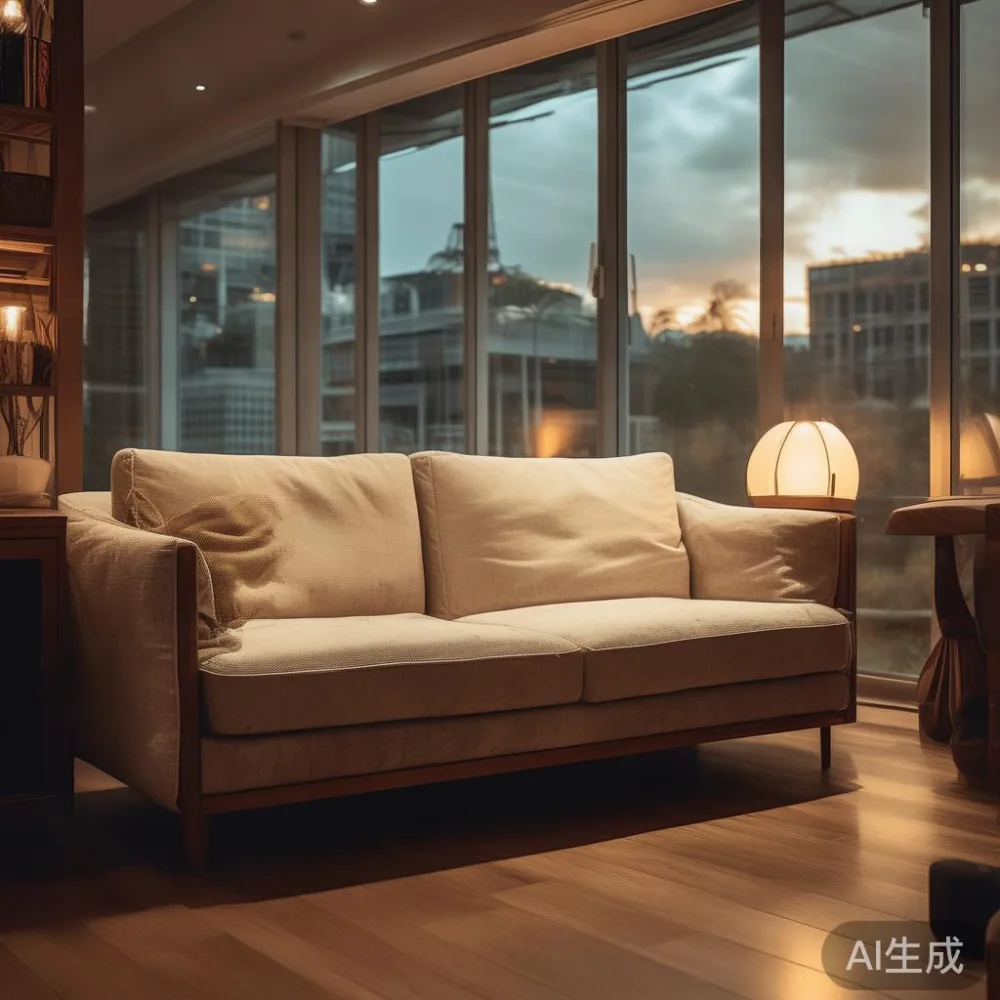
I spent the last few weeks walking showrooms in Sungei Kadut and the Funan furniture floor, and I also visited a MIDHILL display house where every wall was painted in Farrow & Ball-style muted tones. The lesson repeated itself: warmth comes from material, not from colour. A pale ash loveseat next to a smoked oak coffee table reads warmer than a chocolate-brown sofa on white floors. Below is the room-by-room system I use when I help friends source pieces for under SGD 6,000 per room, including the long-tail question I keep getting from a colleague in Punggol: is Japanese sofa worth it compared to a light-luxury Western build?
What does warm minimal actually look like in a 90 sqm HDB?
Picture a 90 sqm BTO in Punggol with a 2.4 m ceiling, a corridor 1.2 m wide, and a lift opening 0.9 m wide on the service lift side. The palette is three tones: a warm white ceiling (Dulux Whisper White, around SGD 28 per 4 L), a putty wall (Skimmed Milk White, SGD 35), and one wood tone that runs through every room. Most Singapore owners I work with pick European white oak because it photographs well under 4000 K downlights, and because a MIDHILL solid oak dining table at 160 cm × 80 cm fits four without crushing a 3 m by 3 m dining zone.
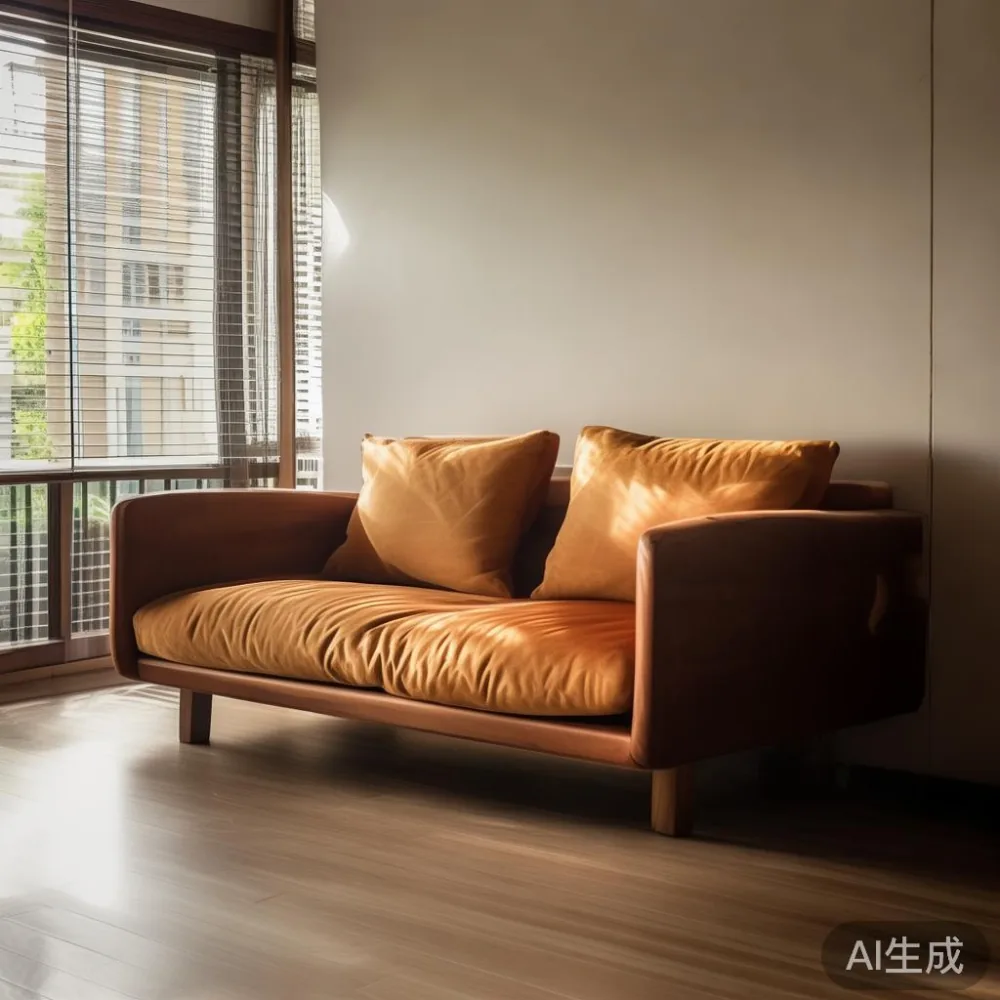
Floors stay light — 15 mm engineered oak at SGD 38 per sq ft installed, or a warm 600 mm by 600 mm homogeneous tile at SGD 6.50 per sq ft for owners who want the lowest maintenance in a tropical climate. Rugs are 200 cm by 280 cm in un-dyed wool (around SGD 480). Window treatments are linen, never blackout polyesters, because warm minimal depends on soft, scattered light. The corridor constraint is real: a 1.2 m passage means anything deeper than 95 cm has to be flat-packed and assembled inside the unit. That alone disqualifies a lot of heavy imported solid wood sofas that arrive in one 180 cm crate.
How do I match the loveseat to the rest of the solid wood set?
I anchor the room on the loveseat first, then pull the supporting pieces from the same material family. A loveseat between 140 cm and 170 cm wide is the sweet spot for a Singapore living room of 14 sqm to 18 sqm — wide enough for two adults and a small child, narrow enough to leave 80 cm of walkway on each side. Anything shorter than 135 cm starts to feel like a hallway chair; anything longer than 180 cm starts to push the room into a three-seater scale and the warm minimal language breaks down.
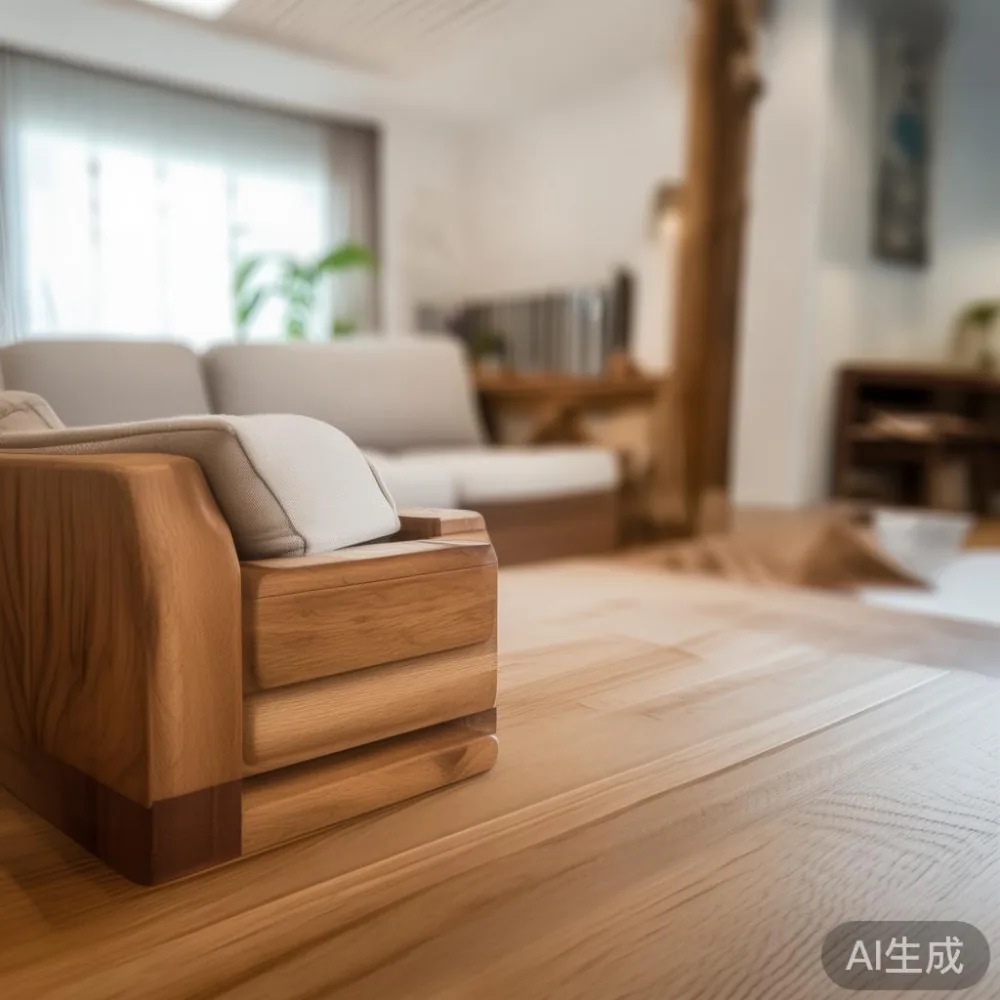
Frame material matters more than upholstery colour in a warm minimal room. A solid wood loveseat on oak legs (typically 18 cm high, 4 cm thick) anchors a 38 cm-high coffee table in the same species. Upholstery should be one of three: a boucle in cream (24,000 Martindale rub count minimum, SGD 90 per metre), a linen-blend in oat (18,000 rubs, SGD 60 per metre), or a top-grain leather in cognac if the owner has small kids and wants wipe-clean surfaces. I avoid anything with a visible tufting grid because the dimples catch dust under ceiling fans and read fussy.
From the loveseat, I extend the material story to the dining table (4 cm-thick oak top, 220 cm long for a 4-to-6 seater), the bed frame (a 160 cm × 200 cm queen with a 5 cm solid oak headboard that is 110 cm tall — the height that visually balances a 95 cm tall wardrobe), and the nightstand (a 45 cm × 40 cm × 55 cm unit that lines up with the bed frame edge). Skip any piece that introduces a second wood species; the moment ash meets walnut meets teak, the room stops feeling minimal and starts feeling like a furniture catalogue.
Is Japanese sofa worth it for a warm minimal HDB?
This is the question my colleague keeps asking after her 5-room Punggol BTO was handed over last month. Japanese sofa design is genuinely a good fit for warm minimal: low seat height (38 cm to 42 cm, which is 8 cm lower than a typical American build), narrow armrests (12 cm versus 18 cm), and removable covers that can be washed in a 7 kg Singaporean washing machine. The trade-off is foam density. A Japanese sofa at SGD 1,800 to SGD 2,400 usually uses 28 kg per cubic metre foam, which feels firm in a tatami-mat way but softens out after 18 months.
If you want a similar silhouette with a denser 35 kg per cubic metre seat and a solid wood frame in oak or ash, you are looking at a light-luxury Western or French light luxury build in the SGD 1,600 to SGD 2,800 range. A MIDHILL loveseat at 155 cm wide with kiln-dried oak legs and a removable boucle cover landed at SGD 1,490 last quarter, including GST, and the 10-year structural warranty covers frame cracking — a real risk in air-conditioned HDBs where indoor humidity drops to 45 percent in January. The honest answer to is Japanese sofa worth it is: yes for cover washability, no if you want a heavier 18 kg-per-leg frame that survives a 10-year-old climbing on it every evening.
How do I lay out the dining table, bed frame, and wardrobe around the loveseat?
Treat the four main pieces as one continuous material line and you avoid the mismatched-furniture problem most HDB owners face. The dining table is the largest horizontal surface in the home, so I match its leg profile to the loveseat legs. A 4 cm-thick oak top on 7 cm square legs echoes a loveseat on 6 cm round legs within a 2 mm tolerance — close enough that the eye reads them as a family. Table size for a 3 m by 3 m dining zone is 160 cm × 80 cm (six seats) or 180 cm × 90 cm (six to eight seats) with 90 cm of clearance on every side.
The bed frame sits in the master bedroom, and the rule I follow is a 110 cm tall headboard when the ceiling is 2.4 m, a 95 cm headboard when the ceiling is 2.7 m in a Punggol or Bedok executive HDB. A 160 cm × 200 cm queen frame in solid oak weighs 62 kg, light enough for a two-person carry through a 1.2 m corridor but heavy enough to feel substantial. The wardrobe opposite the bed should be no deeper than 60 cm so the walkway stays at 70 cm; a 240 cm wide by 220 cm tall wardrobe with sliding doors in oak veneer gives you 1.8 cubic metres of hanging space, enough for two adults in a tropical wardrobe rotation.
The nightstand is the easiest piece to overlook. Pick a height within 5 cm of the mattress top — a 55 cm tall nightstand next to a 60 cm mattress top sits too low and looks apologetic. A solid wood nightstand at 60 cm tall, 45 cm wide, and 40 cm deep, with one drawer and a 3 cm-thick oak top, runs around SGD 320 to SGD 480 and is the piece I buy first because it anchors the bedside reading-lamp height.
Where does the marble table fit without breaking the warm minimal mood?
A marble table in warm minimal has one job: to be the cool counterpoint to all the oak. A 90 cm round Carrara marble top on a 2 cm-thick slab weighs 56 kg, so it needs four legs, not a centre pedestal, and it works best as a side table next to the loveseat rather than a centre coffee table — the weight of marble in the centre of a 3.5 m by 4 m living room tips the visual balance. A round shape also softens the rectangular grid of a 14 sqm HDB living room and lets two people reach across for a cup without standing up.
Stick to warm-grey or warm-beige marble (Crema Marfil, Tundra Grey, or a low-vein Carrara). Avoid cool blue-vein Statuario because the blue undertone fights the warm putty walls. The base should match the loveseat legs — an oak cross-base or an oak cylindrical base at 45 cm tall sits at the same height as the 45 cm armrest of a typical solid wood loveseat, which is the line of sight that makes a small room feel designed.
Light luxury, post-modern light luxury, and the rest of the vocabulary
Light luxury is a Chinese-origin design label that has spread through Singaporean condo fit-outs in District 9 and District 15. French light luxury leans on cream fabrics, brass-tipped legs, and a 40 mm to 60 mm fluted detail on headboards and wardrobe doors. American light luxury is wider, lower, and more upholstered, with 60 cm-deep seat depths and rolled arms at 22 cm diameter. Post-modern light luxury is the playful branch — mixed metals, asymmetric marble tops, and an occasional curved-back accent chair in bottle green or rust boucle. Pick one of the three sub-styles and stay inside it; mixing French brass legs with American rolled-arm loveseat and a post-modern marble table produces visual noise in a 90 sqm flat.
The price ladder for a complete warm minimal set in oak, without the marble table, sits between SGD 4,800 and SGD 6,200 for a four-piece package (loveseat, dining table for four, queen bed frame, two nightstands). Add a wardrobe and a marble side table and the room lands between SGD 7,800 and SGD 10,400, still under the SGD 11,000 ceiling most Punggol and Bedok owners tell me they want to stay under.
What about delivery, GST, and the 14-day return window in Singapore?
Solid wood furniture is heavy and the Singapore lift-corridor geometry is unforgiving. A 220 cm-long dining table in a single crate weighs 78 kg and measures 230 cm by 90 cm by 12 cm; that crate fits through a 0.9 m service-lift door only on its side, and only if the lift car depth is 1.5 m. Most HDB service lifts are 1.2 m deep, so plan for two-piece knock-down tables in the dining category, and keep the loveseat below 80 kg per box so two delivery men can carry it up a 12-storey corridor turn. Free shipping over US$350 translates to roughly SGD 470 at today's 1.35 exchange, which most oak solid wood pieces clear without difficulty.
GST at 9 percent applies to all furniture imported or assembled locally. On a SGD 1,490 loveseat, that is SGD 134, factored into the displayed price by reputable sellers. The 14-day return window is your safety net for fabric colour and wood grain — order a 30 cm by 30 cm swatch first if the supplier offers it, because a cream boucle under 4000 K showroom lighting can read yellower under 3000 K warm white at home. The 10-year structural warranty covers frame and joint failure; the lifetime refinishing service covers surface scratches and fading, which matters in a flat with floor-to-ceiling west-facing windows.
Are mid-century or American bed frames the right American bed for 2026 in a warm minimal flat?
If you are hunting the best American bed for 2026 to pair with a warm minimal solid wood set, focus on platform beds with a 5 cm-thick headboard and slats no more than 6 cm apart. American platform bed frames in queen size weigh 55 kg to 75 kg, sit 30 cm to 35 cm off the floor, and work with mattresses 25 cm to 30 cm thick. The lower profile is the visual difference from a French light luxury bed at 110 cm of headboard height, and it suits a 2.4 m HDB ceiling because the mattress top stays under 70 cm — a comfortable sitting-up height for reading.
Stay away from American storage beds with hydraulic lifts if your HDB corridor turn is tight; the base alone is 200 cm by 160 cm by 35 cm and the crate will not clear a 90-degree staircase turn. A flat-pack American platform bed from a brand like MIDHILL ships in two boxes of 38 kg each and assembles in 35 minutes with an Allen key. Pair it with a 25 cm pocket-spring mattress (around SGD 1,200) and the bed frame becomes the quietest, lowest-maintenance piece in the room.
How does a French bed compare to a Japandi bed, and which one wins?
French bed vs Japandi bed is a 50-50 split in the showrooms I visit. French bed frames are taller, with a 110 cm to 125 cm headboard, fluted vertical panels, and a 35 mm brass-tipped foot detail. They photograph beautifully, but in a 2.4 m HDB ceiling they leave only 130 cm of headboard-to-ceiling, which can feel cramped when the bed sits against a wall under a window. Japandi bed frames — a hybrid of Japanese platform and Scandinavian wood — are lower (headboard 80 cm to 95 cm), wider in plank (8 cm instead of 5 cm), and unfinished on the back so they cannot sit in the centre of a room.
For a warm minimal HDB master bedroom, the Japandi bed wins on proportion. The lower headboard leaves 145 cm of vertical air, the wider planks echo the thicker dining table top, and the unfinished back means you save SGD 200 to SGD 400 versus a French fluted panel. The French bed wins only when the bedroom is 16 sqm or larger — a five-room flat's master or a condo primary suite in District 19.
Is Italian light luxury wardrobe worth it, or should you go local oak?
Is Italian light luxury wardrobe worth it depends on three numbers: ceiling height, wall length, and door clearance. Italian wardrobes typically run 260 cm to 280 cm tall, which is too high for a 2.4 m HDB ceiling unless you drop the bulkhead to 240 cm — a 2,400 renovation move that adds SGD 1,800. Italian wardrobes also use 70 cm-deep carcasses versus the 60 cm local standard, so a 240 cm-wide Italian wardrobe eats 0.2 cubic metres more of your bedroom than a local oak wardrobe of the same width.
A local solid oak wardrobe with sliding doors, 240 cm wide by 220 cm tall by 60 cm deep, costs between SGD 2,200 and SGD 3,100, fits through a 0.9 m service lift when flat-packed into four 60 kg cartons, and assembles inside the unit in 90 minutes. The Italian alternative at SGD 4,500 to SGD 6,800 buys you 10 percent more internal volume, soft-close hinges, and a particular grain pattern. For a warm minimal bedroom, the local oak wardrobe is the better purchase in nine out of ten HDB layouts I have measured.
Building the full room: a sample shopping list and total cost
Here is the warm minimal living-and-dining package I assembled for a 4-room Punggol flat last month. The loveseat is a 155 cm solid oak frame in oat boucle, SGD 1,490. The dining table is a 160 cm by 80 cm oak top on square legs, SGD 1,180. Four dining chairs in ash with cream leather seats, SGD 480 for the set. A 90 cm round Carrara marble side table on an oak base, SGD 860. A 160 cm by 200 cm queen platform bed frame in solid oak, SGD 1,250. Two nightstands at 60 cm tall, SGD 360 each. A 240 cm sliding-door wardrobe in oak veneer, SGD 2,400. The grand total landed at SGD 8,380 including GST, delivered and assembled in seven working days, with the 14-day return window used to swap one chair whose grain was a touch too red against the putty wall.
For owners comparing that figure against under 2000 Modern light luxury furniture packages, the trade-off is volume of pieces versus material density. A sub-SGD 2,000 modern light luxury set usually means a 130 cm loveseat in engineered wood, a 140 cm four-seater table in MDF with an oak veneer, and a flat-pack wardrobe in melamine — lighter, faster, but with a 3-to-5 year lifespan before the veneer starts peeling at the edges in our 32 °C, 85 percent humidity climate. The oak solid wood set above costs four times more but holds its finish for 12 to 15 years, and the lifetime refinishing service sand-backs any surface damage at roughly SGD 18 per square foot.
Do I really need a loveseat, or will a three-seater work in a small HDB?
A three-seater at 210 cm wide eats 30 percent more floor area than a 160 cm loveseat, and in a 14 sqm living room that difference is the gap between a 70 cm walkway and a 100 cm walkway. The loveseat also pairs better with a single accent chair on the opposite side of a marble side table, which is the warm minimal arrangement I keep drawing for clients. The three-seater only wins in households that entertain weekly, or where two adults and two teens share the sofa on weekday evenings. For a couple or a family of three in a four-room flat, a 150 cm to 170 cm loveseat is the right scale.
If you want the look of a three-seater without the footprint, consider a 210 cm loveseat-with-chaise in two pieces: the 160 cm seating unit and a 50 cm chaise that locks into the left or right side. The total width is the same as a three-seater, but the chaise gives you a leg-rest for a 178 cm adult, and the two-piece delivery clears the 0.9 m lift door that a single-crate three-seater cannot. The same logic applies to bed frames, dining tables, and wardrobes — two-piece knock-down construction is the Singapore-friendly answer to European light luxury silhouettes that were designed for 1.4 m-wide lift doors in Berlin or Paris.
Where does a French light luxury accent chair fit, and where is the best European light luxury furniture to source from?
A French light luxury accent chair — curved back, fluted channel detail, brass-tip legs — sits best in the bedroom corner as a reading chair or at the foot of the bed as a landing spot for a throw. In the living room, it competes with the loveseat for the same visual lane, so I would not place them within 1.5 m of each other. The accent chair becomes the second material story in the room: cream boucle, brass, and a single dark wood leg detail.
For owners asking about the best European light luxury furniture to source from Singapore, three routes exist. Route one is direct import from Italy or Germany through a local distributor; prices are 20 to 30 percent higher than buying locally because of shipping, GST, and a 6-to-10 week lead time. Route two is a Singapore-based brand that manufactures in Vietnam or Malaysia under European design direction; lead time drops to 14 to 21 days and warranty service is in town. Route three is a Chinese light luxury brand with a Singapore showroom; lead time is 7 to 14 days, prices are 15 to 25 percent below the European equivalent, and the construction is solid wood with a kiln-dried ash or oak frame.
Whatever the route, insist on a 10-year structural warranty, a 14-day return window, and a sample swatch posted to your flat before the full order is dispatched. A cream boucle that looks pale grey in a 4000 K showroom turns warm yellow under 3000 K home downlights, and the only way to know which direction your room leans is to tape a 30 cm by 30 cm swatch to the wall for 48 hours and look at it morning, noon, and night.
A short checklist before you click checkout
Measure the lift door (90 cm or wider?), the corridor turn (90 degrees or 180 degrees?), and the room dimensions with 10 cm of skirting already in. Confirm the loveseat width is between 140 cm and 170 cm. Match the wood species across the dining table, bed frame, nightstand, and wardrobe — one species, one finish, one grain direction. Pick one sub-style of light luxury and stay inside it. Add a 90 cm round marble side table only if the room is wider than 3.2 m. Keep the total four-room package under SGD 11,000 including GST, and ask the seller for a written delivery window in working days, a 14-day return clause, and a 10-year warranty certificate before you wire the deposit.
Warm minimal is not a style you buy in one afternoon. It is a series of small, restrained decisions across the loveseat, the dining table, the bed frame, the nightstand, the wardrobe, and the marble side table, repeated in the same oak or ash across 90 sqm of HDB. Get the species right, get the proportions right, and the rest of the room will look like it has been there for ten years, even if you assembled it in a weekend.