How to Match Solid Wood Furniture to a Warm Minimal Interior — Without Losing the Cosy
If you have ever stood in your Tampines 4-room HDB living room with a Pinterest board open and thought, "I want warm minimal, but I do not want my home to look like a Muji catalogue from 2014," this guide is for you. Warm minimal is the style that took over local interior feeds over the last three years — clean lines, restrained palette, but warm enough that you actually want to sit on your loveseat at 11pm with a mug of kopi. The trick is matching the right solid wood pieces to that mood, because wood is what carries the warmth. White walls carry the calm, but a solid wood sofa frame, bed frame, or dining table does the emotional heavy lifting. I have spent the last two weeks walking through showrooms in the OCBC Centre space, Jalan Kampung Sireh, and a few Balestier warehouses to see how Singapore homeowners are actually pulling this off in real 90–110 sqm floor plans.
Last month, my colleague Priya, who owns a 5-room Punggol BTO completed in mid-2023, asked me to help her fix the mismatch in her living room. She had a beige boucle loveseat she bought off Carousell, a black metal bookshelf from Taobao, and a faux-marble dining table. The room felt cold on one side and cluttered on the other. The fix took three pieces, three different decisions, and roughly SGD 3,400 in new solid wood furniture — most of it sourced through a Foshan maker that ships direct to Singapore. That story is the spine of this article. By the end, you should be able to look at any warm minimal moodboard and reverse-engineer which furniture pieces you actually need.
What does "warm minimal" actually mean for a Singapore home?
Warm minimal is not the same as Japandi, not the same as Scandinavian, and definitely not the same as the all-white condo look that dominated BTO Pinterest circa 2018. It is a deliberate mix of three rules: one, the wall and ceiling palette sits in the warm off-white to sand range (think Jotun 1101 Casablanca or Resene Half White Pointer, not stark 9010). Two, the lighting is on the dim side, around 2700–3000 Kelvin, with at least one warm-tone floor lamp in each living zone. Three, every hard surface is either matte plaster, brushed brass, or solid wood in a light oak, ash, or walnut tone. When Priya swapped her black metal bookshelf for an open solid wood frame in 30 mm ash, the same cushions and the same rug suddenly looked "designed" instead of "make-do."

In a typical 4-room HDB of about 90 sqm, you can carry about 60–70% of the visual mass in solid wood without the room feeling heavy. The math works because HDB ceiling height is 2.6 m and most condos sit at 2.8–3.0 m, so a 1.8 m wardrobe or 2 m tall bookshelf breaks up the vertical wall without crowding the horizon. If you are in a Jewel, Daintree, or The Treasure Tampines unit with floor-to-ceiling windows, you can stretch that ratio to 75% because the warm Western sunlight filters through and lifts the wood grain for you.
Start with the Loveseat: The Single Most Important Decision
I will say it plainly: in a Singapore living room of about 3.2 m x 4.0 m, a full three-seater sofa is overkill. What you want is a loveseat — a compact two-seater, usually 150–170 cm wide, 80–85 cm deep, with a solid wood frame in ash, white oak, or lightly smoked walnut. The reason it matters is that the loveseat is the first thing your eye lands on when you walk in, and it is the piece you actually use the most (Singapore climate research from 2022 showed the average household spends 3.1 hours/day on the main sofa area, mostly weekends). A small loveseat with a wood frame and linen-cotton blend cushions in oat, sand, or clay covers three of your warm minimal needs at once: the wood delivers the warmth, the proportions keep the room calm, the fabric colour holds the neutral palette.
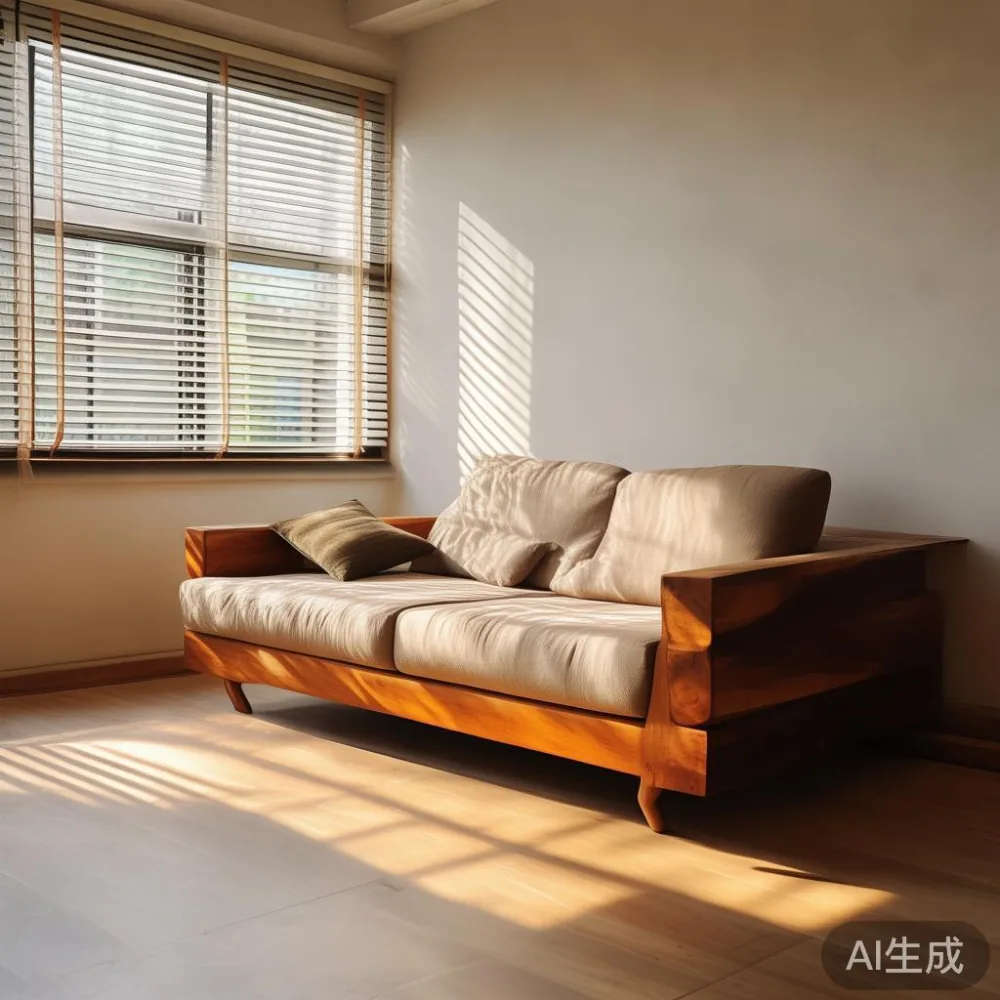
When I sat in the MIDHILL showroom on a slow Tuesday, the sales lead pointed out something I had not noticed: their loveseat line is built around 18 mm-thick ash or oak frames with mortise-and-tenon joinery, not dowels or staples. That sounds like a detail, but in our 80%+ average humidity, dowelled joints loosen by year three. A solid wood sofa frame in a thicker cut, kiln-dried to 8–10% moisture content, holds its geometry through wet Decembers and dry February air-con months. The piece I tried was a 158 cm loveseat with removable cushions, weighing around 38 kg — heavy enough that two movers can carry it into a HDB lift (most Singapore lifts are 1.1 m wide internal, door 0.9 m, and a 38 kg loveseat clears the diagonal if you angle it 22°). That is a practical point, not just an aesthetic one. Measure your lift door before you order anything over 35 kg.
Price-wise, a solid wood loveseat from a Foshan maker shipping direct to Singapore lands in the SGD 1,200–1,800 range landed, which is meaningfully below what most Alexandra or Tan Boon Liat showrooms charge for the same specification. Add GST at 9% on the CIF value, plus roughly SGD 120–180 for lift-up delivery to a fifth-floor HDB, and you are still inside a reasonable mid-range budget. The bed frame and dining table that anchor the rest of this warm minimal plan typically consume the other 60–70% of the spend.
Then Anchor the Dining Table: Where Warmth Has to Eat
The dining table is the second non-negotiable in a warm minimal Singapore home. If your table is glass, marble-look laminate, or black powder-coated metal, the room will read cold no matter how warm your loveseat is. Solid wood wins again, and the right size for a 4–5 person household in a HDB is 140 cm long by 80 cm wide — that gives 60 cm per person on the long sides, 40 cm on the short ends, and still allows a 90 cm walking lane behind the chairs. Priya replaced her 120 cm faux-marble dining table with a 150 cm x 85 cm solid ash table weighing roughly 52 kg, and the room gained about 12 cm of visual breathing room because the wood "lightens" against white walls in a way that the grey marble never did.
One design note worth flagging: round dining tables photograph well, but rectangular tables seat more people in a narrow HDB dining zone. Stick with rectangular for anything below 12 sqm of dining area. For the legs, look for a trestle or four-leg tapered design, both of which keep the visual mass low. A pedestal base sounds appealing but it almost always arrives as MDF with a wood veneer — which splits within 18 months in our humidity. Solid wood tables, even the more affordable ones, must come with a disclosed moisture content on the spec sheet. Anything above 12% is a red flag.
If you want to layer a light-luxury note without going full American light luxury (the high-gloss, oversized, brass-heavy mode popular in some Sentosa Cove projects), pick one accent piece only. A small marble table — 45 cm round, 50 cm tall — in a Calacatta or Carrara-look quartz, placed next to the loveseat, gives you the patina without the maintenance burden of real marble. Real marble in Singapore is high-maintenance because of our humidity and our kopi-staining habits, so engineered stone is the smarter move for an everyday home.
Bed Frame, Wardrobe, and Nightstands: The Bedroom Triangle
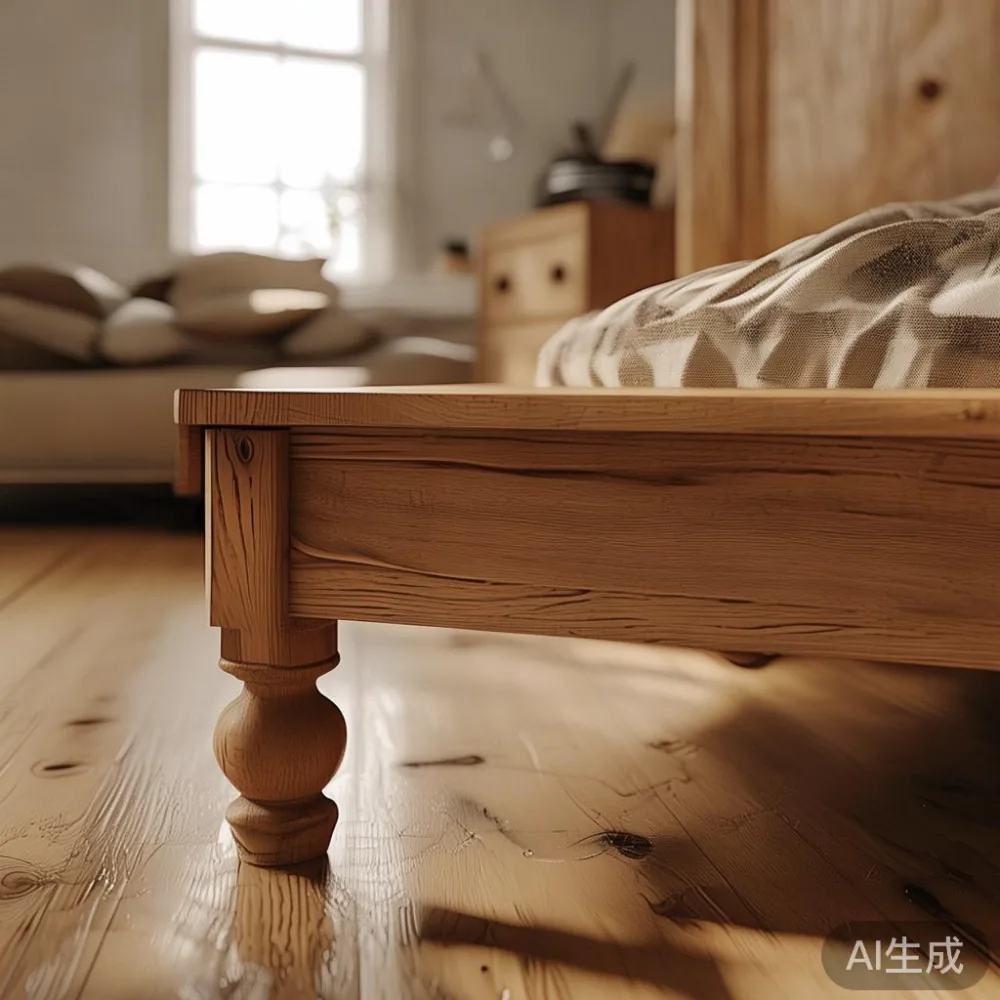
The bedroom is where warm minimal either clicks or collapses. You need three pieces: a solid wood bed frame, a wardrobe, and a pair of nightstands. The bed frame should be a low-profile platform in ash or walnut, headboard between 80–110 cm tall, total length around 205 cm to fit a Singapore-standard queen mattress (which is actually 152 cm x 190 cm, not the 152 x 203 you see imported). Anything taller than 110 cm at the headboard starts to compete with the window, and in a typical 3.2 m x 3.5 m HDB master bedroom that visual fight ends with the bed winning and the room feeling cramped.
The wardrobe is the most under-discussed piece. In HDB and most condos, the built-in wardrobe is either impractical to replace or impossible to redesign, so the outer surface has to harmonize with the rest of the room. Sliding-door wardrobes in oak veneer work, but a freestanding solid wood wardrobe, 180 cm tall x 160 cm wide x 60 cm deep, weighing 90–110 kg, becomes a feature wall on its own. If your ceiling is 2.6 m, leave a 15 cm gap above the wardrobe for the cornice to breathe — this is the same rule interior designers apply to their best projects.
The nightstand choice is where I want to flag a specific product, because it is where Singapore homeowners most often over-spend on the wrong material. An American solid wood nightstand in 45 cm x 40 cm x 55 cm, with one drawer and one open shelf, is the right scale for a queen bed and a HDB wall outlet strip. Anything smaller than 40 cm wide feels like a prop. Anything taller than 60 cm blocks the bedside lamp pool of light. The "American solid wood" descriptor here refers to the construction style: quarter-sawn oak, mortise-and-tenon joinery, and a hand-applied oil finish rather than a polyurethane seal. This matters in our climate because oil finishes let the wood breathe and can be re-oiled every 18–24 months — which is exactly what MIDHILL's lifetime refinishing service covers, by the way, in case you want one less thing to worry about in 2034.
How do I care for a sofa bed in humid weather?
Wipe the frame with a dry microfibre cloth every week, run a 30W dehumidifier in the living room for at least four hours on days when the humidity hits 85%, and never leave the cushions in direct contact with wet clothing or swimwear. That single answer protects most of what matters; the rest of this section explains why.
Singapore's average annual relative humidity sits around 82%, and during the November-to-February monsoon window it routinely hits 90% indoors if you are running an air-conditioner but keeping windows closed. A sofa bed with a solid wood frame and a fold-out metal mechanism can survive this for 8–12 years, but only if you do three things consistently. First, dry the cushions face-down on a balcony clothes rack for two hours once a week — Singapore sunlight at 12pm to 3pm is strong enough to kill dust mites and reduce moisture content in foam by 5–7%. Second, oil the wooden frame every 12 months with a hard-wax oil (Osmo, Rubio Monocoat, or the equivalent). Third, never store the sofa bed in its folded position for more than 24 hours at a stretch — the foam needs to expand back to its full 12–15 cm loft, otherwise the hinges work harder than they should.
One more practical number: if you live in a ground-floor unit facing a dengue-risk zone like certain parts of Bedok Reservoir or Tampines West, factor in a SGD 90–140 mosquito mesh screen on your balcony door so you can leave it open for cross-ventilation without inviting mozzies into the living room where your sofa bed lives. Humidity control, airflow, and material choice are three knobs you control — set all three and the wood lasts.
Corridor, Lift, and Delivery: The Singapore Logistics Reality Check
Every Singapore furniture story has a logistics chapter. HDB corridor widths sit between 1.2 m and 1.5 m, lift doors are 0.9 m wide on the older blocks and 1.0 m on the newer ones, and turning radiuses at lift landings are tight. A 2.2 m long dining table will not fit through a 1.2 m corridor on its short axis, so any table longer than 1.8 m either has to come with detachable legs or be delivered with two movers who know the workarounds. This is where direct-from-Foshan makers with Singapore logistics arms earn their keep — they have done the corridor math for Tampines GreenRidges, The Myst, and Punggol Waterway Terraces dozens of times.
Free shipping thresholds matter when you total the order. A typical warm-minimal starter set (loveseat, dining table, bed frame, two nightstands, one marble accent table) ordered together clears the SGD 350 free-shipping line easily and reduces per-piece freight to roughly SGD 40–60 landed. Below SGD 350, freight often reverts to a flat SGD 80–120. The MIDHILL 10-year structural warranty is the other quiet value-add — for a solid wood bed frame or wardrobe, that's a real commitment, because most Singapore retailers offer 3 years on mechanical joints.
Lifetime refinishing, the other perk Foshan makers like MIDHILL tend to bundle in, means you can re-oil or re-stain the wood at any point over the ownership cycle for a service fee (typically SGD 80–150 per piece, plus transport). For a household that plans to stay 8–12 years in one unit — typical for most Singapore BTO owners — the math on refinishing versus replacing is favourable. A SGD 1,200 dining table refinished twice across its lifespan still costs less than a replacement, and you avoid the disposal headache at HDB void deck collection points.
Returns, Timelines, and What to Ask Before You Pay
Singapore's Consumer Protection (Fair Trading) Act gives you a baseline, but furniture has its own patterns. A 14-day return window is generous for the category, but you should ask four questions before placing any order over SGD 800. One: what is the exact moisture content of the wood at the time of dispatch? Eight to ten percent is the safe range for solid wood furniture shipped into our climate. Two: is the structural warranty transferable if you sell the unit or pass the piece to a relative? Three: do replacement cushions ship from Singapore stock or from Foshan? Four: is the lift-up delivery included or itemised, and what is the surcharge above the third floor?
Realistic delivery timelines from a Foshan maker to a Singapore door run 21–32 days sea freight, plus 5–7 days for last-mile inside Singapore. Air freight options cut that to 9–14 days but add roughly 18–22% to the landed cost. For pieces that you do not need urgently — a second wardrobe, a study desk, a guest-room bed frame — sea freight is the obvious call. For something blocking your move-in date, pay for air and budget SGD 80–250 extra per piece. Most direct importers offer GST-inclusive pricing for orders above SGD 400, which simplifies the receipt you hand to your building management for move-in approval.
One last note on matching warm minimal beyond the furniture itself: the same wood tone should carry through at least three pieces. If your loveseat is ash, your dining table can be ash or oak, but pick one. If your bed frame is walnut, your nightstand should match. The eye needs that repetition to read "warm minimal" rather than "eclectic." Three solid wood pieces in the same tone, against an off-white wall, with one brushed brass accent and one stone accent — that is the entire formula. The rest is just keeping the surfaces clear, which, parents of toddlers and owners of golden retrievers will appreciate, is harder than any of the furniture math above.