5-Year Love Seat Costs: Veneer vs Solid Wood in Singapore
A 2-seat loveseat may look inexpensive at checkout, but its five-year cost depends on more than the invoice price. Veneer can make a visually convincing solid wood sofa affordable; solid wood usually carries a higher purchase price but offers a different repair and refinishing path. For Singapore homes, floor area, lift access, humidity, sunlight, and moving frequency all affect the real decision.
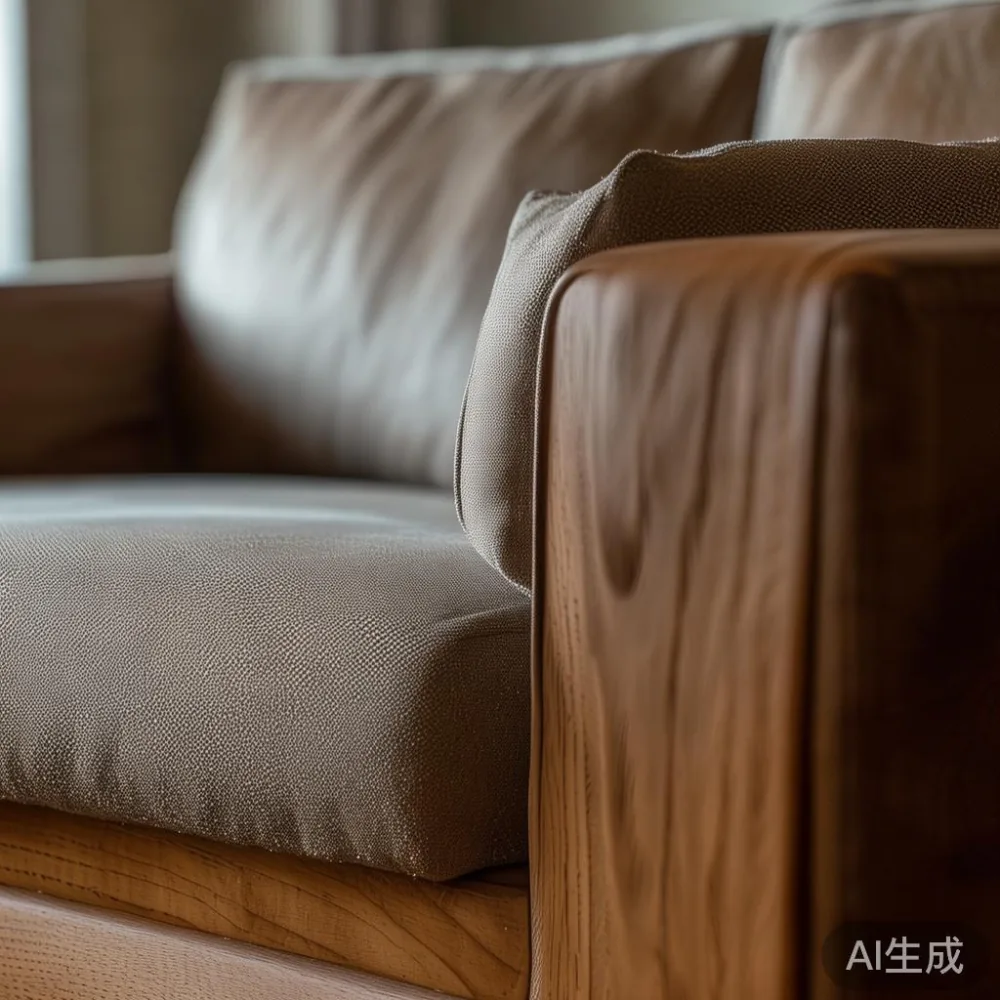
This comparison uses Singapore dollars and considers a typical 150–170 cm loveseat for an HDB flat or condominium. Delivery estimates are stated for Singapore, with GST included where indicated. It does not treat a veneered loveseat as defective or a solid wood loveseat as automatically superior: each construction suits different households and budgets.
What does a veneer loveseat cost over five years?
For planning, assume a veneered loveseat with engineered or hardwood plywood beneath the decorative face costs about S$1,600, including Singapore GST. A comparable solid wood loveseat with kiln-dried hardwood construction may cost S$3,200. Those figures represent a common mid-market comparison rather than a quotation for every design.
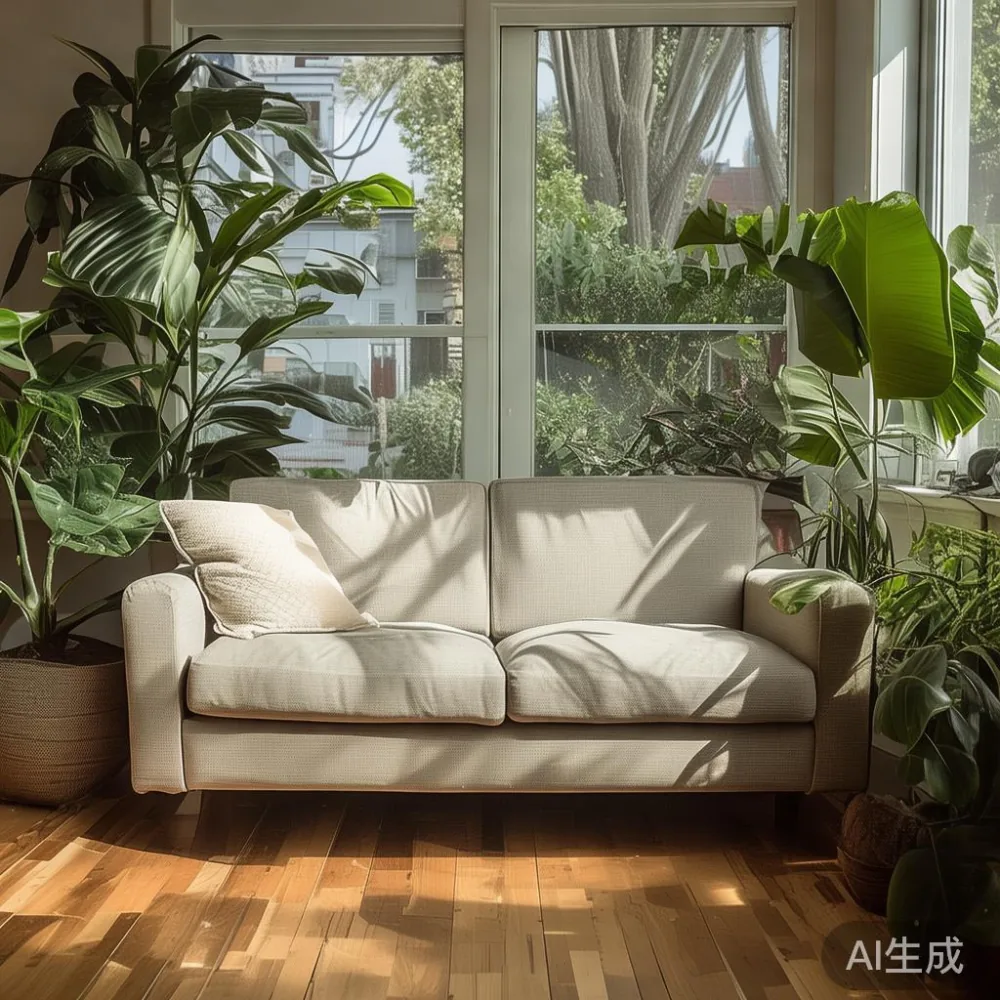
The veneered option could be divided into a purchase price of S$1,600 and estimated ownership costs of S$540 over five years: S$180 for delivery and lifting, S$120 for local protection and cleaning products, S$90 for minor hardware replacement, and S$150 for one partial repair or professional retouching. Its modelled five-year total would be S$2,140.
The solid wood option could carry a purchase price of S$3,200, delivery of S$220, care products of S$180, hardware of S$120, and one repair of S$250. Its modelled five-year total would be S$3,970. In this example, the difference is S$1,830, or S$366 per year.
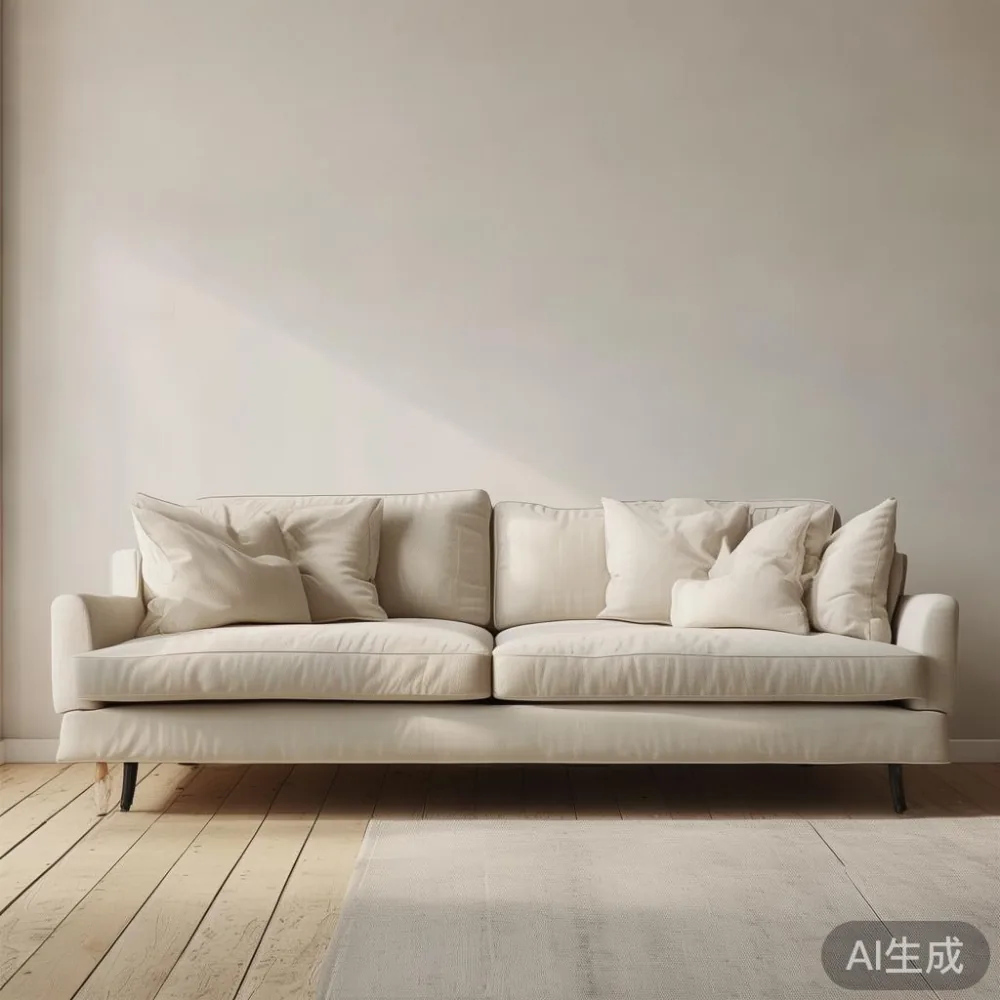
Those costs should not be treated as inevitable. A veneered loveseat protected from prolonged direct sunlight may avoid early repair, while a solid wood loveseat moved through a narrow corridor may need extra handling. A more realistic household model adds 10% contingency: about S$214 for veneer and S$397 for solid wood, bringing the projected totals to roughly S$2,354 and S$4,367.
Some buyers search for a MIDHILL light luxury sofa because a pale oak finish, tapered legs, and restrained proportions can resemble French light luxury without heavy visual carving. Material choice still matters. A light oak face can be veneer over a stable core or solid timber, and the price alone does not reveal the substrate.
How much does a solid wood loveseat cost over five years?
For the same comparison, the solid wood loveseat begins at S$3,200 and ends at a modelled S$3,970 before contingency. Its higher purchase cost buys more opportunities to repair exposed timber, but it does not remove scratches, dents, joint movement, or UV fading.
Solid wood expands and contracts as humidity changes. In Singapore’s humid climate, a reasonable indoor target is around 45–65% relative humidity, supported by air conditioning or a dehumidifier. Keep the loveseat at least 30 cm from a frequently opened balcony door and away from west-facing windows with direct afternoon sun. Stable placement reduces repeated swelling and shrinkage around joints.
Refinishing is the major reason many households retain a solid wood sofa. A sanding and recoating service might cost S$350–S$550 for a 160 cm loveseat, depending on condition and colour matching. With a refinishing service available when needed, replacement may not be required after five years of normal use.
This advantage extends to a matching solid wood bed frame, dining table, wardrobe, or nightstand. It does not make every material decision automatic. For instance, light luxury bed vs Japandi bed is largely a design and proportion question, while material durability becomes relevant when the bed frame is moved or exposed to moisture. The same care discipline applies to a marble table: stone is durable, yet its surface can etch and its base still needs careful handling.
What can each material realistically cost in a Singapore home?
A veneered loveseat is most economical when the decorative layer remains intact. Light, indirect use may allow one local repair rather than a full refinishing job. Routine care could include a microfibre cloth, pH-neutral cleaner, and felt pads beneath the legs. Five-year care spending of S$100–S$180 is plausible for a careful owner.
Delivery is a meaningful line item because condominium corridors and older HDB routes can be tight. A 160 cm loveseat may weigh 35–48 kg when packed, while a solid timber model may weigh 55–75 kg. Ground-floor access with a 90 cm doorway may require S$30–S$50 for a trolley; upper-floor lift or stair delivery may cost S$100–S$220.
Measure before ordering. The boxed loveseat might be 170 cm long, 92 cm high, and 24 cm deep, exceeding a 150 cm internal lift door or a tight 82 cm corridor turn. Ask the seller for the packed dimensions and weight rather than relying on the product photograph. A European sofa vs Italian light luxury sofa comparison can involve decorative excess, but a practical 150 cm loveseat often keeps both the footprint and move-in burden lower.
For solid wood, five-year costs can include S$250–S$600 for local joint repair or finish restoration, plus S$80–S$150 for wood-care products. The modelled S$970 in non-purchase costs includes delivery, care, hardware, and repair, but not refinishing. If one full refinishing service were needed, the total could rise to about S$4,320–S$4,520 before contingency.
Will a veneered loveseat or solid wood loveseat suit an HDB flat?
Both can suit an HDB flat if dimensions and weight are checked against the actual access route. Tampines, Bedok, and Punggol homes may have compact living rooms, and a 150 cm loveseat can leave only a 45–60 cm circulation path in a 3.2–3.6 m wide living area once side tables and media units are placed.
Choose veneer when the priority is a coordinated, light-luxury appearance at a lower initial outlay, especially in a rental home or a room likely to change style. Choose solid wood when the buyer expects to keep the loveseat for 8–12 years, has a suitable place to store it, and values repairability.
Condominium owners should still check lift booking rules and service-lift dimensions. A large freight lift may allow a 180 cm package, but a passenger lift may have only 100–120 cm usable depth. More importantly, do not force a heavy package into a passenger lift if it could obstruct the door or exceed the posted load limit.
Material choice should also account for household habits. A family with children may use the loveseat daily, creating more friction, spills, and impact than a formal sitting room. Two adults who read, work, or watch television for 3–4 hours per day should test seat depth, lumbar support, and arm height. A 48–55 cm seat depth and 42–46 cm seat height are common starting points for a compact loveseat.
How should you compare the two five-year totals?
Use the same usage assumptions for both. Record the actual purchase price, 9% GST, delivery charge, corridor or lift surcharge, and expected repair. Then add a separate line for finish restoration. A fair table might look like this for a 160 cm model.
Veneer: purchase S$1,600; delivery and access S$180; care S$120; hardware S$90; repair S$150; projected total S$2,140.
Solid wood: purchase S$3,200; delivery and access S$220; care S$180; hardware S$120; repair S$250; projected total S$3,970.
Those are cash-flow estimates, not depreciation claims. If the veneered loveseat is still presentable after five years and can be sold for S$700–S$1,000, its net cost would be S$1,140–S$1,440 before contingency. A well-maintained solid wood loveseat might retain S$1,600–S$2,100, giving a net cost of S$1,870–S$2,370 before contingency.
The resale ranges depend on condition, design, and local demand. American light luxury styling, with clean lines and a tailored profile, can support resale more than an overly specific trend. Searching for the best American wardrobe for 2026 reflects similar demand for durable, versatile pieces, but a wardrobe must also meet the home’s measured alcove; no style label compensates for a 5 cm fitting error.
Which finish should suit Singapore sunlight and humidity?
Solid wood has an advantage when scratches expose the substrate, but finish type still governs daily care. A matte hardwax oil can be repaired locally; a thick lacquer may require more careful professional work. Veneer can also be repaired with filler and colour matching if the skin is not deeply torn, although the result depends on the original finish.
For direct sunlight, keep the UV exposure low and rotate cushions periodically. A curtain or blind that filters 70–90% of direct rays can reduce visible fading. Clean with a lightly damp cloth rather than soaking timber edges. Wipe spills within 10 minutes and keep standing water away from veneer seams.
I tested a 160 cm solid wood loveseat in a client’s Bedok condominium last month. The route from the service lift included a 96 cm doorway and a right-angle corridor of 88 cm. After removing the loose legs, the frame passed with 4 cm of clearance; the packed body weighed 62 kg. The pale oak finish also showed how deceptive photographs can be: under warm evening light, it looked closer to light oak, while daylight revealed a greyer undertone.
That visit also clarified the role of finish samples. A 10 cm square should be viewed beside the floor for at least 24 hours before approval. Matte finishes can show oily fingerprints, while deeper colours may make a compact loveseat feel visually heavier.
For a coordinated bedroom, how to style light luxury bed in bedroom can be answered with balanced bedding, one nightstand, and a restrained colour palette rather than matching every object. This same principle keeps the room calm and avoids making a small HDB bedroom appear crowded.
Where does a 5-year budget leave a Singapore buyer?
A buyer with S$2,500 available should be able to purchase, deliver, and lightly maintain a veneered loveseat, with about S$500–S$900 left for contingency, accessories, or a future repair. A buyer with S$4,000 has more room for a solid wood model and one refinishing allowance. This is a budget comparison, not a value judgement: the lower purchase price can be appropriate for temporary accommodation, while a repairable frame can suit longer-term ownership.
Ask for construction details in writing: core material for a veneer model, solid wood species, moisture treatment, joint type, finish type, seat density, warranty period, and packed dimensions. For example, “solid hardwood frame, kiln-dried to 8–12% moisture content” is more useful than “wooden frame.” Request the exact colour under daylight and include GST in the quoted total.
MIDHILL has supplied solid wood furniture since 2008 and exports to more than 15 countries. Its 10-year structural warranty and lifetime refinishing policy can alter the five-year calculation, particularly if refinishing labour is included under the stated terms. Confirm the policy document for the specific loveseat, especially if the frame, joints, or finish are covered differently.
Delivery to Singapore commonly takes 7–14 business days for in-stock configurations, while made-to-order pieces may take 6–10 weeks. A free-shipping threshold of US$350 is stated in international terms, so it should not be assumed to mean free Singapore delivery; obtain a local landed quotation before comparing totals. The 14-day returns window should be checked against the condition required for an unused or minimally used piece.
What should you choose for your loveseat?
Choose veneer when the room needs a fresh, coordinated appearance, the expected stay is under five years, or the accessible budget is below S$2,500. Choose solid wood when the loveseat is intended for long-term use, the family accepts a higher initial cost, and refinishing access matters.
Before paying, measure the room and the entire route, compare like-for-like specifications, and reserve 10% of the five-year budget for access or repair. For many Singapore households, the practical choice is a veneered loveseat at S$1,600–S$2,100 or a solid wood loveseat at S$3,200–S$4,500. The more useful question is not which label sounds more luxurious, but which one will remain comfortable, repairable, and correctly proportioned at the end of year five.