How Southeast Asian Humidity Affects Solid Wood Loveseats
Singapore’s equatorial climate can change the dimensions, finish, and comfort of solid wood furniture more than many shoppers expect. Humidity levels of 70–90% are common during the wetter months, while air-conditioned HDB flats and condos may drop to 50–60% overnight. For a loveseat, the difference matters because timber expands when it absorbs moisture and contracts as relative humidity falls. A wide solid wood frame may therefore gain 2–4 mm across its width during a humid period, enough to create slight binding, rubbing, or uneven gaps if the piece was assembled in a drier environment.
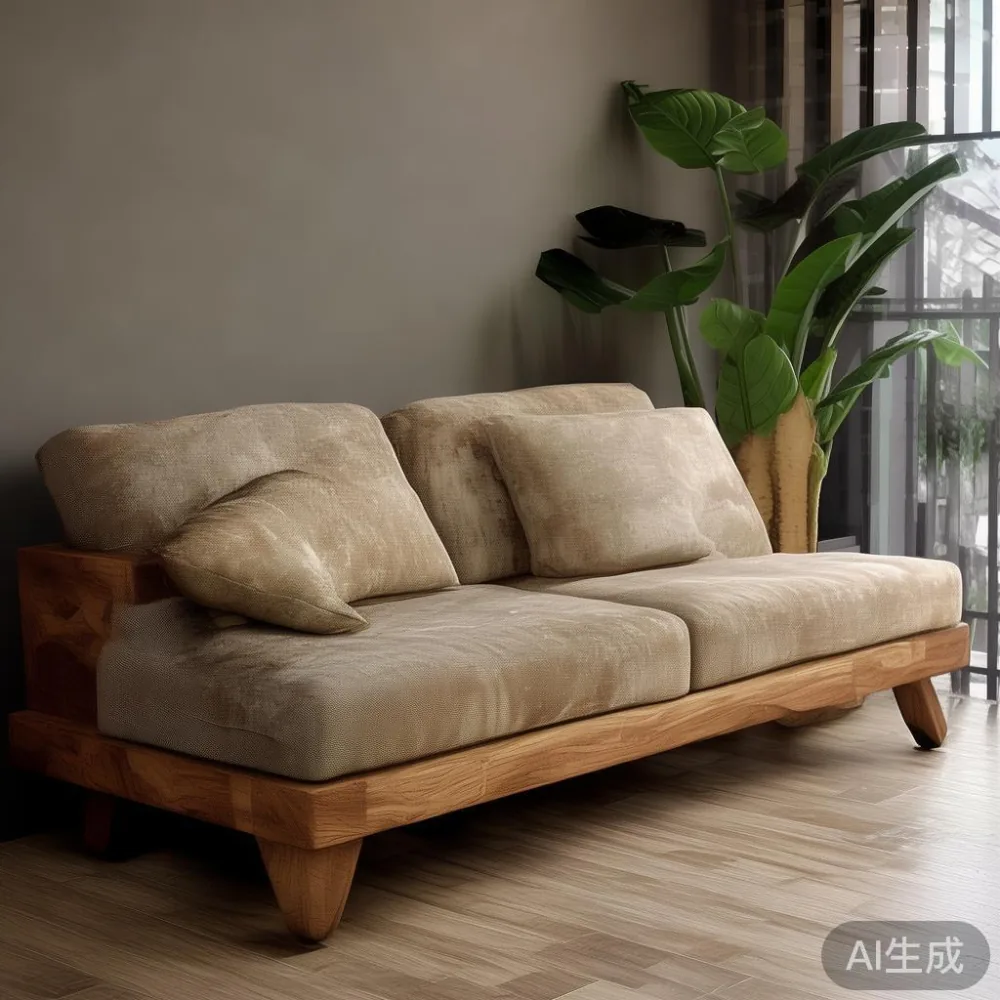
That is why a Singapore loveseat should not be judged only by its photograph. You need to know the timber species, the panel construction, the finish, and the acclimatisation period before delivery. MIDHILL builds solid wood furniture in Foshan and has operated since 2008, exporting to more than 15 countries. Its 10-year structural warranty and lifetime refinishing service provide useful protection, but correct placement and humidity control remain the owner’s responsibility.
In this guide, we focus on how humidity affects wood in Singapore homes, from Tampines HDB living rooms and Bedok condos to Punggol apartments with narrow lift lobbies. We also cover practical measurements, delivery planning, care routines, and the details worth checking before accepting a loveseat.
Why does Southeast Asian humidity make solid wood furniture move?
Wood is hygroscopic. It absorbs and releases water vapour as the surrounding air changes. In Singapore, outdoor relative humidity frequently reaches 80% during monsoon periods. Indoors, the relevant figure may be different: a flat without dehumidification can remain near 65–75%, while a room cooled to 22–24°C may register roughly 55–65%.
The movement is not uniform. Solid timber generally expands more across its grain than along the length of the board. A 160 cm-wide back panel might move by roughly 2–4 mm across a seasonal cycle, while movement along the same board could be only 1–2 mm. Veneered sheet construction can be more stable, but it reacts differently from a solid panel. The concern is not that one movement ruins the furniture; it is that a frame, joint, drawer, or door was made under assumptions that no longer match the room.
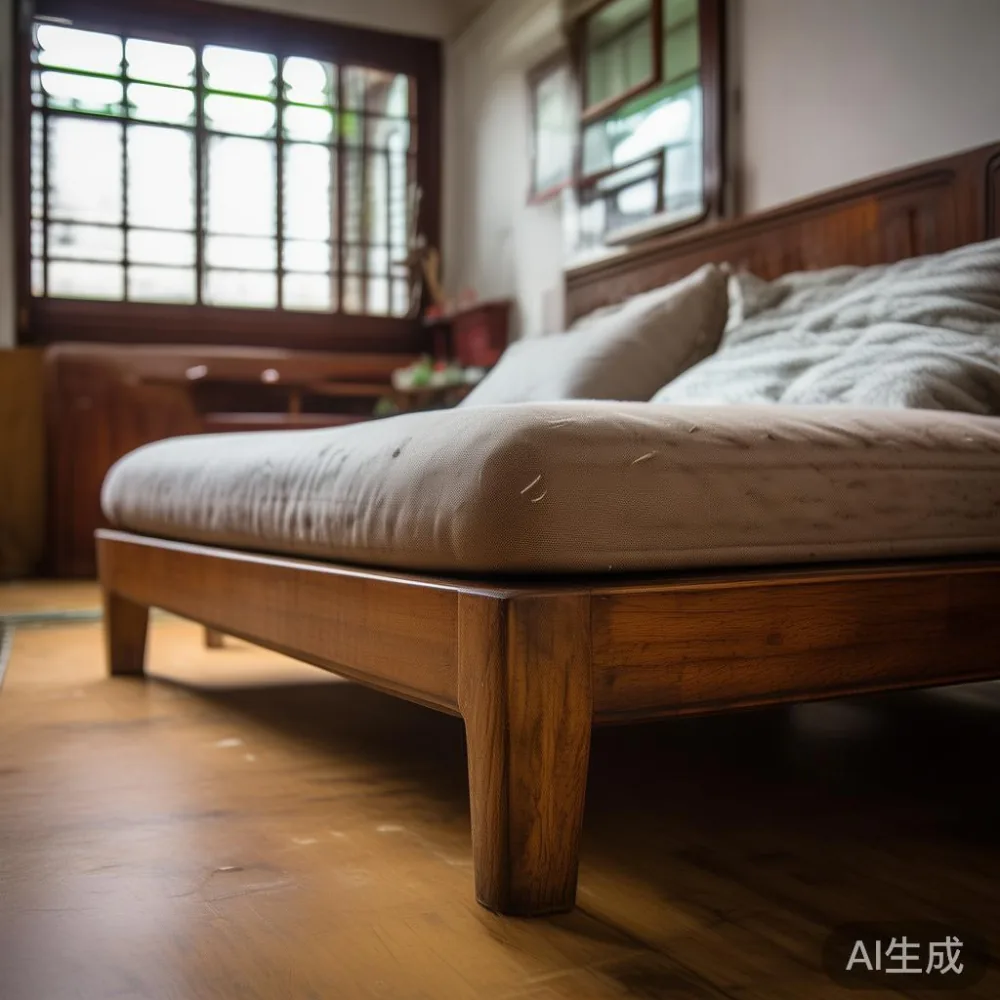
For a solid wood sofa, inspect whether the legs are fitted with compression fittings rather than rigidly locked against a stretchers. For a solid wood bed frame, check that the headboard and side rails are joined in a way that allows dimensional change. A dining table needs an expansion arrangement beneath the top, while a wardrobe should have slightly adjustable hanging rods and doors that can be aligned after acclimatisation. The same timber can therefore perform well in a carefully made frame and poorly in an over-tightened frame.
Finishes also influence the visible symptoms. A matte oil or wax finish breathes more readily than a thick film-forming coating, but water rings can appear if a damp glass is left on a surface. Lacquered surfaces may show fine checking lines as moisture cycles occur. None of these effects automatically indicate defective construction, so photographs should be compared with the finish specification at purchase.
What humidity level should a Singapore loveseat be kept at?
A relative humidity reading of 45–60% is a practical target for the timber itself. This range is not the same as the thermostat setting. A dehumidifier should be positioned so that its intake and outlet are not pressed directly against a sofa or bed frame, because localised airflow can cause uneven drying.
Place a hygrometer on the shelf of the living room rather than directly against an air-conditioning vent. Check it at approximately 8:00 a.m. and 9:00 p.m. on the same day, then repeat during a wet week. If the reading remains above 65% for more than 14 days, consider a dehumidifier. Many compact Singapore units can extract 10–20 litres of water per day, although actual output depends on room size and temperature. A 10 m² room may need less capacity than a 25 m² living-and-dining area.
Do not attempt to compensate by leaving a window open during heavy rain. Outdoor air at 85% humidity will usually add moisture rather than remove it. Dry-air circulation is more useful: keep furniture at least 30 cm from a wall if possible, leave 10–15 cm below a raised solid wood bed frame or wardrobe plinth, and avoid placing a loveseat against a cold bathroom wall or damp balcony.
Air conditioning helps because it cools and dehumidifies the air, but rapid transitions can still create stress. A room moved from 24°C and 80% humidity to 20°C and 45% humidity may produce more noticeable shrinkage than a stable 23–25°C setting. In an HDB flat, one air-conditioned room can be ideal while the adjacent living space remains humid. Moving a hygrometer between the two areas over 3 days can reveal this imbalance before a new piece is delivered.
Will a loveseat fit through my HDB lift and condo corridor?
Humidity matters after the furniture reaches Singapore, but getting it into the home matters first. HDB and condo access varies by block, so obtain the lift dimensions, door width, turning radius, and corridor measurements before ordering. A common lift internal size might be about 110 cm wide by 140 cm deep, but a usable diagonal and the position of the control panel can reduce the effective loading space. The opening measured at the lowest point may be only 90 cm rather than the nominal 100–110 cm.
A loveseat with detachable legs offers more flexibility than one delivered as a rigid frame. If the body is 158 cm wide, 86 cm deep, and 78 cm high, removing 12–16 cm legs can help negotiate an entrance. Lift doors usually open to roughly 80–90 cm, and corridor corners can require a 45-degree turn. Measure the narrowest route from the lift lobby to the intended room, including any fire doors, shoe cabinets, and mirror panels.
For staircases, calculate the “diagonal” as well as the width. A 198 cm diagonal can pass through a right-angled landing even when individual dimensions look inconvenient. Protection blankets should be applied before the frame enters the lift, and the delivery team should be told whether parking is 20 metres or 200 metres from the entrance. These details are as important as the furniture dimensions because a damaged frame or scratched wall creates an avoidable dispute.
How should I measure and compare a solid wood loveseat?
Begin with usable space, not marketing width. Leave 60–90 cm of circulation behind a freestanding loveseat and at least 75 cm in front if it faces a coffee table. A 150–170 cm loveseat can suit a compact HDB living room, whereas a 185–200 cm model may dominate a narrow room. Check the seat height too: 40–45 cm is easier for many adults than a low 35–38 cm design.
Ask for the external dimensions after assembly, the seat width, the internal frame width, and the packaged dimensions. “Solid wood” describes the material, not necessarily every component. The visible frame, arms, back, or legs may be solid timber while internal supports use plywood or engineered timber. Clear answers help you compare quality without assuming that one label means identical construction across every brand.
Weight is another useful clue. A two-seat solid wood loveseat may weigh 55–85 kg, depending on the timber and frame. Confirm whether it separates into sections and whether the stated weight refers to one piece or the complete set. A heavier item may be reassuring, but weight alone cannot establish joinery quality.
Customers often search for terms such as best American sofa for 2026 or MIDHILL sofa while comparing proportions. The style label offers little information about moisture performance. Look instead for a timber thickness of at least 18–20 mm for principal rails, real mortise-and-tenon or dowelled joints where applicable, and adjustable feet that can take up a 1–2 mm gap. For French light luxury styling, pale oak, walnut-toned timber, tapered legs, and restrained upholstery can create an elegant appearance without excessive visual weight.
Can I compare French provincial and American furniture for humid homes?
Style names do not determine humidity resistance. The distinction is usually visual: French provincial furniture often uses carved details, curved edges, and a softer, traditional profile, while American light luxury furniture tends toward cleaner lines, generous upholstery, and a more relaxed silhouette. Post-modern light luxury can mix both with slimmer forms and mixed materials.
Both the American bed vs French provincial bed question and the light luxury bed vs Italian light luxury bed comparison eventually lead to the same construction checks. Look at how headboards connect to rails, whether wide boards have a stable joinery arrangement, and whether doors and drawers can be adjusted. A carved French provincial bed may need more careful inspection around joints because decorative mass does not guarantee moisture stability.
The phrase French provincial for office can describe a warm, residential study direction, but office use introduces another factor: controlled indoor air conditioning can create very dry conditions. A desk should still be allowed to acclimatise for 5–7 days before paperwork and equipment are placed on it. For any bed frame, keep it 20–30 cm from the wall where space allows and avoid direct airflow from an air-conditioning outlet.
The same framework applies to a dining table, nightstand, wardrobe, and marble table. A marble dining table may handle humidity well, yet its timber base still needs the correct joint and support. A marble coffee table needs level feet because uneven loading can amplify movement in the timber frame beneath it. The Mid-century modern coffee table is a useful design reference, but its compact top should not conceal weak bracing. An European light luxury coffee table should be checked for a stable apron, secure fixings, and enough clearance beneath the top.
What should I do when the loveseat arrives in a humid Singapore home?
Do not refuse a solid wood sofa merely because the packaging feels slightly damp in Singapore. Humidity is expected here. Instead, inspect the piece under good light. Photograph the corners, legs, seat deck, joints, and finish before assembly. Report dents, cracks, chips, mould staining, or finish separation with clear close-up images and the delivery date.
Allow 7–14 days for acclimatisation in the final room. Keep the loveseat away from direct air-conditioning output and do not use a hair dryer, heat gun, or strong fan to speed drying. Wipe the surface with a lightly damp cloth, then dry it immediately with a clean cotton cloth. Use coasters and trays for drinks. Under a dining table or nightstand, felt pads should be replaced rather than used when crushed.
During the first 30 days, check the frame for minor movement every 7 days. Tighten fittings only when the manufacturer’s instructions recommend it; repeated over-tightening can strip joints or reduce the natural movement allowance. If a removable back panel becomes uneven, contact the supplier rather than forcing it. MIDHILL provides a 10-year structural warranty, and its lifetime refinishing policy can help restore the surface when wear or environmental effects become visible.
For ongoing care, apply the specified wood-care product every 6–12 months, depending on use and finish. Dust with a soft cloth rather than a wet duster. If a finish feels tacky during humid weather, let it cure in a ventilated room. Avoid silicone-based polish unless approved for the particular coating.
Does Singapore’s GST affect the price and delivery of a loveseat?
Displayed prices can be interpreted differently across websites, so check whether GST is included. Singapore’s standard GST rate is 9%. For example, a loveseat listed at SGD 1,880 before GST would total SGD 2,049.20 after GST; an SGD 2,450 before-GST price becomes SGD 2,670.50. Confirm the final amount and any delivery charge before payment.
Delivery should also be timed around adaptation. A piece leaving Foshan in humid conditions may undergo several weeks of transport and storage before reaching a dry, air-conditioned Singapore room. A sensible sequence is to have the home ready, receive the furniture, unpackage it, and allow 7–14 days of acclimatisation before heavy use.
Some sellers quote dispatch rather than arrival. Ask for the expected Singapore delivery window, usually expressed in 20–40 days depending on production and shipping conditions, and clarify whether custom pieces take longer. Avoid arranging access around an estimated date when tracking is unavailable.
MIDHILL offers free shipping for orders above US$350, but the threshold is stated in US dollars even though shopping in Singapore is naturally conducted in SGD. Confirm the converted threshold and any destination-specific charge at checkout. Its 14-day return policy gives buyers a defined period to assess the loveseat, subject to the stated condition requirements. Do not assume that a custom finish, used item, or damage caused by placement is automatically eligible.
What are the signs of humidity damage rather than ordinary wood movement?
Small seasonal gaps of less than 2–3 mm can be normal if the frame remains stable. More concerning signs include mould-like spotting, persistent musty odour, blackened finish, lifting veneer, deep splits running across a board, loose joints, or repeated binding of doors and drawers. Inspect beneath the seat cushions and below the loveseat after a damp week, where surfaces may remain wet for longer.
Measure the room and the furniture rather than relying on appearance alone. If a door rubs at 70% humidity but opens freely at 55%, adjustment is likely. If a leg joint is cracked, swollen, or separating from the frame, stop moving the piece and seek advice. Do not fill a structural crack with ordinary wood glue; the repair method should match the timber, joint, and finish.
One real example from my own checking illustrates the point. Last month I visited a colleague’s Bedok condo after a sustained wet spell. Their hygrometer read 76% near the balcony, while the opposite side of the living room measured 61%. A newly delivered solid wood sofa developed a 2 mm gap along one rear rail. We did not tighten the joint or force the frame. We moved it 25 cm away from the glazing, lowered the dehumidifier setting, and checked the area at 48-hour intervals. Five days later the gap had closed as the room settled below 65%, without any treatment to the timber.
That experience shows why precise control matters. The sofa was not defective; it was responding to different local conditions. The same rule applies to a dining table beside an open kitchen, a nightstand near a bathroom, and a wardrobe positioned against a cool exterior wall. Singapore homes can experience several microclimates within 10 metres.
How do I choose a humidity-resistant loveseat without overspending?
Prioritise construction information and total dimensions over decorative labels. Request the timber species, moisture treatment, finish type, joinery, leg-removal options, and acclimatisation instructions. Compare these details across at least 3 products. A SGD 900 imported loveseat with unclear specifications may need more maintenance than a SGD 1,600 model with documented frame construction and adjustable fittings, although neither price alone proves performance.
For a typical HDB living room, plan for a width of 140–170 cm and a depth of 80–90 cm. In a larger Tampines or Punggol condo living space, 170–200 cm can work if circulation remains clear. Before purchase, measure the lift opening and route on the same day; buildings can differ even within the same estate.
Ask whether the loveseat is upholstered with foam that performs well in humid conditions, breathable fabric, or a removable cover. If removable, check that the zip and washable cover can be managed in limited drying space. Avoid placing the piece where sunlight through west-facing windows can heat the timber to 32–35°C while humidity is also refined. A simple blind can reduce both heat and moisture exposure.
Look for a supplier that supports the purchase after delivery. MIDHILL’s export history, 10-year structural warranty, lifetime refinishing option, and 14-day returns form a clear service framework for buyers comparing solid wood furniture. The responsible choice is not the piece with the largest claim, but the one whose construction, measurements, finish, and after-sales terms suit a Singapore home.