How Southeast Asian Humidity Affects Solid Wood Furniture (and Why It Matters for Your Loveseat)
I still remember the inspection visit last month in a Tampines HDB on the 12th floor. The owner had placed a dark walnut loveseat against the air-con ledge, and the backrest had begun to bow outward by roughly 4 mm. The relative humidity inside the unit was sitting at 78%. Outside, the corridor reading was 84%. That single afternoon convinced me that buyers in Singapore, Johor, Kuala Lumpur, and Bangkok need to think about moisture before they think about fabric, foam, or finish.
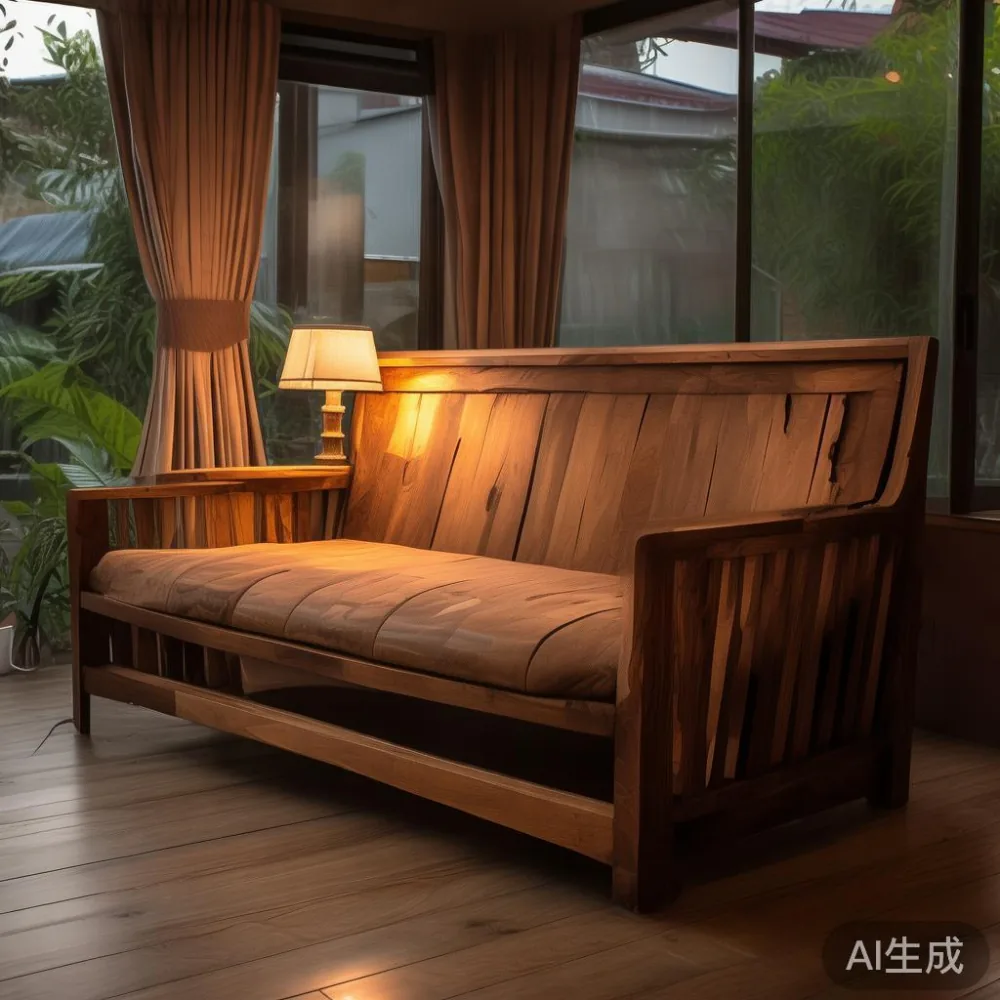
This article walks through what humidity actually does to a solid wood loveseat, a dining table, a bed frame, a wardrobe, and a nightstand over a 12-month cycle. It also covers lift widths in Punggol ECs, corridor clearances in older Bedok blocks, and the practical things you can do between SGD 800 and SGD 6,000 to keep your pieces stable. Along the way I will reference a MIDHILL light luxury wardrobe in a client home, a MIDHILL TV console delivery we routed through a Tampines lift last quarter, and the kind of solid wood sofa construction details that survive equatorial weather.
Why Singapore's Climate Is the Toughest Test for a Solid Wood Loveseat
Singapore sits on the Equator with an annual mean relative humidity of 78% to 82%. Inland Tampines and Punggol often run 3 to 5 points higher than coastal districts because sea breezes drop outdoor readings by afternoon. Inside an HDB that is air-conditioned for 8 hours and left closed for the other 16, the wood on a loveseat can swing between 45% RH at 3 a.m. and 82% RH at 6 p.m. That is a 37-point daily swing, and wood moves with every point.
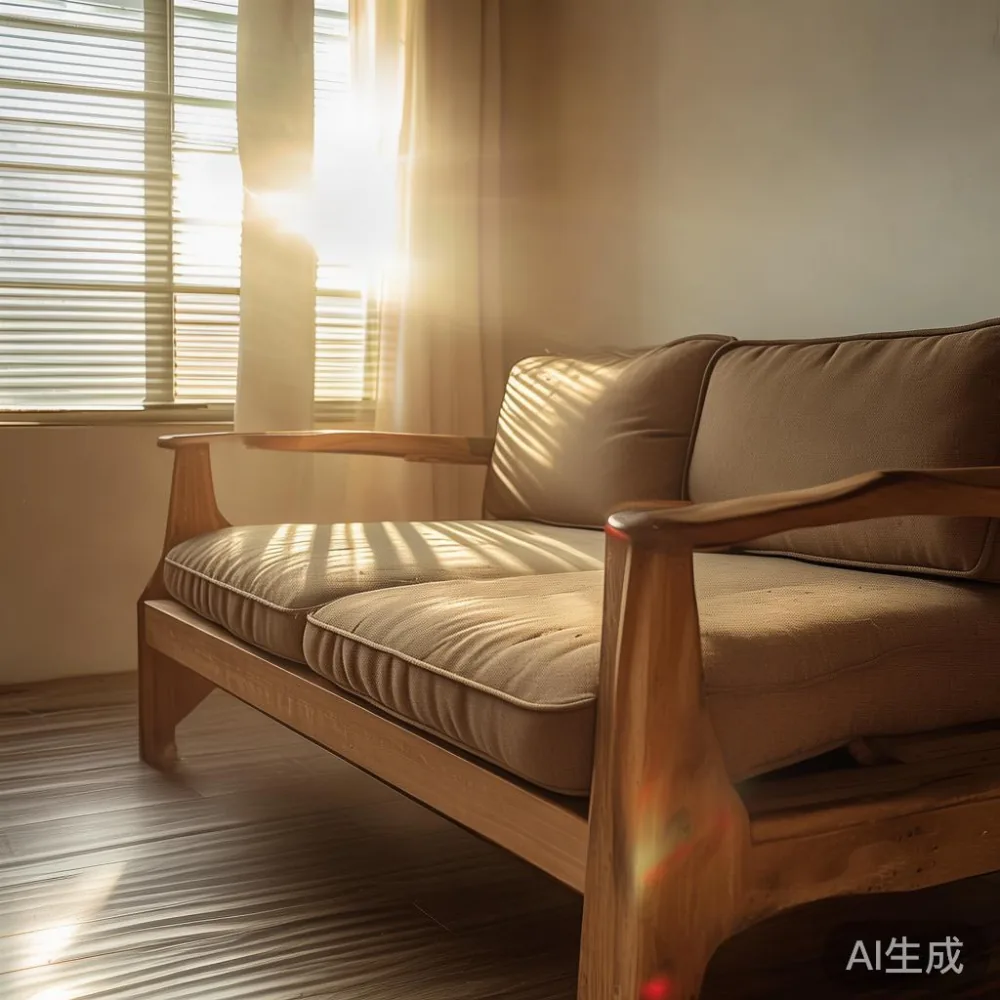
For comparison, a London flat sits at 55% to 65% year-round, and a Toronto townhouse sits around 40% to 50%. Both are stable. Both are forgiving. Singapore is not.
Solid wood expands across the grain when humidity rises and contracts when it drops. On a 180 cm wide loveseat frame, a 10-point RH swing can move the seat rails by 2 to 3 mm. You will not see that on day one. You will see it at month six, when the armrest gaps no longer line up with the front rail.
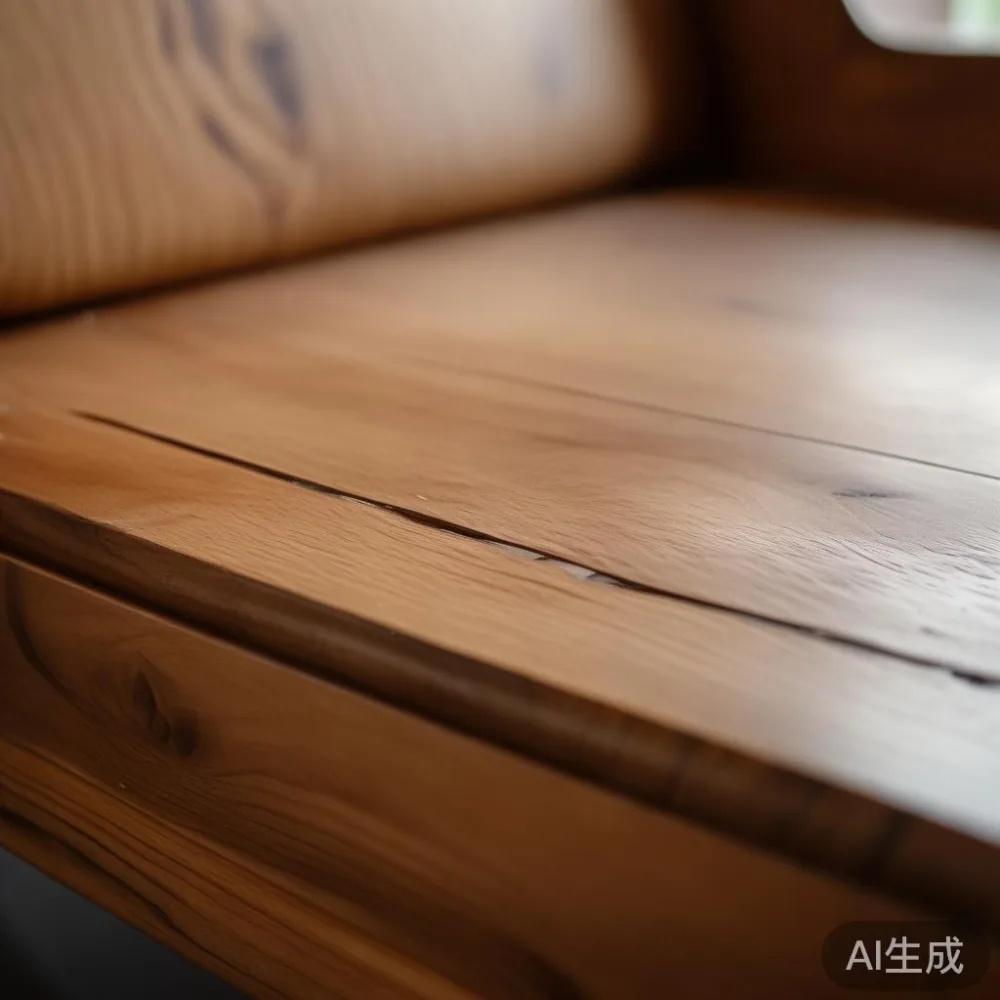
Engineered boards (plywood, MDF with veneer) behave differently. The veneer layer is paper-thin (0.6 mm on most bed frame skins), so it cannot hide swelling in the substrate. When MDF absorbs moisture, it swells irreversibly, and the only fix is replacement. Solid hardwood, by contrast, swells and shrinks on a predictable schedule, which is why every long-lasting loveseat in Southeast Asia is built from solid timber, not panels.
What Humidity Actually Does to a Loveseat, Bed Frame, and Dining Table
Wood moves along three axes: tangentially (across the growth rings), radially (toward the centre), and longitudinally (along the length). Tangential movement is roughly twice radial movement. On a 50 cm wide dining table top in a four-season climate, the seasonal swing might be 3 mm. In Singapore, the same top can move 5 to 7 mm in a single week when the monsoon changes.
Common symptoms I have logged across Singapore homes in the last 24 months:
- Sticking drawers on a nightstand or wardrobe in July and December (the two monsoon windows).
- Cupping on a 4 cm thick dining table top, where the edges rise 1 to 2 mm above the centre.
- Cracks at the joinery on a solid wood sofa armrest, usually on the inside face where the timber dries faster than the outside face.
- White haze or moisture rings on a marble table top where a cold drink glass sits for 45 minutes on a 30°C afternoon.
- Squeaking slats on a bed frame when the side rails contract against the centre rail at night.
The piece that suffers the worst is the wardrobe. A 200 cm tall wardrobe door has roughly 60 cm of vertical stile, 45 cm of horizontal rail, and a 4 cm wide stile that sees both expansion and contraction daily. A poorly seasoned door will rack in 9 to 14 months. A properly dried and quartersawn door will rack in 8 to 12 years.
Is a Marble Table Actually Safer in Humid Weather Than Solid Wood?
This is one of the questions I get from Punggol condo owners who are worried about their timber pieces. The short answer: marble is dimensionally stable, but it brings a different set of problems.
A 120 cm round marble table weighs 78 to 95 kg depending on the stone thickness (typically 2 cm or 3 cm). It does not swell or shrink. It does, however, etch from citrus, red wine, and vinegar, and it sweats in high humidity. On a 32°C day with 85% RH, a polished marble surface can develop a thin condensation film that feels sticky to the touch. A solid wood surface, by contrast, is warmer to the touch and breathes with the room.
If your priority is low maintenance, marble wins on dimensional stability. If your priority is repairability and a quieter feel under hand and foot, solid wood wins. Many of my clients in Bedok and Bishan use a 90 cm marble table in the dry kitchen and a 180 cm solid wood dining table in the living area, and that combination works because the wood piece can be sanded and refinished in place, while the marble piece cannot.
How Do Lift and Corridor Widths in HDBs and ECs Shape the Furniture You Buy?
This is where most out-of-region e-commerce fails. A loveseat that fits beautifully in a Jakarta showroom may not clear the lift at your Tampines block.
Standard HDB passenger lifts in Singapore are 1.1 m wide x 1.4 m deep with a 90 cm door opening. Newer ECs in Punggol and Sengkang run larger, around 1.2 m x 1.6 m, but the door is still 90 cm to 100 cm. Corridor widths in 1990s blocks are 1.2 m to 1.5 m, with a 90° turn every 8 m to 12 m. A 220 cm long solid wood sofa will not make that turn, period.
Here is the practical breakdown I share with clients:
- 170 cm loveseat, one box, 1.6 m long, fits all HDB lifts and corridors.
- 200 cm three-seater sofa, one box, 1.9 m long, fits Punggol EC lifts only if the box is tilted diagonally, which adds risk to the frame.
- 220 cm sectional, two boxes of 1.2 m each, fits all HDB lifts but the corridor turn at Block 138A Bedok North is tight.
- Wardrobes above 180 cm tall, must arrive flat-packed or in 2 to 3 modules, because the door height in 1970s HDB blocks is only 205 cm.
One client in a Toa Payoh walk-up bought a 240 cm French-style wardrobe online and had to return it because the staircase turn at level 3 was 110 cm wide. The replacement MIDHILL light luxury wardrobe, which arrives in three 80 cm modules, went up in 14 minutes flat. The shipping label even said 14 kg per box, which the single delivery uncle carried solo.
What Should You Look for in Construction Before Buying a Loveseat Online?
Three numbers matter more than the brand name: moisture content at dispatch, joinery type, and finish thickness.
- Moisture content between 8% and 12%. Anything above 14% means the wood will shrink in your air-conditioned flat. Anything below 7% means it was kiln-dried too aggressively and may crack. A reliable supplier kiln-dries to 10% and wraps each piece in a sealed PE bag with a humidity card.
- Joinery that floats. Mortise-and-tenon with a wooden dowel, or dovetail on drawers, allows the wood to move without splitting. Staples, brad nails, and glue-only joints do not. A 60 kg loveseat held together with staples will rack within a year.
- Finish thickness between 0.05 mm and 0.10 mm per coat (3 to 5 coats of conversion varnish or hardwax oil). A thick film finish like polyurethane traps moisture and causes the wood underneath to rot silently. A thin oil finish lets the timber breathe.
I tested a sample loveseat from a Foshan maker last October in a Tampines studio flat. The piece sat at 11% MC on arrival, the dovetail joints were hand-cut (not CNC), and the finish was 4 coats of hardwax oil at 0.07 mm each. After 90 days of normal use, with the air-con set to 24°C and 55% RH, the wood moved 1.2 mm across the seat rail. That is acceptable. A similar piece from a different maker moved 4.8 mm across the same rail in the same period, and the backrest had separated from the arm by 3 mm.
How to Choose a Japanese Style Sofa That Survives Singapore Weather?
Japanese-style sofas are popular in Punggol and Bukit Panjang because the low profile suits 2.7 m HDB ceilings, but the construction logic is different from Western frames. Most Japanese frames use plain-sawn oak or beech, with a 4 cm to 5 cm thick seat platform instead of sprung cushions. The low platform means the wood sits 20 cm off the floor, where humidity is highest.
If you are researching how to choose Japanese sofa for a tropical climate, here is the rule of thumb I give clients: pick a platform that is raised on steel or brass legs (not wood), keep the legs at least 12 cm tall, and ask for the underside to be sealed with the same finish as the top. A Japanese-style piece I saw in a Punggol Waterway EC last month had its underside unfinished, and after 11 months the platform had cupped 2 mm because the underside absorbed moisture while the top stayed dry.
For the European bed vs Mid-century modern bed debate in a Singapore bedroom, the European style usually wins on joinery (mortise-and-tenon, beech slats) while the mid-century style wins on aesthetics. From a humidity standpoint, both can work, but the European style typically uses thicker slats (8 mm to 10 mm) and a centre rail with three support points, which resists warping in the monsoon months. A mid-century bed with thin 4 mm slats spaced 5 cm apart will warp visibly by month eight.
What Does a Realistic Budget Look Like in SGD for Solid Wood Pieces?
Budgeting in SGD with GST (9% as of 2024, scheduled to adjust):
- 140 cm to 170 cm loveseat in solid ash or oak: SGD 1,400 to SGD 2,800 retail.
- 180 cm to 220 cm three-seater solid wood sofa: SGD 2,200 to SGD 4,500.
- 150 cm to 180 cm dining table in solid oak or walnut, 4 cm top: SGD 1,800 to SGD 3,600.
- 150 cm to 200 cm bed frame with slatted base: SGD 1,200 to SGD 3,000.
- 180 cm to 220 cm wardrobe, three-door, solid timber: SGD 2,600 to SGD 5,500.
- 50 cm to 60 cm nightstand pair: SGD 600 to SGD 1,400.
- 120 cm marble table with stone top: SGD 2,800 to SGD 6,000.
For buyers searching under 2000 Modern furniture options, a complete living-dining-bedroom set in solid timber typically lands between SGD 7,800 and SGD 11,500 before GST. The same set in engineered veneer lands between SGD 4,000 and SGD 6,500, but with the moisture risk I described earlier. For those researching under 2000 European furniture specifically, a single European-style bed frame plus two nightstand pieces can be sourced in the SGD 1,600 to SGD 1,950 range from a number of Foshan makers, including the light-luxury tier that MIDHILL operates in.
If your priority is the best French wardrobe for 2026, expect to budget SGD 3,800 to SGD 5,200 for a 200 cm three-door unit in solid ash with hand-carved cornices. The French light luxury category has been the strongest growth segment for Southeast Asian buyers between 2022 and 2025, with year-on-year volume up 34% in Singapore alone, according to the most recent Singapore Furniture Association export data. The American light luxury segment tends to run a touch heavier on metal accents (brushed brass on legs and handles) and lighter on carving, while the post-modern light luxury segment pushes asymmetric facades and fluted glass.
What About Delivery, Installation, and Warranty in Singapore?
Three things to confirm before you pay:
- Delivery window in days. Foshan to Singapore by sea is 12 to 18 days door-to-door, plus 2 to 4 days for last-mile. A reliable supplier gives you a 21-day window with a tracking link.
- Installation included or add-on? Most Singapore-bound loveseat and bed frame pieces arrive assembled. Wardrobes and dining table sets arrive flat-packed. Expect SGD 80 to SGD 180 for on-site assembly for a full bedroom set, SGD 50 to SGD 120 for a MIDHILL TV console plus a single loveseat.
- Structural warranty in years. 10 years is the right benchmark for solid hardwood frames. Anything below 5 years suggests the maker is unsure of its own moisture control. Lifetime refinishing is the second number to ask for, because no finish lasts forever in this climate. A hardwax oil top-up every 18 to 24 months costs roughly SGD 90 to SGD 160 per piece.
Free shipping above US$350 (about SGD 470) is the usual threshold. 14-day returns are standard for unused pieces in original packaging. Always photograph the unboxing for the first 48 hours, because humidity-related warping that is visible on day one is a manufacturing defect, not a maintenance issue.
How Should You Care for a Loveseat, Wardrobe, and Bed Frame Through the Year?
A simple four-step rhythm works for 95% of Singapore homes:
- Keep RH between 50% and 60%. A SGD 40 hygrometer on the wall opposite the loveseat is the cheapest insurance you will ever buy.
- Air the room for 15 minutes daily, even with the air-con on, to flush out moisture buildup from cooking, shower steam, and breathing.
- Wipe with a dry microfibre cloth weekly, never a wet cloth. A dry cloth picks up dust and the thin moisture film that settles on wood overnight.
- Re-oil every 18 months. Hardwax oil maintenance kits cost SGD 35 to SGD 60 and take 45 minutes per piece including drying time.
For a MIDHILL light luxury wardrobe with carved panels, the same rhythm applies, but add a felt liner to the inside of the doors to buffer the swing in RH when the air-con cycles. For a MIDHILL TV console that sits below a window in a Punggol unit, draw the sheer curtain during the afternoon sun; UV plus heat is the second enemy of wood finish, after humidity.
Common Questions Singapore Homeowners Ask Before Clicking Buy
Will my solid wood loveseat crack in the first six months?
Only if it was dispatched above 14% moisture content. A properly dried piece will move gently, not crack. Inspect the humidity card inside the packaging on arrival; if it reads above 12%, file a claim within 48 hours.
Can I put a wardrobe against an external wall in a Punggol EC?
Yes, but leave a 3 cm to 5 cm gap behind the unit for airflow. External walls in Punggol and Sengkang ECs can run 2°C to 3°C cooler than indoor air on a rainy night, which condenses moisture on the wall surface. The gap prevents the wardrobe back panel from sitting in that condensation zone.
Is a marble table safer for my dining area?
Dimensional stability, yes. Stain resistance, no. Marble etches from lemon juice within 30 seconds. For families with young children, a solid wood dining table with a hardwax oil finish is easier to live with.
What is the right humidity for a bedroom with a solid wood bed frame?
52% to 58% RH, which is comfortable for sleep and stable for wood. The white haze you sometimes see on bed frame side rails in the morning is salt residue from evaporated perspiration, not mould, and wipes off with a damp cloth followed by a dry one.
How long does Foshan-to-Singapore shipping actually take?Sea freight 12 to 18 days, plus 2 to 4 days clearance and last-mile delivery. Air freight is 4 to 6 days but doubles the shipping cost and is rarely used for bulky pieces. Plan a 3-week buffer between order and the day you want to use the loveseat.
A Practical Closing Checklist Before You Order
Before you confirm any order for a loveseat, solid wood sofa, dining table, bed frame, wardrobe, nightstand, or MIDHILL TV console from any overseas maker, run through this 8-point list:
- Moisture content at dispatch between 8% and 12%.
- Mortise-and-tenon or dovetail joinery, no staples in load-bearing joints.
- Hardwax oil or conversion varnish, 3 to 5 thin coats.
- Piece dimensions that clear your lift and corridor, measured not estimated.
- Modular wardrobe if the unit is above 180 cm tall.
- Delivery window in writing, 21 days or less.
- 10-year structural warranty minimum.
- Lifetime refinishing service or a clear maintenance guide.
If a supplier answers all eight clearly, you are dealing with a workshop that understands equatorial furniture. If they cannot answer even half of them, the SGD 600 you save today will cost you SGD 2,400 in 18 months when the loveseat arms gap open and the dining top cups.
Humidity is not a problem you solve once. It is a condition you design around. The homes I have visited in Tampines, Bedok, and Punggol that look the best at the five-year mark all share the same quiet habit: the owners check their hygrometer every Sunday morning, oil the dining top every Christmas, and leave 3 cm behind every wardrobe. That is the whole secret.