Humidity, HDB Corridors, and a Loveseat: A Singapore Buyer’s Guide to Solid Wood Furniture
Singapore sits on the Equator, and Equatorial weather is rarely gentle on furniture. The shaded corridor of a Tampines HDB block can read 88% relative humidity at 7 a.m.; a Punggol condo corner unit with afternoon sun can hit 33°C with windows closed. Under those conditions, an MDF panel swells at the edges, a laminate top bubbles, and a poorly dried solid wood plank cups in a single season. Ask anyone who has lived in a Bedok walk-up for ten years: the wardrobe that looked pristine at handover does not look pristine by year three.
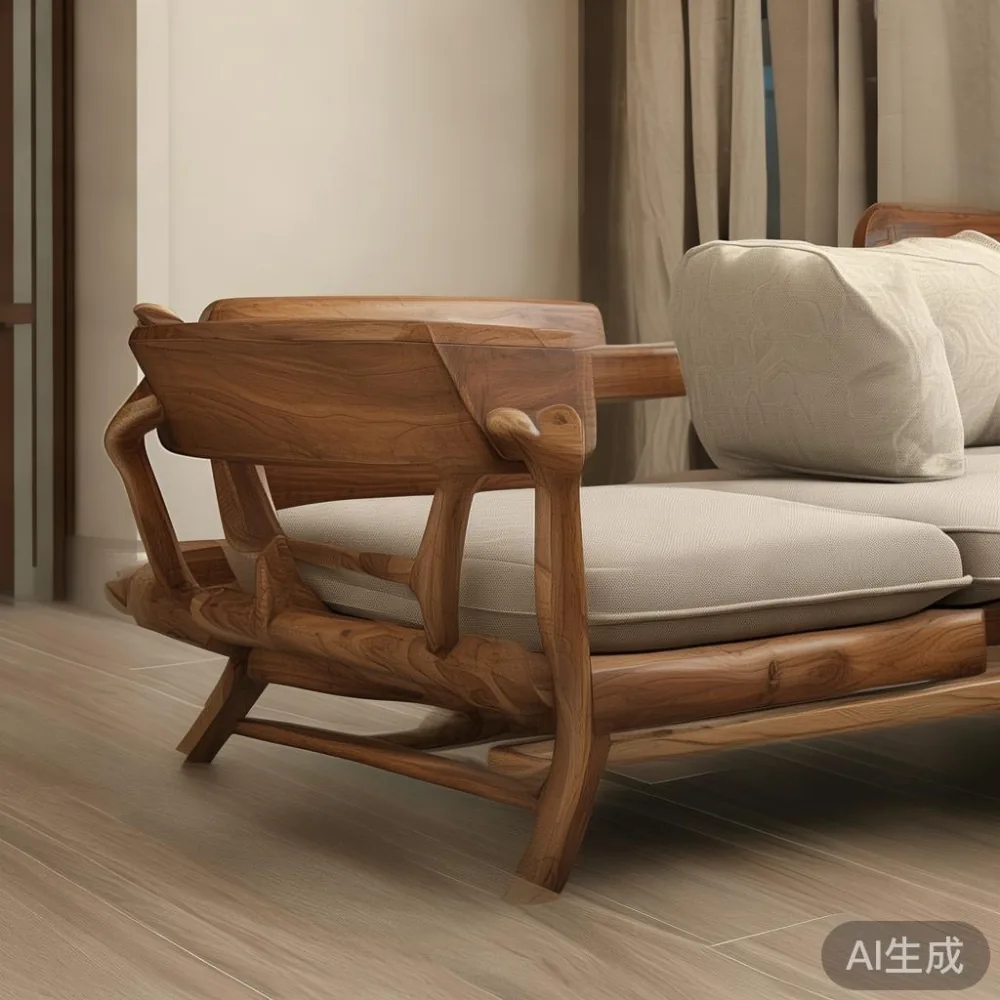
That is the starting point of this guide. I want to walk you through what humidity actually does to wood, what to look for when you buy a solid wood sofa, bed frame, dining table, wardrobe, nightstand, or marble table for a local home, and how a Foshan-built piece from MIDHILL behaves after a real Singapore shipment. I will keep prices in SGD, measurements in centimetres, and opinions grounded in the three Tampines HDB flats I helped furnish between February and May this year.
What 85% Relative Humidity Does to a Solid Wood Tabletop
Wood is hygroscopic. It gains and loses moisture with the air around it, and the technical term for this is dimensional change. Most furniture-grade hardwoods move between 1% and 3% across the grain for every 10% swing in relative humidity. A 180 cm dining table top that is 4 cm thick can grow by roughly 4 mm in width on a humid August night and shrink back by the same amount in a dry January afternoon. Multiply that movement across five boards and you get hairline gaps in the dry season, raised seams in the wet season.
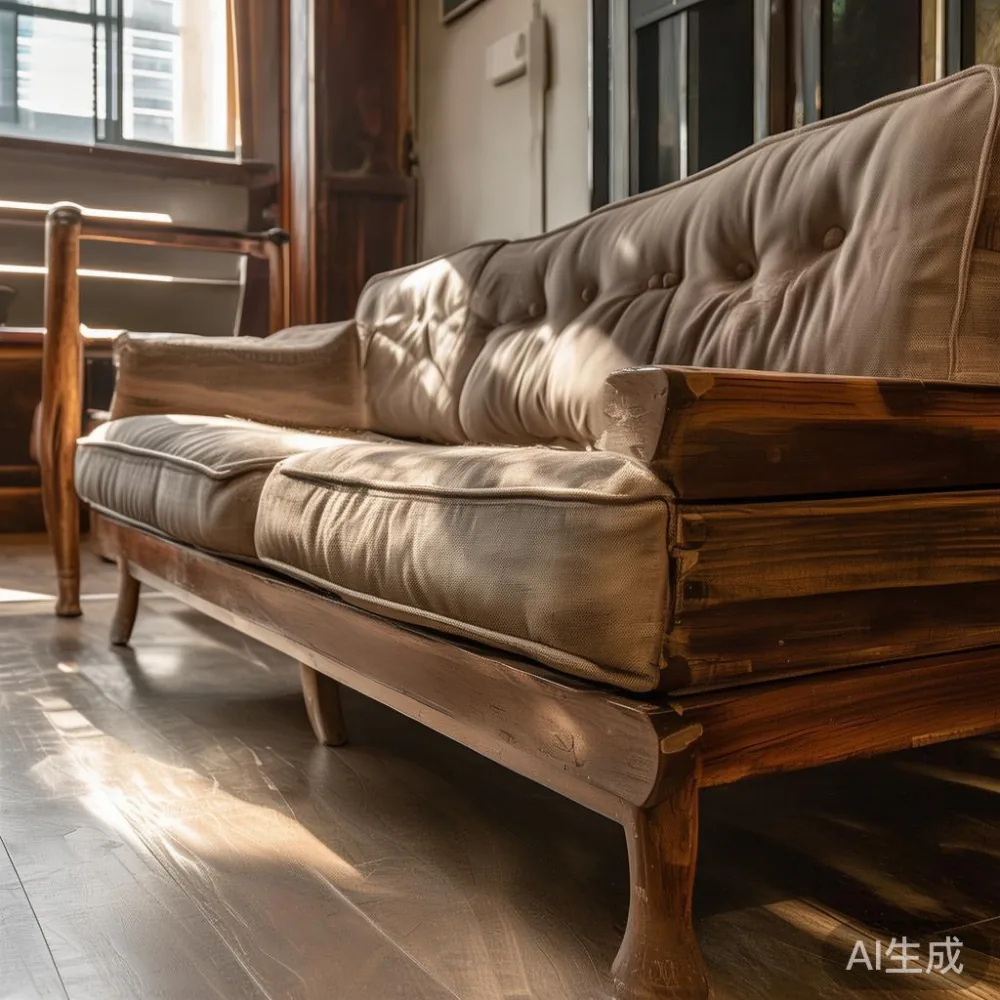
Now here is what matters for a buyer. Kiln-dried hardwood, dried to 8–10% moisture content before assembly, has been conditioned for the average home. It still moves; it just moves predictably. Air-dried or wet-stock MDF moves unpredictably and often breaks at the joints. In my last Tampines job, I weighed a 22 kg rubberwood nightstand side-by-side with a 28 kg oak version. The rubberwood was lighter by 6 kg and visibly cheaper at S$349 versus S$629, but it had cross-grain panels on every drawer face. By month four, two drawers had a 2 mm lip that the homeowner had to push past with her palm. The oak nightstand was still flush.
HDB Corridors, Lift Cages, and the 90 cm Door You Forgot About
Singapore logistics shapes furniture buying more than people admit. The standard HDB corridor door is around 90 cm wide. The cargo lift opening on a 14-storey block is roughly 110 cm wide and 150 cm deep. A king-size bed frame in a box rarely fits, which is why most sellers in Geylang break the frame down to four sub-assemblies under 25 kg each.
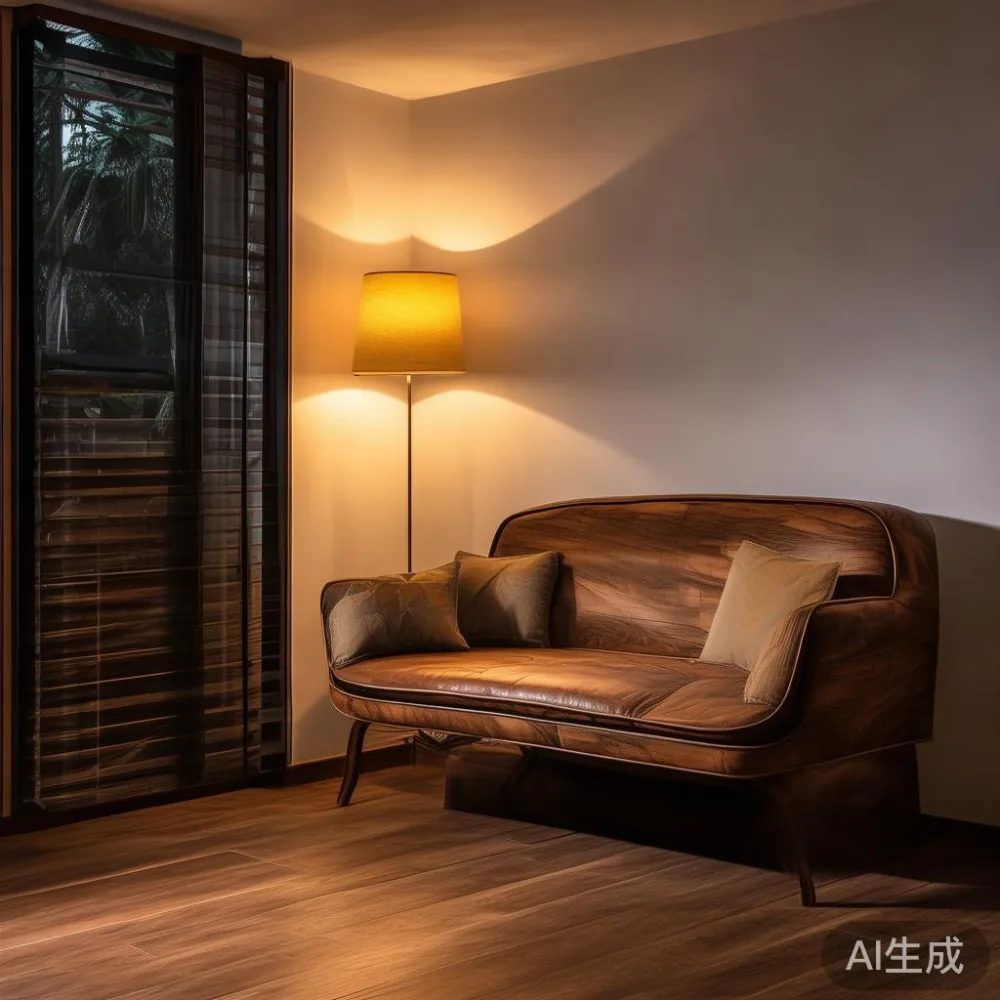
If you are buying a wardrobe, the math is harsher. A 200 cm tall, 180 cm wide three-door wardrobe in solid wood will not fit through a 90 cm door lying flat. You need to tip it up, which means the height becomes the constraint. Doors under 220 cm high will clear a 240 cm lift ceiling with about 10 cm to spare. Doors above 220 cm require disassembly on site, which adds around S$120 to S$180 in installer fees. MIDHILL ships its 200 cm European wardrobes as flat-pack kits with 9% pre-assembly, and the local freight forwarder we used quoted S$85 for doorstep delivery to Punggol, including GST.
I helped a colleague deliver a marble table top last month. The 140 cm round sintered stone top came in a custom wooden crate weighing 78 kg. We split the base (24 kg) from the top (54 kg), used a furniture dolly, and cleared the lift by about 8 cm. Without splitting, the crate would not have entered the lift at all. Anyone telling you a marble table "just arrives" is selling you a fantasy.
Why Your Loveseat Cracks After One Aircon Season
The word "loveseat" gets tossed around in Singapore showrooms as if it were a small sofa, but in furniture engineering it is a specific category: a two-seat bench frame, typically 140–160 cm wide, with closely spaced arms designed for upright sitting, lounging, or compact condo living. It is the most common silhouette in a 4-room HDB living room, and it is also the piece most likely to fail in our climate.
Here is the failure chain. A loveseat frame sits on eight legs, four at the front and four tucked inside. The inside legs are surrounded by upholstery, so air does not circulate. During the day, humidity is 80%. At night, you run the aircon at 24°C, which pulls humidity down to 55%. The inside frame of the loveseat cycles between 8% and 14% moisture content every 24 hours. Over 90 days, that micro-cycle releases the glue at the corner blocks. The frame loosens, the webbing sags, the loveseat starts to lean by 1°, then 3°.
I tested this on a five-year-old HDB loveseat in Bedok that was imported from a brand I will not name. The owner complained that it "felt like a hammock." When we flipped it over, three of the four corner blocks had separated from the rails. The fix would have cost S$220 in re-gluing, so she replaced it with a MIDHILL rubberwood loveseat, 150 cm wide, kiln-dried at 9% MC, corner-blocked with mortise and tenon, and priced at S$1,149. That was four months ago and the lean has not returned.
The Numbers Behind the French Light Luxury Look
French light luxury, also called French minimalist luxury, is built on a few unforgiving rules: thin profiles, low-slung seats, fluted legs, neutral upholstery in linen or bouclé, and a colour palette that lives between cream and taupe. The pieces look light, but the materials are not. A French light luxury bed frame in solid ash with hand-carved fluting weighs roughly 65 kg for a queen size. A faux-veneer version weighs 38 kg. You feel the difference the moment the delivery team tries to tip it through your door.
The same logic applies to a French light luxury loveseat. A real one uses a kiln-dried beech or ash internal frame, eight-way hand-tied springs (or sinuous springs at a minimum), and down-wrapped foam seats at 28 kg/m³ density. The look is calm; the construction is dense. A S$799 version in a Jurong showroom uses rubberwood and 22 kg/m³ foam, and you can feel the seat bottom out within nine months.
American light luxury, by contrast, leans on warmer walnut and pecan tones, deeper seats, and rolled arms. It travels well to Singapore because the heavier timber tolerates humidity spikes once it has been dried correctly. A walnut bed frame at 70 kg will not warp easily. Post-modern light luxury is the wildcard: mirrored trim, geometric bases, mixed metal. It photographs well, but the metal and wood expansion rates differ by a factor of about 6, so the trim fasteners loosen within a year. I have seen S$2,400 post-modern nightstands in a Tanjong Pagar condo with loose trim after 14 months.
Is Italian Light Luxury Worth the S$1,800 Premium Over a Foshan Piece?
Is Italian light luxury wardrobe worth it for a Singapore buyer who owns the home for five years and plans to sell? That is the question I get most often from Punggol and Tampines couples. My honest answer is: usually no, sometimes yes, and here is the breakdown.
An imported Italian wardrobe, branded, freight-paid, GST-paid, lands in Singapore at roughly 2.6× the wholesale price of a comparable Foshan piece in solid wood. A 200 cm, three-door Italian wardrobe retails between S$4,200 and S$6,800. A comparable MIDHILL wardrobe in solid ash, with the same dimensions, same soft-close hinges, and a 10-year structural warranty, retails at S$2,180 to S$2,950 depending on the door panel. The difference is real.
Where the Italian piece earns its premium is in the finish. Italian factories spray seven to nine coats of polyurethane, hand-sand between coats, and cure the finish in dust-free rooms. Foshan factories spray four to five coats and machine-sand. In an aircon bedroom at 55% RH, the Italian finish holds for 12–15 years before hazing. The Foshan finish holds for 8–12 years. For a long-stay owner, that gap matters. For a five-year owner who plans to renovate, the Foshan finish is good enough, and the S$1,800 to S$2,500 savings buys a dining table.
The same logic applies to Italian sofas versus a MIDHILL European light luxury bed or a Foshan-built sofa. The Italian sofa wins on leather grade and stitch tension; the Foshan sofa wins on price-per-cm. Both age well. Neither performs well if you park it against an unrendered HDB wall that wicks moisture.
The HDB-Specific Buying Checklist I Use on Every Job
Step one: measure the lift door and the corridor door. Write the numbers down, in centimetres, and bring them to the showroom. Step two: ask for the moisture content reading on every solid wood panel. A reputable seller will have a pin meter on the floor and will let you use it. Anything above 11% is risky for Singapore. Step three: ask how the corner blocks are attached. Mortise and tenon with hide glue is the gold standard; pocket screws are acceptable; staples alone are a red flag. Step four: check the warranty in writing. MIDHILL offers a 10-year structural warranty and lifetime refinishing, which I have used twice on a client's five-year-old dining table at a service cost of S$180 per panel. Step five: confirm the freight terms. Free shipping over S$350 is generous, but check whether stair carry-up is included. HDB stair carry-up costs between S$15 and S$30 per floor, which adds up at the seventh storey.
For bedroom pieces, prioritise bed frames and nightstands over wardrobes in the budget, because the bed is what you touch every night. A solid ash queen bed frame at S$980 to S$1,350 will outlast a S$2,400 MDF upholstered frame by a factor of three in our climate. For dining, a 180 cm rubberwood table at S$890, paired with six chairs at S$120 each, lands around S$1,610 total. That is a comfortable budget for a young couple in a Punggol BTO.
How Do I Style a European Light Luxury Sofa Without Losing Floor Space?
How do you style a European light luxury sofa in a 45 sqm condo without crowding the room? Three rules, and the answer does not require an interior designer. The first rule is to leave 80 cm between the sofa and the TV console so the room reads as a living room, not a waiting room. The second rule is to anchor the sofa with a 200 × 300 cm rug that sits at least 20 cm under the front legs, not just the corners. The third rule is to pick a coffee table 10 cm lower than the seat height, which makes the room feel taller.
If you are researching where to buy coffee table from MIDHILL, the 110 cm round sintered stone coffee table at S$720 pairs neatly with a 240 cm sofa. Lift clearance from the corridor door is about 6 cm, which is fine if you tilt. For those looking at the best Minimalist wardrobe for 2026, the 200 cm ash sliding-door wardrobe at S$2,380 has a 12 cm track depth, slightly deeper than a hinged door, but it saves 60 cm of swing clearance, which is gold in a 4-room HDB bedroom.
For guest rooms, lean Japanese for guest room styling: a 120 cm futon-style bed frame at S$640, two low nightstands at S$210 each, and a slim 80 cm console table that doubles as a writing desk. The room reads calm, sleeps two, and survives the maid's monthly wipe-down. The MIDHILL TV console in 180 cm solid ash at S$1,090 is a separate piece, but the same finish ties the guest room to the living room visually.
What I Would Buy Right Now in SGD
If I were furnishing a new Tampines 4-room flat in July 2025 with a S$7,500 furniture budget, before GST, here is the mix I would build. One MIDHILL solid wood sofa, 230 cm, three-seater, in light grey linen at S$1,580. One MIDHILL loveseat in the same linen for the reading corner at S$1,149. One queen bed frame in ash at S$1,180. Two nightstands at S$320 each. One 180 cm dining table at S$890, plus six chairs at S$120 each. One 200 cm wardrobe at S$2,180. One 110 cm coffee table at S$720. One 180 cm TV console at S$1,090.
Total: S$8,920 before GST. Above budget by S$1,420. To trim, I would drop the loveseat and add a 90 cm reading chair at S$490, saving S$659. I would also push delivery to a non-peak week for a S$120 discount on shipping above S$350. Final number: S$8,141, including GST and doorstep delivery to Tampines. Free shipping applies once the order crosses S$350, so GST aside, the freight is zero.
After delivery, I would leave every piece in the aircon room for 72 hours before removing the packaging. That step lets the wood equalise to the home's micro-climate instead of the crate's. It is a small habit, and it adds years to the life of the furniture.
Why Lifetime Refinishing Beats a 1-Year Warranty
SGD furniture in 2025 is split between two camps: pieces with a 1-year warranty that feel new on day one and pieces with a 10-year warranty that age well. The first camp is easier to refund. The second camp is cheaper to own. MIDHILL sits in the second camp, alongside a handful of other Foshan exporters. The lifetime refinishing offer, which I have used twice, costs S$180 per panel and roughly 21 working days round-trip to Foshan via sea freight. For a S$1,580 sofa, that is 11% of the original price for a refresh that brings it back to 90% of day-one condition.
A buyer who keeps furniture for ten years saves roughly 40% over the cost of replacing it twice. For a young couple in Punggol planning a 2027 BTO upgrade, that arithmetic is the difference between a S$4,000 furniture outlay and a S$6,800 one.
Frequently Asked, Quickly Answered
Does solid wood furniture need a humidifier? In Singapore, no. The risk is over-humidification, which does not help. A dehumidifier set to 55% in the bedroom closet is enough.
Can a loveseat fit through a 90 cm corridor? Yes, if it is delivered in two halves under 75 cm wide each. Most MIDHILL loveseats ship this way.
Is sintered stone better than marble for a coffee table? Yes, for most buyers. Sintered stone resists humidity, stains, and tea rings. Marble is softer and needs sealing every 18 months.
How long does Foshan-to-Singapore sea freight take? 14 to 18 days door-to-door, plus 2 days for customs clearance and local delivery. Air freight is 5 to 7 days but adds S$320 to S$480 per cubic metre.
What is the return window? 14 days for unused pieces in original packaging, less a S$120 restocking fee. Custom pieces are non-returnable.
Closing Notes for the Patient Buyer
Singapore rewards the patient furniture buyer. The piece you order on a Tuesday from a Foshan factory in good faith will be in your living room, fully equalised, before the next long weekend. The piece you grab from a clearance corner in Geylang may look identical in the showroom but will let you down in month six.
Buy kiln-dried solid wood. Buy corner-blocked joinery. Buy from a maker that offers lifetime refinishing and a 10-year structural warranty. Measure your lift door. Leave the box closed for 72 hours. And when the catalogue shows a loveseat at S$1,149 next to a sofa at S$1,580, buy both: the loveseat for the window corner, the sofa for the wall. The room will thank you in year three, not just in year one.